


A lot has changed in 200 years, but the Community Church of Chesterland’s core mission of being welcoming and inclusive has remained the same.

A lot has changed in 200 years, but the Community Church of Chesterland’s core mission of being welcoming and inclusive has remained the same.
“We’re celebrating 200 years of being a church and for us, that means a welcoming, inclusive, justice-oriented community of faith,” said minister Jason Bricker-Thompson of the CCC’s bicentennial celebration this year. “That’s been a long part of our history.”
The church, at the corer of Wilson Mills and Caves roads, will hold a special service Jan. 13 to kick off its 200th anniversary.
The public is welcome to enjoy guest musicians Tina Bergmann and Bryan Thomas during the service at 10 a.m. Sunday. Cake and sparkling juice will be served, said Bricker-Thompson, adding celebratory events and free monthly meals will be held throughout the year in honor of the CCC’s bicentennial.
“It’s really been a community church. We’ve changed denominations, we’ve changed names multiple times in 200 years and we’ve had churches merge together, but it’s always been a very diverse congregation in our community,” Bricker-Thompson said. “They’ve always been a real presence in this community and that hasn’t change. Other things change, but our essential core mission has remained the same.”
That mission and history includes fighting for social justice, no matter the consequences, said church moderator Jody Kamensky.
Members have experienced pushback firsthand, such as in 1970, when some were arrested for civil disobedience while marching with Cesar Chavez in support of better pay and working conditions for migrant workers, Kamensky said.

He gave a brief history of the CCC’s many incarnations:
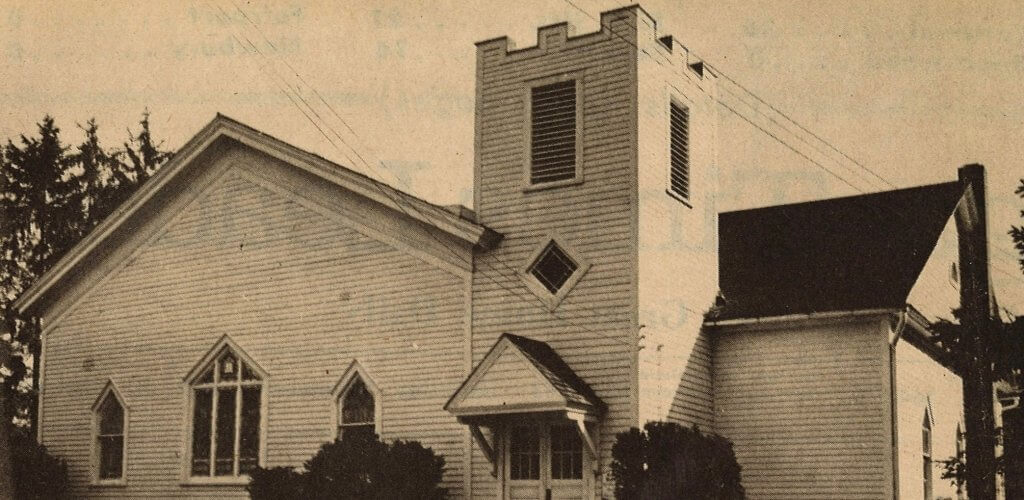
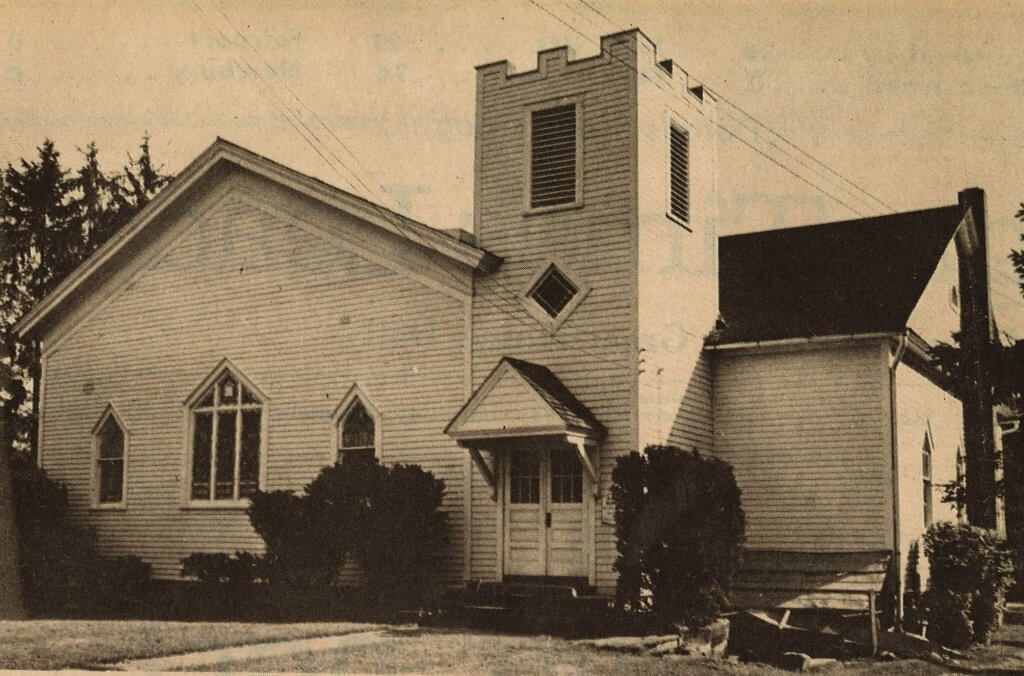
Formed in 1819 as First Presbyterian Church, the original building still stands at the intersection of state routes 322 and 306. At that time, the location was considered the western frontier of the United States. In 1884, it became the Congregational Church of Chesterland. Then, in 1920, it merged with the Disciples of Christ as the Federated Church of Chesterland. By 1931, the CCC incorporated, and began bringing together the Federated Congregationalist and Disciples of Christ.
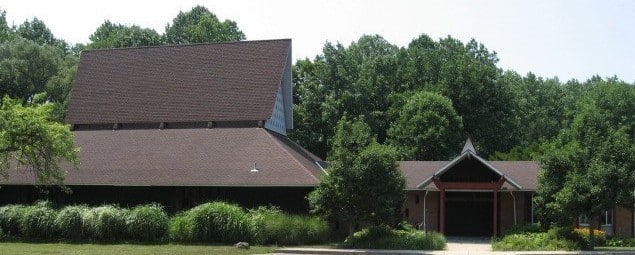
In 1957, the CCC affiliated itself with the United Church of Christ. It began worshiping in its current church building in 1961.
From its inception, members took a stand on controversial subjects, such as banning the common practice of separating men and women at services. So common was this custom that most churches of the era had separate doors for men and women, Kamensky said.
After axing that tradition, the members of the CCC went on to support the Second Great Awakening, an American spirituality movement that focused on individualism and salvation, as well as order and morality. In 1848, after the CCC openly voiced support for feminism as introduced at the Seneca Falls Convention, it received the honor of hosting President James Garfield as he presided over services.
Throughout the late 1800s and early 1900s, the CCC community took every opportunity to practice what it preached. Members of the church worked toward the ratification of the 13th Amendment abolishing slavery, as well as the 19th Amendment granting women the right to vote. In the 1960s, members were strong supporters of the civil rights movement, attending the Civil Rights March on Washington led by Rev. Dr. Martin Luther King Jr., Kamensky said.
In 1970, when the first Earth Day was declared, CCC youth led a special worship service (a tradition that continues today). Throughout the 1970s, members advocated for prison reform, called for the end to the Vietnam War, the military draft and nuclear proliferation. In 1973, members attended the National Peace March in Washington D.C. The CCC also initiated the first Geauga Women’s Center in the church basement. Further, members solicited Ohio senators to ratify the Equal Rights Amendment.

By the 1980s, the CCC was well known for its outreach programs. It established an Alcoholics Anonymous group and offered inexpensive leasing to the community preschool, Kamensky said.
In 1993, it became one of the first churches in Northeast Ohio to be open and affirming — members were welcome regardless of race, sexual orientation, physical ability, gender, social class or other differences. In 1995, the CCC built a pavilion overlooking a river ravine, establishing an outdoor sanctuary for Sunday summer worship.
More recent issues concerning CCC members include homelessness, gun reform, immigration, LGBTQ equality, healthcare reform, pollution, police brutality, bullying, the #MeToo Movement, the empowerment of women and the eradication of poverty. The CCC participated in the Cleveland Gay Pride Parade and also sent members to the Back Bay Mission in Biloxi to help rehab houses damaged by Hurricane Katrina. A recent community anti-bullying event was held in cooperation with the Geauga Co-Operative Ministries.
Locally, the CC supports organizations such as Next Step (transitional housing and support for young adults), Hiram Farm (an organic farm employing adults on the autism spectrum), WomenSafe and the Harriet Tubman Ministries (human trafficking in the community). The CCC also facilitates annual collections for organizations such as the Hartville Migrant Ministry, Chesterland’s Food Bank and Homeless Stand Down.
For more information on the CCC, call 440-729-7898, visit https://www.chesterlanducc.com/, and find them on Facebook.


