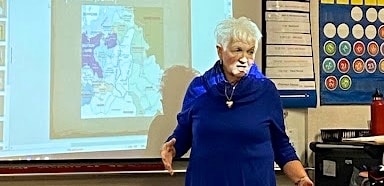
Burton Elementary School sixth-graders have been reading the “Number the Stars” by Lois Lowry...
Sixth-Graders Study WWII
Burton Elementary School sixth-graders have been reading the “Number the Stars” by Lois Lowry. During their novel study, they have also been conducting research on World War II; the Holocaust; Nazi Germany; Denmark’s King Christian X; Denmark, the setting of the book; and the author, Lois Lowry. Students picked one of these topics to research and then created an informational slide presentation to share with peers.
As part of their project, they also picked from a variety of creative works to publish and present to their class. Choices included: a cookbook of traditional Danish or Jewish recipes; a map of Denmark; a diary written from the perspective of a Jewish child or non-Jewish child; a newspaper article written during the time period of the book and discussing the Nazi occupation; a picture book about King Christian X; or a book of poetry focusing on topics from the time period.
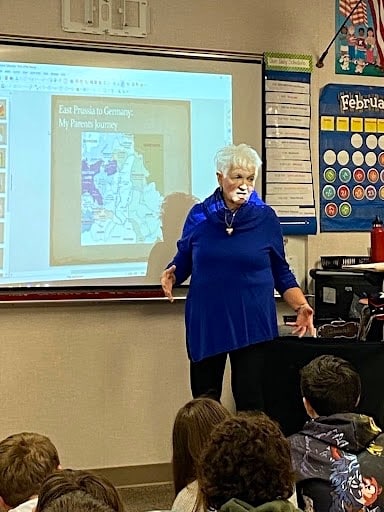
On Feb. 10, students welcomed two visitors to present their unique stories of life after World War II. One presenter was Mrs. Meyers who immigrated to America from Germany when she was 4 years old. Right after the war, her parents sent her to live with relatives in the United States so she could have a better life. She shared pictures of her family, home and cat, Peter, whom she attempted to smuggle on the plane with her. The students learned how her bravery helped her overcome leaving her birth parents for a better opportunity. They were fascinated by her story and how she learned English so quickly, too.
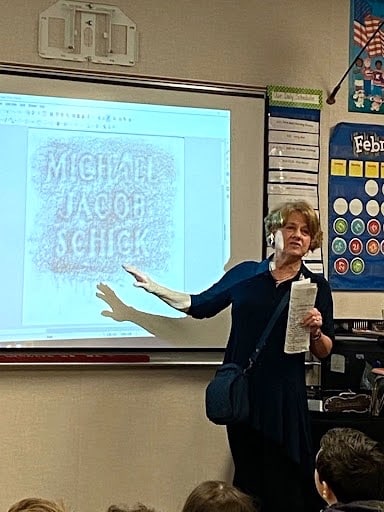
The other presenter, Mrs. Redding, was also born after the war. Her story focused on the heroism shown by her father, Michael J. Schick. He was a Marine serving in China after the bombing of Pearl Harbor. He is famous for having been a prisoner of war for 45 months, which is the longest of any soldier from Cleveland during World War II. Mrs. Redding has spent her life learning about her father who she never met since he died when she was four months old. The students found her story fascinating and were moved by her pictures, newspaper clippings, letters from President Truman and Gen. A.A. Vandegrift, commandant of the Marine Corps.
The sixth graders’ appreciation was expressed through thank you letters that they wrote and sent to the ladies after the visit. It proved to be a great lesson in bravery, heroism, courage and history, and a wonderful way to end the unit of study in Mrs. Lunardi and Mrs. Burnett’s English language arts class.
Then and Now Project
First-graders at Ledgemont Elementary School have just wrapped up their project-based learning unit called “Then and Now.” It was a wonderful opportunity for the kids to see how many advances have been made over time.
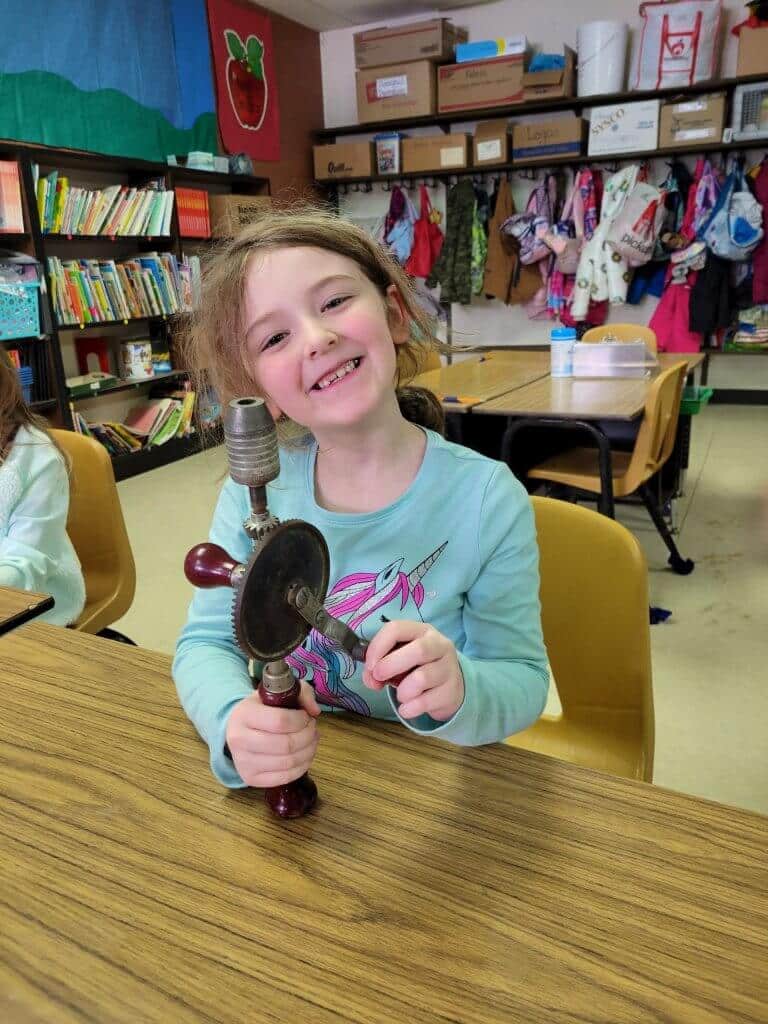
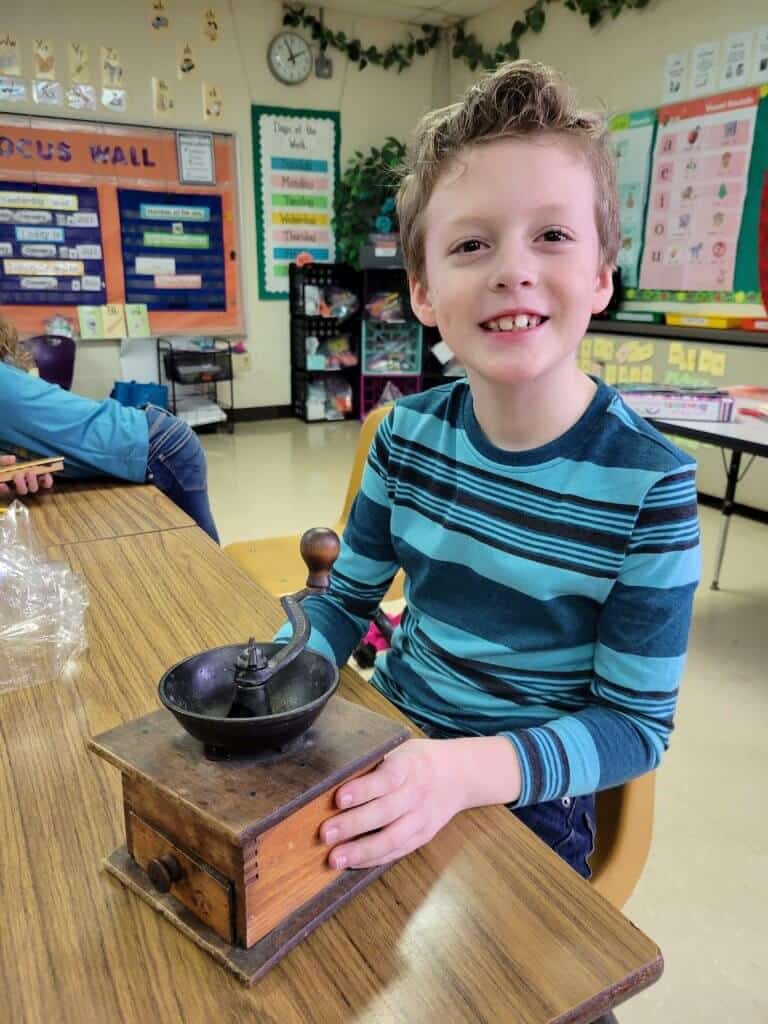
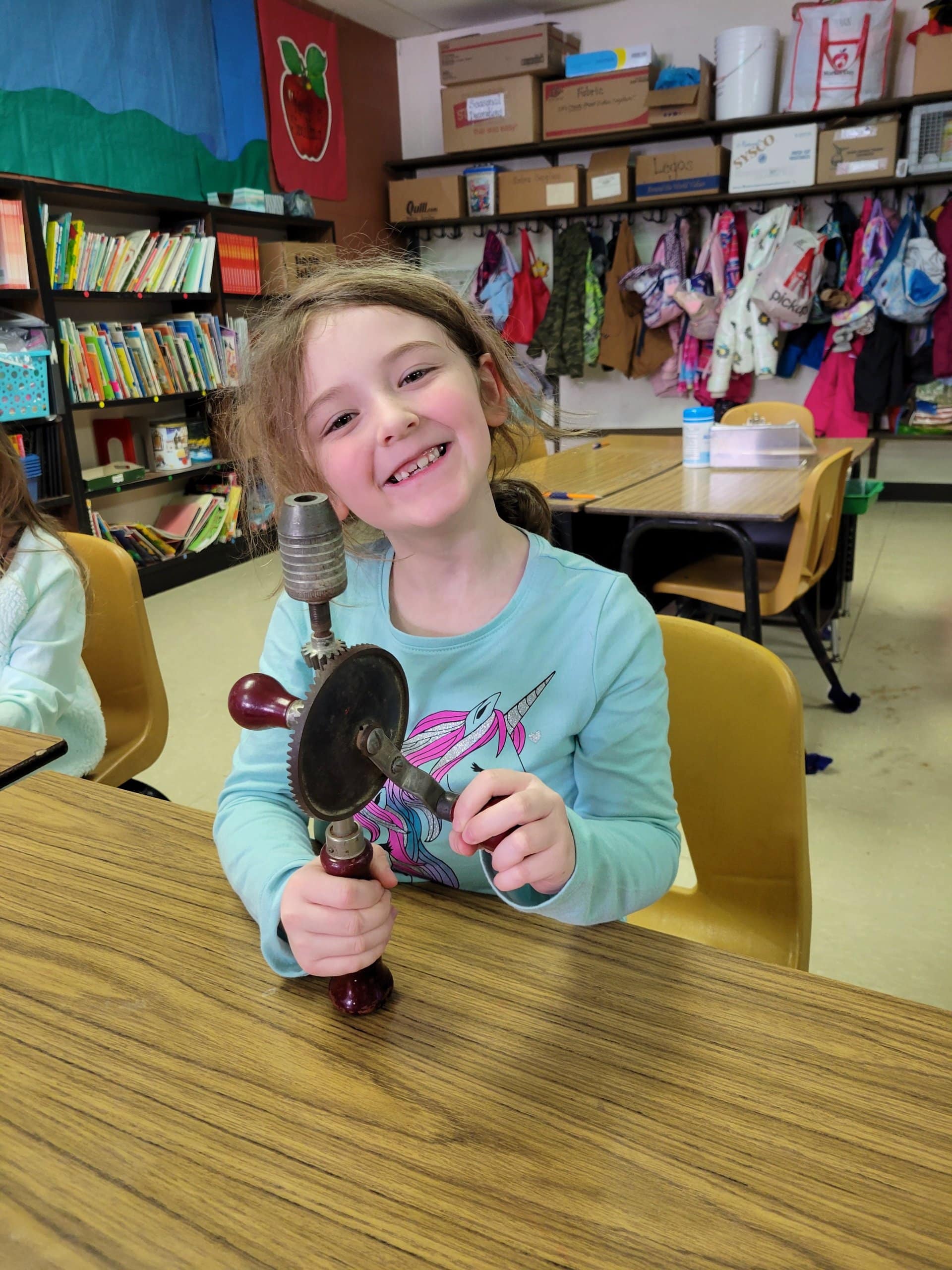
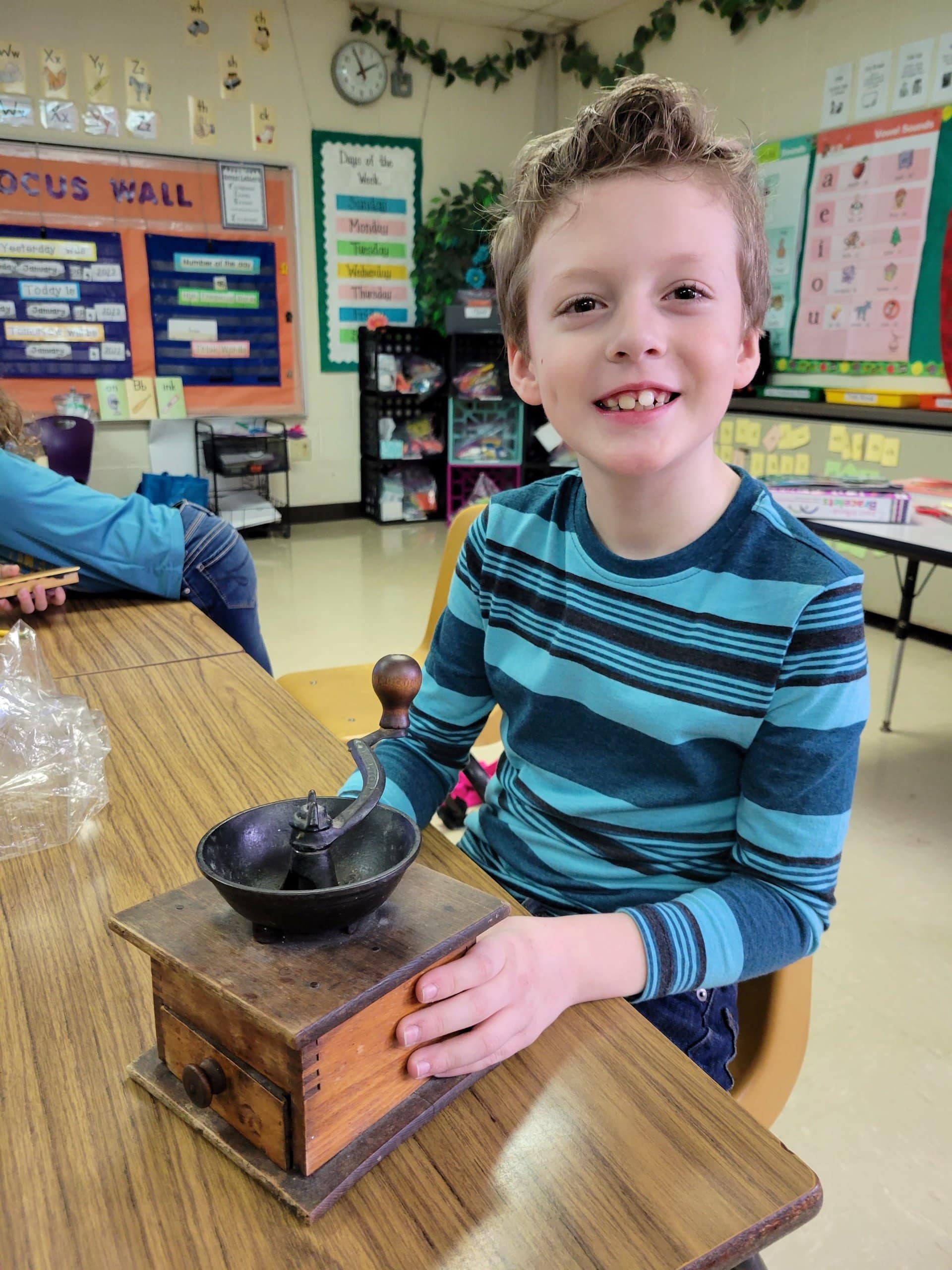
The unit began with an entry event called the “First Grade Mock History Museum.” The cafeteria tables were stocked with items from the past. Students were put with partners and had to try and guess what each item was used for and/or what it was called. As expected, many of the items were incorrectly identified. Students were also amazed at some of the items brought in for a “show-and-tell” after the museum, which was part of their weekly homework. Students were responsible for identifying the name of the object, the year it was made and what it was used for.
After watching some short video clips of “Little House on the Prairie,” students began with the driving question, “How can we share with others how the world has changed over time?” The unit continued as students began researching their group’s chosen topic to answer this guiding question. Voice and choice were evident as groups chose topics including technology, jobs, toys, transportation, food, clothing and communication.
Teachers became coaches in providing input as students filled out a Google Slides presentation. Some of the required components were naming the driving question, identifying three items under their topic to compare and contrast from past to present, finding one influential person who has made a change in history and creating an invention they would like to produce and sell.
Along with the PBL project, students were asked to conduct an interview with an adult who lived in the past. They had to ask questions about how life was in the past and compare it to their life in the present. The results proved that many adults think life was easier in the past and predict transportation will include flying cars in the future. Research continued until all groups were ready to present. Along with a verbal presentation, students were also allowed to bring in an item from the past that represented their topic. Groups brought in items to compare such as an old metal toy train, clothing from the early 1900s, a letter typed on a typewriter and an old elementary school slate board used for writing.
After all the presentations, students reflected on their group projects and discussed strengths and weaknesses of their group dynamics. Teachers prepared a rubric to coincide with all components to the PBL and pictures were posted on DOJO to highlight the amazing results. When asked, the majority of the students do not want to live in the past for fear they have to use a bathroom outside and walk to school a few miles away.