History runs deep in Huntsburg Township and residents Josh Burton and Carl Seliskar have tasked themselves with preserving and sharing it.

History runs deep in Huntsburg Township and residents Josh Burton and Carl Seliskar have tasked themselves with preserving and sharing it.
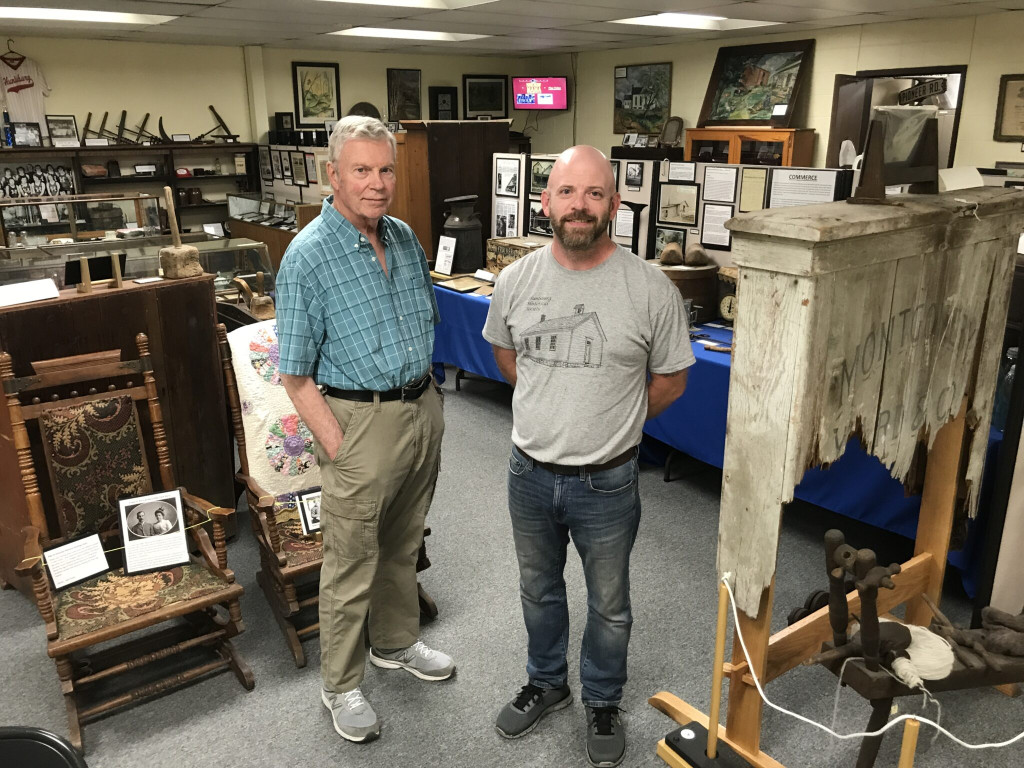
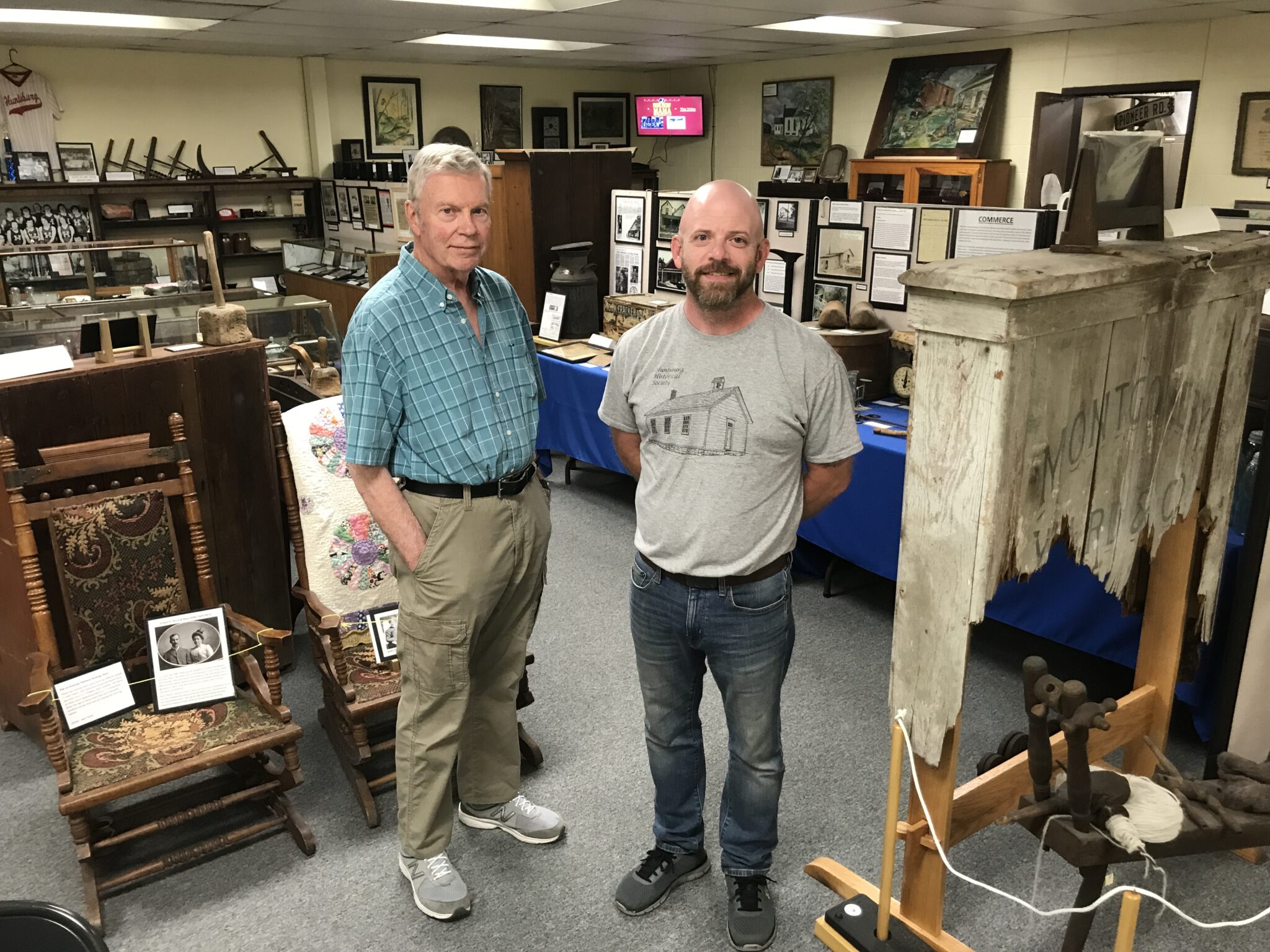
The Huntsburg Township Historical Society, housed in the Huntsburg Community Center, began with a few totes of antiques in 2008 and has grown to fill two rooms under the stewardship of Burton, historical society president, and Selsikar, its vice president.
The collection, which continues to expand, consists of over 1,000 items, all donated by Huntsburg residents past and present, catalogued and curated by Burton, Selsikar and his wife, Elaine, with the support of a 40-person board.
“It’s the epitome of small-town America,” Burton said. “The history of America can be written from any of these small townships. Whether it’s the early settlers going to an unforeseen land and carving out a path for themselves and their families and the people who would follow them in the very first part of the 1800s, or leading up until the Civil War, where we had a large number of our young men going off to fight.”
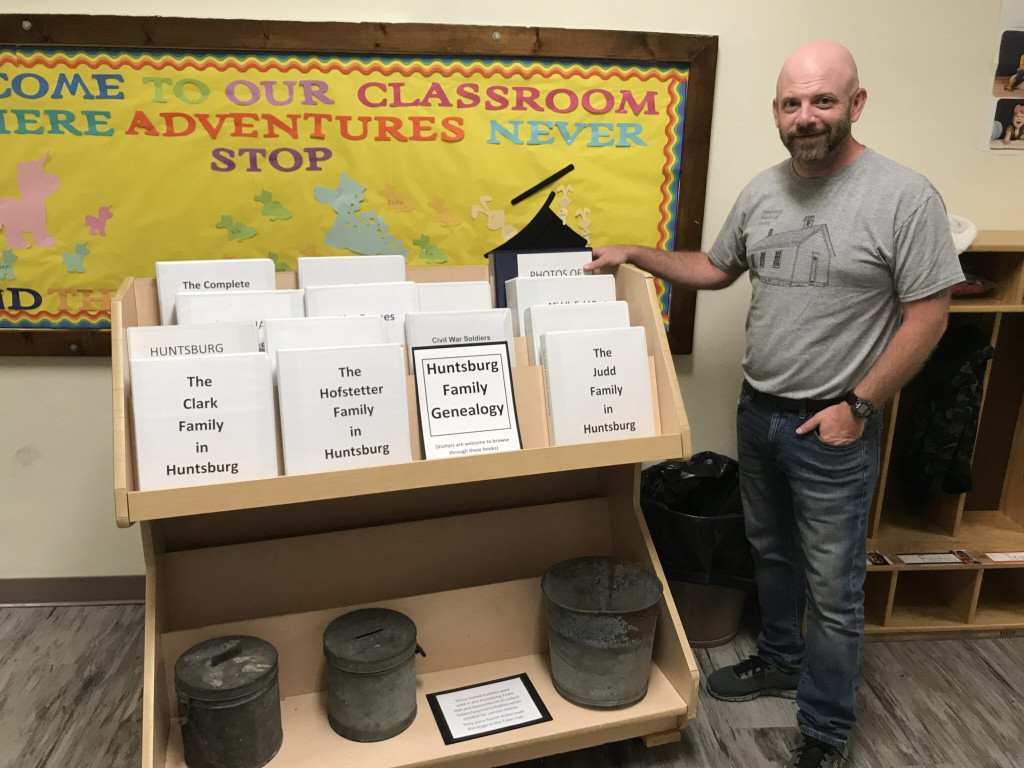
The historical society offers a glimpse into the past for Geauga County residents who might want to research their lineage, whether you are someone from as far away as Alaska who might have a connection to Huntsburg, or a teacher or students who wants to learn about local history.
The society is open the first Saturday of every month from 10 a.m. to 2 p.m. and by appointment, but will be open for the entirety of the upcoming Huntsburg Pumpkin Festival, Oct. 4-5 from 10 a.m. to 6 p.m.
“Pumpkin festival is our biggest weekend of the year. That’s when we get our most visitors and hats off to (festival committee President Andy Supinski) for all he does for that. He’s really taken the ball and run with it,” Burton said.
Residents have donated examples of early photographic prints, clothing of the past, artwork, sports uniforms and musical instruments, family heirlooms and early examples of radios and television sets.

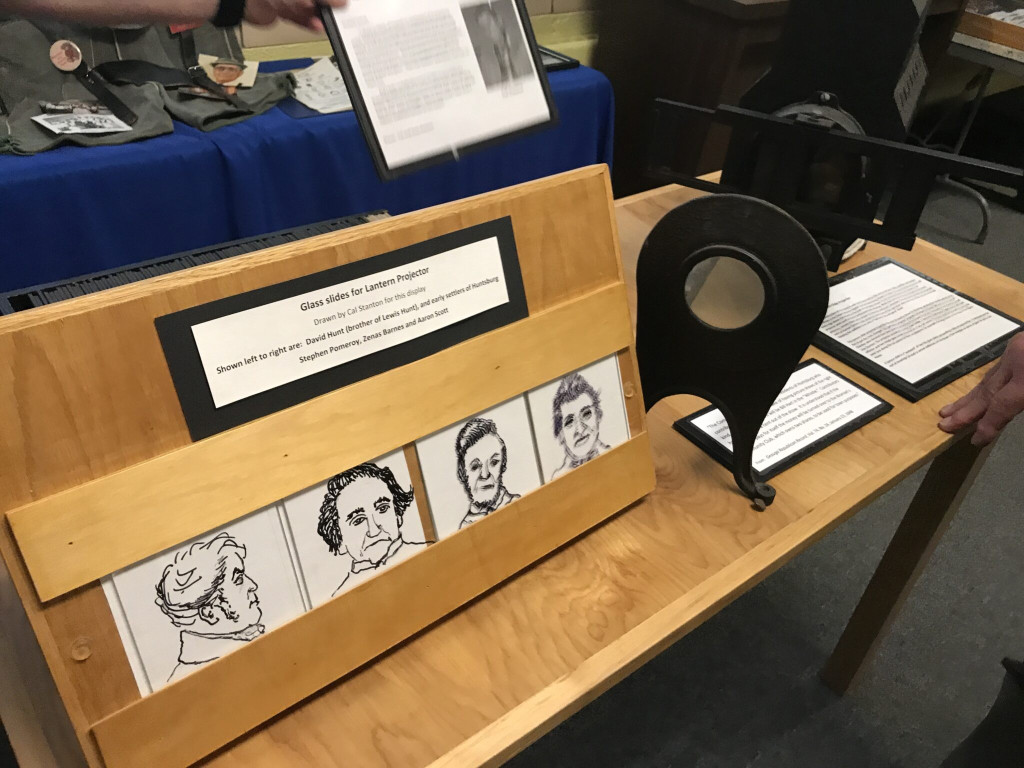
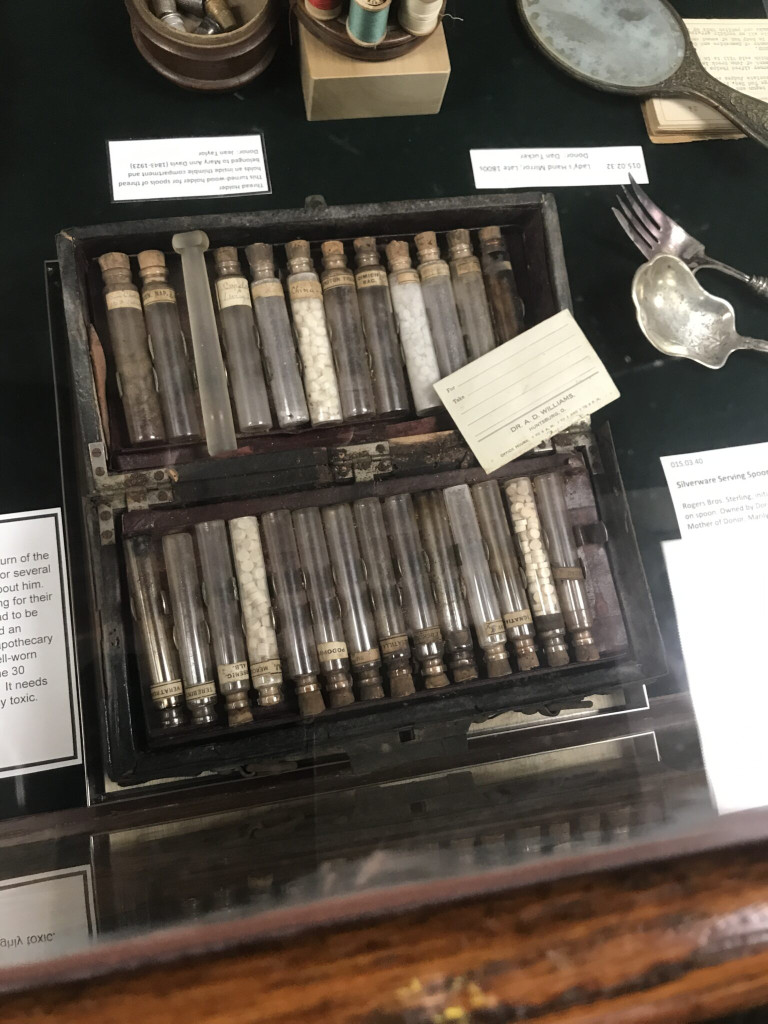
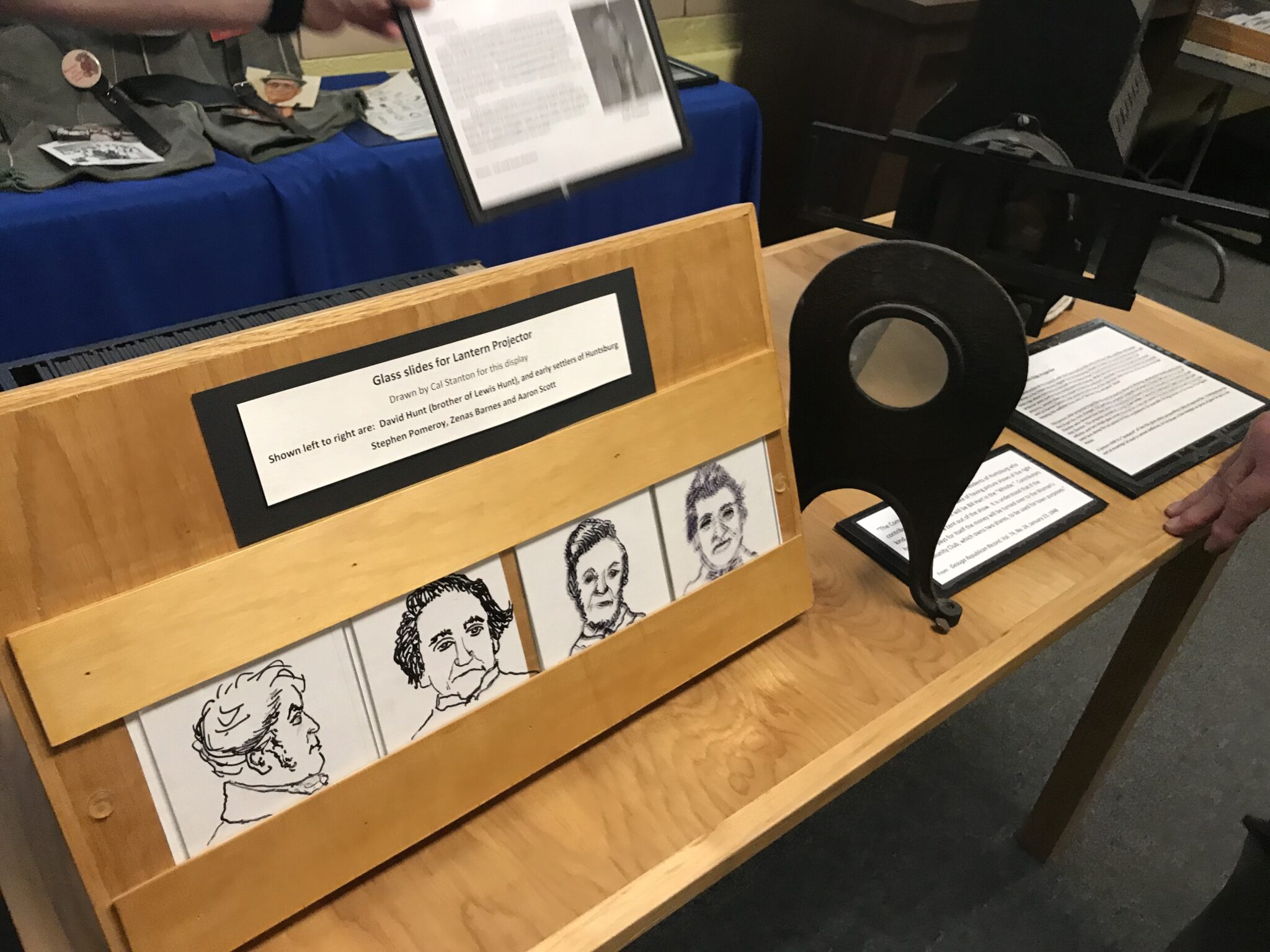
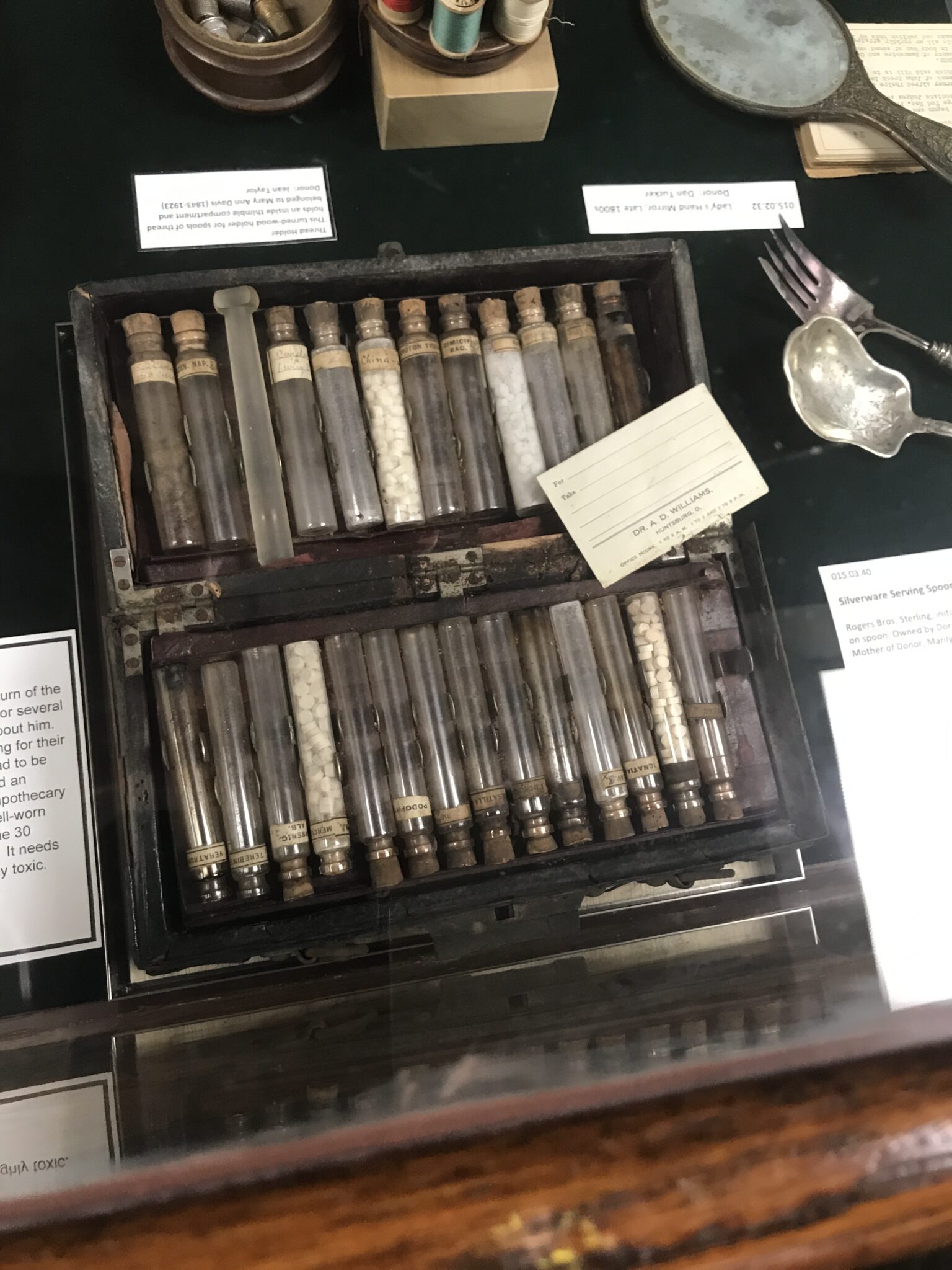
Collection highlights include the town’s original voting poll of 1823, a traveling physician’s apothecary kit, a Huntsburg baseball uniform from the 1930s, and the glass slides and projector used in the town hall’s opera house to project caricatures of residents between films from the beginning of the movie era through World War II.
The collection tells “a story that represents every small town in America and we just happen to be very passionate about the one that is Huntsburg,” Burton said.
It serves as a portrait of a lost world, one Burton and Selsikar feel called to honor.
“I was raised amongst a lot of things you see in this museum at our family farm,” Burton said. “It was ingrained in me at an early age that it was important to know where you came from. It helps you to understand who you are a little bit and maybe why you are the way you are.”
The music exhibit showcases recordings of Huntsburg musicians such as the “Boys Are Back” band, whose music seems to play out of an old 1920s radio through some creative use of modern technology.
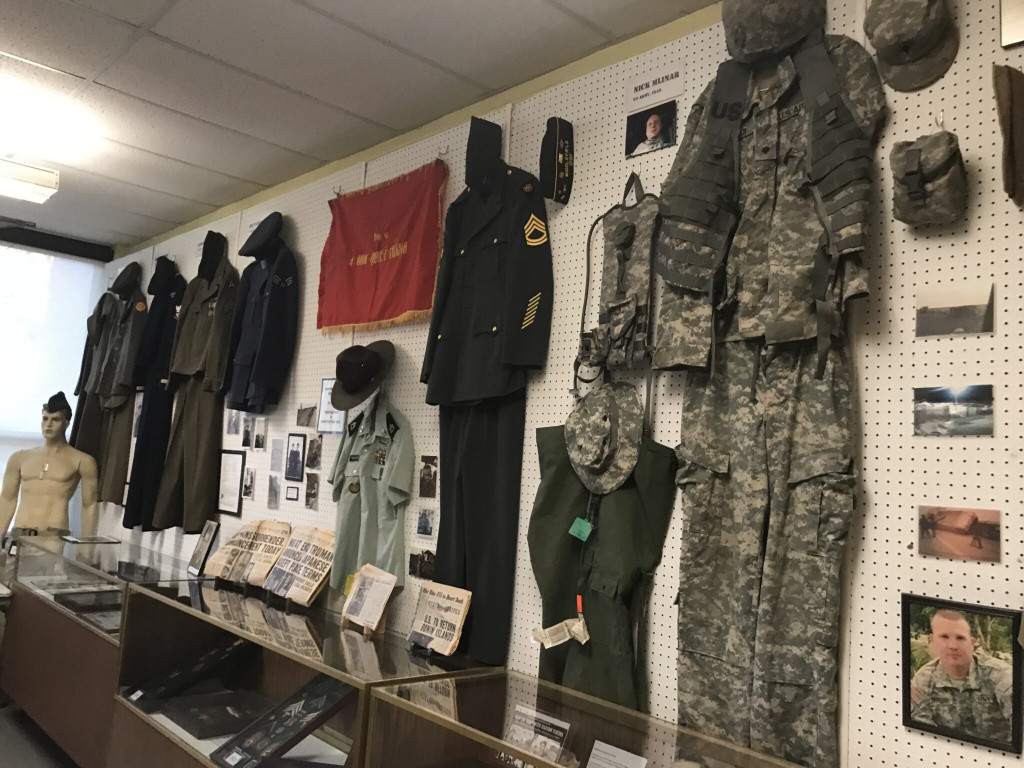
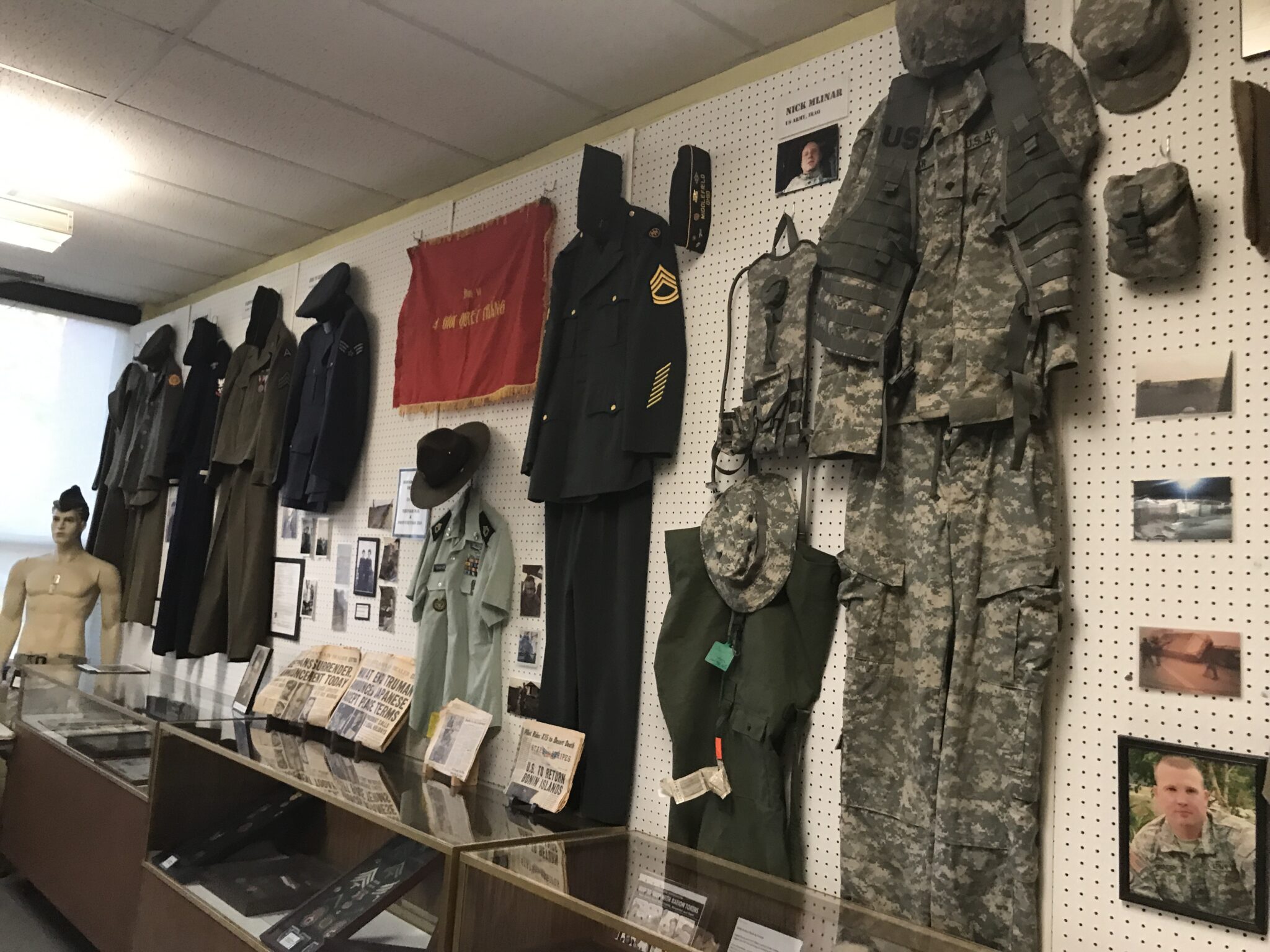
There’s also a section of uniforms and artifacts from Huntsburg veterans from World War II through the second Gulf War, all displayed behind UV protection windows to blunt the ravages of the sun on clothing and documents.
Burton’s family has been on the same property in Huntsburg for over 200 years, instilling in him a reverence for the past since childhood.
“I come from a long generation of people who don’t throw things away,” Burton said. “I grew up amongst these things. I don’t know life without them. Nothing made me happier than sitting around listening to my grandparents tell stories.”
Seliskar was raised on the farm next to the current historical society and has a long familial connection to Huntsburg.
“My father bought the farm here in 1949 and we moved out here in 1950,” he said. “He didn’t know, but he had bought the original Lewis Hunt house (the man who gives the town its name). He had deduced it was the original Lewis Hunt house, only to be disappointed when the Geauga County Historical Society announced that it wasn’t the original Lewis Hunt House. (They said) it was another house down the way — which was not true. My first goal was to prove my father correct, that it was the Lewis Hunt house, and so my connection (to the historical society and town) is to Lewis Hunt, whose house I lived in.”
Holding a doctorate in chemistry and background in research, Seliskar, along with his wife, co-authored a book titled, “Huntsburg: Early Pioneers Families and Settlement in the Western Reserve” and his wife also wrote all the notes in the display.
The couple’s work is a labor of love for Huntsburg.
“I mean, I’m a Huntsburg boy,” Seliskar said. “It’s important for people to see that community is important. I lived in a city for much of my professional career and I can tell you that this is important.”
Huntsburg is also unique in that its layout has not changed very much since its founding, offering a glimpse into the time when settlers from Massachusetts, Connecticut and New York started coming to the Western Reserve in the early 19th century, he noted.
“Each of these settlements was essentially a microcosm of the early citizens of the Western Reserve,” Seliskar said. “It is pretty much the same structurally that it was in the beginning.”

He also pointed out the number of young men from Huntsburg who went off to fight in the Civil War.
“We have over 60 Civil War soldiers buried in Huntsburg, which is a remarkable number considering the population of the township,” he said.
The historical society plays a major role in the town’s Memorial Day observances, which include placing roughly 200 flags on veterans’ gravestones and giving flowers to attendees, many of whom have family members who served in the country’s wars.
To Burton, it’s important to make sure the day represents reverence for the sacrifice of those who served, a spirit that carries over to all the historical society’s work.
“We owe a debt of gratitude to the people that came before us. I’m trying my best to carry this work on from people like Carl,” Burton said. Seliskar preceded him as president.
“Very few people can walk to the gravestone of their great-times-six grandfather and every generation since then, to know where they’re buried,” he said.
The past continues to expand for Burton, as new items are brought into the collection.
“As far as seeing it all, I still find things I don’t think I’ve seen,” he said. “You get something new that connects you to something else that was an unanswered question and then you follow that thread. You never know what the next person who walks in the door will either bring you or (share that will) help fill a gap.
“Unfortunately, like a lot of small towns across this region and the United States, towns like Huntsburg have become places you go through instead of come to,” Burton added. “We try to do our best, with the historical society and … with the Pumpkin fest, we’re trying to make this a place people go to.”