Chardon City employees and community members gathered Oct. 28 to officially commemorate local artist Elliot Miller’s completion of three murals on the building that once supplied water to trains passing through the city.
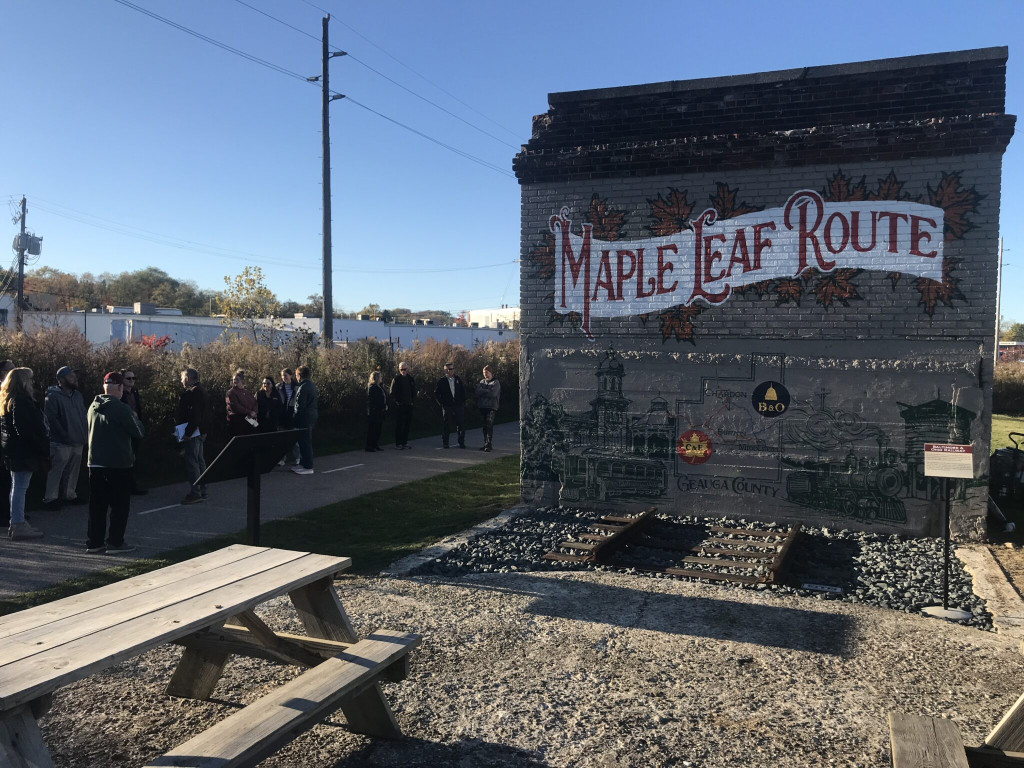
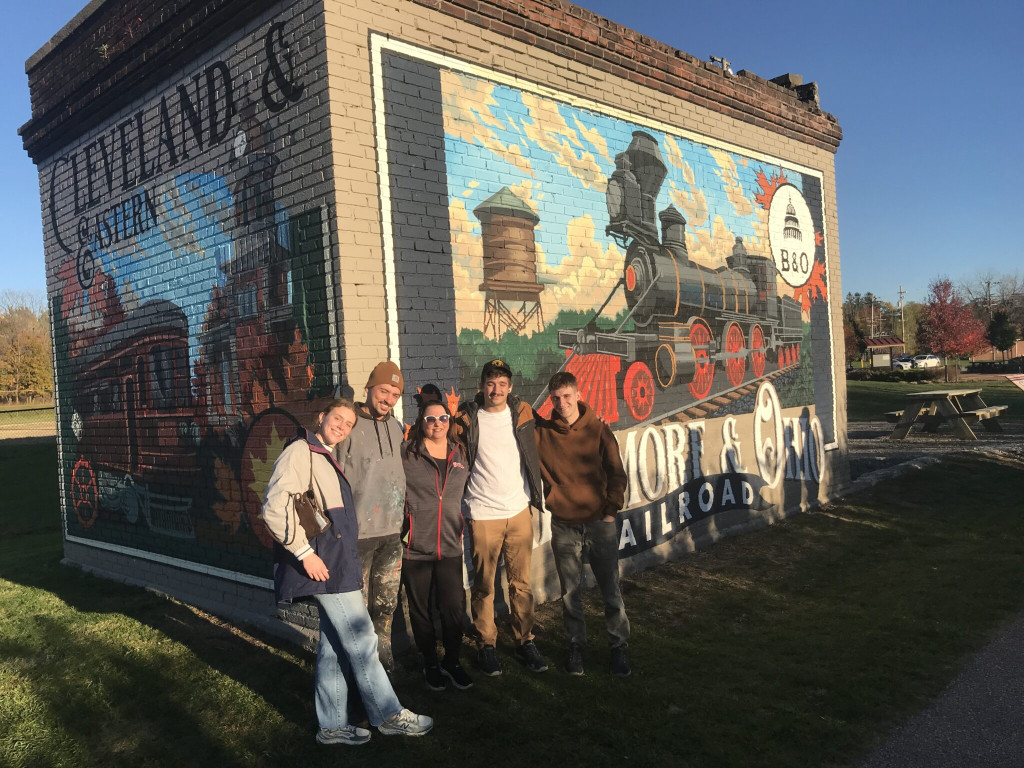
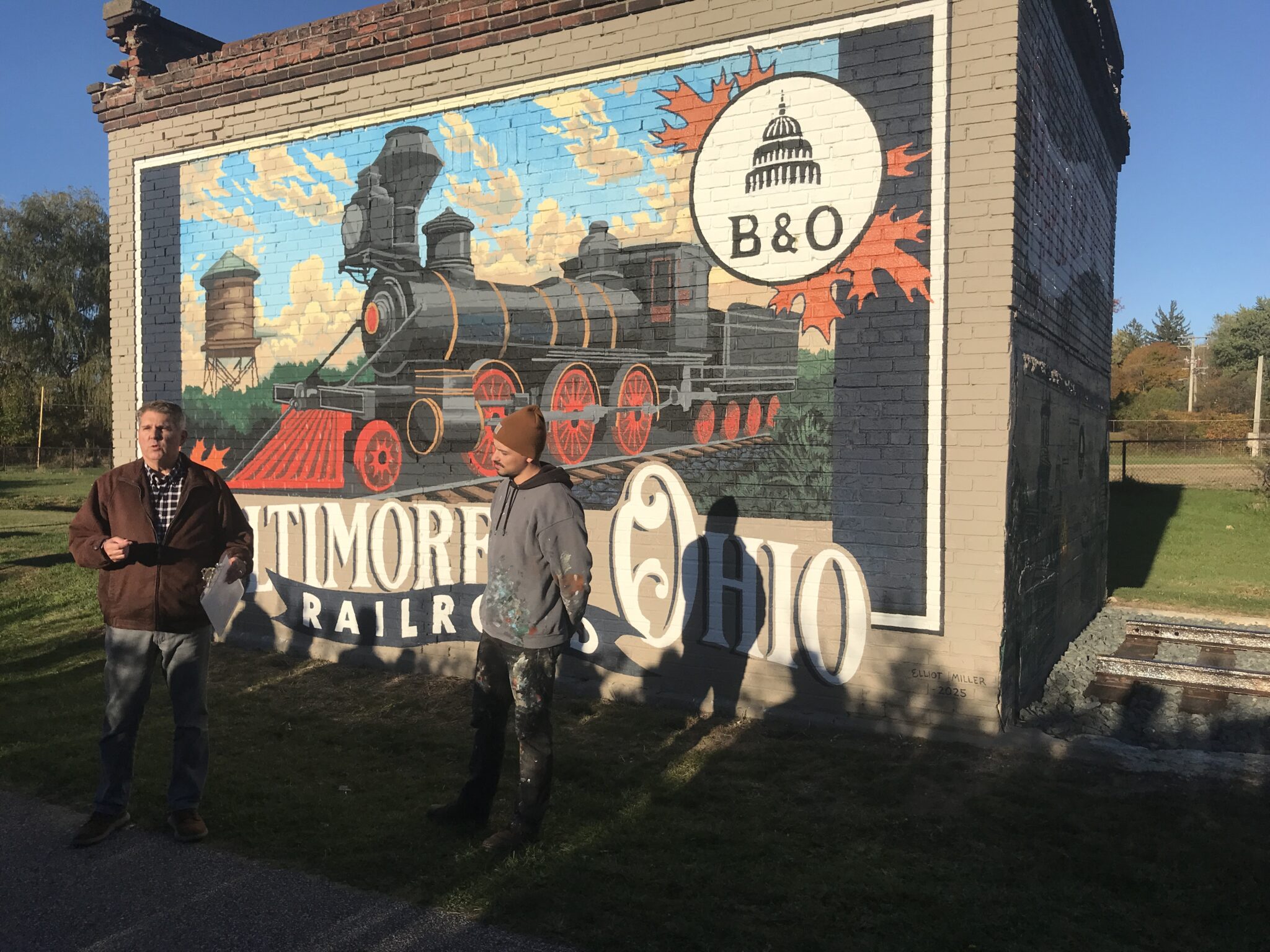
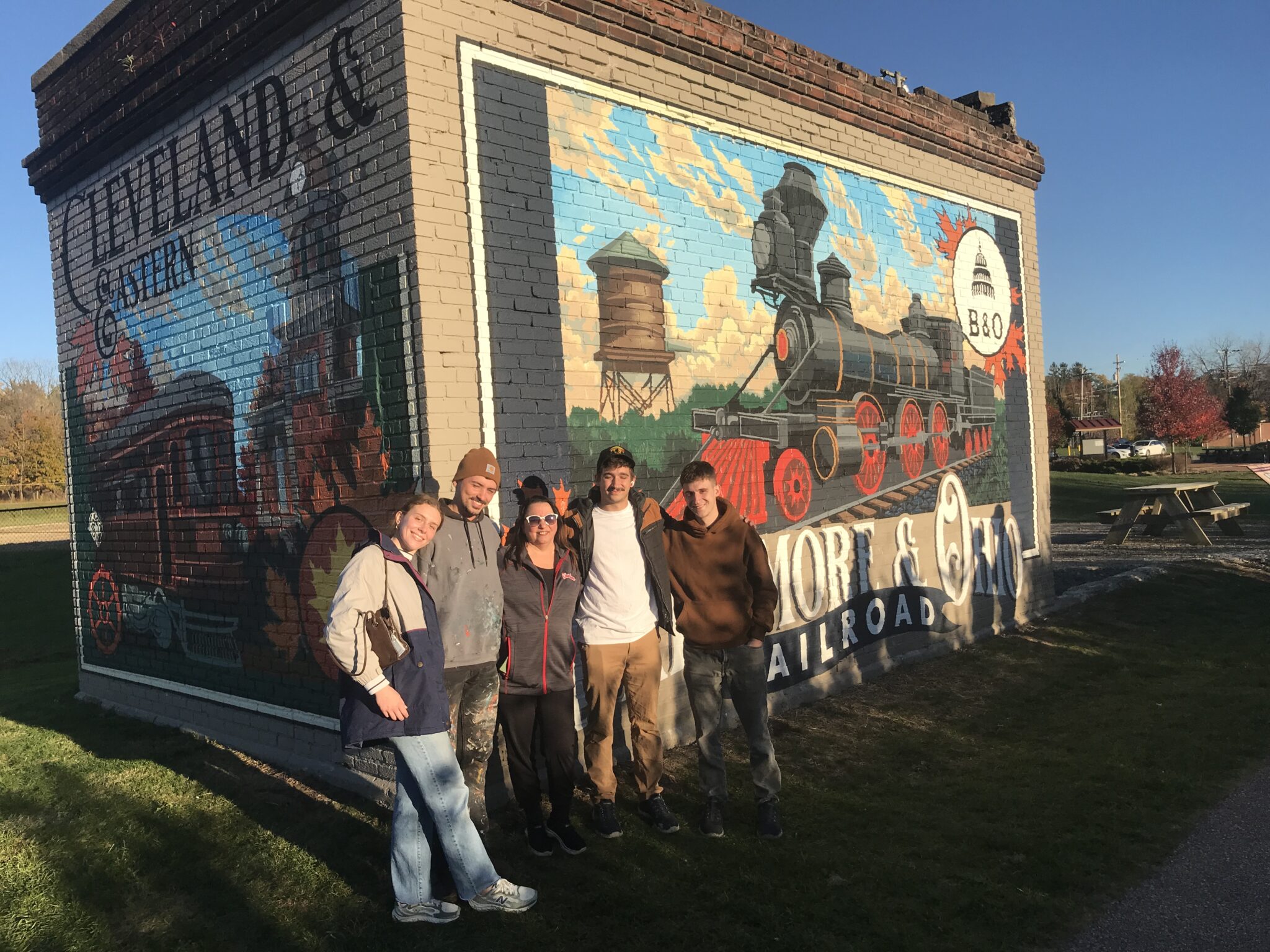
Chardon City employees and community members gathered Oct. 28 to officially commemorate local artist Elliot Miller’s completion of three murals on the building that once supplied water to trains passing through the city.
Miller’s signature was still drying in the bottom corner of the mural’s west-facing facade as Chardon Mayor Chris Grau dedicated the artwork, a culmination of many years of planning.
“It reminds us of Chardon’s industrial and transportation past,” Grau said.
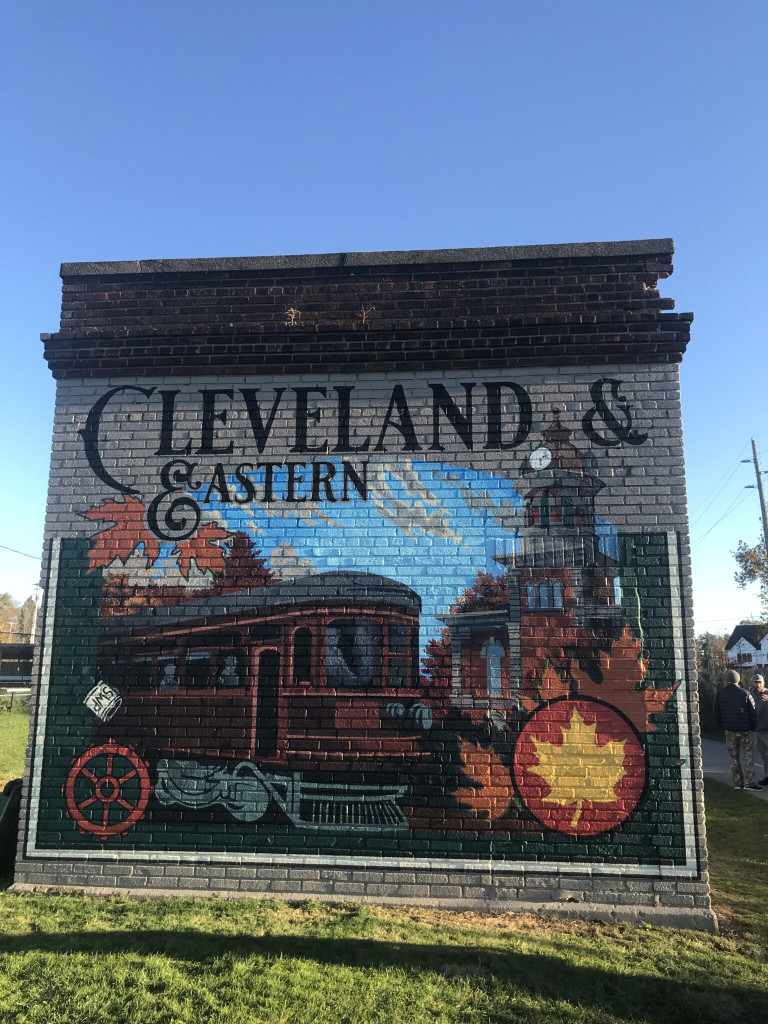
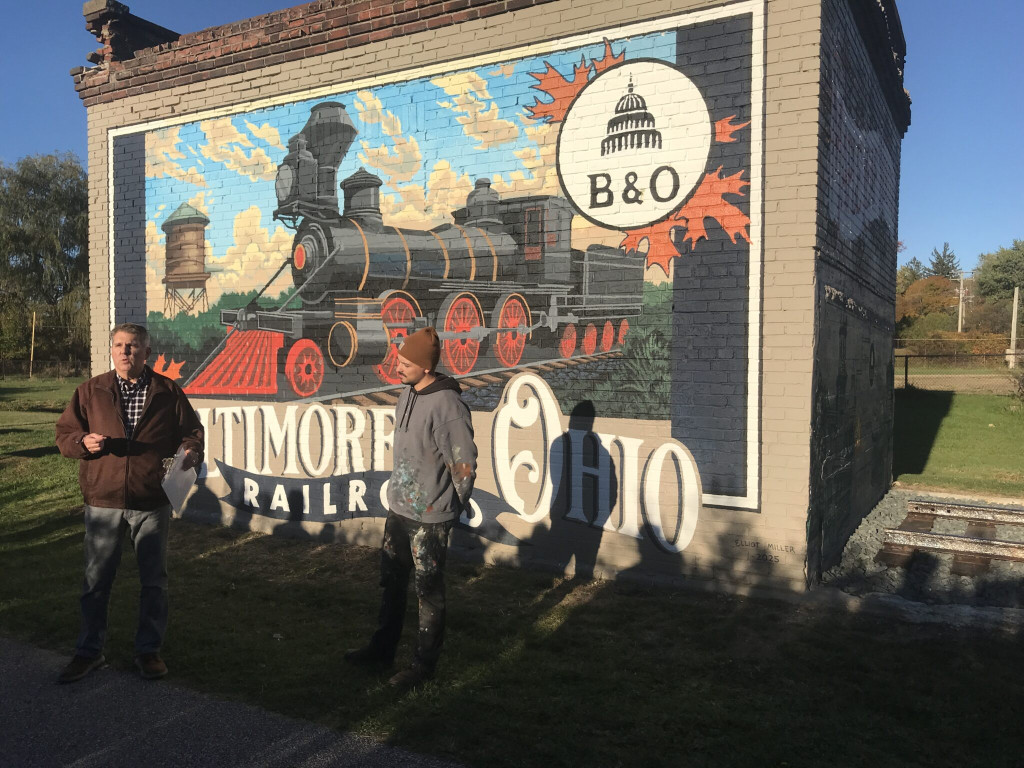
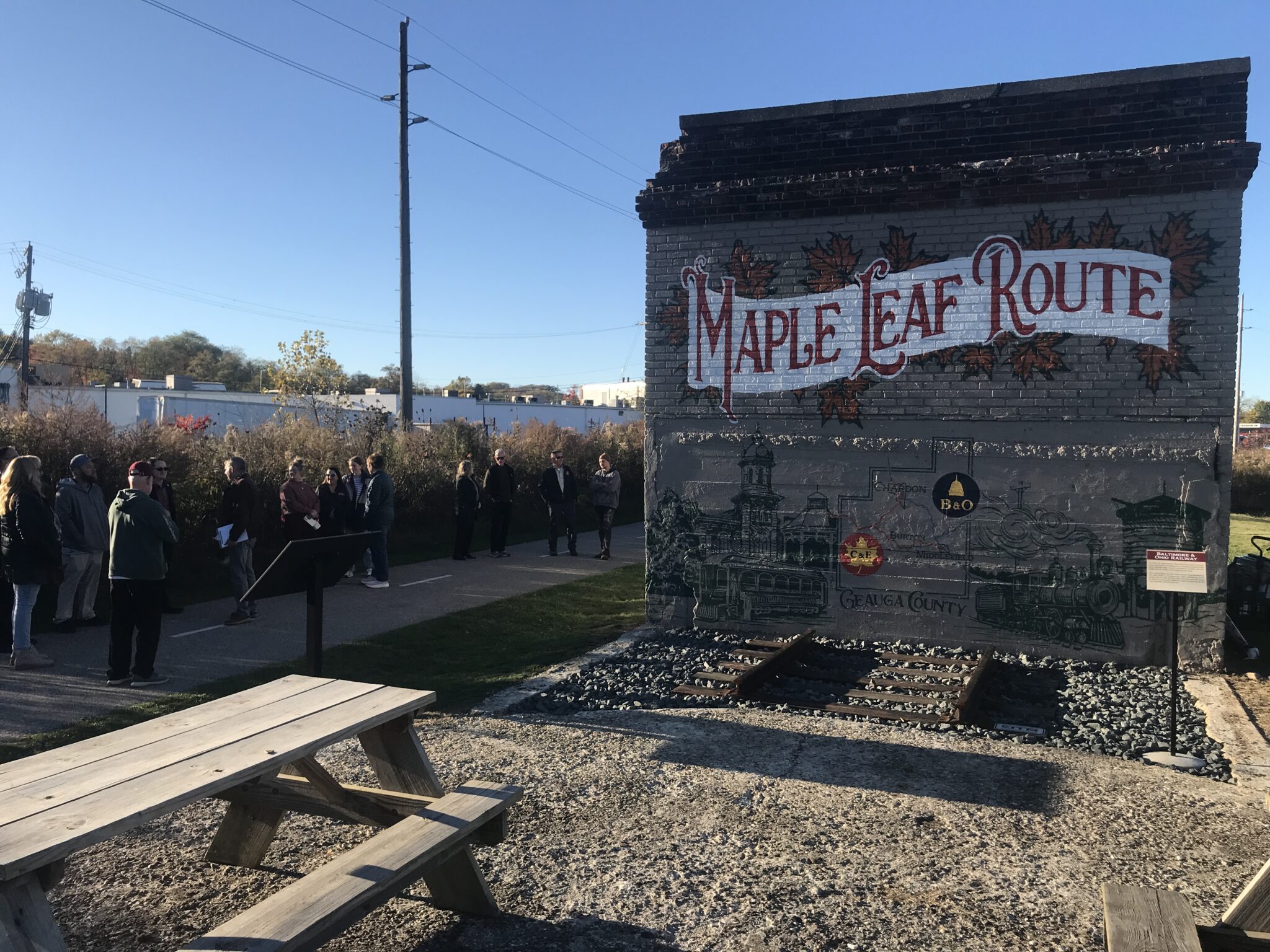
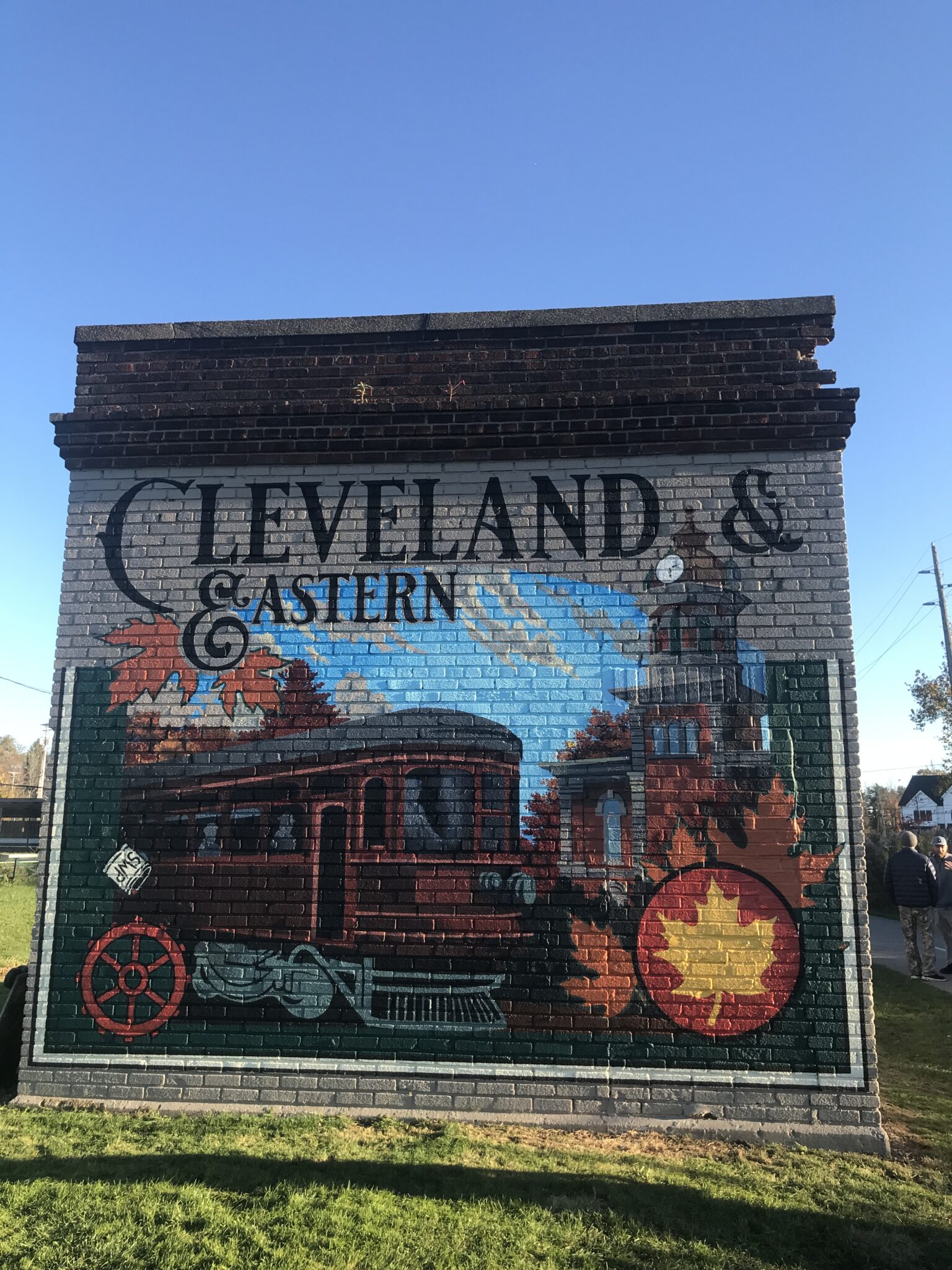
The murals depict images of the Baltimore & Ohio Railroad and Cleveland & Eastern Interurban line that once crossed Northeast Ohio and connected Chardon to destinations throughout the region.
The building displaying the images — located on the Maple Highlands Trail between South Hambden Street and Park Avenue — once contained the tanks that supplied water to the steam engines that passed through Chardon, Grau said.
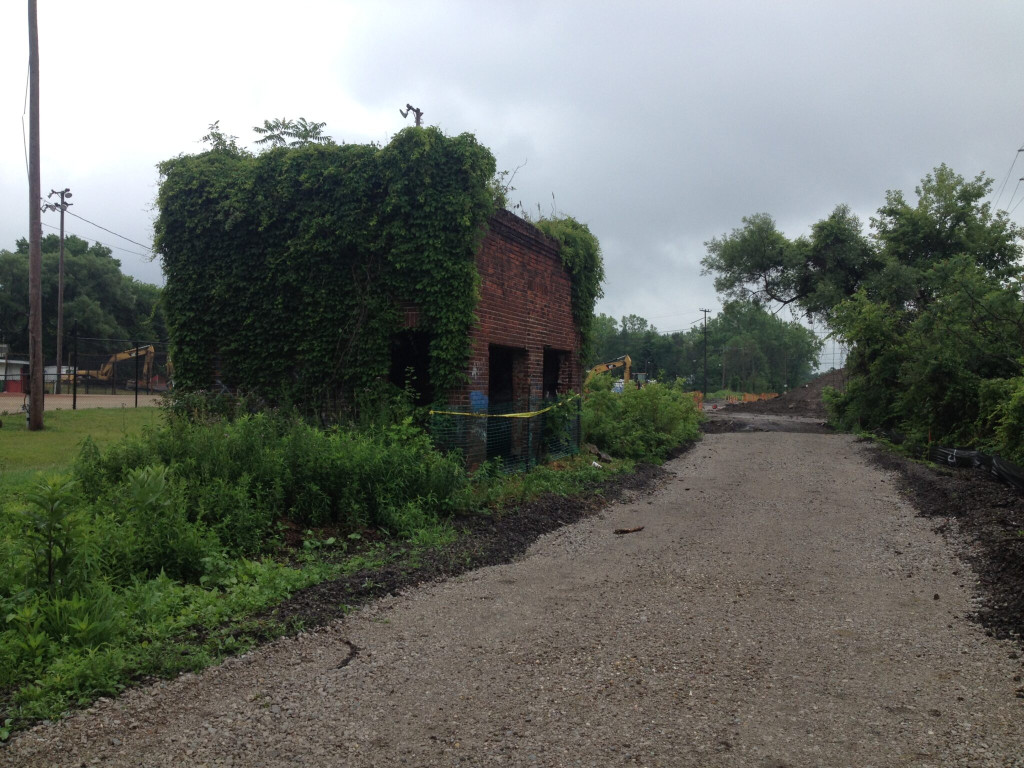
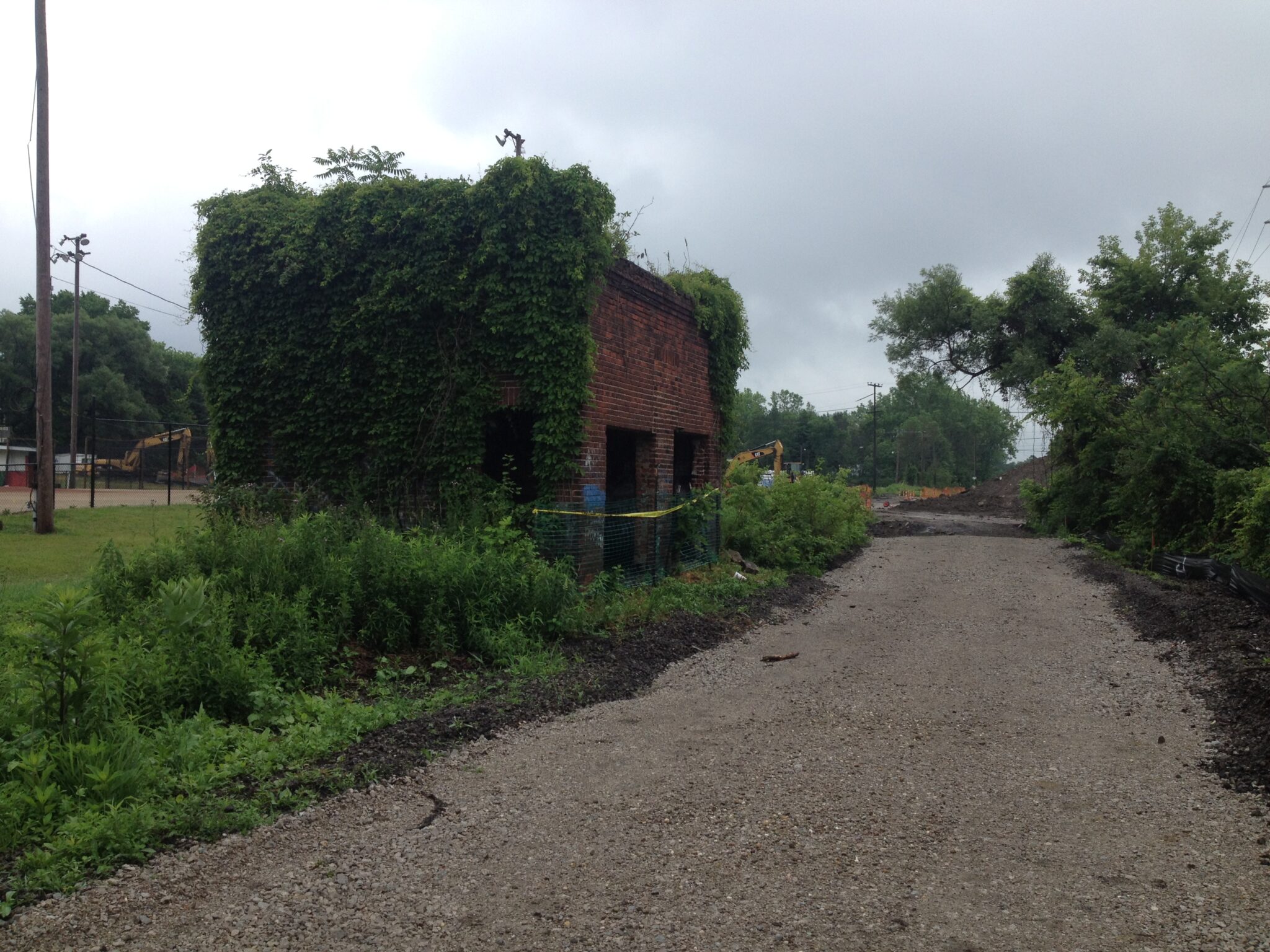
With the removal of Chardon’s rail system over 50 years ago, the building had fallen into disrepair, Grau said, adding the murals are just one portion of a larger project to highlight the city’s past as a rail hub and connect it to its current life.
“This all started six, seven years ago, when we had a meeting on the porch of my house,” Grau said to the crowd. “This building was in a horrible state of disrepair. It was open to the elements, there was graffiti, ivy climbed over the entire building.”
In collaboration with local stakeholders — including Adam Rogers, recreation director for the city of Chardon, and former City Manager Randy Sharpe — the group began a plan to revitalize the existing structure through public art.

“We had a structural engineer come out and start to formulate ideas of what could be done with the building,” Grau said. “That led to, we’re just going to close it up, clean it up and prepare it so that someone like Elliot could showcase his talents here. Which is something that he has done, and Elliot, it really is just incredible. We want to thank you.”
In a follow-up email, Rogers described the project “as a true community effort — the Chardon Rotary Club generously funded the south-facing mural, while Chardon City Council provided funding for the other two murals.”
He added, “The goal was to both celebrate Chardon’s railroad history and create an artistic landmark that connects our city’s past with its vibrant present.”
Today, “The Water House” serves as a canvas for public art that connects the community’s history with its creative future, Rogers said.
In paint-splattered clothes, Miller received the community’s congratulations last Tuesday, but admitted he has not fully grasped the project’s completion.
“It did feel like there were a bunch of people standing in my bedroom because I just spent so much time here,” Miller said after the ceremony.
Miller estimated he spent a “few hundred hours” designing and painting the murals, which covered approximately 960 square feet.
Miller began the project in the winter of 2024.
“I was very excited, but definitely knew it was going to be a lot and even knowing it was going to be a lot, it was even more than I expected,” he said. “I got the designs ready. We agreed to do it in the winter before last summer, so I had the winter and spring (of 2024) to think it up, figure it out and get ready.”
Miller expected the building’s surface to be a major challenge.
“I knew the mortar would be a big problem. Usually, if I am drawing something, I can do everything in a nice continuous stroke and things go on nice and easy,” he explained. “But this is like trying to spread butter on a pancake versus a waffle. This is a waffle. Just how deep this mortar is made it difficult, it just takes five times as long to get anything done.”
Miller collaborated with local historian and author Dan Rager via email to discuss his ideas.
“I then went to the library to get some better pictures of the old steam engine and then just by scavenging the internet and looking at those books, I was able to pull together what I thought was important to put on the wall,” Miller said. “Everything was drawn beforehand and then made really big.”
Miller spent the past two summers creating the artworks, a challenging undertaking. He received help from the Chardon Lands and Buildings Department, which primed the walls, brought ladders and kept the lights on.
His girlfriend, Lou Piotrkowski, was also a source of support, he said.
“I’d have some long, lonely days here, I’d be painting, and it was always really nice to see her pull in and walk over,” Miller said. “It would take me out of the moment, which was really nice. I’d need those breaks. She’d bring me a coffee or a sandwich, pat me on the head and make sure I was OK.”
Piotrkowski also took the opportunity to step back and admire Miller’s efforts last week.
“I feel a sense of relief for Elliot,” she said. “It was a very large project and ended up being a lot more than he was expecting just because the brick and the material made the paint take more time to set in and look nice. I’m proud of him. It’s a nice addition to Chardon, commemorates the steam engine and its whole history.”
Marie Miller, Elliot’s mother, who was also in attendance, called the mural beautiful.
“I’m very proud of Elliott and very relieved for him that it’s finally finished because it was a big undertaking with the brick being so rough and not a smooth surface,” she said, echoing Piotrkowski. “It took a lot longer than he anticipated.
Rogers commended Miller for bringing “both vibrancy and historical storytelling to the space.”

“Elliot’s artistic vision captures Chardon’s railroad past while inviting residents and visitors to engage with the trail in a new and meaningful way,” he said. “His attention to detail and creative use of color have truly transformed ‘The Water House’ into a community landmark.”
People’s expressions of gratitude for his work is what always stays with him, Miller said.
“(Thank you) is not your typical comment, but it means a lot to me,” he said. “It makes me realize that people really care and appreciate it. For a lot of people, it (this building) is part of their regular day, so it’s cool to take something like an old rickety building and make it something that people appreciate and see. (Seeing the murals) definitely changes subconsciously what you’re thinking of when you’re on your walk.”
Grau and Rogers both see the project as part of a continued effort to connect Chardon’s past to its future.
“I love talking to people about the railroad that used to come right through Chardon,” said Grau in a follow-up interview. “As a young kid, we were used to seeing the train come right through the middle of Chardon. Traffic would stop, the train would come through, you felt energized by that. I am very glad that’s not happening today, but back then, as a kid, it was amazing.”
The murals are part of a public works project that include signs with information and photos that describe Chardon’s railyard, the mayor said.
“There used to be up to 14 tracks adjacent to that water infiltration house building,” he said. “They would come in, park, exchange passengers, equipment and materials. It was a very active hub that not only brought people, but jobs and commerce.”
Roger added in a followup email, “The murals are part of a broader community effort to blend public art, history and outdoor recreation, all key elements of what makes Chardon such a special place to live and visit.”