3 Candidates Vie for Juvenile/Probate Judge Seat
Three candidates are competing in the May 5 Primary Election to become the next Geauga County Juvenile/Probate Court judge. They are Stephanie Heibertshausen Anderson, Kat Jacob and Abbey King Mueller. Below are their responses to the Geauga County Maple Leaf candidate questionnaire.

Three candidates are competing in the May 5 Primary Election to become the next Geauga County Juvenile/Probate Court judge. They are Stephanie Heibertshausen Anderson, Kat Jacob and Abbey King Mueller. Below are their responses to the Geauga County Maple Leaf candidate questionnaire.
Stephanie Heibertshausen Anderson
Age: 45
Current Occupation/Employer: Attorney and Business Owner/Anderson Legal Services, LLC
Education: B.A., Miami University; J.D., Cleveland State University College of Law
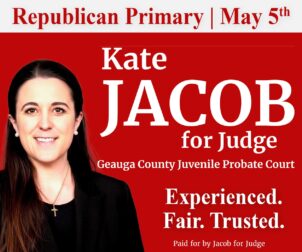
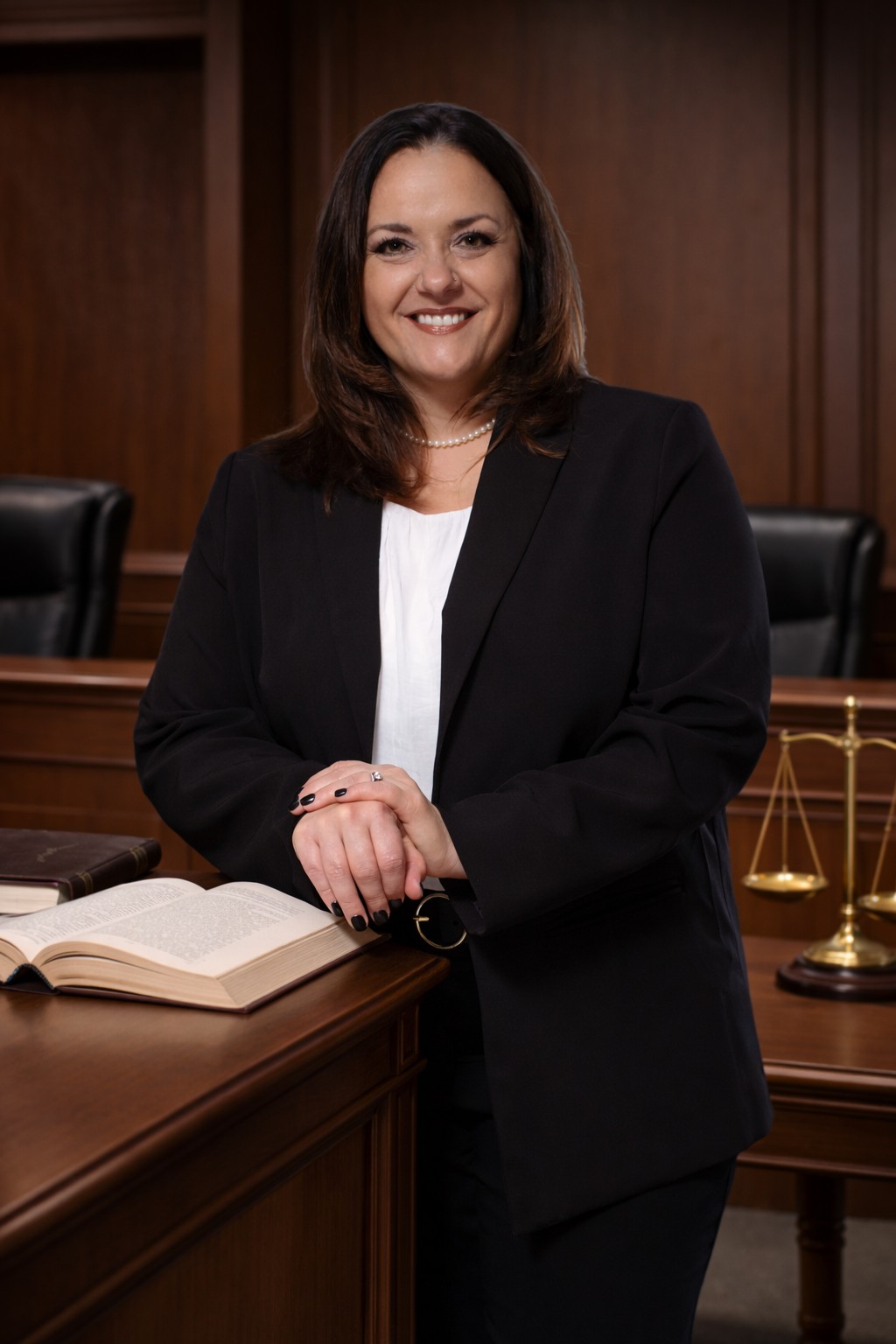
Kate Jacob
Age: 39
Current Occupation/Employer: Attorney working as Chief Compliance Officer & Administrator of the Geauga County Auditor’s Office
Education: J.D. from the Case Western Reserve University School of Law; M.A. from the Johns Hopkins University; B.A. from the Johns Hopkins University
Abbey King Mueller
Age: 43
Current Occupation/Employer: Magistrate — Geauga County Probate/Juvenile Court
Education: Bachelor of Arts (Social Work) – University of Montana; Juris Doctor – University of Akron School of Law
- Legal Background
- Please describe your legal background, including your primary areas of practice and experience in probate or juvenile court.
- List any awards or honors you have received; the date(s) you were admitted to the bar of any state and any lapses in membership, and all courts in which you have been admitted to practice, including the dates of admission and any lapses in membership; and list all bar associations or legal or judicial-related committees, selection panels or conferences of which you are or have been a member.
- Are you currently serving or have you served as a judge or magistrate?
- Are you currently engaged in the practice of law? Explain. If you are NOT currently engaged in either the practice of law or serving as a judge or magistrate, please explain how your current and past work is relevant to your performance in the judicial office you seek.
Heibertshausen Anderson: I currently own and operate a solo family law practice where I represent parents and children in divorce, custody, and juvenile matters. My practice focuses on helping families navigate some of the most difficult moments of their lives, and my cases often involve allegations of domestic violence, abuse, neglect, and other high-conflict custody disputes, as well as representing survivors of domestic violence in their protection order hearings. In my private practice, I am frequently in juvenile court, representing families in private custody cases, defending children in delinquency matters, and defending families accused of abuse, neglect, and dependency.
Previously, I was a prosecuting attorney for 14 years between Cuyahoga County, the Ohio Auditor of State and the Attorney General’s Office. When I worked for Cuyahoga County, I prosecuted abuse, neglect, and dependency matters, juvenile delinquencies, and, ultimately, violent felony offenses. I was a special prosecutor for the Ohio auditor, prosecuting public officials for theft in office and other ethics-related offenses.
I served as an officer in the Air Force for 12 years as an assistant judge advocate general in the Ohio Air National Guard, preparing estate plans for service members prior to deployment.
I’m admitted to practice in the State of Ohio (2006), the Air Force Court of Appeals (2011), and the Court of Appeals for the Armed Forces (2011).
I’m a member of the Geauga and Cleveland Metro Bar Association.
Jacob: My trial-tested legal experience and administrative expertise uniquely prepare me to lead the juvenile probate court with the ethics, fairness and fiscal responsibility our community deserves. I am currently engaged in the practice of law, serving as the chief compliance officer and administrator for the Geauga County auditor. My job involves navigating contract, property, fiscal and employment law, as well as government ethics and budgetary oversight.
My experience as Geauga’s juvenile court prosecutor provided me with a deep understanding of the judge’s role in protecting and supporting children and families. Later, as an assistant Geauga County prosecutor in the civil division, I was legal counsel for Geauga’s courts — including the juvenile probate court — as well as county agencies and townships.
Beyond my primary roles, I am honored to have been elected by my peers as the treasurer of the Geauga County Bar Association, reflecting my commitment to the legal profession in our community. I previously served a term as the bar association’s secretary, chair of its courts committee and chair of its grievance committee. I was admitted to the bar in May 6, 2013, and to the U.S. District Court, Northern District of Ohio on Jan. 3, 2018. Further, I volunteer with Legal Aid providing pro bono legal advice to low-income clients.
King Mueller: I served as a law clerk for the Geauga County Prosecutor’s Office from 2008 through 2011 while I attended law school. Upon passing the Ohio Bar Exam, I then became an assistant prosecutor for the Geauga County Prosecutor’s Office and served in that capacity until 2018, when I was appointed as a magistrate for the Geauga County Probate/Juvenile Court. During my time as an assistant prosecutor, I handled a variety of matters including civil, criminal, and appellate; however, the core of my work was representing Geauga County Job & Family Services prosecuting child abuse, neglect, and dependency cases in Juvenile Court; and adult protective services cases in probate court.
Since January 2018, I have served as a magistrate for the Geauga County Probate/Juvenile Court. I handle a wide range of matters across both divisions, including unruly, delinquency, traffic, child custody, child support, and child abuse, neglect, and dependency cases in juvenile court; and estate administration, involuntary civil commitment, guardianship, adoption, and adult protective services cases in probate court.
Ohio Bar: admitted November 2011- Current status: active/in good standing since admission in November 2011; U.S. District Court – Northern District of Ohio: admitted 2012; member of the following: Ohio State Bar Association – joined 2015 (estimated); Geauga County Bar Association – joined 2018; Ohio Association of Magistrates – joined 2018; Ohio Supreme Court Faculty Presenter.
- Relevant Case Experience
- What experience have you had handling estates, guardianships, adoptions, juvenile delinquency cases, custody disputes or abuse and neglect matters?
Heibertshausen Anderson: I have significant, recent experience in handling juvenile-related matters. I am currently representing individuals in approximately 25 custody-related matters in juvenile and domestic relations courts across northeast Ohio. Of those cases, two are abuse, neglect, and dependency cases. I’ve also had the opportunity to work with parents in adoption cases.
I’m the only candidate who has prosecuted and defended parents in abuse, neglect, and dependency cases, and prosecuted and defended juveniles in delinquency matters. Now approximately half of my custody clients are involved in private custody cases in juvenile courts.
Recent and significant courtroom experience matters. A person who has not handled a case in eight years will not have the same legal knowledge as one who currently practices in court.
Jacob: As Geauga’s juvenile court prosecutor, I handled hundreds of juvenile delinquency and unruly cases, as well as adult contributing cases. Unfortunately, many of those cases involved or resulted in custody disputes; or abuse, neglect and dependency matters.
In my current role as chief compliance officer, I bring a sophisticated layer of administrative expertise to the table. My work with the auditor’s property division often involves navigating complex estates, trusts, and guardianship matters. I have seen firsthand how legal issues in the probate court impact property rights and fiscal stability.
Furthermore, my commitment to this field extends into my volunteer work. I serve on the Bar Association’s Advanced Directives Committee assisting seniors, and on Legal Aid cases involving probate matters.
King Mueller: I have been serving as a magistrate for the Geauga County Probate/Juvenile Court since January 2018. For the past eight years, I have handled a wide range of matters across both divisions, including unruly, delinquency, traffic, child custody, child support, and child abuse, neglect, and dependency cases in the juvenile division; and estate administration, involuntary civil commitment, guardianship, adoption, and adult protective services cases in the probate division. Prior to becoming a magistrate, I served as an assistant prosecutor for 6 years during which time I primarily represented Geauga County Job & Family Services prosecuting child abuse, neglect, and dependency cases in juvenile court; and adult protective services cases in probate court.
- Why Are You Running for Office?
- What motivated you to seek the position of Geauga County Juvenile/Probate Court Judge?
Heibertshausen Anderson: Someone I love was abused as a child, and I saw how that trauma impacted them. No family should ever have to endure that. Over nearly two decades as a prosecutor, JAG officer, and family law attorney, I’ve seen families thrive when the system works — and the harm caused when it doesn’t.
Those experiences drive my belief that juvenile and probate court should provide stability, accountability, and a clear path forward. Strong families create better outcomes for children, and the court plays a critical role in that process.
This role requires more than good intentions — it requires real courtroom experience.
Jacob: My commitment to Geauga County is rooted in a 15-plus-year career of service and professional accountability. I have spent my career working alongside our community’s leaders first as a prosecutor in the courtroom, and later as an administrator and compliance officer working to ensure our county’s systems operate with fiscal integrity and transparency.
My goals are founded on the principles that have guided my entire career: commitment to transparency, responsible stewardship of public resources, and fair and impartial application of the law. Geauga County deserves a court led by someone with a proven track record of upholding these standards.
King Mueller: In simple terms, I am seeking this position so I can help people, and serve the community in a greater capacity. I have devoted my entire career to public service, and specifically, helping children and families involved in the court system. I have served as the court’s magistrate for the past eight years. The children and families of Geauga County deserve a judge who is prepared and equipped to lead the court. The cases that come before the court involve emergencies, family crises, and life-altering decisions that demand a judge with judicial experience, sound judgment, and a proven commitment to this work.
- Judicial Philosophy
- How would you describe your judicial philosophy and approach to applying Ohio law?
Heibertshausen Anderson: My judicial philosophy is grounded in applying Ohio law as written, with fairness, consistency, and a clear focus on the best interests of children. The law provides the framework, and it’s the judge’s responsibility to apply it faithfully, without bias, outside influence, or personal agenda.
My approach is practical and disciplined. I will ensure that every party is heard, that decisions are based on complete and accurate information, and that the reasoning behind those decisions is clear and transparent. I will ensure that cases are decided swiftly. Families deserve consistency, predictability and finality from the court.
At the same time, I recognize that these cases involve real people facing difficult circumstances; I will apply the law with both firmness and compassion.
Jacob: My judicial philosophy is rooted in judicial restraint. A judge’s role is that of a neutral arbiter who interprets and applies the law as written; not an advocate legislating from the bench.
Every party to a case deserves an impartial judicial officer. As stated in In re Murchison (1955), “[a] fair trial in a fair tribunal is a basic requirement of due process.” Decisions must be dictated by evidence, not by personal politics or biases.
In the juvenile probate court, where cases are often deeply personal, consistency and predictability are essential to providing families with stability and justice. By strictly adhering to the law, the court under my stable leadership would focus on protecting the vulnerable and upholding the public’s trust.
King Mueller: My judicial philosophy is rooted in judicial restraint. I believe the role of the probate/juvenile court judge is to resolve specific cases and controversies, not to create social policy. I believe the law should be applied as written, and the court should interpret the laws, not make the laws. The law should be applied in a neutral, fair, and consistent manner with due regard to protecting the rights of all parties while prioritizing the best interest of children and vulnerable adults.
- Qualities of a Good Judge
- What qualities are most important for a judge serving families, children and vulnerable adults?
Heibertshausen Anderson: I’ve practiced in front of dozens of judges across the state of Ohio. The best judges are the ones with recent courtroom experience. They have intimate familiarity with the law and the rules of evidence and can preside over cases without relying on attorneys to guide the process. In addition to experience, a good judge must know how to balance fairness with compassion. They must be patient, prepared, and willing to listen, while making timely, well-reasoned and legally-sound decisions. Integrity and independence are essential. A good judge ensures every party is heard and that decisions are consistent, transparent and grounded in the law.
Jacob: The most vital qualities for a judge serving Geauga County’s families and vulnerable adults are integrity, temperament and administrative experience.
Our next juvenile probate judge must possess the integrity to apply the law impartially, ensuring every person is treated with dignity. Temperament is equally critical; in the emotionally charged environment of juvenile and probate matters, a judge must be a calm, patient, and steady presence. Finally, administrative experience is essential to ensure cases are resolved efficiently. Justice delayed is justice denied, especially for children and vulnerable adults in need of stability and protection.
King Mueller: I believe a judge serving families, children, and vulnerable adults must be patient and empathetic, yet firm and consistent. Such a judge must demonstrate humility, fairness and neutrality. This judge must have an understanding of the widespread impact of trauma on people, and how it can shape behavior. This judge must utilize a collaborative approach to working with families, and have sensitivity to diverse family structures. This judge must be pragmatic. The probate/juvenile court judge must shepherd families through difficult situations while providing a strong, stable and firm environment where problems are resolved.
- Probate Court Issues
- The Geauga County Probate Court oversees estates, guardianships, adoptions and certain mental health matters. Which of these areas requires the greatest attention in Geauga County and why?
Heibertshausen Anderson: Guardianships and mental health civil commitments require the greatest attention because they directly impact the safety, autonomy, and dignity of our most vulnerable residents. These cases involve significant restrictions on personal liberty, so careful, timely judicial oversight is essential. The court must ensure decisions are based on clear evidence, due process is followed, and individual rights are not unnecessarily limited. With an aging population and increasing mental health needs, the risk of neglect, exploitation, or delayed intervention grows. Prioritizing thorough reviews, accountability, and coordination with treatment providers protects individuals in crisis and those unable to protect themselves.
Jacob: While every area of the probate court is vital, guardianships require our most urgent focus. This priority is deeply personal to me: My family spent decades navigating the guardianship process in this very court. I have personally experienced the emotional weight and logistical hurdles these cases place on families.
With Geauga’s growing senior population, I believe that we must treat guardianship with the highest level of care and moral obligation. As your judge, I will apply my experience as chief compliance officer to implement rigorous financial oversight, safeguarding seniors from exploitation and neglect. My goal is to provide every family with the same stability and compassion my family sought — protecting the dignity and assets of our most vulnerable, with the efficiency and integrity they deserve.
King Mueller: Mental health matters require the most attention. Mental health issues are prevalent across the probate and juvenile divisions. There is a lack of available and accessible mental health services and psychiatric care. The waitlists for initial assessments are long. The waitlists for services after completion of the initial assessments can be even longer. There are not enough counselors available to serve the needs that exist in our county. People often present to the court with acute psychiatric issues that must be addressed immediately; but the reality is these issues are not adequately addressed. Receiving the necessary mental health care is something that undoubtedly helps maintain stability in a family, and maintain a juvenile in his/her home thereby avoiding placement in residential treatment.
- Protecting Seniors and Vulnerable Adults
- Financial exploitation of seniors and vulnerable adults has become a growing concern. What safeguards should courts use to protect these individuals?
Heibertshausen Anderson: Under Ohio law, probate judges can appoint guardians and require them to file detailed annual accountings — creating a paper trail that exposes mismanagement early. When full guardianship isn’t necessary, conservatorship preserves the person’s autonomy while still protecting their assets.
Courts can void powers of attorney obtained through fraud or undue influence, and issue emergency orders to freeze assets the moment exploitation is suspected — before the money disappears. Guardians ad litem serve as the court’s eyes and ears, investigating suspicious financial activity and reporting directly to the judge.
Proactive docket monitoring allows probate courts to identify at-risk individuals early — those who are isolated or cognitively declining — and intervene before serious harm occurs.
Jacob: Protecting our seniors from financial exploitation requires a proactive, trust but verify approach. My background as chief compliance officer has taught me that transparency is the best deterrent to abuse. I will go beyond rubber-stamping accounts and conduct thorough, auditor-level reviews of financial reports to spot irregular patterns early. I also believe in strengthening the vetting process for prospective guardians to ensure high ethical standards. Further, having spent my career working for and with the county prosecutor, I won’t hesitate to report red flags for review.
Financial exploitation often happens in the dark. Having experienced a guardianship with my own family, I believe that guardianship is a sacred public duty and that the court must be a vigilant watchdog for Geauga County’s seniors.
King Mueller: It is essential for the probate court to maintain strict oversight of fiduciaries, guardians and conservators by mandating the filing of regular detailed financial accounting in estate administration, guardianship, and conservatorship matters. The court must have an internal procedure in place to conduct a thorough review of the accounting to verify the funds spent were authorized by the court, and the expenditures were for legitimate purposes for which proper verification and receipts are provided. The court’s local rules should set forth the filing requirements for the accounting in these various matters. It is equally as essential that the probate court have the ability to provide court-appointed legal representation, emergency guardians, and neutral third-party fiduciaries when necessary.
- Juvenile Justice Philosophy
- How should the juvenile court balance accountability with rehabilitation for young offenders?
Heibertshausen Anderson: Juvenile court must balance accountability with the scientific reality that adolescent brains aren’t fully developed until age 25. The prefrontal cortex, which governs impulse control and decision-making, is still maturing. Although young offenders are culpable, they’re more capable of change than adult offenders.
Early intervention is critical. Programs that respond swiftly with targeted services dramatically reduce recidivism. Diversion programs, community-based sanctions, and trauma-informed treatment address root causes rather than simply punishing symptoms.
Leniency is not the goal. Accountability remains essential; young people must understand that actions carry consequences. But accountability looks different with kids — family engagement and other tools are more powerful than detention.
Jacob: My philosophy on juvenile justice is informed by years of experience as Geauga County’s Juvenile Court prosecutor. I have stood in that courtroom and seen firsthand that while every child’s situation is unique, Geauga’s values of accountability, hard work and respect remain constant.
True accountability involves restorative measures like restitution and community service, ensuring youth understand their duty to victims and our community. As chief compliance officer, I believe in results, not just process. My goal is to ensure that court programs are both effective and compassionate. By addressing the trauma and hurdles children face, we can provide them with a roadmap that helps turn a difficult moment into a foundation for lifelong success.
King Mueller: Barring extreme circumstances, decisions made in juvenile court should be tailored to the specific needs, circumstances, and social history of the juvenile rather than on the offense itself. The court should apply a trauma informed and collaborative approach to understand why the juvenile is exhibiting delinquent behavior. The goal is to address the root of the problem because delinquency does not occur in a vacuum; it is usually a product of the juvenile’s past experiences and family dynamics. One of the guiding principles of juvenile justice is that juveniles must be treated differently than adults due to their age and developmental status. The court should first seek to rehabilitate and reform behavior by providing services and support rather than solely focusing on punishment.
- Youth Mental Health and Substance Abuse
- What role should the court play in addressing youth mental health issues and substance abuse?
Heibertshausen Anderson: The court plays a critical role in breaking the cycle that turns juvenile offenders into adult offenders. We can’t just punish behavior — we have to address what’s driving it. That means identifying mental health and substance abuse issues early, connecting families with services, and holding youth accountable in a way that promotes change. Done right, the court becomes a turning point, not a stepping stone to future involvement in the system.
Compassionate and accountable justice can change the trajectory of a family. Our county is blessed with a tremendous community of treatment providers; the next judge needs to leverage their power.
Jacob: From my years as Geauga’s juvenile prosecutor, I know that substance abuse and mental health struggles are often behind delinquency. The court should provide a disciplined, evidence-based framework that addresses these root causes before they lead to adult incarceration.
Leveraging my compliance background, I will oversee the court’s programs to ensure they are delivering measurable results for Geauga families. By combining firm accountability with a structured path toward healing, we can provide our youth the tools they need to overcome trauma and grow into healthy, responsible adults.
King Mueller: The court should act as a rehabilitation-focused entity and prioritize diversion programs, interagency collaboration, and family involvement. Whenever possible, juveniles should be diverted from the formal court process, and linked with community-based treatment programs. If formal court intervention occurs, the court should apply a multidisciplinary approach by bringing together the family and various community agencies involved with the juvenile and family to create an individualized treatment plan. When necessary, the court should provide probation, electronic monitoring, and/or drug testing for juveniles.
- Preventing Juvenile Crime
- How should the court work with schools, social services, and law enforcement to prevent juvenile crime?
Heibertshausen Anderson: The court has a responsibility to bring the right people to the table. Schools, social services, and law enforcement each have insight into the issues that a family is facing. By coordinating those efforts, the court can focus on the root of their issues rather than the symptoms. I also believe in strong communication and accessibility. Families need to understand the process and feel connected to available resources. Early, coordinated intervention gives families a real chance to stabilize, improves outcomes for children, and helps prevent deeper involvement in the system.
If I am elected, I will foster those relationships.
Jacob: Prevention begins with collaboration, not isolation. Having served as a juvenile prosecutor, I understand that the court is most effective when it acts as a hub for Geauga’s schools, law enforcement and social services.
With nearly 16 years of working with- and for those entities, I am uniquely situated to foster a culture of information-sharing. By coordinating a unified response, we can facilitate disciplined, local solutions that address root causes and better help youth. Together we can build a Geauga-strong network of agencies working together to uphold accountability & guide our children toward becoming responsible, productive adults.
King Mueller: It is important for the court to build and maintain community partnerships with schools, which would enable the court to resume providing community outreach education in the school setting designed to address mental health and substance abuse issues in an age-appropriate manner. The court should continue to grow its partnership with Geauga Family First Council. Communication between the court and community-based treatment agencies is essential to the success of diverting youth from the formal court process. The court should bring local leaders together periodically to identify service gaps and develop strategies to address these needs.
- Geauga Park District
- Under Ohio law, a probate court judge plays a crucial role in governing local park districts. Explain what your oversight style with respect to the Geauga Park District would be.
Heibertshausen Anderson: Under Ohio law, the probate judge’s role with respect to the park district is limited to appointing commissioners, and I will respect those boundaries. My approach is straightforward: appoint qualified commissioners from diverse backgrounds who value accountability, transparency, and responsible stewardship of our natural resources.
Beyond those appointments, my involvement will be minimal. The board — not the judge — runs the park district. However, I will ensure that commissioners are fulfilling their legal obligations. That includes transparent and accountable budgeting, orderly and professional meetings, and meaningful opportunities for public input. The public deserves to understand how decisions are made and to have a voice in them.
The park district should operate for the benefit of everyone.
Jacob: The probate judge is responsible for appointing commissioners to Geauga’s R.C. Chapter 1545 park district boards. My oversight will be defined by transparency, merit-based appointments and fiscal rigor, drawing directly from my career spent protecting Geauga’s interests.
As an assistant prosecutor, I worked closely with township clients on park matters, including in forming a new district. Later, at the auditor’s office, I navigated complex fiscal and legal issues facing Geauga’s park districts. My unique background and institutional knowledge gives me a deep understanding of both legal compliance and taxpayer value. I am committed to appointing park commissioners who uphold the highest legal and ethical standards, ensuring our natural resources remain professionally managed and preserved for the long term.
King Mueller: I believe the probate court judge’s role is to appoint commissioners, not to dictate the policies or operations of the park board. If elected, I will appoint the most qualified candidates to ensure the park board is comprised of competent and equipped individuals who will govern the park board in accordance with the applicable rules, regulations and bylaws.
- Park District Appointments
- The Probate Judge appoints members of the Geauga Park District Board of Park Commissioners, whose mission is to conserve and protect natural resources while providing recreation and education. What qualifications and philosophy would you look for in commissioner candidates to ensure the board maintains the proper balance between environmental conservation and public use of the parks?
Heibertshausen Anderson: I will appoint commissioners with diverse backgrounds (i.e., accounting, recreation, conservation, etc.), sound judgment, and a commitment to accountability, transparency, and stewardship of our natural resources. They must understand the need to balance conservation with responsible public use so our parks remain protected but accessible to families. Decisions should be data-driven, lawful, and focused on long-term sustainability, not special interests or pet projects.
Jacob: Our park commissioners should possess a passion for conservation, and a commitment to ethics and fiscal transparency. To that end, my oversight of the Geauga Park District will center on professionalizing the appointment process through transparency. To modernize the process, I will make commissioner applications available online, and publish formal notices in local newspapers and digital platforms to reach a diverse pool of talent.
Additionally, I will form a selection committee of local experts to review candidates. Prospective commissioners will complete a questionnaire detailing their views on issues including their commitment to (1) public comment, (2) the highest ethical standards, (3) bringing park IT and fiscal services back under the County to save taxpayer money and increase accountability. This rigorous, public-facing process will help ensure that our 1545 park boards are comprised of responsible stewards dedicated to protecting our parks.
King Mueller: I believe the park board should consist of commissioners with diverse professional backgrounds who possess the specialized knowledge and skill sets necessary to best serve the park district.
- Do you believe public comment should be allowed at park district board meetings?
Heibertshausen Anderson: Yes, public comment should be allowed at board meetings. Transparency and public input are essential to good governance, and the community deserves a voice in how the parks are managed.
Jacob: Candidate did not address.
King Mueller: I believe public comment should be permitted at park board meetings. I believe the public comment should follow the same format in place for the county commissioner meetings.
- Are there any programs or activities, e.g., hunting and trapping, you would like to see discontinued or modified? Explain.
Heibertshausen Anderson: As for specific programs, my role is not to dictate policy. I would expect commissioners to evaluate activities like hunting or trapping based on law, safety, conservation goals, and community input. The focus should always be on balance, safety and preserving the parks for future generations.
Jacob: Candidate did not address.
King Mueller: I do not believe any programs or activities should be eliminated at this time. However, if there is reason to believe a certain activity is detrimentally impacting the ecosystem of any park district property, then the park board should follow the proper procedure to modify the activity.
- Transparency in Appointments
- How important is transparency and public accountability in the appointment of park district commissioners? What steps would you take to ensure transparency and public accountability in park district decision-making?
Heibertshausen Anderson: Transparency is non-negotiable in appointing park district commissioners. I will publicly post vacancies, outline clear qualifications, and use an open application process. These appointments will be non-partisan. I will share applicant information when permitted, conduct structured interviews, and explain my final selection so the public understands the decision.
Accountability continues after appointment. I expect commissioners to operate openly, with transparent budgets, orderly meetings, and meaningful public comment. The public should know how decisions are made and have a voice in them.
While the judge’s role is limited, I will ensure that my expectations are clearly communicated so that the park district operates with transparency, accountability and for the benefit of the entire community.
Jacob: My career has been largely focused on fighting for transparency and accountability in Geauga County government. As detailed in question 12, my oversight of R.C. 1545 park districts’ appointments will move away from closed-door decision-making. In everything, I will always keep an open mind and will carry out my adjudicative duties faithfully and impartially.
As park commissioners oversee substantial budgets of public funds, the process by which they are appointed should necessarily be more public. Implementing public notices, publishing candidate questionnaires, and utilizing a selection committee to review candidates will completely transform the appointment process and make it open to the public. By professionalizing park commissioner appointments, we all remain answerable to the residents we serve.
King Mueller: I believe it is important to have a formal procedure in place for park board appointments to ensure a fair process as well as the appointment of the most qualified candidates. I also believe county residents should be able to provide input regarding appointments. If elected, I will work to develop and implement such a procedure, which will undoubtedly include provisions allowing input from the park board and county residents. The procedure will be available to the public. I will then appoint the most qualified candidates pursuant to the formal procedure.
- Court Administration
- What improvements or modernization would you like to see implemented in the Geauga County Juvenile/Probate Court? Should court employees and administrators be required to work from home? Explain.
Heibertshausen Anderson: We need to modernize the court by improving access and efficiency. That starts with better use of technology, including remote hearings for appropriate matters so working families don’t have to miss work or travel unnecessarily. I also want to expand wrap-around services, connecting families with resources that address the root issues behind cases.
Equally important is fostering a culture of accountability and transparency in court operations so the public understands how decisions are made.
I do not support broad work-from-home policies. Serving the public requires accessibility, collaboration and responsiveness — things that are best achieved with staff present and engaged. The focus should always be on providing timely, effective service to the families who rely on the court.
Jacob: Modernizing the court requires leadership changes at the top to restore trust. Drawing on my compliance success at the auditor’s office, I will institute (1) rigorous professionalism standards, (2) a code of ethics and civility for all staff, (3) strict disclosure protocols to prevent political influence and (4) HR practices mirroring county standards.
I will align accounting with county fiscal standards, stop court-ordered payments under protest and end non-judicial staff from signing court orders. Integrating IT under centralized county oversight will eliminate waste and improve security. Public-facing court employees must be present and accessible, as technology cannot replace the human element of justice. These reforms will transform the court into a professional, transparent institution Geauga can trust.
King Mueller: I want to expand and enhance service provision for children and families involved in the court system. Specifically, I want to implement e-filing for both the probate and juvenile divisions to improve access and efficiency. I want to increase the court’s capacity to provide mediation services; expand the court’s supervised visitation program; expand the court’s case management program, and re-establish a community service program for youth involved with juvenile court. I believe these improvements can be funded through targeted grant applications, and redirecting existing resources to avoid unnecessary cost to taxpayers.
I believe court employees, including the court administrator, should be required to work on site at the court.