


Reports of coyotes in the Chester Township area are no cause for concern this winter, said wildlife biologist Paul Pira, of the Geauga Park District.
“They have become more common over the years,” he said, adding as the population increased, so did sightings.
“There’s nothing to be concerned about,” Pira said.
Coyotes first migrated to Ohio in the early 1900s, he explained, and now every county has them. In 1990, he personally spotted his first coyote in Geauga County.
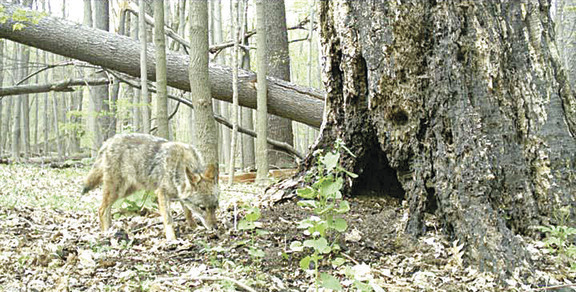
Typically, coyotes seek to avoid contact with humans, preferring to come out at dawn and dusk.
Pira said the only times there have been incidents in the park district have been as a result of a domesticated dog being off a leash and happening across a coyote.
“In general, they are pretty secretive creatures. You don’t see them out too often during the day,” Pira said.
Like other wild animals, coyotes can be attracted to residential areas as a source of food.
Pira listed open trash containers and readily-available pet food outside as reasons an animal would come near a house. Bird feeders, which can attract squirrels and other rodents, can also be attractive.
“If they make that connection between humans and food, then you can develop problems,” Pira said. “Obviously animals are looking for easy ways to obtain nutrition.”
February is peak breeding season for coyotes, followed a month later by denning. Late spring is the time during which coyotes are most frequently spotted.
If a person is approached by a coyote, Pira suggested moving slowly and not turning your back to the animal. Also, if possible, pick up any nearby pets and move them away.
Generally, a raised voice is enough to frighten one away, although throwing sticks or small rocks at the coyote will help reinforce that message.
“They should be scared off by your presence,” Pira said. “Any of the coyotes I’ve encountered are afraid of you.”
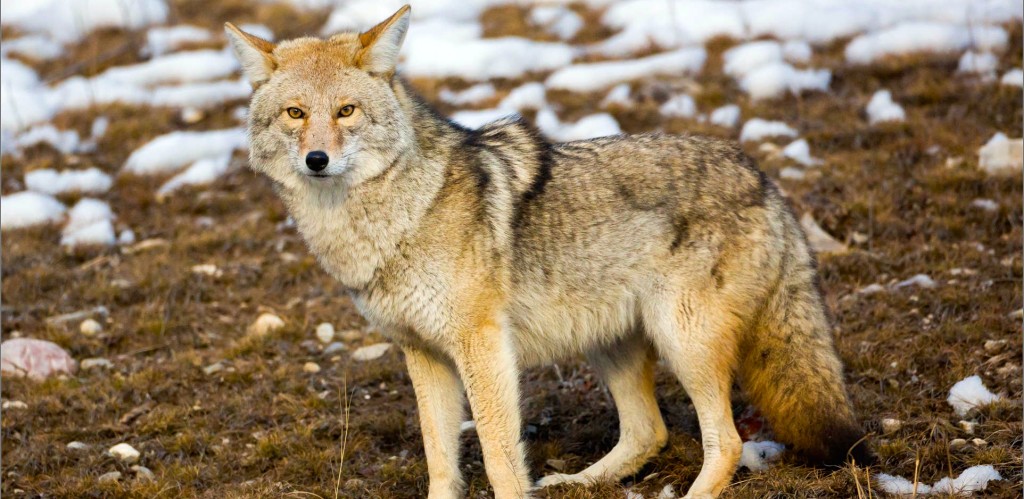
A coyote can be described as looking similar to a German shepherd, although there are some distinctive features for which to look.
The ears and muzzle will be pointy and slender. The tail will have a downward droop with a distinctive black tip, while the eyes will be bright yellow.
Pira also said they don’t wander around like a domesticated dog, but, instead, will run in a straight line.
If you do encounter a coyote you think is acting strangely or if you have concerns about any wild animal, Pira recommended contacting the wildlife officer at the Ohio Division of Wildlife.


