


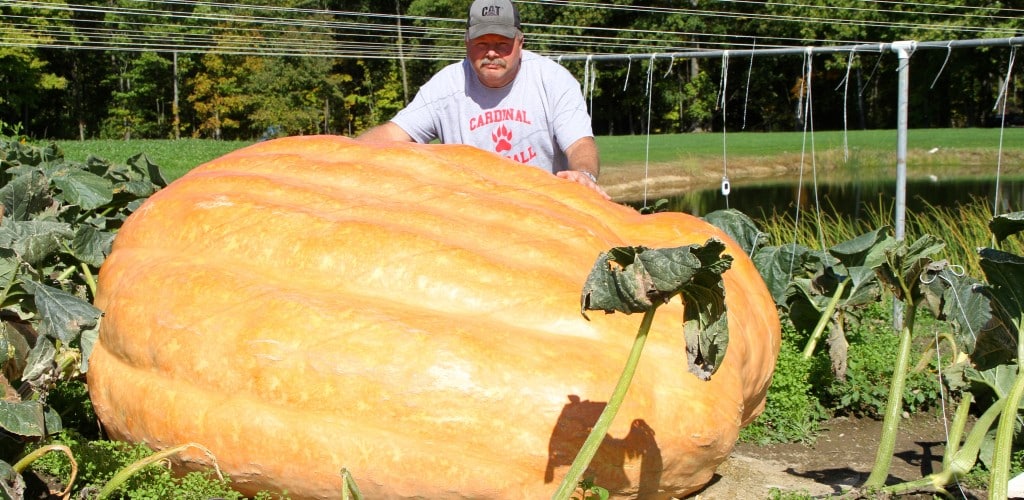
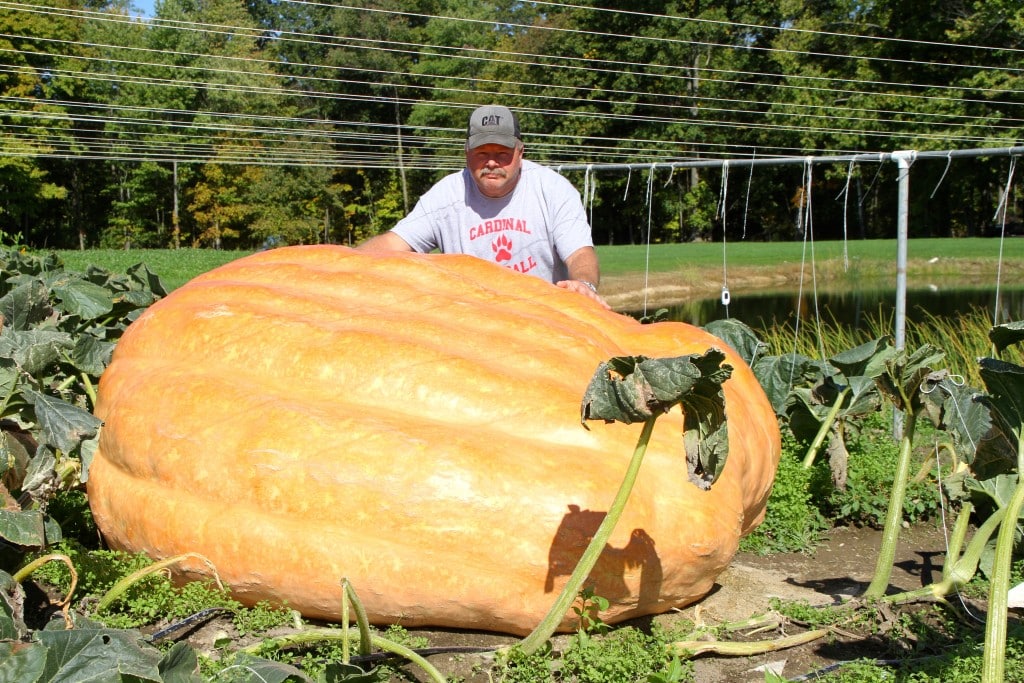
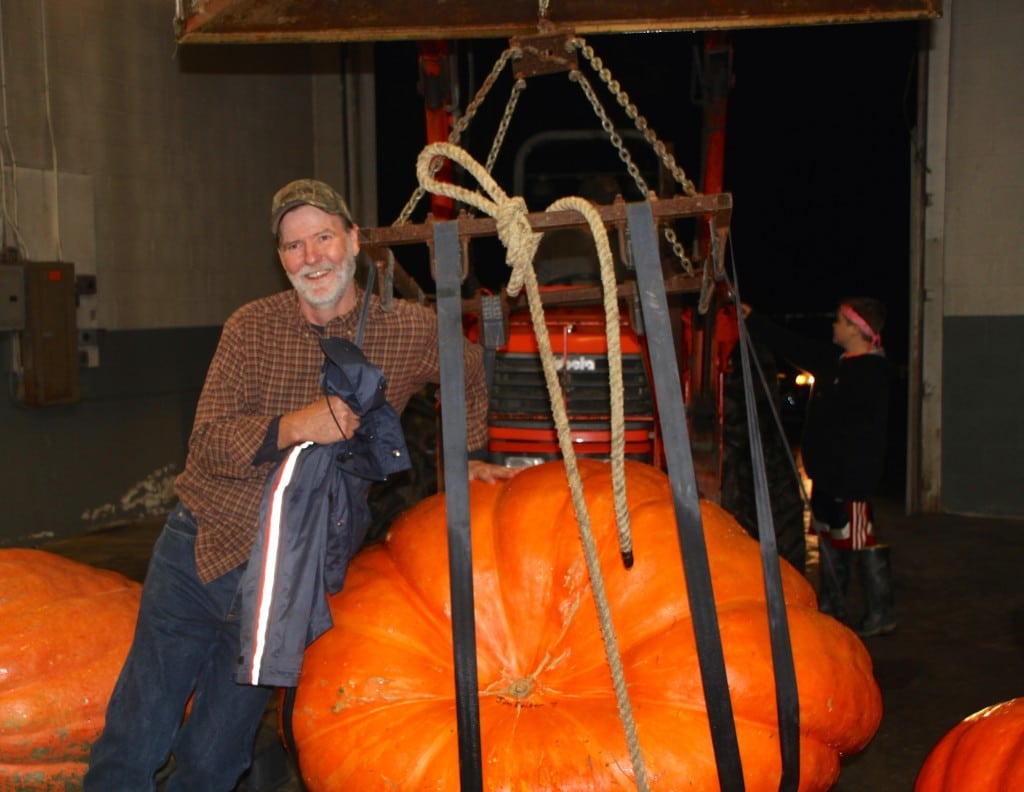
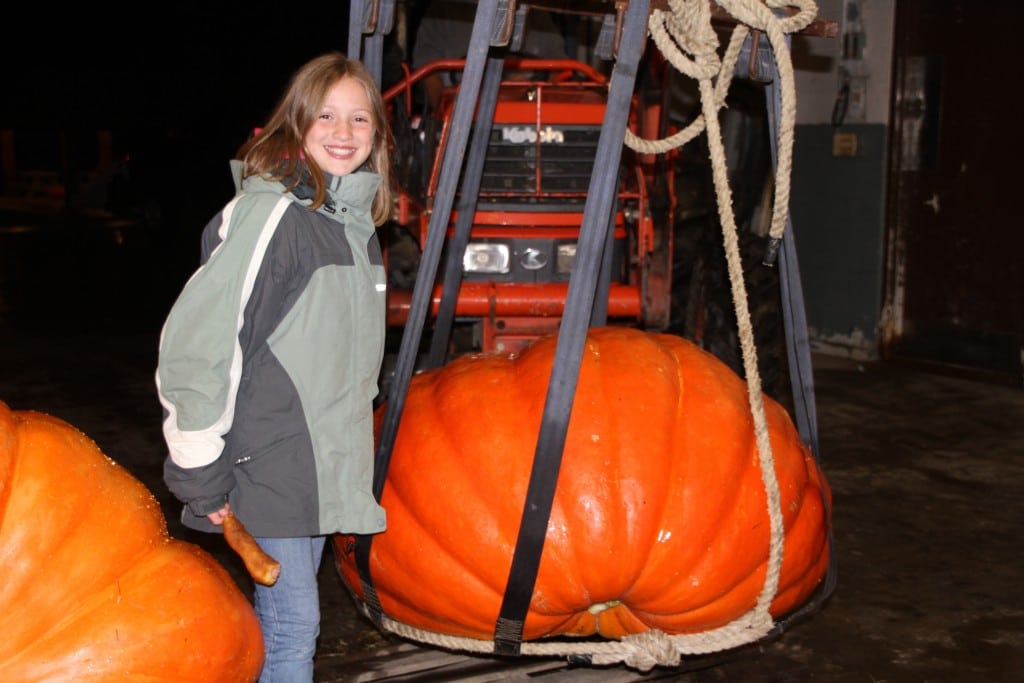
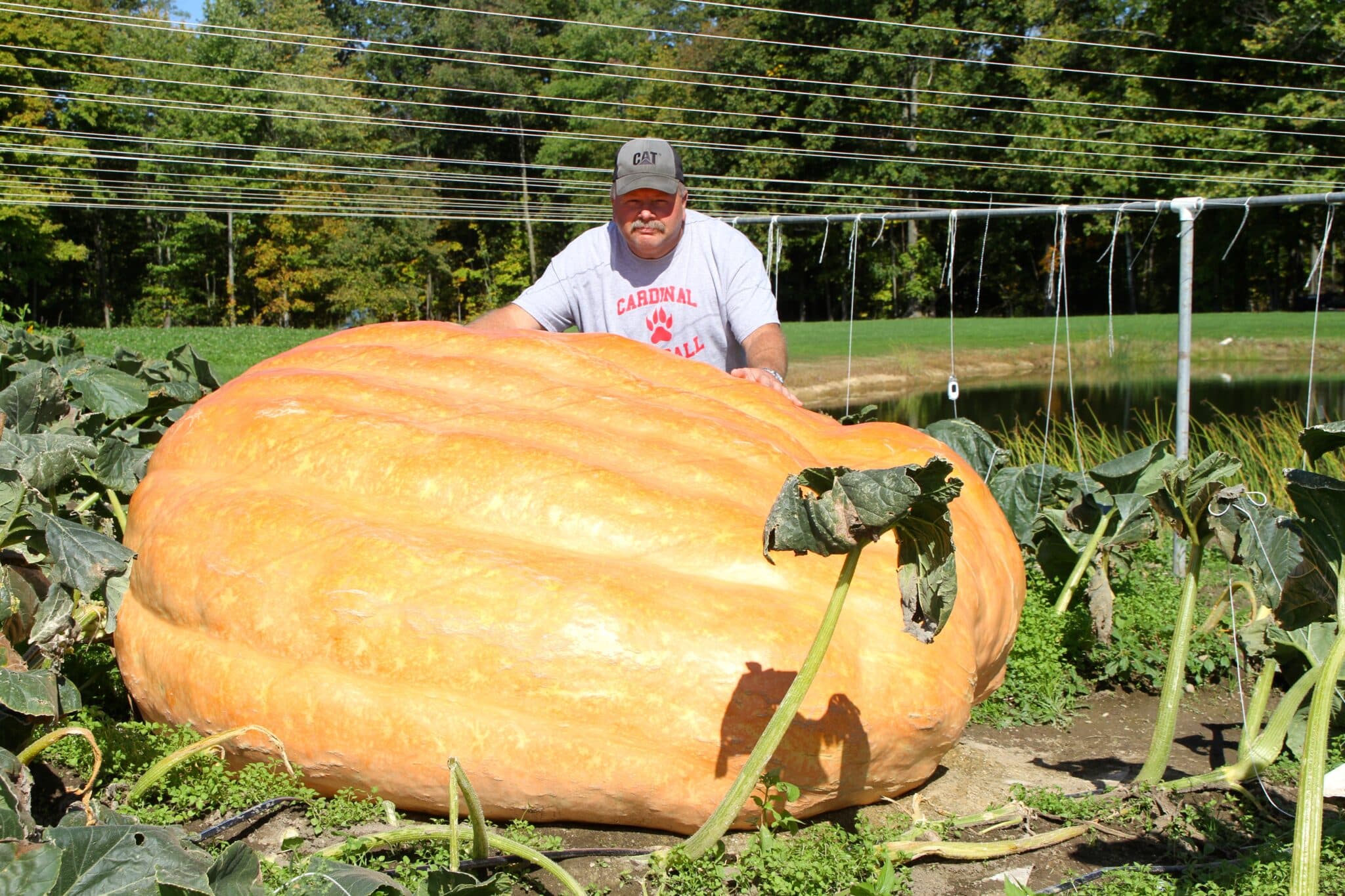
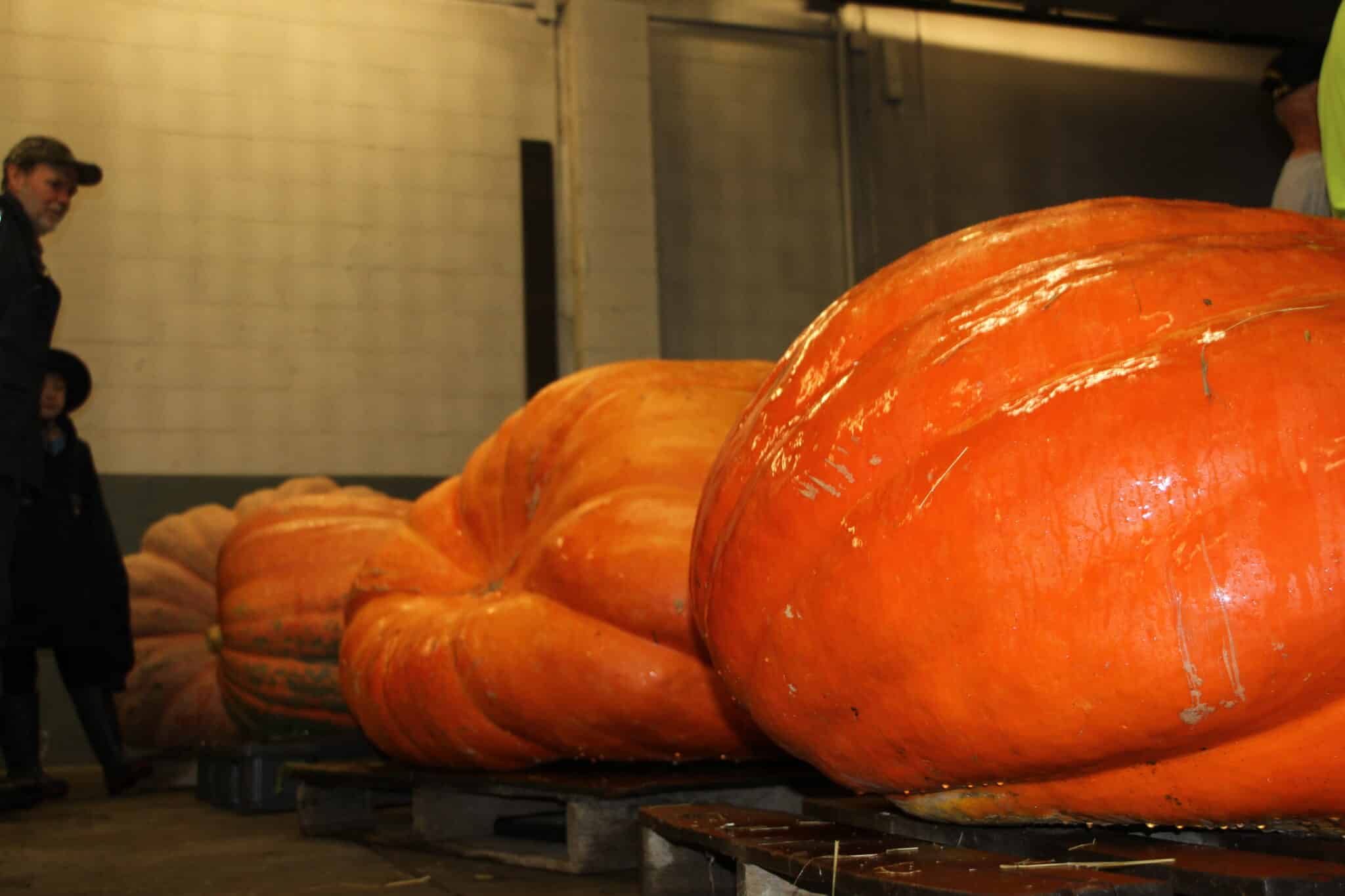
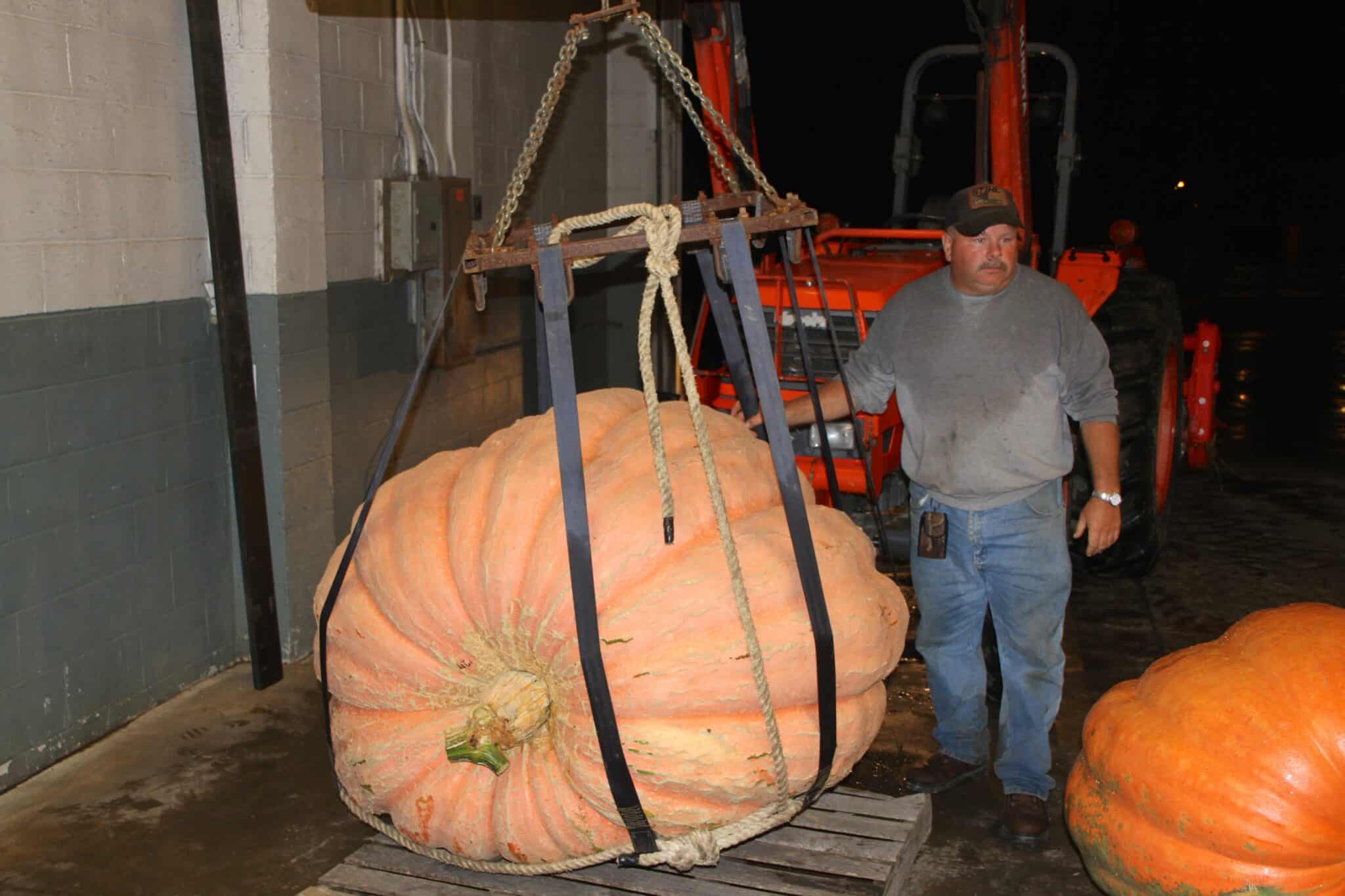
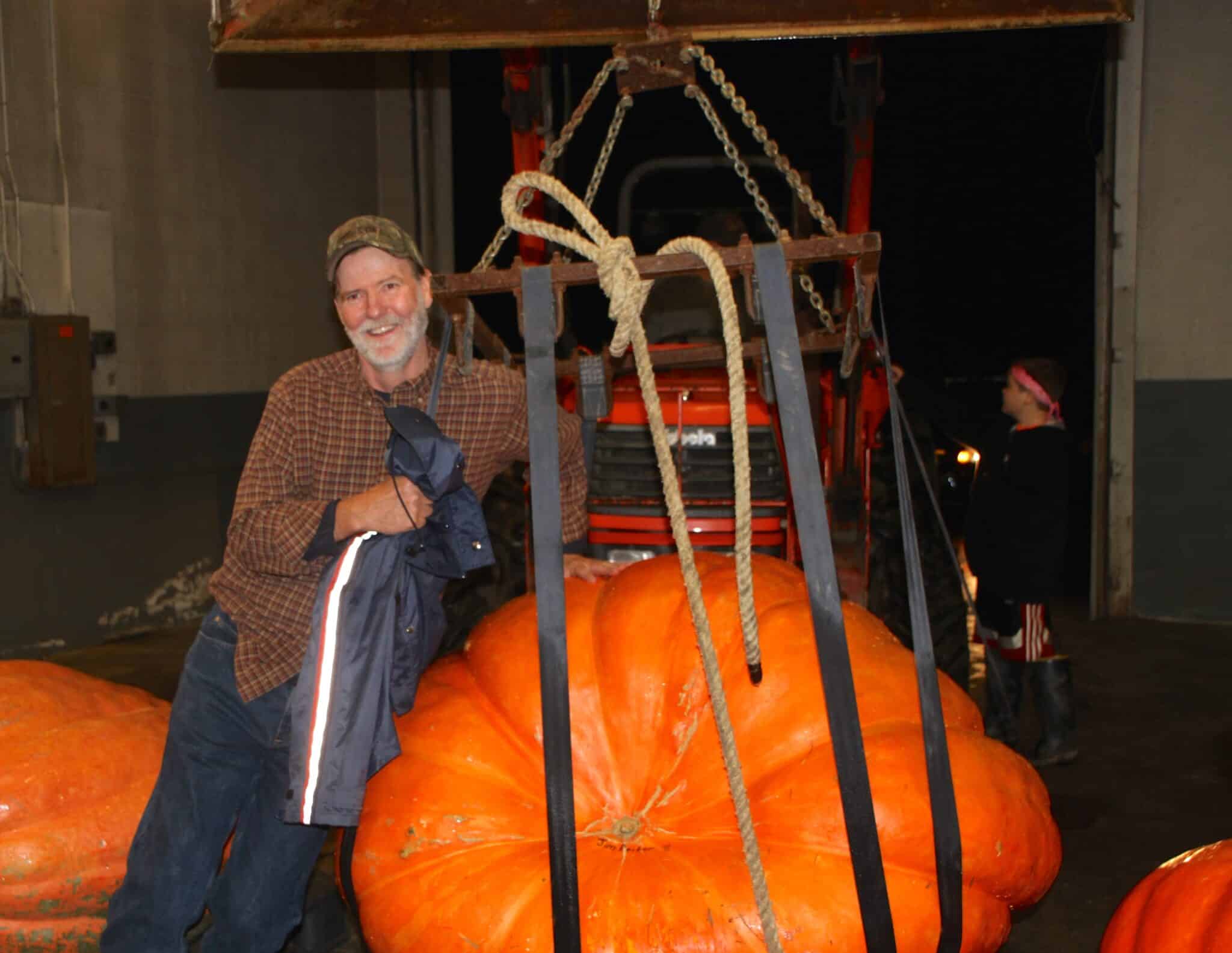
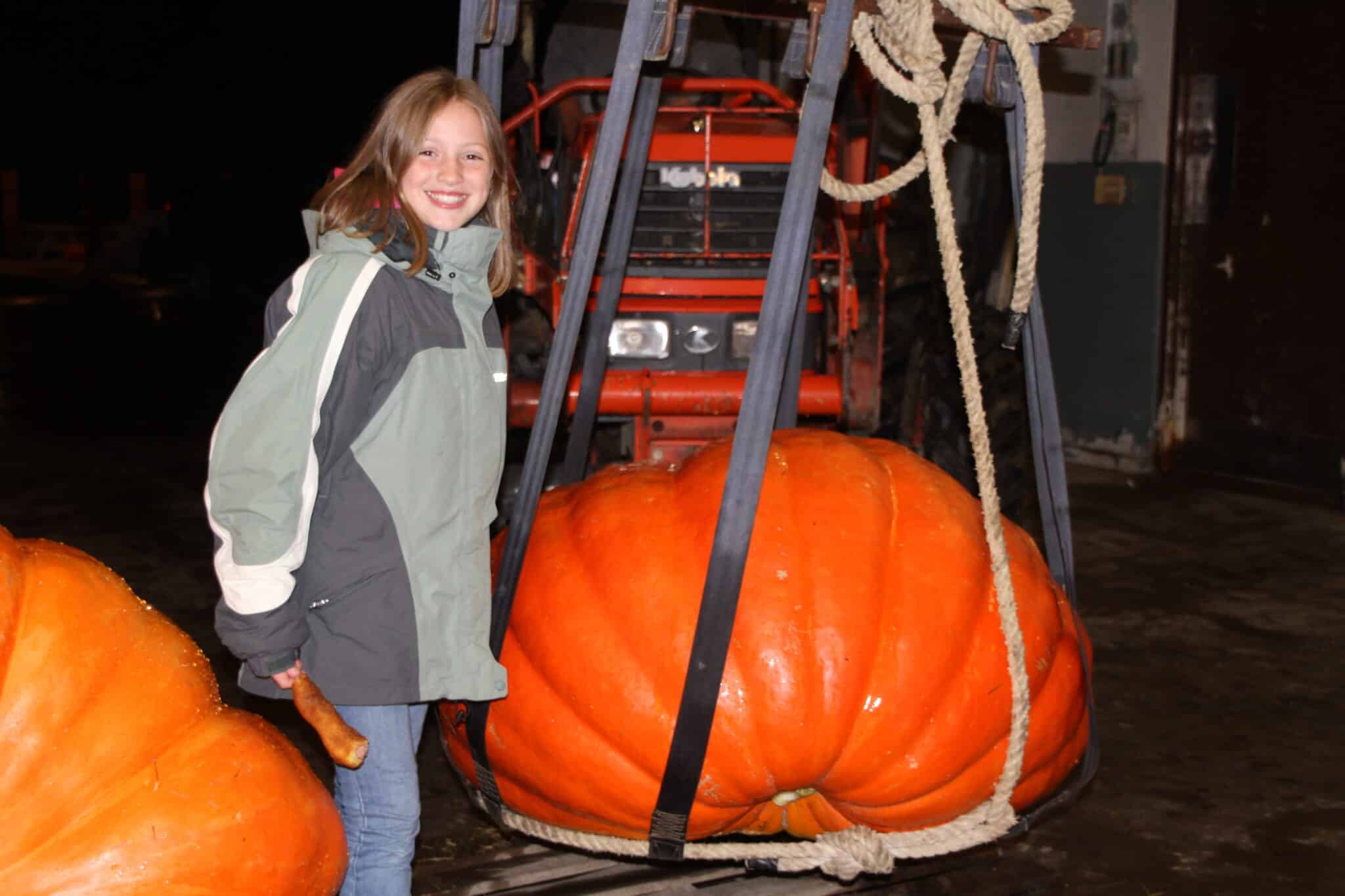
Jerry Rose Jr. is a salt-of-the earth guy who likes everything big. Big jacked-up trucks, big sunflowers, big corn and, oh yes, big pumpkin.
His quest for giant pumpkins began simple enough. Growing up in Huntsburg Township, Rose, 47, attended the township’s annual pumpkin festival — just finishing its 47th year — and at age 10 entered his first large squash into the giant pumpkin contest. That first season, he grew a 59-pounder.
Since then, he has won the contest a whopping 23 times, including this year, when he took first prize on Sept. 29 with a 1,284-pounder. The second-place competitor, grown by Jim Reiter, weighed 832.5 pounds.
“For me, it’s a lot of fun growing these giants because it’s my own backyard and I don’t have to go very far,” said Rose, who willingly shares his knowledge with anyone who asks. “A lot of the stuff we just learned on our own trial and error.”
Rose is a four-time state champion. He also has finished third in the world twice and fourth once.
In 1993, he grew the heaviest pumpkin at 673 pounds, which he surpassed in 1994 with a 719-pounder and then again in 1995 at 816 pounds. In 2003, he won with a giant pumpkin weighing in at a hefty 1,370 pounds.
The current state record is 2,008 pounds.
“I still have one out in the patch and we’ll see what happens. Maybe it will challenge that state record,” Rose said.
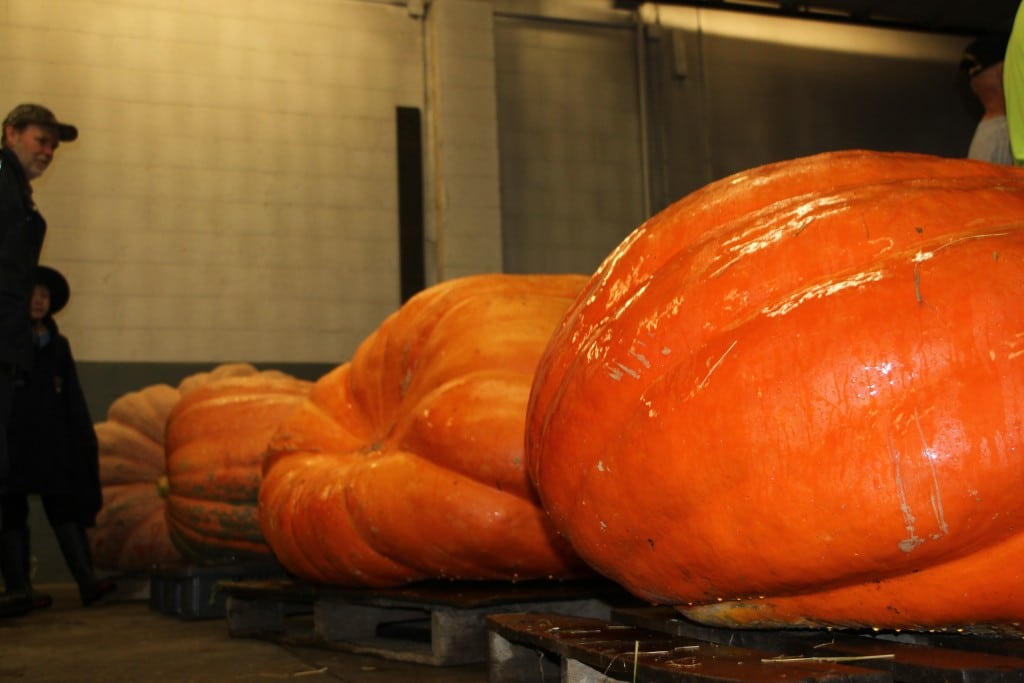
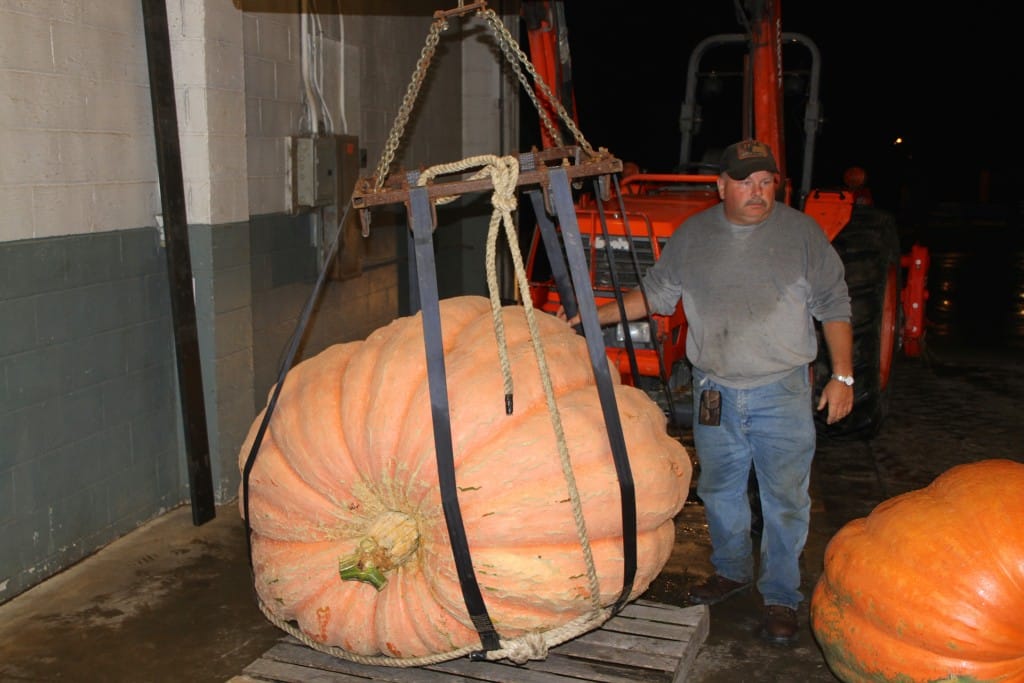
His whopper will be entered in the Ohio Valley Giant Pumpkin Growers’ 22nd annual pumpkin weigh-off Saturday in Canfield.
So far in 2016, the largest pumpkin registered is just over 1,700 pounds.
Many of the entries in this year’s Huntsburg Pumpkin Festival contest can trace their lineage back three or four generations to Rose’s 1,370-pounder.
“The 1,370 produced a lot of big pumpkins,” he said. “A lot of people wanted those seeds when I grew it.”
But this year’s winner and the even larger one still growing on the vine are not an offspring of the Rose 1,370. Instead, they were grown from seeds from a 1,730-pound giant he got from a friend in Pennsylvania.
The seeds are about the size of a quarter, Rose said.
“Out of that 1,730-pound pumpkin I grew my biggest pumpkin ever of 1,844 pounds,” he added.
Despite his prodigious pumpkins, Rose said this year’s growing season was too hot. He lost two of his seven plants to the heat.
“Ideal is 82 degrees daytime, 62 at night. Not 95/75,” he said.
With warmer temperatures, plants get heat-stressed and once temperatures rise much above 85 degrees they don’t grow much, he explained.
Water is not a problem, however, because Rose has his own pond for irrigation.
“Actually, I like to irrigate because then I can put the water exactly where I want it,” Rose said, adding water is pumped into a 1,200-gallon tank he chlorinates for two hours to kill off any bacteria.
During the growing season, plants’ thirst is quenched with about 200 gallons of water a day.
The only real difference between growing field pumpkins and the giant ones is the amount of meticulous care required.
“The giants, I could give you a seed and maybe you could grow a 300-400 pounder out of it. A field pumpkin, maybe you could grow a 20-30 pounder out of it,” Rose said.
Rose also owns state record field pumpkin at 168 pounds.
The key to growing giant pumpkins soil preparation, he said. “I put a lot of nutrients and everything in the soil.”
Rose prefers cow manure, but said it’s hard to get ahold of nowadays, so he uses mainly horse manure. And he composts his soil for two to three years before he uses it.
Then there is meticulous care of the plants, including burial of all vines, except for the primary vine on which the pumpkin grows. Everything else is removed from the plant.
“Each plant of mine this year was about 30-by-30, about 900 square feet,” he said. “And it would have been a lot bigger if I had allowed it to grow more.”
During the peak of the season, in late July and August, Rose said he typically puts in about 40 hours of work per week caring for his plants, which can pack on about 300 pounds a week.
Plants would grow lots of pumpkins if allowed, Rose said, but he only keeps one per plant.
“You want it to be on the main vine, at least 10 feet out from where you planted it, because then you have enough plant behind the pumpkin to push it,” he said. “The vine will continue to grow past the pumpkin, but all secondary, or side vines, are taken off, so everything is behind the pumpkin. We’re into believing that everything behind the pumpkin is what grows the pumpkin.”
He stays on top of bugs and diseases with a weekly spray regiment as well as fungicidal drenches of the soil.
This year, Rose sent some tissue and leaf samples to a laboratory in Idaho for analysis and was told to add “a little bit of this and a little bit of that” to the soil.
He also spoon-feeds each pumpkin with a tiny bit of fertilizer to “keep everything on an even keel.”
The large pumpkins are shaded with old white bed sheets during the growing season to keep them from ripening them too soon.
With temperatures now dipping at night, Rose has his largest pumpkin covered and heated.
“Somebody joked around with me the other day and said what if I need the blankets off my bed. I said the wife will have to go cold,” he added with a chuckle.


