


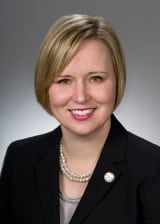
Guest Column from State Rep. Sarah LaTourette
Recognition of Senior Citizens Issues Not Limited to Aug. 21
National Senior Citizens Day was first recognized on Aug. 21 in 1988 through a declaration by President Ronald Reagan. It stands as a day to honor the positive contributions of senior citizens and their impact on society, as well as to recognize the distinct issues that affect senior citizens.
In Ohio, the federally designated state agency responsible for coordinating the programs and services through the Older Americans Act is the Department of Aging (ODA). This cabinet-level agency receives U.S. Department of Health and Human Services dollars as well as state funding to support Ohio’s senior citizens. Programs housed under ODA include the PASSPORT Medicaid waiver (Pre-Admission Screening System Providing Options and Resources Today), the Assisted Living Medicaid waiver, the Program for All-Inclusive Care for the Elderly (PACE), Alzheimer’s Respite Care, and the Long-Term Care Ombudsman.
Being able to remain in a home setting is often very important to senior citizens as they age. The PASSPORT Medicaid waiver allows qualifying seniors for which a nursing facility level of care is necessitated to continue to live in their own home, or in the home of a family member while still receiving care that meets high standards. A facet of the PASSPORT program is that consultations are available without eligibility requirements for any Ohioan that wishes to evaluate their long-term care needs.
The Ombudsman Program, another important program facilitated through ODA, advocates for individuals receiving long-term care through home and community-based services or individuals who are residents of nursing homes. While not a regulatory body, the Ombudsman Program seeks to resolve consumer complaints about long-term care services through mediation and negotiation, as well as to educate providers.

Ohio’s network of 12 regional Area Agencies on Aging (AAAs) has a long-standing reputation as being a “one-stop shop” for connecting elder Ohioans with the resources they need. AAAs serve as the primary local coordinators for community-based services for senior citizens. While not engaged in directly providing services, they determine an individual’s need level, offer case management and make referrals to a variety of public and private-sector organizations that provide the services.
This General Assembly, I have sponsored two pieces of legislation, House Bill 286 and House Bill 527, which have been referred to the Committee on Aging and Long-term Care. This committee’s focus is often on legislation which may impact senior citizens.
House Bill 286, the “Palliative Care Bill,” would create the Palliative Care and Quality of Life Interdisciplinary Council and establish the Palliative Care Consumer and Professional Information and Education Program. The goal of palliative care is to improve the quality of life for a patient and their family by reducing the symptoms, pain and stress associated with serious illness. While often utilized by senior citizens with a serious illness, palliative care may be appropriate for a person of any age or at any point in the trajectory of their illness. Through House Bill 286’s creation of the Palliative Care Council, palliative care will be further integrated into mainstream medicine for all patients and families facing a serious illness.
Additionally, the Education Program established within the bill would ensure that comprehensive and accurate information about palliative care is available to the public, as well as to health care providers and facilities. House Bill 286 directs health care facilities to establish a system to identify patients who might benefit from palliative care. This legislation is currently under consideration in the Senate Health, Human Services and Medicaid Committee after several thorough hearings in the House Committee on Aging and Long-term Care and successful passage of the House.
The goal of House Bill 527, the “Visitation Bill,” is to empower and unify individuals and families being isolated from one another by a caretaker. By creating a channel for a person to petition reasonable visitation with a loved one through the probate court system, it is my hope that we are able to address the needs of family members being prevented from seeing one another when there is no legal justification for the separation. In addition to the authority to grant such visitation, the probate court would be able to impose limits on the visitation or deny the petition after a review of the facts of the case.
There are 15,000 Ohioans turning 65 every month, and we are rapidly approaching a time where nearly 50% of the population will be 65 or older. Familiarization with the issues facing senior citizens does not have to be limited to this year’s National Senior Citizen Day.


