


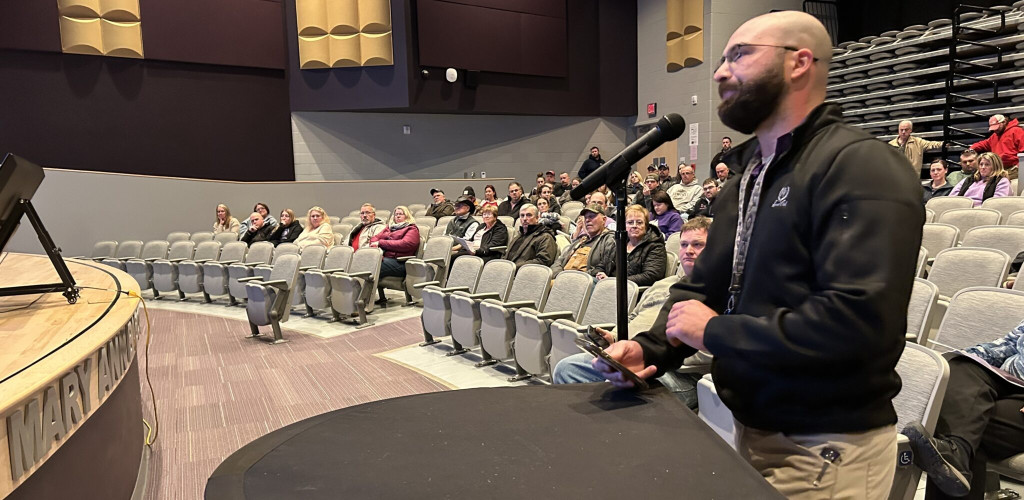
More than 50 Berkshire Schools residents turned out Feb. 10 to protest a proposed tax increase at the school board meeting.
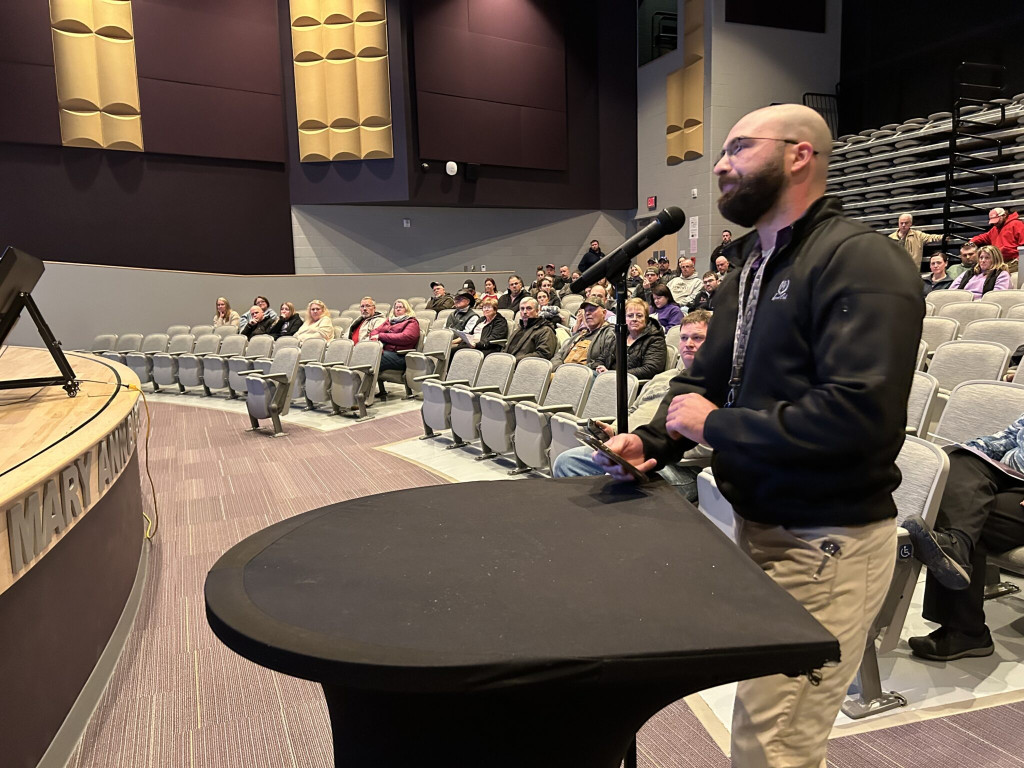
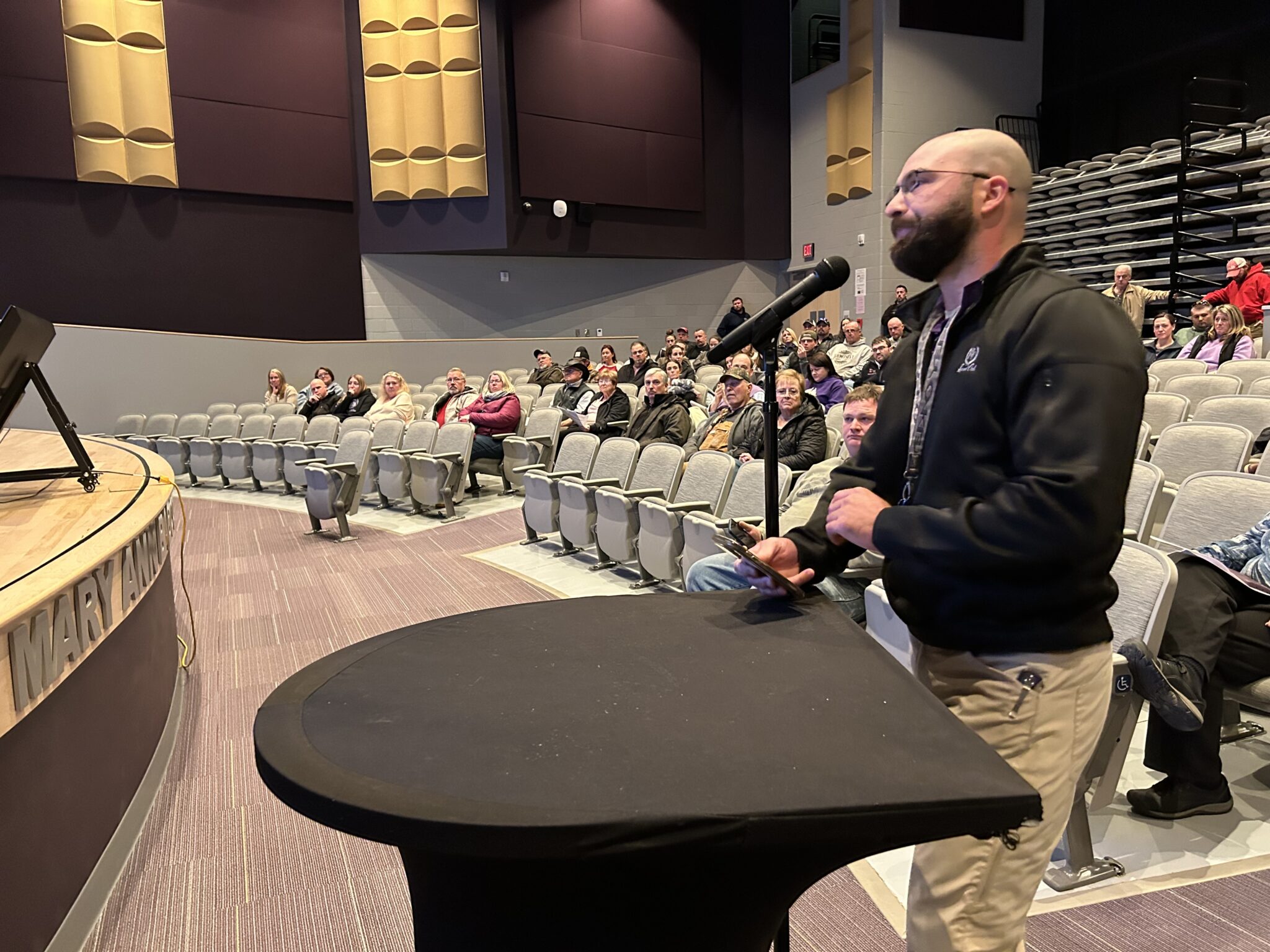
More than 50 Berkshire Schools residents turned out Feb. 10 to protest a proposed tax increase at the school board meeting.
After more than 90 minutes of pleas from the audience, Berkshire Schools Board of Education members voted unanimously to table the issue until a special meeting at 6 p.m. Feb. 26.
Before that vote, many in the audience took the microphone particularly to object to one of four options the board is considering.
Because voters did not pass a 2.5-mill permanent improvement renewal levy in the last two elections, Berkshire’s five-year-forecast shows the district’s general fund in the red in years four and five, according to Treasurer Beth McCaffrey.
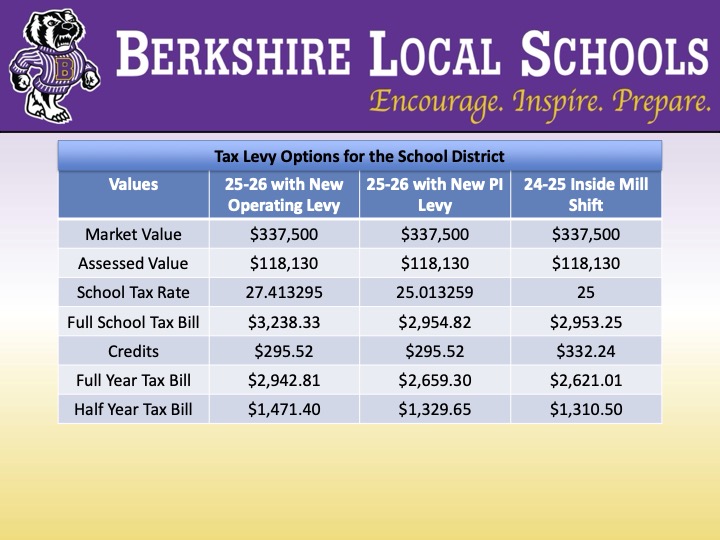
The prediction is causing the board to decide between asking the voters to pass a new 2.5-mill permanent improvement levy, a 4.9-mill operating levy or transferring 2.5 mills from the district’s inside, unvoted millage to the general fund.
Another option, passing a 0.5% earned income tax, would generate most of the revenue needed to keep the district in the black and would cost a worker about $250 per year for every $50,000 earned, McCaffrey said.
At the Jan. 22 board meeting, Superintendent John Stoddard explained the effects of a transfer from inside millage to the general fund.
If the board takes action to transfer funds from the general fund to the PI fund, the district’s inside millage would drop below its 20-mill floor and property taxes would automatically increase to bring the general fund back up to the floor, he said.
Monday, speakers called that “taxation without representation” because residents wouldn’t be voting on the millage transfer increase.
“If you take that 2.5-mill inside millage, you’d better make it 10 because you will never pass a levy again,” said Jim Boyd, of Thompson Township. “It’s taxation without representation. You’d be cutting yourselves off at the knees.”

He said the board had not done enough community engagement when the renewal was on the ballot last year and people need to know why the board needs the money and how they plan to spend it.
John Bonner, of Burton Township, echoed Boyd about a lack of communication and said the levy failure should be a wake-up call.
“I would think you have a lack of support,” he said, recommending the board not vote immediately. “You … cannot do this tonight.”
He said he helped pass the bond issue to build the new school and there was a lot of face-to-face communication for that effort.
The board needs to communicate to residents, many on a fixed income, why a levy is needed, Bonner said.
Chad Russell, of Troy Township, also urged the board to reconsider voting Monday.
“There’s still a chance to try another levy,” he said, noting the renewal levy would not have raised taxes if it had passed.
Stoddard’s presentation showed the transfer would be the least expensive method of raising the necessary funds.
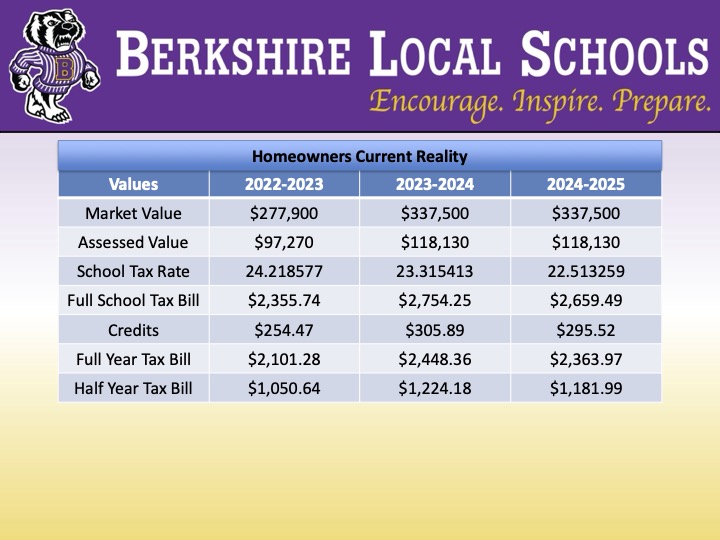
A paper handout showed the differences between the three options under consideration, he said, adding the Geauga County Auditor’s Office confirmed the figures.
According to the handout, a new 4.9-mill operating levy would add $171.50 per year per $100,000 of property valuation; a new 2.5-mill permanent improvement levy would add $87.50 per year per $100,000 property valuation.
A 2.5-mill transfer of inside millage from the general fund to the PI fund would add $76.16 per year per $100,000 property valuation.
Stoddard also noted the rising cost of special education in Berkshire, with the top 60 students requiring about $2.7 million in services; a state change in the voucher system that takes $1 billion in property tax money from Ohio’s public schools and sends it to private schools; unreliable revenue sources; and the loss of about $1 million in delinquent public utility tax collection from the bankrupt Orwell-Trumbull pipeline.
“The state is not funding schools. (The) current funding is at 2022 base costs,” the handout said. “They are shifting the burden back to the taxpayers. Contact your legislator.”
After more than an hour of public input, board member Linda Stone asked to delay a decision.
Board member Jodie Miller agreed she needed time to reflect on what residents had to say during the special meeting and thanked residents for their input.
“We heard so much tonight,” she said. “This is too big a decision to make this quickly.”


