


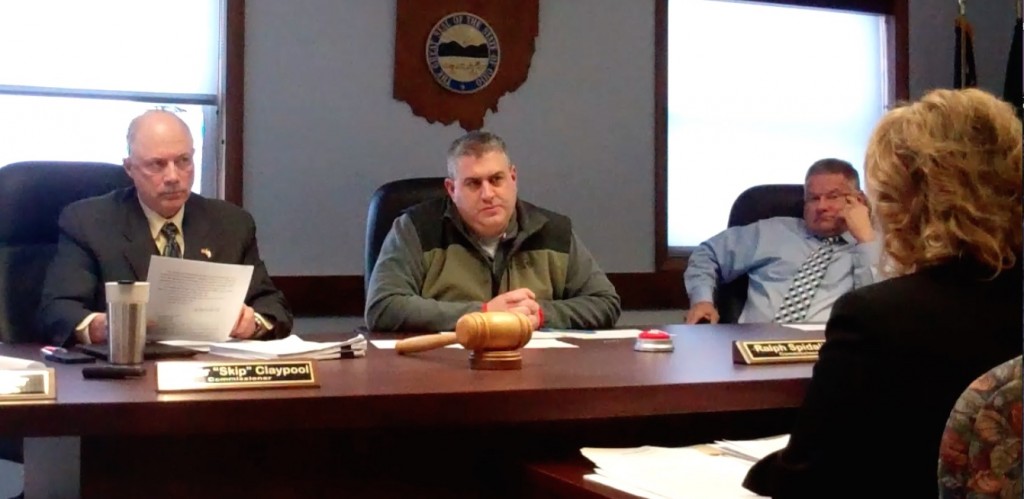
“Using the separation of powers act as a shield to have a conversation with the commissioners, I think, doesn’t serve the best interest of the people in the county.” - Commissioner Walter "Skip" Claypool
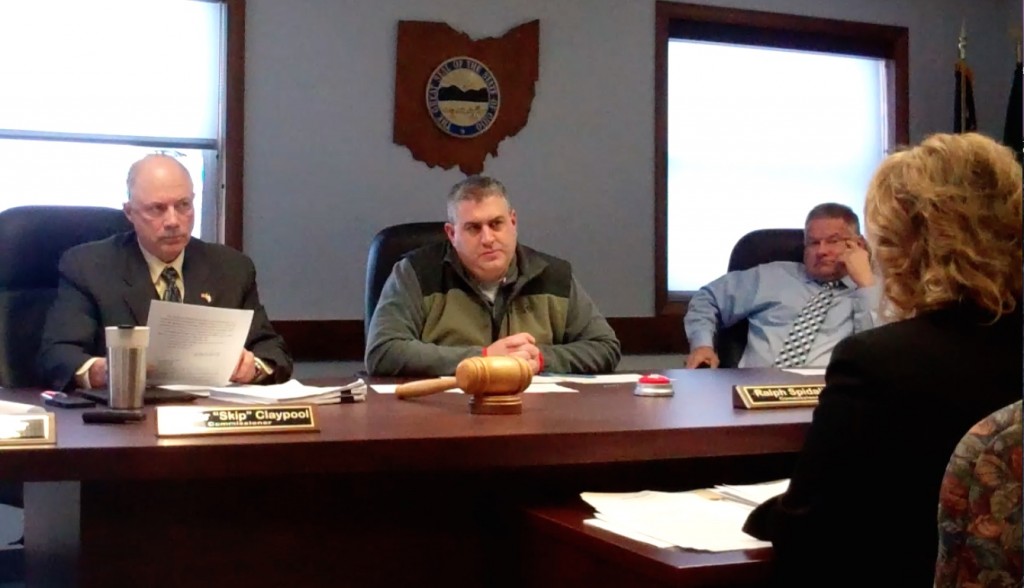
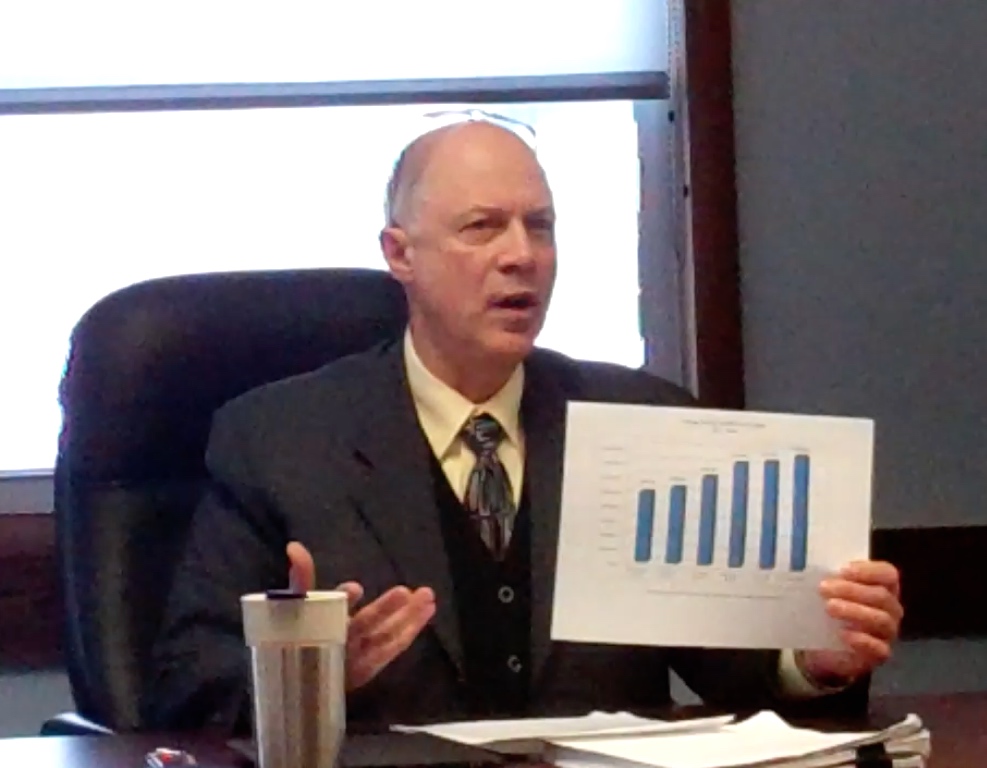
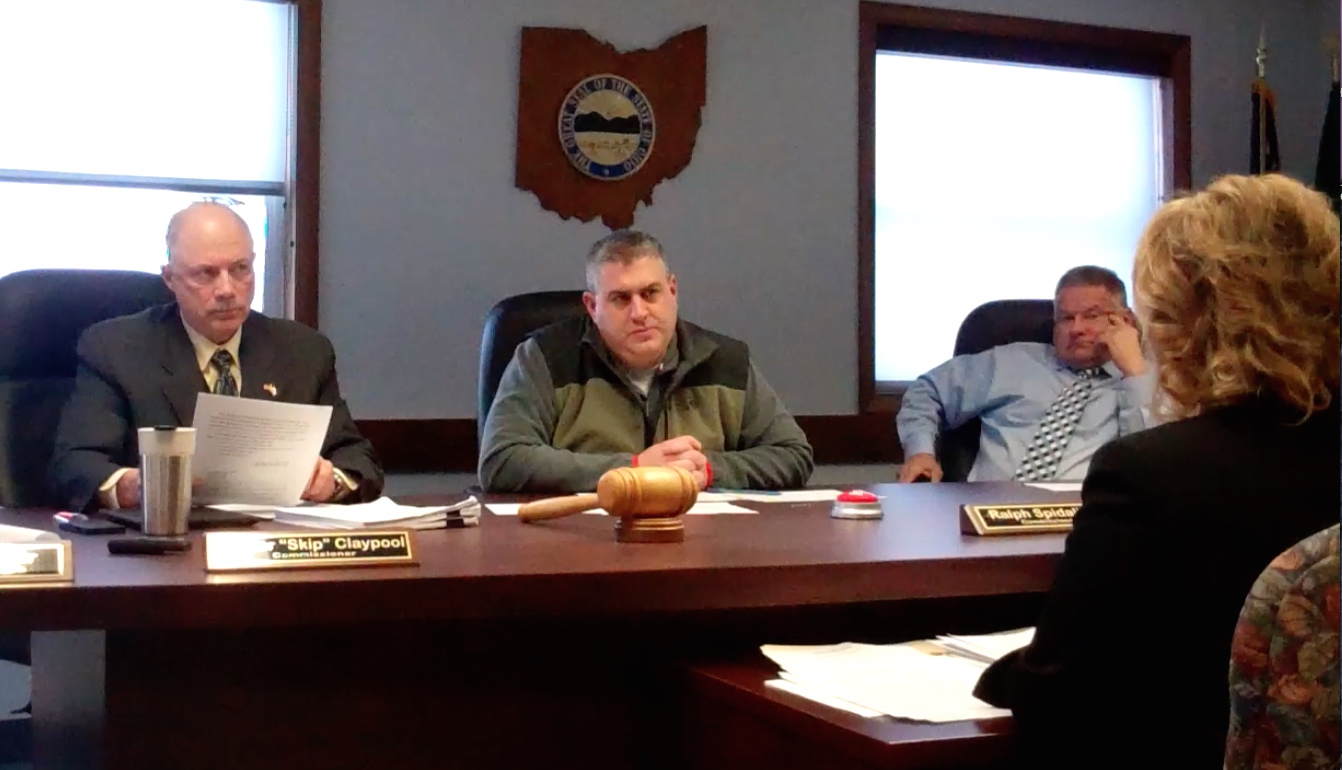
Geauga County Commissioners were hoping to meet Tuesday morning with a representative of the county juvenile court to resolve a funding dispute.
No one from the court showed up, however, leaving the commissioners unable to determine, among other things, where to put a requested $124,732 in funding and whether the request is reasonable and necessary.
“We would like to get more information from the court in order to be able to do that,” Commissioner Walter “Skip” Claypool said. “Without further explanation from the court, we’re a little bit flummoxed.”
Claypool said Kimberly Laurie, the court’s budget coordinator and county liaison, sent him a text message informing him that no one from the court would be attending the 8:30 a.m. meeting. That message was received as the meeting was starting.
The commissioners had requested the meeting in a Jan. 15 letter that was hand-delivered to the court. That letter was sent in response to a Jan. 6 journal entry in which Geauga County Juvenile Court Judge Tim Grendell ordered the commissioners to correct alleged “misappropriations, overpayment and underpayment” in the court’s 2016 budget within 14 days.
With the exception of a “few things,” Claypool said the court is fully funded and the board had seen “no justification to the contrary.”
“The reason we took the $124,000 away, as I understand it, is because other (court) programs were funded from a different source,” the commissioner explained. “So, what his full budget was, was fully funded, based on his request. It just so happens that it’s funded from a different source, not from our general fund, which is good for the taxpayers.”
He added, “But the only way for us to have transparency in the process, and accountability, . . . is for people to see what’s going on. The court order is one mechanism to see what is happening. When the judge gives us a court order, that now is visible, it’s in a public meeting like this and people can see what’s going on. And let the people judge. At the end of the day, I think we’re . . . doing the best that we can do and we’ll let the people judge.”
County Administrator David Lair said he had called Laurie prior to the letter being delivered to explain why the commissioners were requesting the additional information.
“At that point, this was on Friday, she wasn’t sure what the court’s response would be or whether they’d be here,” Lair said. “Apparently, they determined they wouldn’t.”
Commissioner Ralph Spidalieri said he was frustrated Laurie did not attend Tuesday’s meeting.
“Somebody is paid for this budgetary management position and how do you not come to something that involves directly the (court) budget?” he asked. “You’re being paid to do this and where is she?”
When contacted after the meeting, Laurie told the Geauga County Maple Leaf, “We did not attend the commissioners’ public hearing today for the same reason we did not participate in their budget hearings mid last year.”
Attached to her email reply was a copy of June 16, 2015, letter in which Grendell informed the commissioners that, in order to preserve the separation of powers, his court would “refrain from participating in hearings conducted by the commissioners office.”
“In other words, though it is appropriate for the commissioners to hold public hearings for the departments within its own branch of government, it is unconstitutional for the executive branch to put the judicial branch ‘on trial’ regarding our appropriations request,” Laurie said. “The commissioners chose to schedule a public hearing today (Jan. 19) anyway despite the fact that we told them seven months ago that it would be our policy not to attend such hearings.”
Last June, the commissioners appropriated approximately $1.2 million to the Geauga County Juvenile Court for its operations.
However, Heidi Delaney, the commissioners’ budget and finance manager, explained during Tuesday’s meeting the court had received grant funding for some of its programs, in particular the Family Life Intervention Program, or FLIP. As a result, she asked Laurie whether the amount of the grant funding needed to be deducted from appropriated court funding from the county general fund.
“She said she would get us an updated itemization of that, which we did not receive,” Delaney said.
Therefore, that money, about $124,000, was removed from the county general fund budget appropriation.
Delaney said Laurie contacted her in December, after the court received its permanent appropriation, asking why the money was removed and requesting that it be put back into the court’s budget.
Delaney said she and Lair told Laurie the commissioners would need to know in which account to appropriate the money and she declined to provide an answer.
Then, on Jan. 6, Grendell ordered the commissioners to re-appropriate the $124,000 to his court.
Claypool, who noted the order is silent on which account to transfer the money, said he was told verbally to put it in any line item.
“To summarize, we attempted to go through a budgetary process and . . . this court has been somewhat reluctant in cooperating, which creates a problem for us, because in order to do our duty, which is to ensure reasonable, necessary expenditure of funds, we have to understand how those funds are being utilized,” Claypool said. “The current position of the court, and I’m very sad that the court chose not to show up today, so we could have a reasonable conversation about how they’re spending their money.”
Claypool added, “We want to fully fund the court, but in order for us to do our jobs, we have to understand how they’re using the money. That’s our duty, that’s our job, it’s statutory.”
The Ohio Supreme Court has made clear it is in the best interest of county residents “for the courts to work with commissioners, to help us to do our jobs, and we should be working to help one another through this process,” he said.
Claypool also called several statements in Grendell’s Jan. 6 order “inflammatory,” “misleading” and “incorrect.”
“Using the separation of powers act as a shield to have a conversation with the commissioners, I think, doesn’t serve the best interest of the people in the county,” he said.
In her email, Laurie accused commissioners of arbitrarily appropriating the $124,000 to a “random line item” in the court’s general fund budget, even though the court specified in its June 16, 2015, letter the “1001-007-00-900” line item.
“They subsequently, and also arbitrarily, removed it from our final tax budget,” Laurie said. “They also appropriated $194,000 to the CASA fund even though we didn’t request it.”
Said Laurie “If I were them, I would put the $124,000 in the line item we originally specified and take back their extra approximately $70,000.”
Laurie attributed the ongoing dispute to the commissioners’ lack of understanding about the “boundaries of authority created by the Constitution’s separation of powers doctrine.”
“Yes, there are to be checks and balances, but it is not unfettered so as to protect the judicial branch from being controlled by the purse strings of the executive branch,” she said. “For this reason, the commissioners are very limited in order to protect the balance of powers and there is a specific process they would need to go through in order to constitutionally not fully fund the courts as the judge deems necessary. Without going through that process, the commissioners are obligated to fund the court to the penny.”
That specific process does not include a public hearing held by commissioners, she added.
“It appears the commissioners’ office feels it is appropriate and/or necessary to think for the courts, which resulted in this major misappropriation that we are simply now trying to correct,” said Laurie. “We do not need them to think for us because the judge knows the court and its needs inside and out, and, constitutionally, it is the judge’s sole discretion to determine the reasonable and necessary budget for the courts. The commissioners cannot substitute their own judgment for his.”
Commissioner Blake Rear asked what the next step would be if the board refused to comply with Grendell’s order.
“Do we then end up in court and have two lawyers that we’re paying through the nose?” he asked his colleagues.
Claypool said legal counsel advised either the court would choose to cooperate with the board or it files a contempt order or mandamus action requiring commissioners to act.
“It’s real simple,” said Spidalieri. “At the end of the day, I’m not going to put my name on something that I have to answer for later. At the end of the day, it’s simple: We need more information.”


