


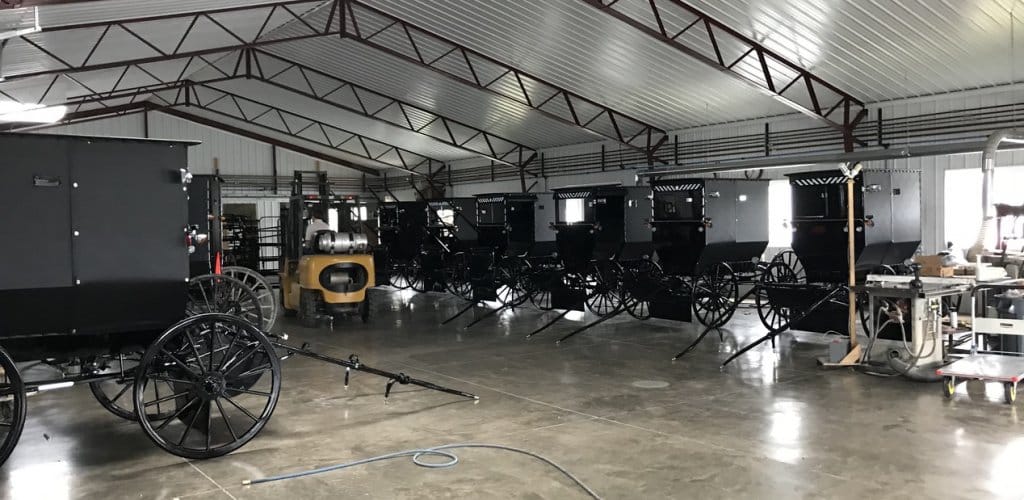
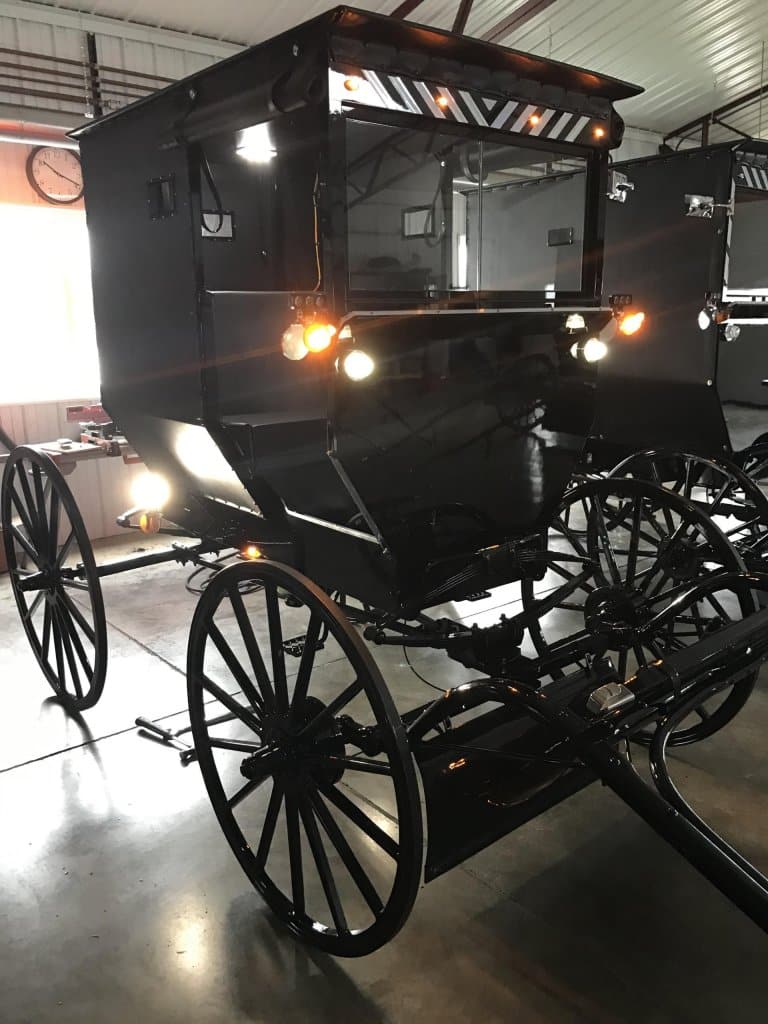
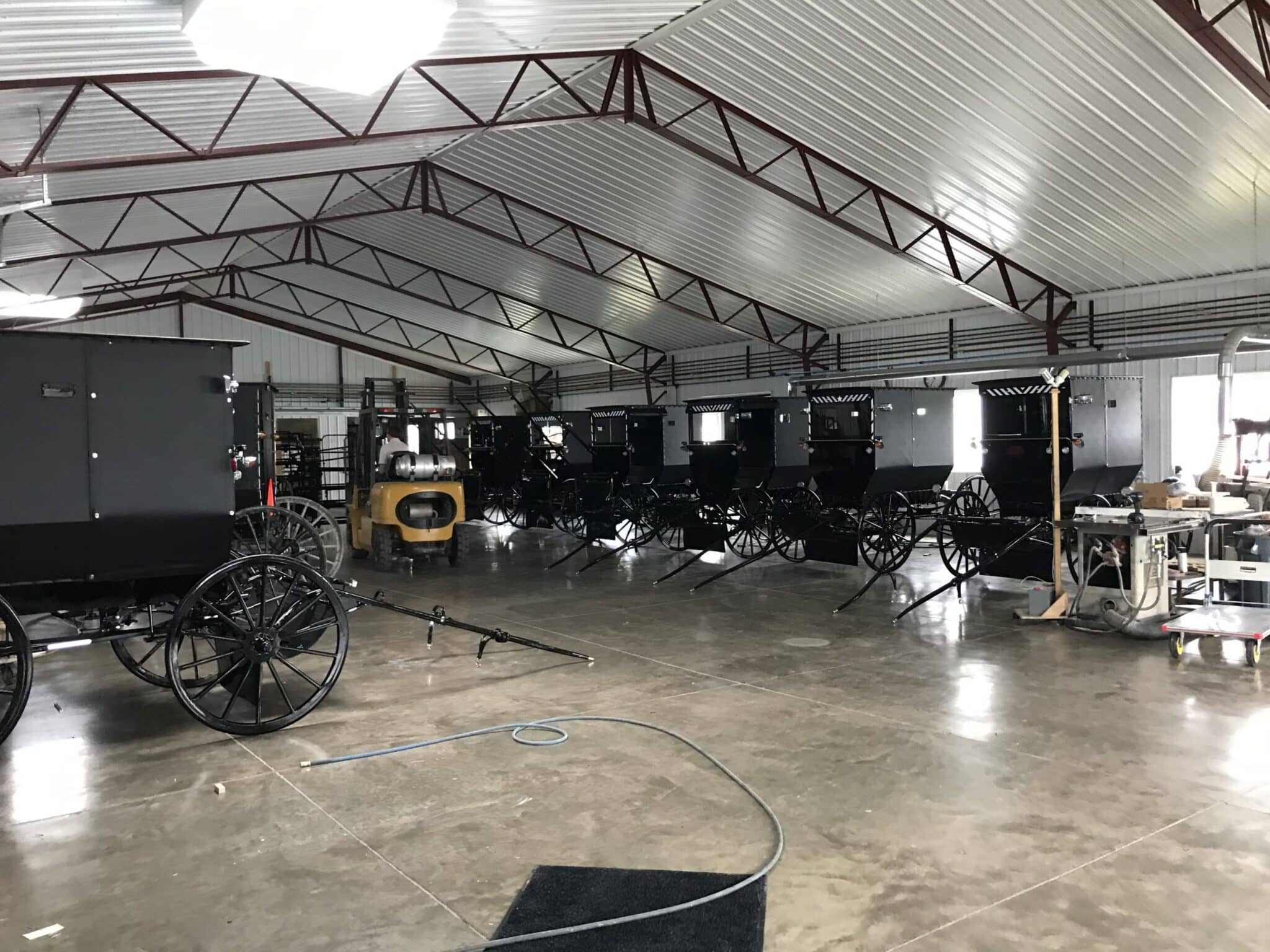
Two days before Christmas, seven Amish buggies stood in two rows at Detweiler’s Carriage Shop waiting for delivery.
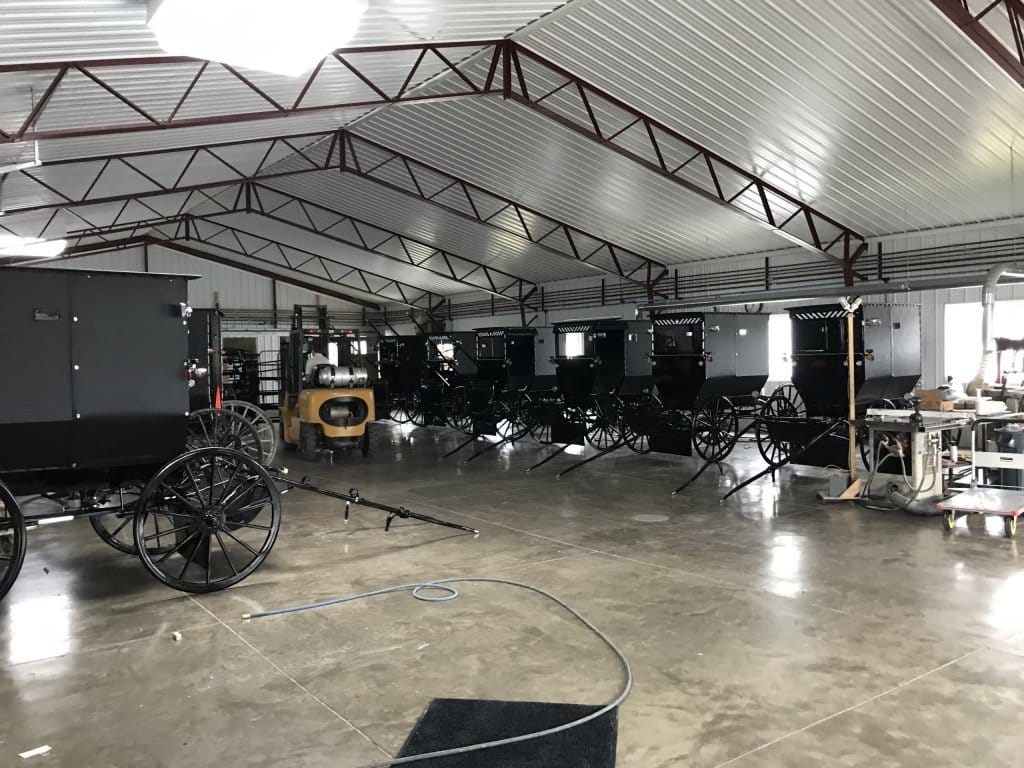
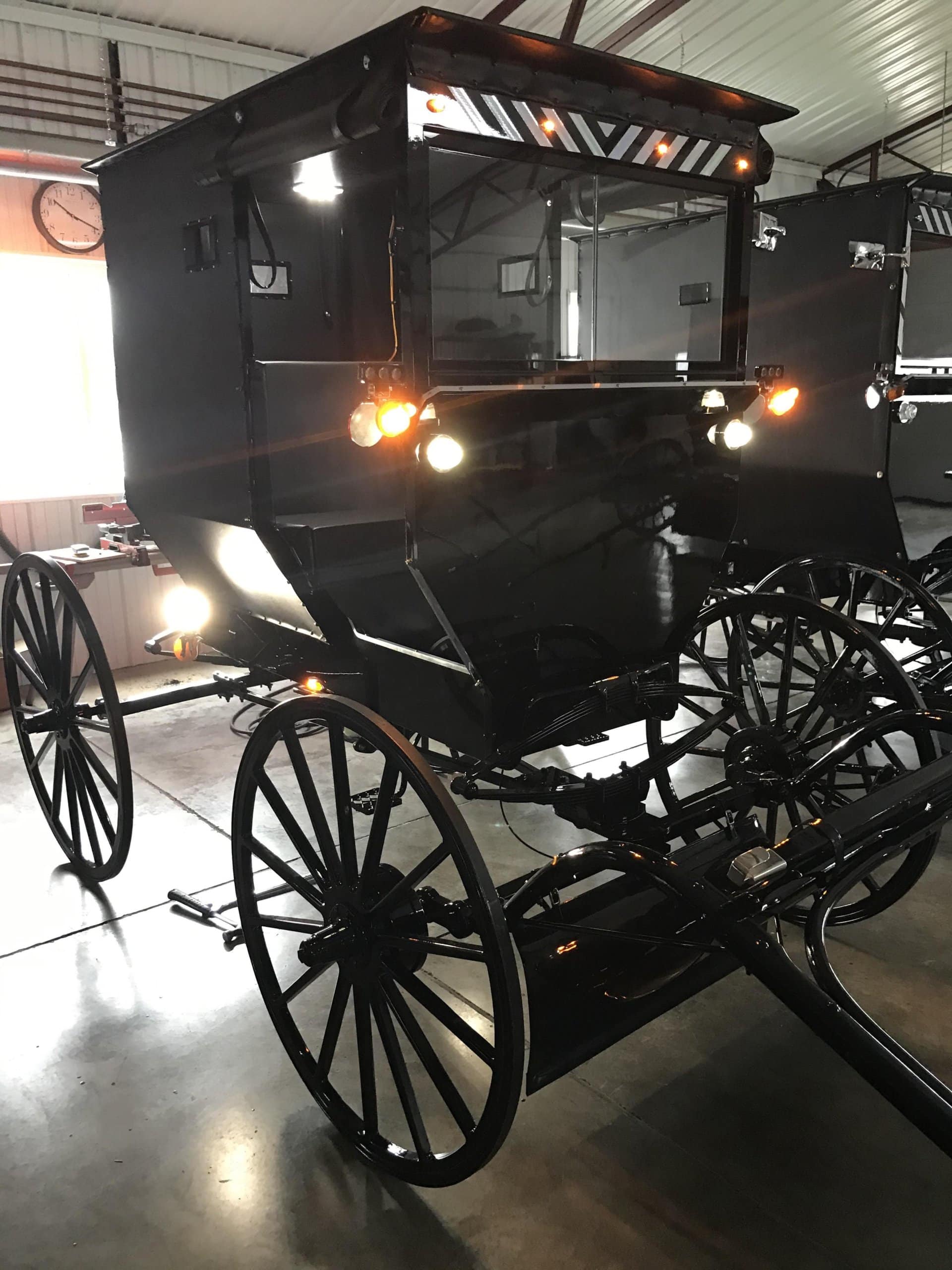
Two days before Christmas, seven Amish buggies stood in two rows at Detweiler’s Carriage Shop waiting for delivery.
Three others were in transit on the truck accompanied by shop owner Albert Detweiler on a cold winter morning.
Andrew Detweiler, his brother, said the five-man operation has been working hard to fill an uncommonly large number of orders.
“Winter is usually slow,” he said. “This winter’s been crazy. Our winter has been booked full.”
The three-generation business builds about 10 buggies per month for wide-spread customers. Local driver Chuck Kennedy comes by with his big enclosed truck to make deliveries, Andrew said.
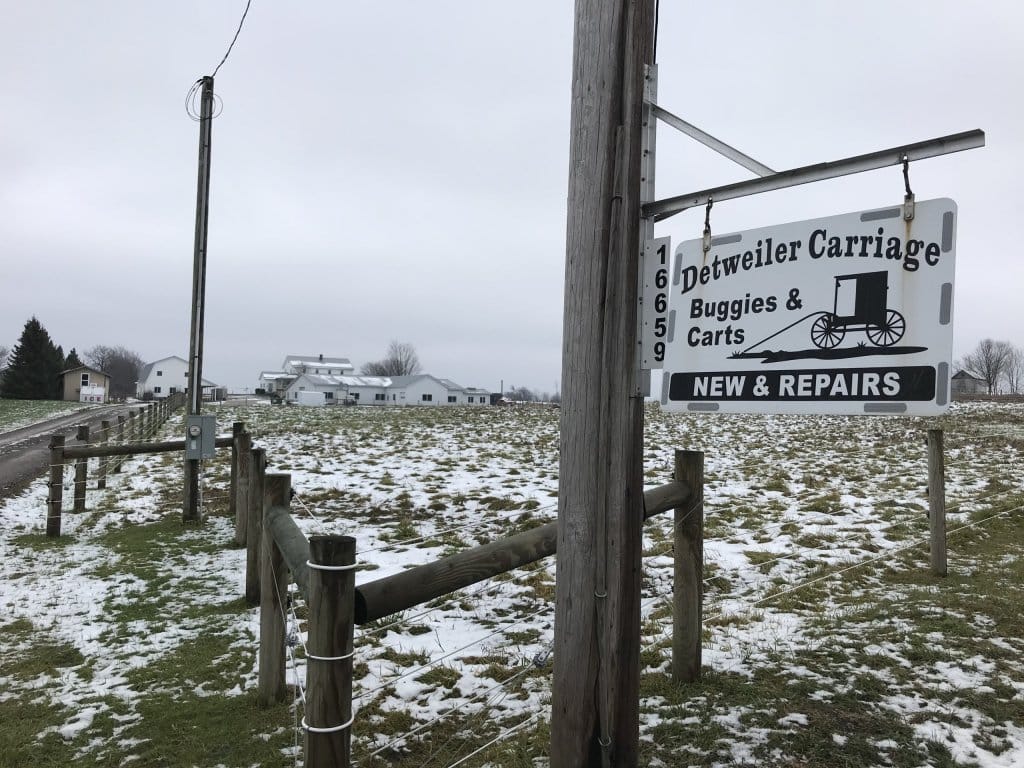
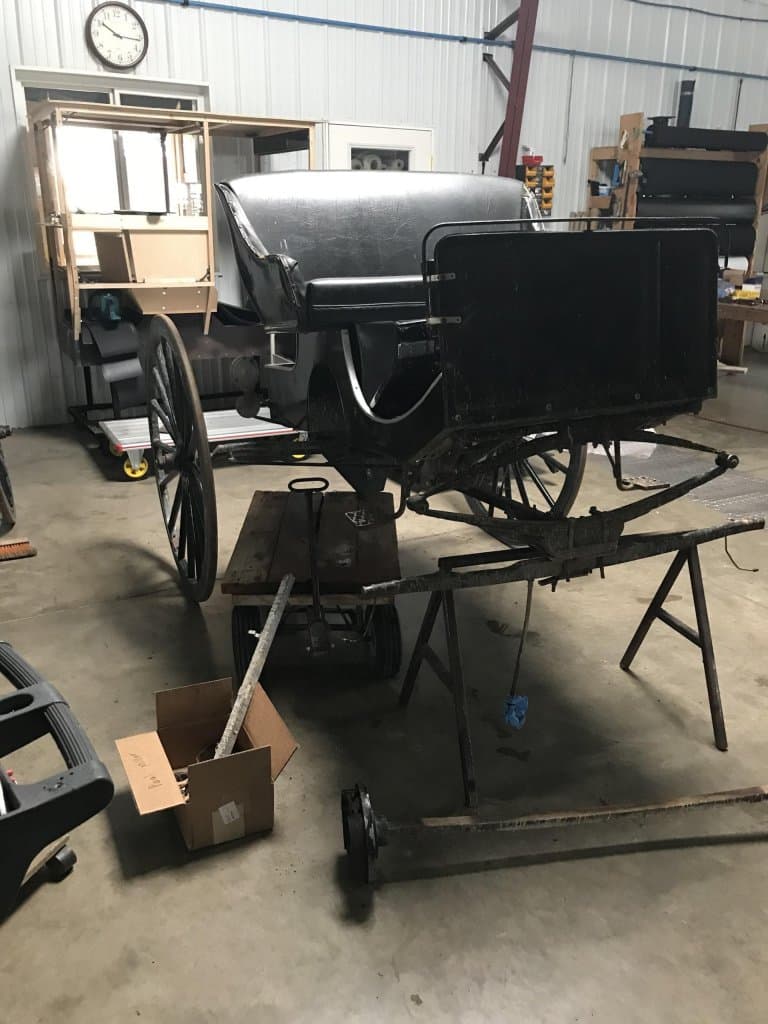
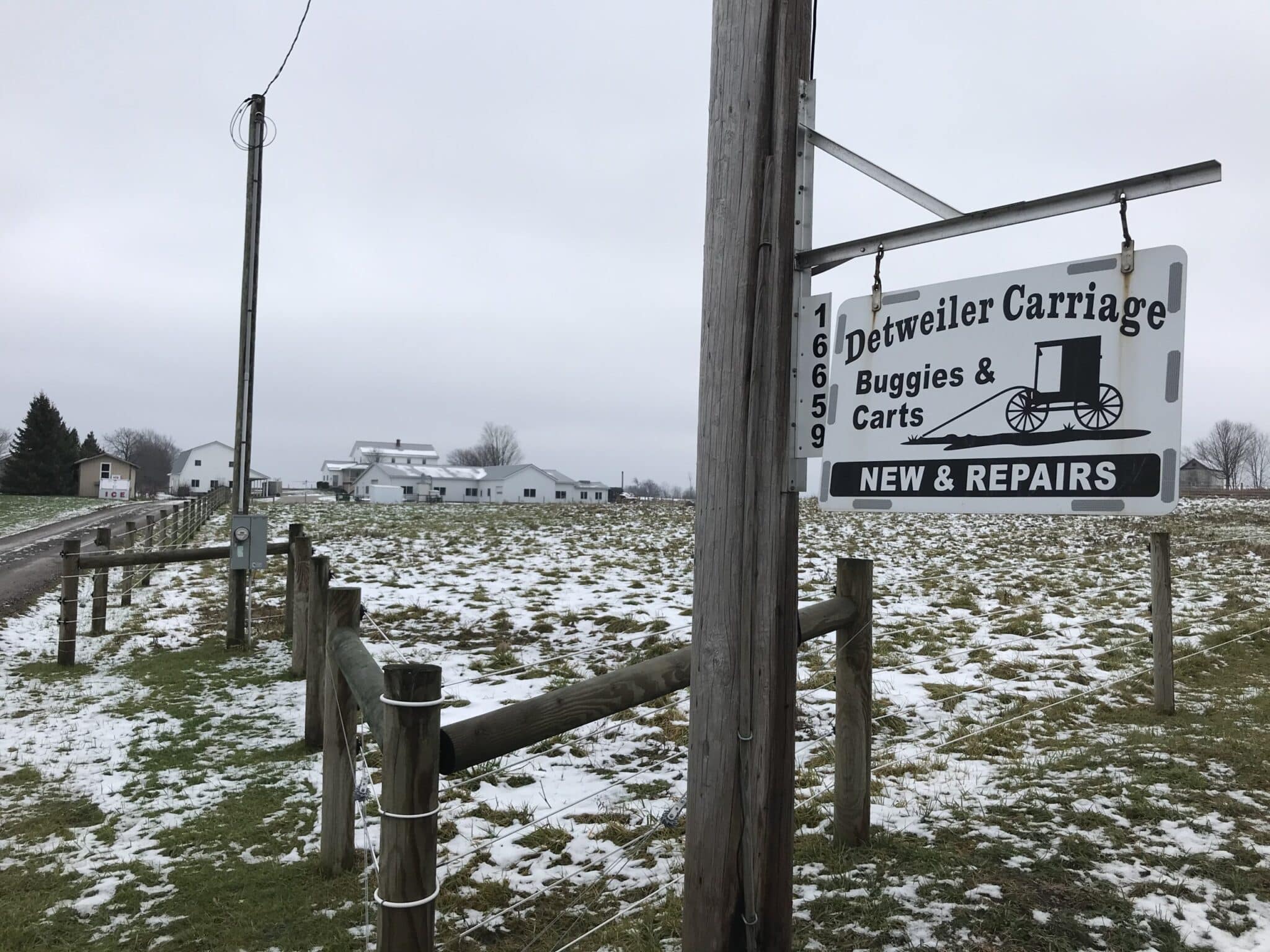
While making those rounds, Kennedy and Albert usually pick up five or six buggies that need to be repaired or refurbished and bring them back to the shop at 16659 Tavern Road, Albert said later in a phone interview.
The new buggies are custom made from orders Andrew and Albert receive from all over the local Amish settlement and sometimes from New York and Pennsylvania.
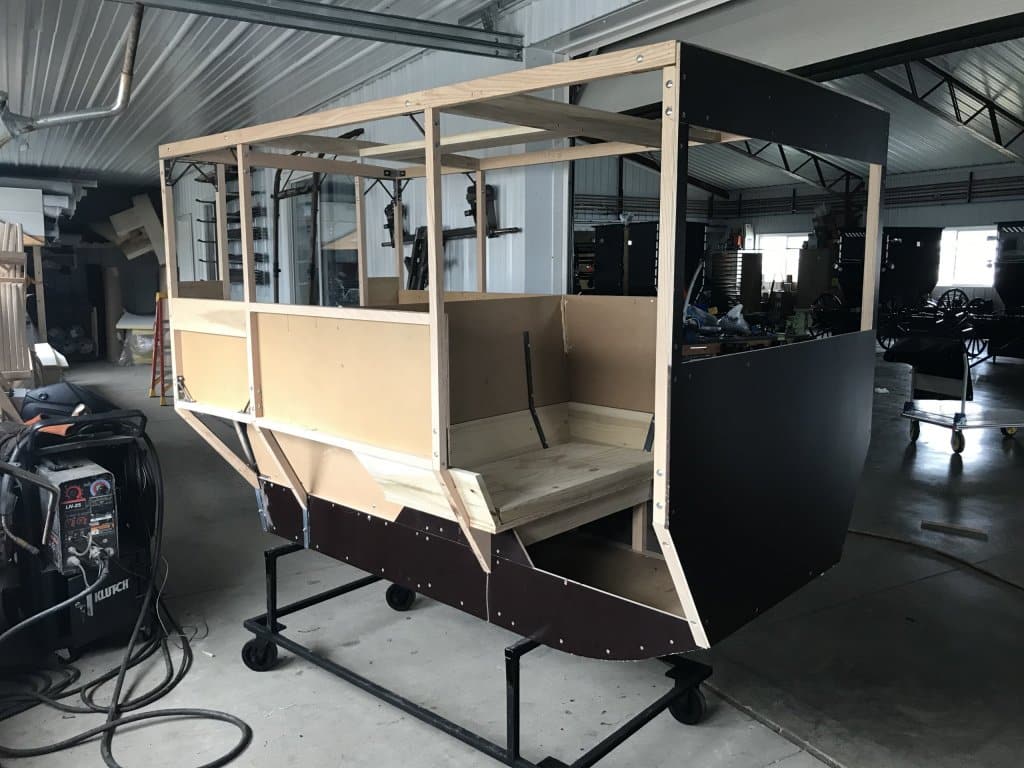
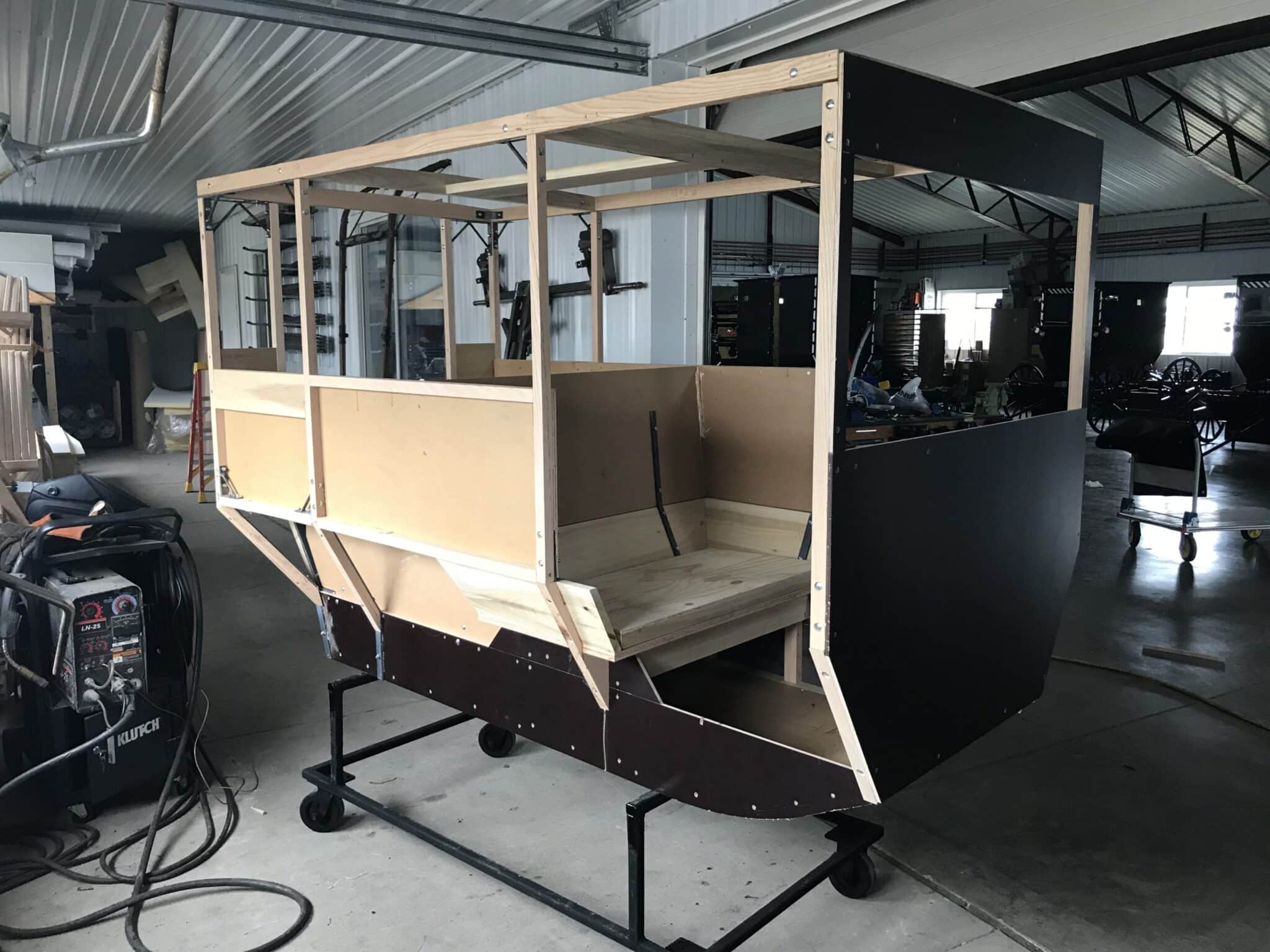
The brothers, as well as Albert’s son, Steven, and Mark Miller (Albert and Andrew’s nephew) operate the pristine, well-lit shop, but the founder of the business, John Detweiler, 74, builds the hardwood buggy frames in his shop on Burton Windsor Road in Burton Township.
“We take the order and tell Dad (John) what we need and he builds it,” Andrew said. “I started with Dad when I was in eighth grade about 20 years ago.”
When a frame arrives at the Tavern Road shop, it has to be sanded until smooth. Steven, 14, does a lot of the sanding, Albert said.
The wooden frame is primed, sanded again and painted. Then, the crew adds the roof, thickly-padded seats, roll-up vinyl curtains and electrical lighting powered by a rechargeable battery, Andrew said.
The light control board containing a row of blue lights is mounted on the inside front panel of the buggy. It is framed with wooden cup holders made by Miller, 22.

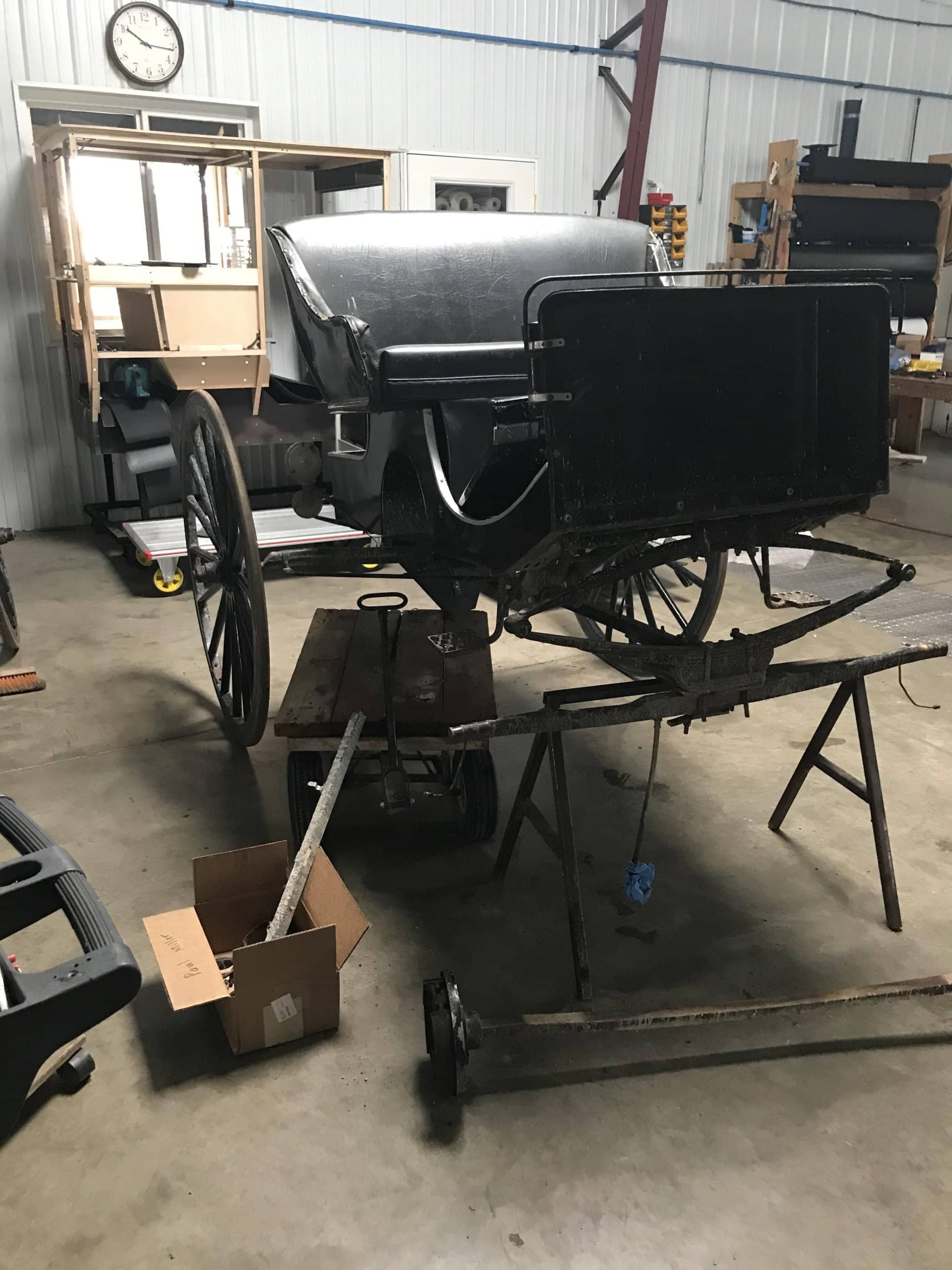
The Detweilers also refurbish older carriages, often adding wiring and lights.
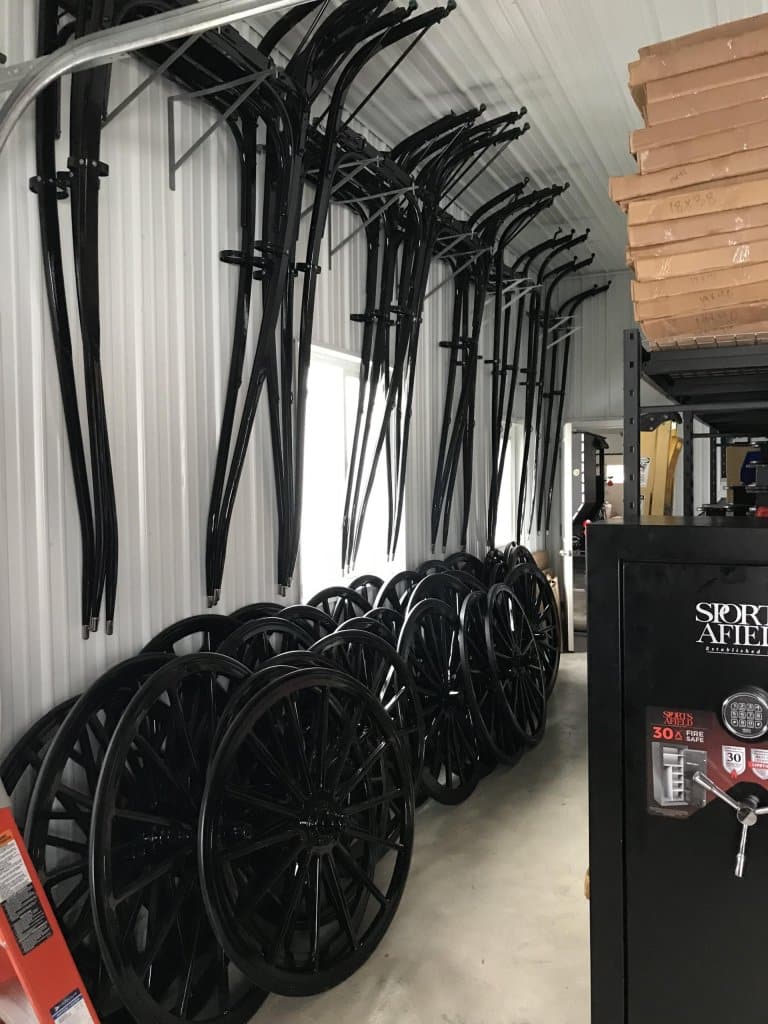
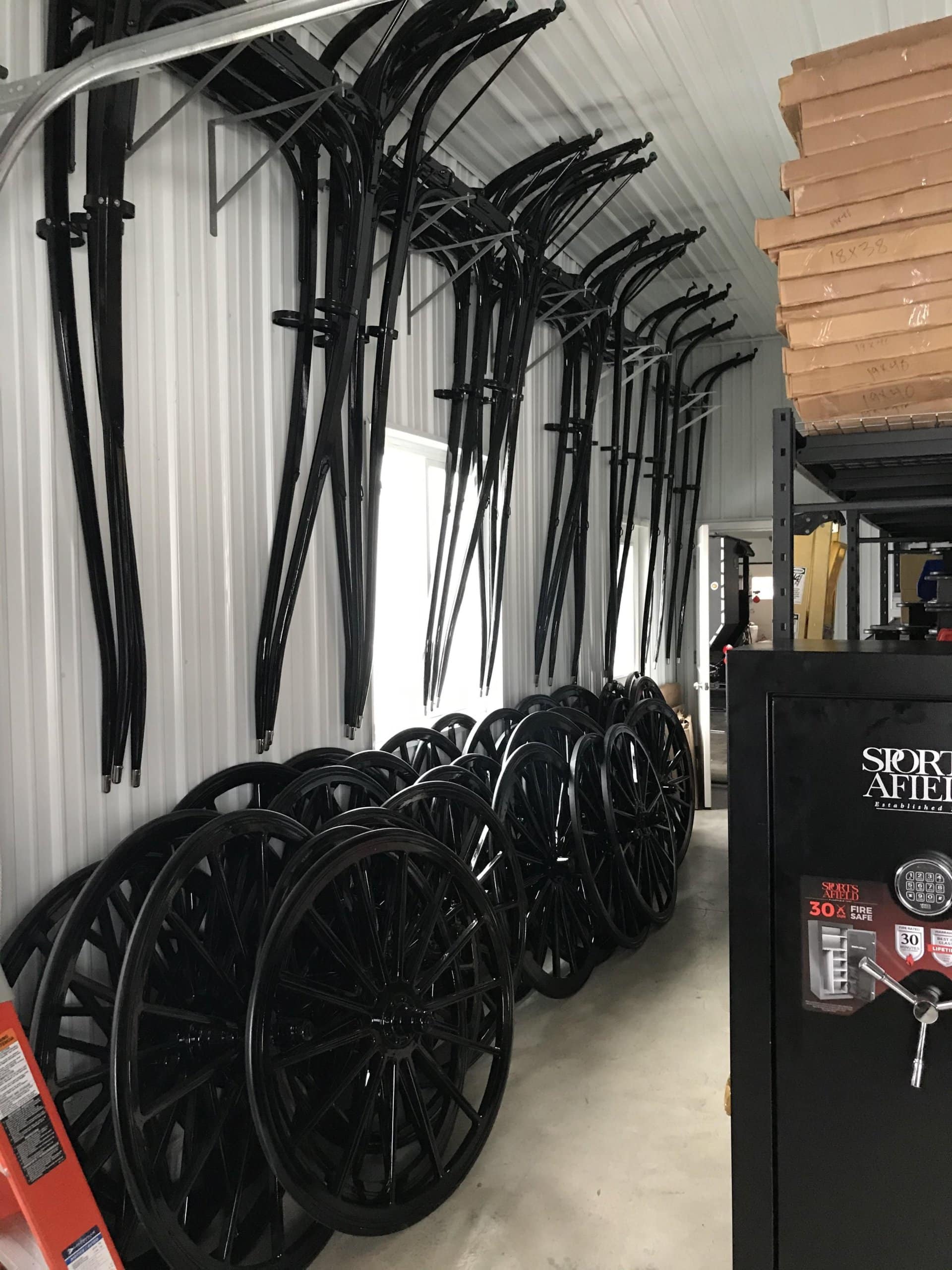
The steel undercarriage for new buggies and carts is built at the shop and the fiberglass, steel-rimmed wheels are bought from Townline Repairs in Middlefield Township, then painted a shiny black, Andrew said.
While they make the wooden shafts and other parts for the buggies and keep a reasonable inventory, some parts must be ordered.
As many businesses have found in 2020, getting parts and supplies in a timely manner is a challenge since delivery systems everywhere have been backed up by COVID-19-related challenges and holiday gift mailing, Andrew said.
What is usually a two- or three-day wait for parts has stretched out to more than a week, sometimes complicating buggy construction, he said, adding they try to keep an inventory of parts.
“We stock most parts. You can’t sell it if you don’t have it,” Andrew said.
The family also builds and sells jog carts — one-person carts that resemble racing sulkies — used to exercise a family’s carriage horses, he said.
The horses, typically bay standardbreds, need to be kept in condition so they can pull a buggy, loaded with a family, to church on Sunday or go to the store for the weekly grocery shopping, Andrew said.
Other Geauga County residents are used to seeing the uniformly black buggies on the road and in the parking lots at area stores.
While some may have more fluorescent tape on the back and front so they are more visible to faster-moving traffic after dark, buggies in the Middlefield settlement are mostly identical. Some are single-seat for two people, while others have a back seat and each has a storage space in the rear. But all are black.
“That’s the way it has always been,” Albert said.
John started the business about 40 years ago. Albert worked building houses for 20 years and when John was ready to step back in 2014, Albert and Andrew built the 5,000-square-foot shop to accommodate the growing business.
Albert said for the five to construct and deliver 10 new buggies per month and make repairs to a few more can be a challenge, but they work to meet the demand that continues to increase.
“No local carriage shop around puts out the number of buggies we do,” he said. “It’s busy.”
The main part of the building that can hold 10 buggies in various stages of construction has office space and a wide shed down one side. Across the workshop is an addition where wheels and shafts lean neatly against a wall and half a dozen jog carts are lined up with their shafts up in the air.
A wagon, waiting for some attention, is parked in the side yard.
“We need all the room we have,” Albert said.
But they don’t need to worry about decorating a show room or customizing carriages for their Amish customers. There are only a few options and next year’s models won’t be different from last year’s models.
Albert is comfortable with the tradition his family is carrying on in the community.
“We’ve added lights, but the style and shape are the same as they have always been,” he said.


