Disciplinary Counsel Push Back on Grendell Appeal
The Ohio Supreme Court should deny Geauga County Juvenile and Probate Court Judge Tim Grendell’s request to reconsider the disciplinary action taken against him in November 2025, said Joseph Caligiuri, counsel of record for the Supreme Court Disciplinary Counsel, in a Dec. 10 filing.
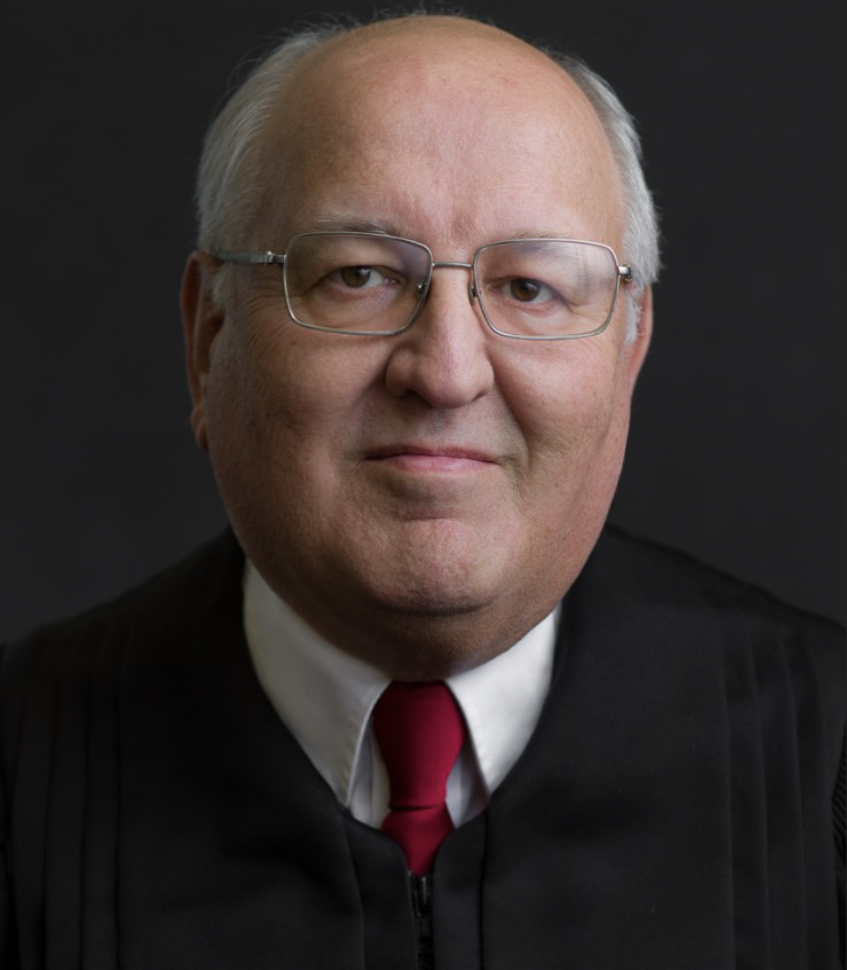
The Ohio Supreme Court should deny Geauga County Juvenile and Probate Court Judge Tim Grendell’s request to reconsider the disciplinary action taken against him in November 2025, said Joseph Caligiuri, counsel of record for the Supreme Court Disciplinary Counsel, in a Dec. 10 filing.
On Nov. 21, the Supreme Court ordered Grendell to be suspended from the practice of law without pay for 18 months with 12 stayed — effectively six months — due to misconduct in a case in which he ordered two teenage boys detained after they refused to see their father.
Grendell faced two other judicial misconduct charges — one stemming from a dispute between the Geauga County Auditor’s Office and Grendell, and another related to his testimony supporting Ohio House Bill 624, sponsored by his wife, former state Rep. Diane Grendell — both of which were dismissed.
Grendell asked the court to modify its decision to impose either a fully-stayed suspension or a public reprimand and requested to pay 33% of court costs, arguing he was disciplined on only one of three charges.
Caligiuri disagreed, saying Grendell’s attorney is attempting to relitigate the case.
“Here, (Grendell’s attorney Stephen Funk) presents four issues for this court’s reconsideration; however, the first two — that (Grendell) acted in accordance with the law when he incarcerated two children and that he should receive a lesser sanction — were lifted almost verbatim from his objections to the Board of Professional Conduct’s Report and Recommendation,” Caligiuri said, referring to the board’s recommendation to the Supreme Court regarding Grendell’s discipline.
“In other words, (Funk) seeks to relitigate issues that this court soundly rejected in its 89-page opinion. Accordingly, this court should deny respondent’s motion as it relates to the first two issues on this basis alone,” Caligiuri added.
The court was clear in their ruling that Grendell violated the Ohio Code of Judicial Conduct in his handling of the juvenile case, Caligiuri said, adding despite this, Funk argues in the appeal that Grendell acted in conformity with the law.

Furthermore, Caligiuri said the case law and section of the Ohio Revised Code Funk cited are inapplicable and amount to Funk “…rehashing an argument that this court has rejected.”
Grendell manufactured unruly charges to detain the two juveniles, Caligiuri said.
“Regardless of whether a legal basis may exist to detain a child on unruly charges, the court unequivocally determined that (Grendell’s) detention of the children was without basis and designed to coerce the children into visiting with their father, all while respondent ‘willfully turned a blind eye to legal safeguards designed to protect the best interests of children and avoid unnecessary detentions,’” he said. “There can be no other conclusion but that (Grendell) disregarded the law.”
Caligiuri also said Funk mischaracterized multiple court cases in his arguments.
“In fact, none of the cases that (Funk) cited stand for the propriety of detaining a juvenile on
unruly charges arising from a refusal to attend visitation. And none of the children in the line of
cases that (Funk) cited had been detained,” he said. “Rather, those cases — as this court noted — ‘demonstrate that children have been charged and adjudicated unruly for not complying with parental visitation.’”
The court recognized there were no factors that warranted the children’s detention, and even if they had been habitually disobedient, there would have been no basis to detain them, Caligiuri said.
Funk also largely ignored the violations related to Grendell’s conduct in the courtroom beyond the decision to detain the boys, Caligiuri said.
The court found Grendell threatened to “claw back” legal funds raised to support the boys’ mother, made comments during a hearing motivated by his anger over a webpage’s negative portrayal of him and failed to disqualify himself from the case when it appeared he could not be impartial, he said.
While Funk argues the court cannot find Grendell lost his ability to be impartial because none of the parties in the juvenile case alleged bias, requested recusal or filed affidavits of disqualification, Caligiuri said there is no legal basis for that argument and none of those factors are required to prove a lack of impartiality.
The court’s decision to suspend Grendell for six months was appropriate and consistent with precedent, he said.
Funk also argues there is no evidence the juvenile boys were harmed, despite “… gut-wrenching testimony regarding the change in (a brother’s) demeanor following his release from solitary confinement in the juvenile detention facility,’” Caligiuri said. “After his release, (the brother), a straight-A honor student, began failing classes and eventually dropped out of high school, and he began using drugs and cutting himself.”
The ruling will not create a “chilling effect” on judges, as Funk contends, Caligiuri said.
“This court’s decision warns juvenile judges that they will be subject to discipline if they ‘willfully
turn a blind eye to legal safeguards designed to protect the best interests of children and avoid
unnecessary detentions,’” he said. “Accordingly, (Grendell’s) ‘unjustified incarceration of two children’ warrants an 18-month suspension with 12 months stayed.”
Caligiuri said it is also appropriate for Grendell to be required to pay 100% of the legal costs, noting precedent has already been established and there is no reason to deviate from it.
“Regarding the board costs, there is no reason for this court to treat (Grendell) more favorably
than other judges who have incurred board costs despite the dismissal of some counts,” he said.