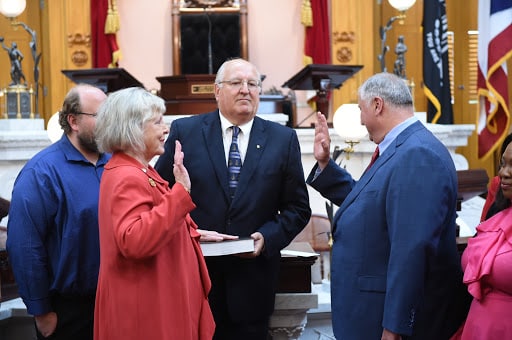
State Rep. Diane Grendell said in a prepared statement she had a “heavy heart” regarding allegations former Speaker of House Larry Householder orchestrated a $60 million racketeering conspiracy involving a 2019 nuclear power plant bailout bill she helped pass, but would not jump to conclusions.
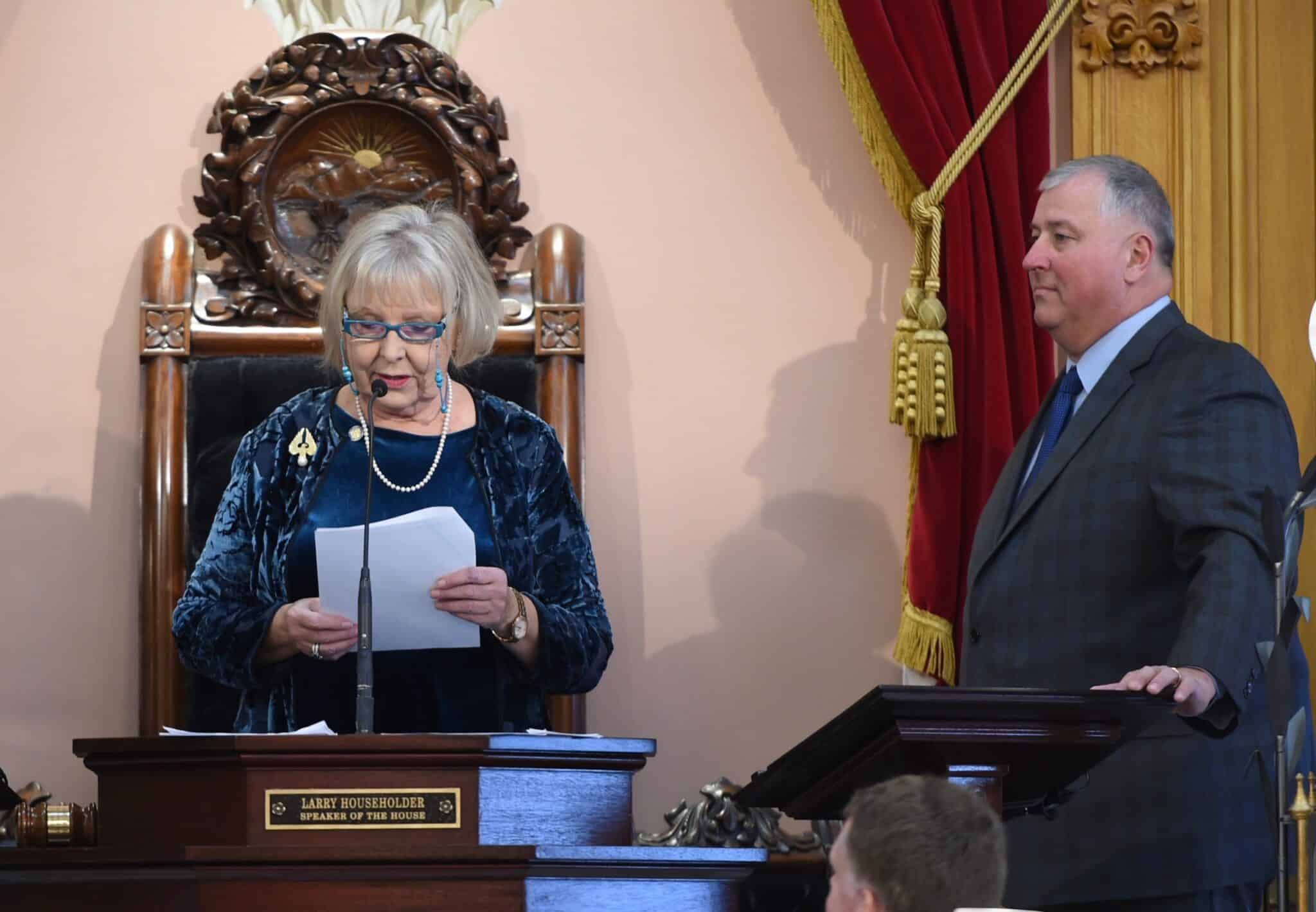
State Rep. Diane Grendell said in a prepared statement she had a “heavy heart” regarding allegations former Speaker of House Larry Householder orchestrated a $60 million racketeering conspiracy involving a 2019 nuclear power plant bailout bill she helped pass, but would not jump to conclusions.
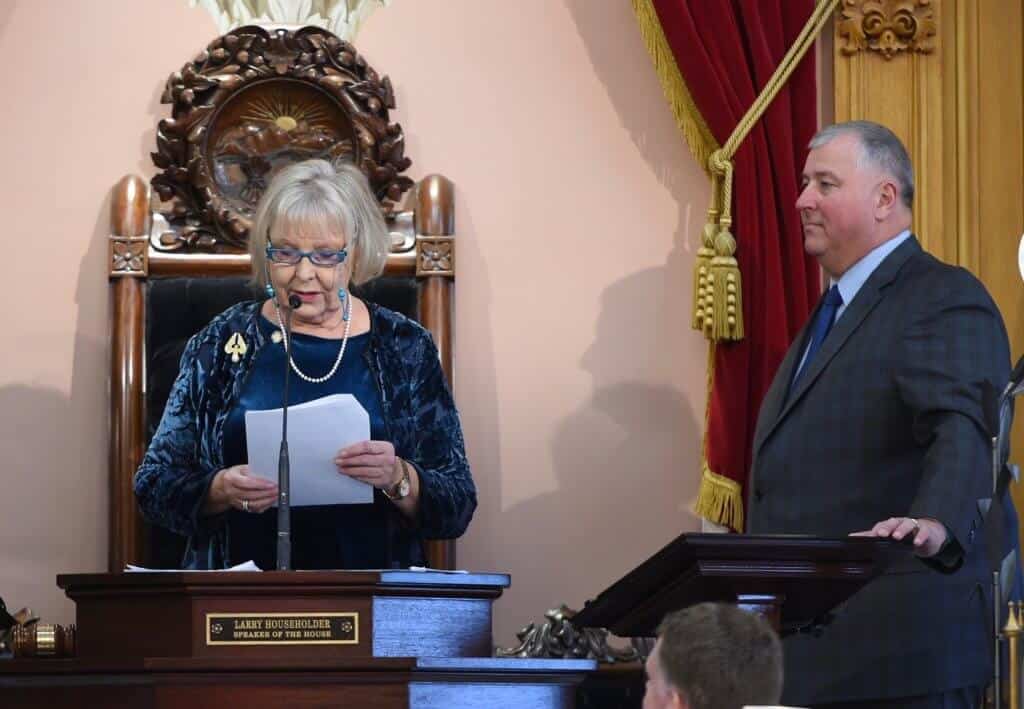
Unlike 91 of her colleagues, Grendell (R-Chester Township) did not vote July 30 to remove Householder (R-Glenford) as speaker. Instead, she was unable to get to the statehouse in time to cast a vote due to being stuck in traffic.
When she did make it, Grendell voted along with 53 other lawmakers to table a motion to expel Householder from the House, thereby keeping him in office. She voted in favor of former Ohio Supreme Court justice and current state Rep. Robert Cupp’s nomination to be the next speaker of the house.
Based on the Geauga County Maple Leaf’s review of campaign finance reports, being on Team Householder rewarded Grendell with a heavy war chest to wage her election campaign against political novice Frank Hall. Her campaign raised more than $500,000 in total contributions, according to the transparencyusa.org website, compared to $11,000 for Hall.
Grendell defeated Hall in the Republican primary, 7,914 votes to 5,180.
While the large sums of campaign cash shoveled to the Grendell for Good Government campaign do not produce any evidence of campaign finance violations or legal wrongdoing on the part of Grendell or her campaign, they do show she was among a handful of candidates to receive hundreds of thousands of dollars in donations, despite squaring off against a neophyte.
Householder drew the ire of the Geauga County GOP Executive Committee in May 2019 when he bypassed the committee’s recommendation — South Russell Village Councilman Dennis Galicki — and appointed Grendell to fill the 76th district seat vacated by former state Rep. Sarah LaTourette, who backed another representative for house speaker. The district encompasses most of Geauga County and northern Portage County.
However, house vacancies are filled by lawmakers of the same party as the departing member and Grendell was the choice of an Ohio House GOP screening committee Householder hand-picked.
Her appointment paid immediate dividends for Householder, as Grendell cast her vote in support of HB 6 — a priority bill of Householder’s that would abolish Ohio’s green-energy standards in favor of customer-funded subsidies to nuclear and coal power plants — within hours of her swearing in.

A “Legislative Solution”
When Householder was arrested July 21, the office of the U.S. Attorney for the Southern District of Ohio released an 81-page affidavit relating financial records and recorded conversations the government used to build its case against Householder and his co-defendants.
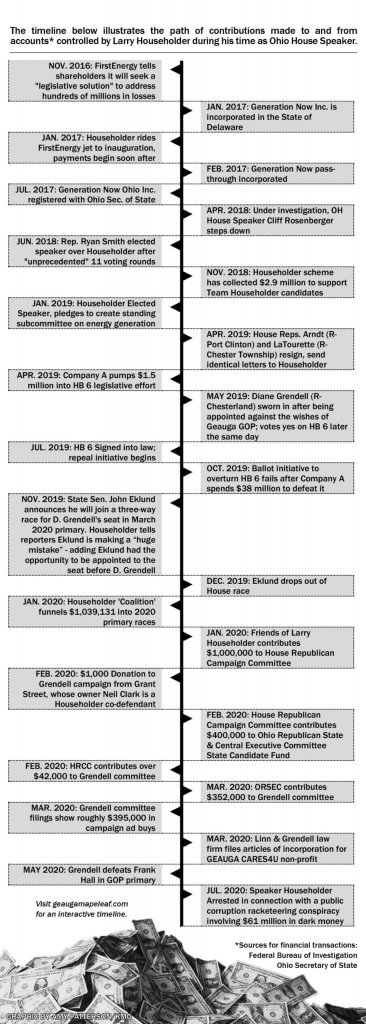
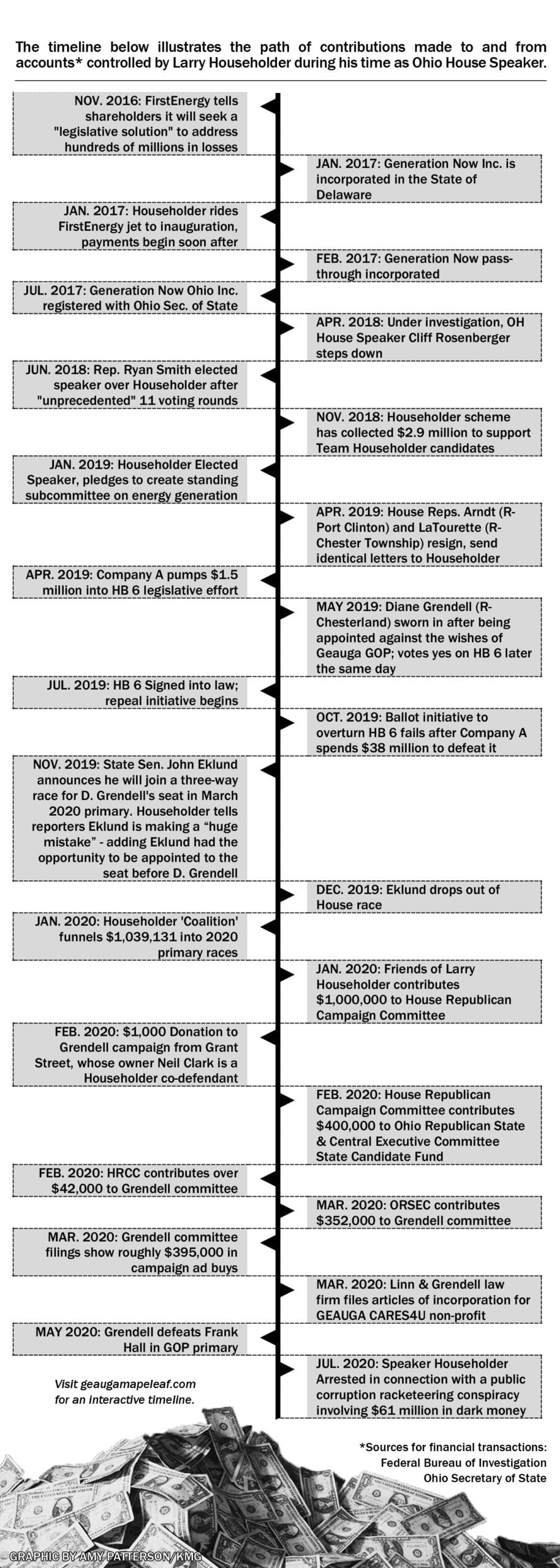
According to that FBI document, in November 2016, “Company A,” later identified in news reports as FirstEnergy, warned shareholders of “hundreds of millions of dollars in losses, particularly from its nuclear energy affiliate.” Discussions for a solution included deactivation or sale of power plants, debt restructuring, bankruptcy or what the company referred to as “legislative and regulatory solutions for generation assets.”
For a full-size interactive timeline, click here.
Householder, originally elected to the House in 1996, was first elected Speaker in 2001. In 2004, Householder and his associates were investigated by the federal government for money laundering and irregular campaign practices, but the case was closed without charges. Householder was term-limited out of his seat in 2004, but ran again in 2016 and returned to the House in early 2017.
In January 2017, Householder rode to President Donald Trump’s inauguration in Washington, D.C., on a FirstEnergy private jet.
The FBI statement says following that trip, in March 2017, Householder began receiving quarterly $250,000 payments from the company into a bank account in the name of a 501(c)(4) entity Householder secretly controlled called Generation Now. Generation Now passed over $1 million through the Growth & Opportunity PAC, a conservative super PAC that has purchased significant media buys through groups such as CrossRoads Media and Storytellers Group.
David Eric Lycan, a former attorney at Dinsmore & Shohl LLP — a Cincinnati-based law firm at which state Rep. Bill Seitz (R-Cincinnati) is a partner — acted as the statutory agent for both Generation Now and Kentucky-based Growth & Opportunity PAC.
Householder and his associates in the criminal enterprise received over $2.9 million in 2017 and 2018, which was used both for personal benefit and to support Householder’s bid to become Speaker, the FBI report alleged.
Householder and his associates spent millions in FirstEnergy money, funneled through the network of PACs and committees to support House candidates involved in the 2018 elections who would back both Householder’s bid for Speaker and the nuclear bailout, the FBI report stated.
On April 10, 2018, House Speaker Cliff Rosenberger (R-Clarksville) resigned while under FBI investigation, setting up a battle between Rep. Ryan Smith (R-Bidwell) and Householder over the Speakership.
After an “unprecedented” 11 rounds of voting, Smith was elected Speaker in June 2018. But by January 2019, Householder won the gavel after a push from Democrats, who saw him as more friendly to labor and more willing to work across the aisle on bipartisan legislation, according to media reports at the time.
The day Householder was elected Speaker – Jan. 7, 2019 – he announced he would create a standing subcommittee on energy generation.

Householder as Speaker
Within months of starting his term as Speaker, both Reps. Steve Arndt (R-Port Clinton) and LaTourette announced they would resign. Although the announcements, on April 10 and 25, were roughly two weeks apart, the pair sent identical resignation letters to Householder, setting up his eventual appointment of Grendell.
Grendell was sworn into office May 29, 2019, and voted to approve HB 6 that same day. Gov. Mike DeWine signed the bill into law July 23.
Bank records uncovered by the FBI investigation show Company A wired approximately $9.5 million into the main Generation Now account between April and May 2019. The report said passage of the company’s funds through Householder-controlled entities solidified his political power by showing members the strength and reach of his political operation.
The FBI report details the high-pressure campaign Householder put on lawmakers — including “a media blitz — television ads, radio ads, mailers and digital media” unleashed against legislators to gain their support for the bill.
A campaign to organize a statewide ballot initiative referendum to overturn HB 6 began immediately after it was signed into law.
“This required ballot campaign organizers to collect the signatures of registered voters in order to put the referendum of HB 6 on the 2020 ballot,” the FBI report said. “And so, Company A’s and the Enterprise’s fight continued.”
From July 24 to October 22, 2019, Company A-controlled accounts wired over $38 million into Generation Now to defeat the ballot initiative so HB 6 would go into effect, according to the FBI. Funds were used to purchase media ads and mailers against the ballot initiative, to “conflict-out” signature-collection firms, and to pay off and bribe signature collectors supporting the referendum.
In sum, the FBI stated Company A entities paid Householder and others involved in his scheme about $61 million in secret payments over a three-year period in exchange for the billion-dollar-bailout in HB 6.
Neil Clark, founder of Grant Street Consultants, was named as one of four defendants in addition to Householder in the government’s case. In a 2019 recorded conversation, Clark said Company A operated as the “bank” for Householder’s scheme.
According to the FBI, Clark said “Generation Now is the Speaker’s (c)(4)” and its funds were “unlimited.” Defendant Matthew Borges, former chair of the Ohio GOP, similarly described Company A’s payments to the enterprise as “monopoly money.”
Clark also described himself in recorded communications as Householder’s “hit man” who will do the “dirty s**t.”
Besides funding the legislative campaign to pass HB 6, the FBI said Company A’s money was used on personal expenses, including at least $500,000 in personal benefits to Householder, and a profit of over $8 million of Company A money in accounts controlled by Householder and his co-defendants at the end of 2019.

2020 Primary Campaigns
The bank account Householder and his co-conspirators controlled remained largely inactive from October 2018 until early 2020, when $1,010,000 was wired from Company A to a coalition that eventually funneled the money through Growth & Opportunity PAC, according to the FBI report, which added Growth & Opportunity PAC used the money to benefit “Team Householder” candidates for the 2020 primary election.
According to FEC filings, the PAC spent over $1 million between February and March on legal services, bank fees, polling, research, direct mail services, advertising via TV, radio and digital, and media production for those candidates. Householder’s campaign committee contributed $1,000,000 to the House Republican Campaign Committee, which the FBI reported Householder controlled in order to direct resources to his allies in the statehouse.
The FBI said Householder’s support came in a variety of forms, including individual campaign contributions, money and staffing from HRCC and “dark money resources.”
In February, the HRCC contributed $400,000 to the Ohio Republican State & Central Executive Committee State Candidate Fund, which donated to only three primary races in 2020:
- Grendell for Good Government: $352,200 across three donations in early March;
- Citizens for Niraj Antani: $77,919.60 in one donation May 8; and
- Citizens for Tom Young: $26,871.11 across 10 donations from late March to late April.
On Feb. 24, the HRCC also donated almost $43,000 to Grendell for Good Government. HRCC filings record contributions to only five committees in 2020:
- Friends of Mark Frazier: $643,313.11 through 19 donations between Feb. 4 and Apr. 13;
- Ohio Republican State Central & Executive Committee State Candidate Fund: $400,000 in a single donation Feb. 16;
- Grendell for Good Government: $42,778 in a single donation Feb. 24;
- Stephens for Ohio: $13,644.34 in two donations in February and March; and
- J. Todd Smith for Ohio: $8,107 in three donations from January to February.
Clark’s Grant Street Consultants also contributed $1,000 to Grendell for Good Government on Feb. 5.
In addition, between February and April her campaign received more than $55,000 from the Ohio Republican Party.
On July 23, the Geauga County Maple Leaf emailed Grendell’s Columbus office requesting comment on several issues, including whether she called for Householder’s immediate resignation, whether her campaign was reviewing the donations it received from various Ohio Republican Party campaign funds to determine if it received or benefitted from any alleged dirty money and whether her campaign intended to return the $1,000 donation from Grant Street Consultants.
The next day, Grendell said the Maple Leaf has “no journalist integrity as you have pursued a malicious, slanderous campaign against the Grendells for several years.”
“Therefore, we see no reason to respond to your questions since you will not report answers correctly,” Grendell said in her email reply. “Clearly, your paper only seeks to hurt the good people who work only to help Geauga County residents.”