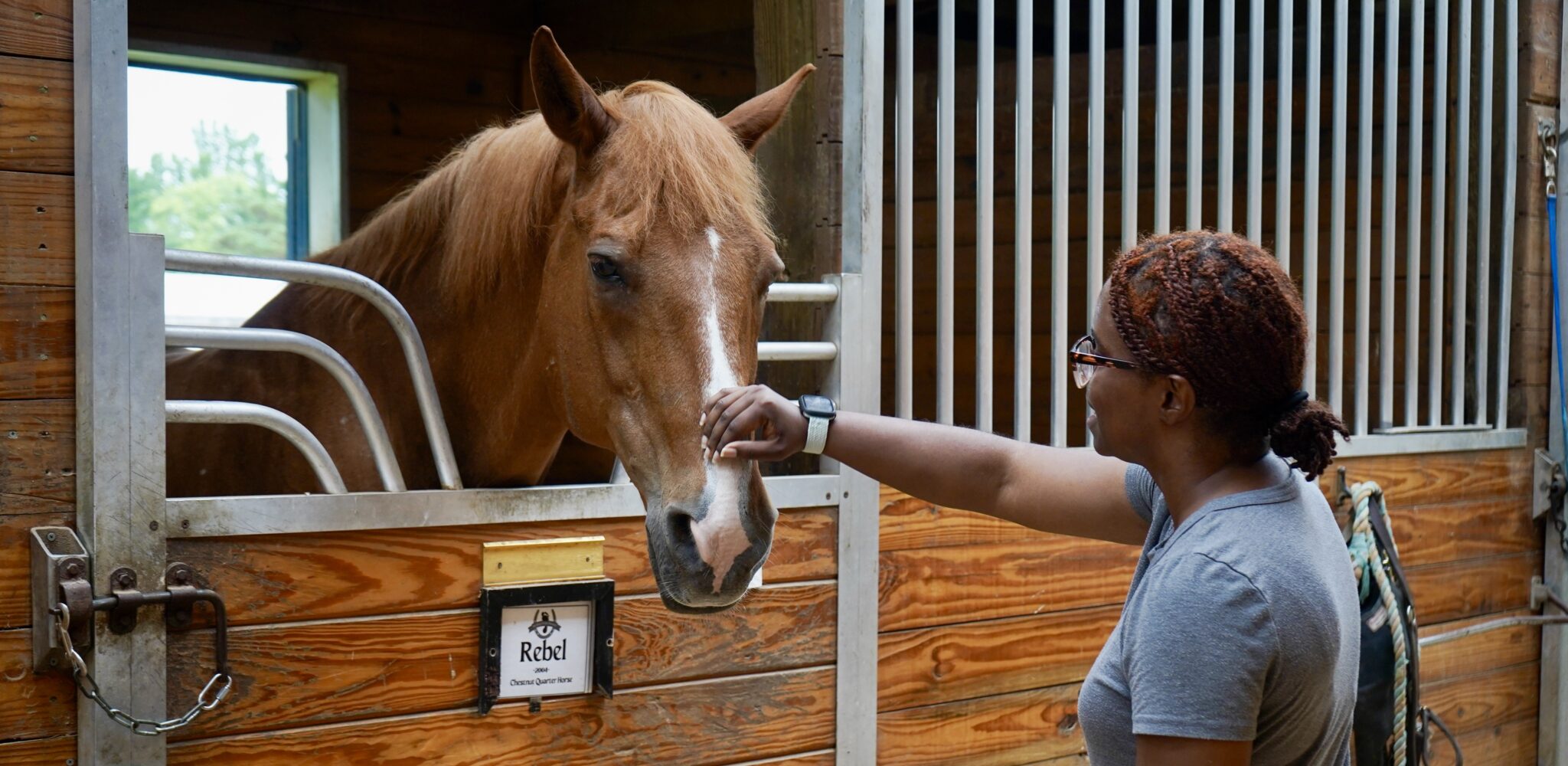
Equine therapy organization In Step With Horses is reaching more clients and launching new programs thanks to the Geauga West Rotary Club’s 2025 Community Impact Grant.
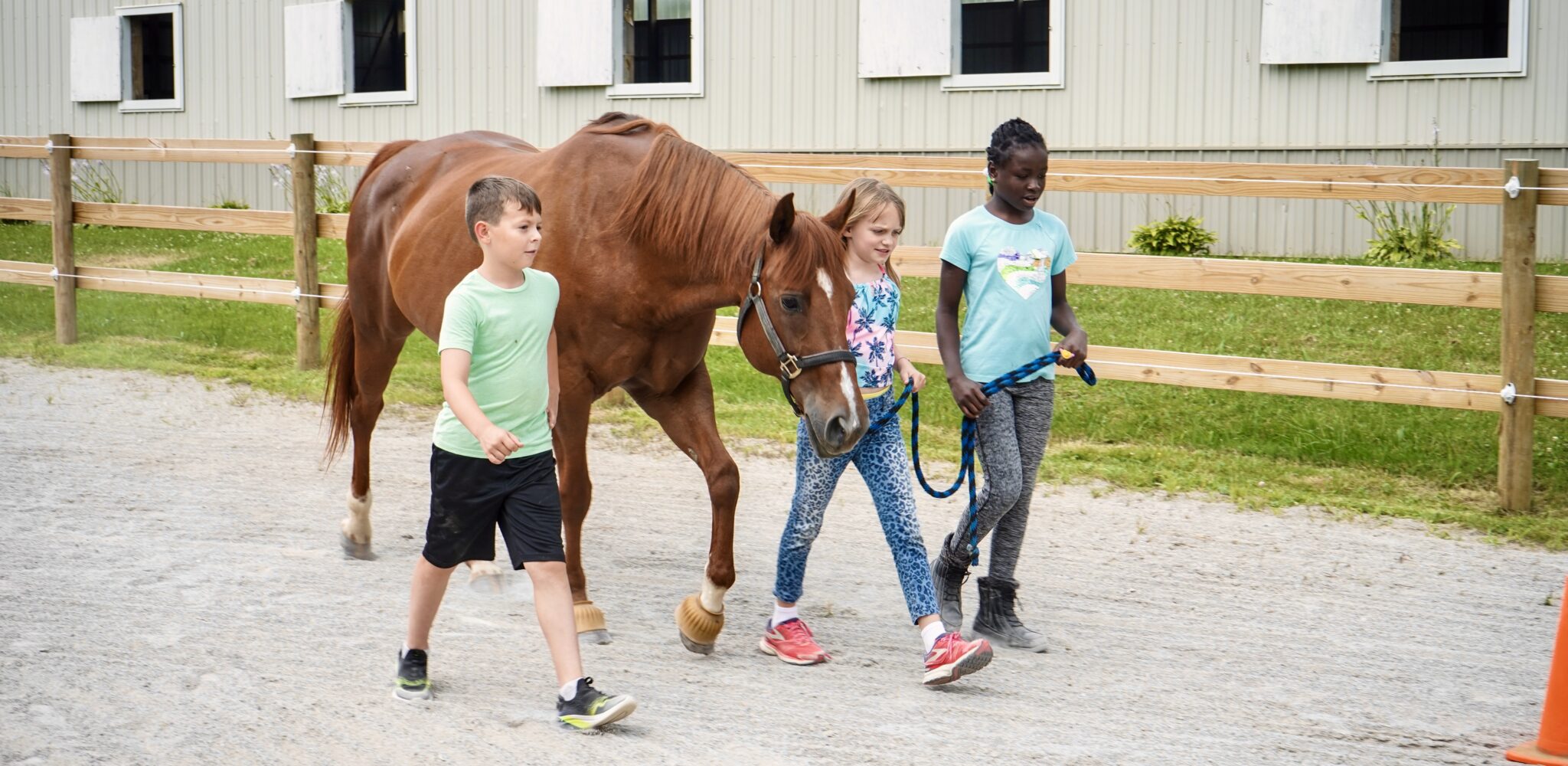
Equine therapy organization In Step With Horses is reaching more clients and launching new programs thanks to the Geauga West Rotary Club’s 2025 Community Impact Grant.
The grant, which awarded In Step, of Chester Township, $5,000, was matched with an additional $5,000 from the Marguerite Wilson Foundation, enabling the organization to expand its services.
Located at 7212 Wilson Mills Road, In Step provides psychotherapy, riding and wellness programs for clients of all ages dealing with anxiety, trauma, grief and other challenges through hands-on work with horses, Clinical Director Sarah Swiger said March 23.
“In Step With Horses was selected from several applicants by members of the Geauga West Rotary (Club) Foundation Board for its well-articulated program, goals and objectives and its unique way of addressing the mental health issues of both adolescents and adults from all backgrounds,” said foundation Chair John Zachariah.
The Rotary uses its Four-Way Test as a selection criterion: “One, is it the truth? Two, is it fair to all concerned? Three, will it build goodwill and better friendships? Four, will it be beneficial to all concerned?” Zachariah added.
“One of the significant accomplishments through this partnership is the beginning of an ongoing relationship between In Step With Horses and the Geauga West Rotary Club that is focused on serving the community by meeting the needs of both the young and the old who seek mental health services in a non-traditional setting assisted by non-judgmental horses and skilled professional therapists,” he said.
Swiger said the grant allowed the organization to increase its client base by more than 20%, surpassing the original goal of 15%.
Equine-assisted psychotherapy programs are ground-based and include a therapist, client and at least one horse, she explained, adding activities are tailored to client needs.
“For the therapy side, it would be equated to traditional therapy in an office, except you come out into natural space, you’re in an arena, or you’re outside in nature and you incorporate and include horses in the session,” Swiger said.

She added that three traditional therapy sessions are roughly equivalent to one equine-assisted session.
“It may look something like the client going out into the pasture space with a horse or a few horses and working on connecting with that horse,” Swiger said.
For example, a client could work on building boundary-setting skills they can apply in other areas of their lives, she said.
“While that sounds frightening to some people, it actually works very well for especially people in trauma and grief, and even a lot of our first responders, where that’s not the culture to talk about your stuff,” Swiger emphasized.
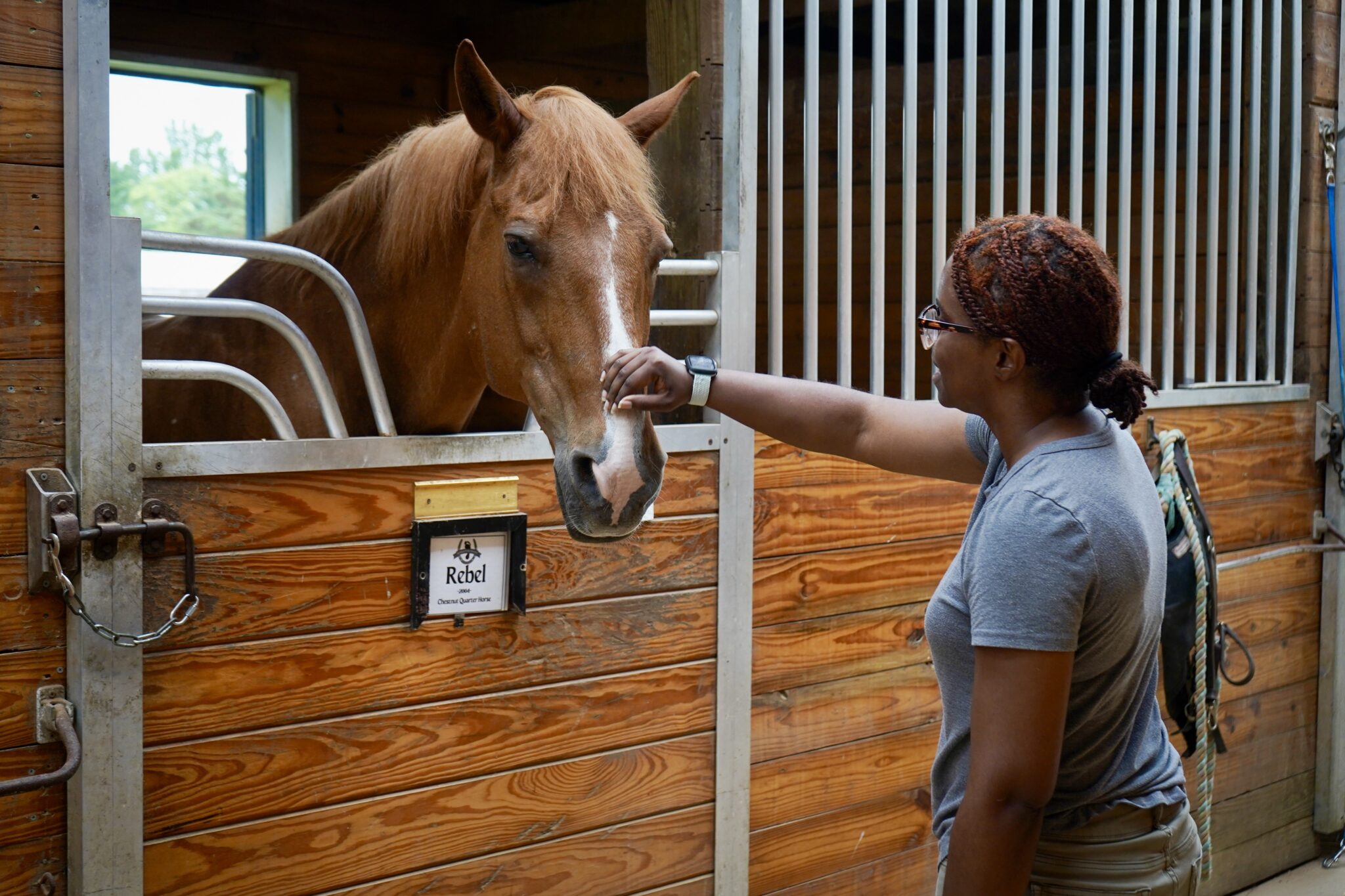
Other exercises, such as brushing horses, promote mindfulness and self-regulation, she said.
“A lot of times, (the therapy happens) out in the space with the horse not connected to any type of rope, or it’s there in their space and we’re meeting them where we are in our space, as well,” Swiger explained. “That’s a good way to regulate and really to get, you know, your feet under you and to kind of bring your body into itself because horses, they work off of energy, so they know how we are internally when we enter their space or even before we enter their space.”
Riding sessions also teach clients about horse care and equipment, offering a full-body experience that accelerates therapeutic progress, Swiger said.
“It happens more quickly because it’s a full-body experience,” she said. “We use all of our basic core therapy modalities, but then incorporating the horses in it, I think, kind of expedites the process and it brings things out more quickly than maybe a traditional setting would.”
The grant has enabled In Step With Horses to launch new initiatives, such as the empowHERd program, an eight-week group therapy program for pre-teens to build self-confidence and self-worth, Swiger noted.
“It’s allowed us to … partner with other organizations in the community or meet other people and other organizations in the community of Geauga County that maybe we didn’t have access or know about before,” she added.
Swiger said In Step aims to continue expanding outreach, partnering with additional organizations, and diversifying programming.
“We’re really doing what we can to expand our opportunities … for programming, but also to really continue to develop the program that we’ve had all along,” she said. “And to make sure that it’s dynamic and that it grows with what the community needs.”