


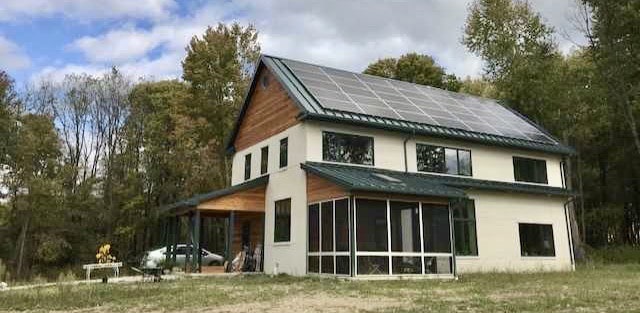
When Jacqueline Samuel decided to build a solar-powered house a few years ago, she wanted a dwelling that uses as little energy as possible.
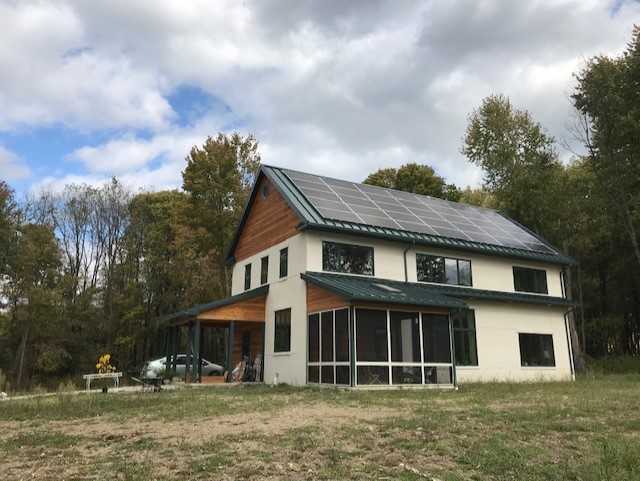
When Jacqueline Samuel decided to build a solar-powered house a few years ago, she wanted a dwelling that uses as little energy as possible.
Her decision arose from her concerns about pollution and a wish to be part of maintaining the Earth’s delicate balance as a living organism, she said during a virtual presentation to the Geauga Economic Leadership May 7.
Samuel’s beliefs were bolstered by her research showing 80% of the energy in the U.S. comes from fossil fuels extracted from the Earth.
She researched ways in which she could minimize her own carbon footprint and determined her home could make a difference.
“We have a choice to move away from fossil fuels and choose renewable energy. That can make a big difference in mitigation of damage to the Earth,” she said.
With a clear goal in mind, Samuel sought out an architect who would understand her concerns and abide by her wishes.
“I was very lucky to find (Chardon architect) Hank Penttila,” she said. “We agreed on the philosophy of protecting the environment.”
Almost two years ago, Samuel moved into her new house and is thrilled it uses about 40% less energy than a regular home. Samuel said the 35 solar panels on the roof produce twice the energy she needs and she only needs to use the electric grid when cloud cover keeps the solar panels from producing.
“It’s really nice to receive an Illuminating Company bill of $0,” she said.
Her house was designed so the windows have overhangs that keep the hot summer sun out but, when the winter sun is lower in the sky, the windows take advantage of the warming rays, Samuel said.

Educating the public about solar power was one of her goals, she said.
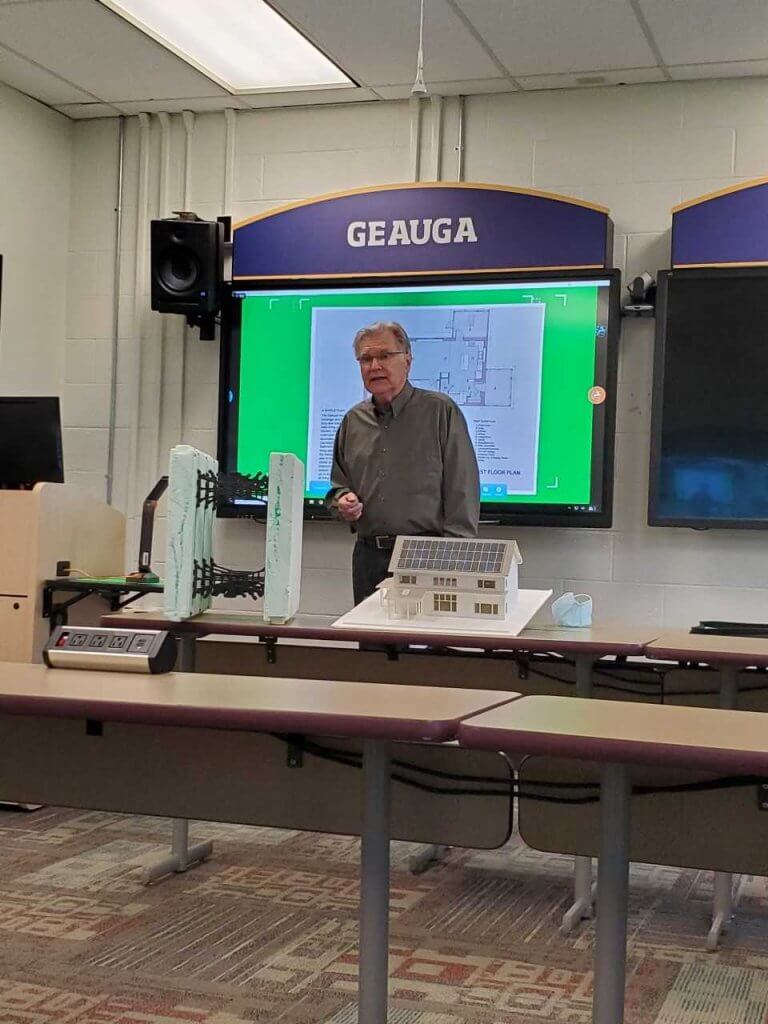
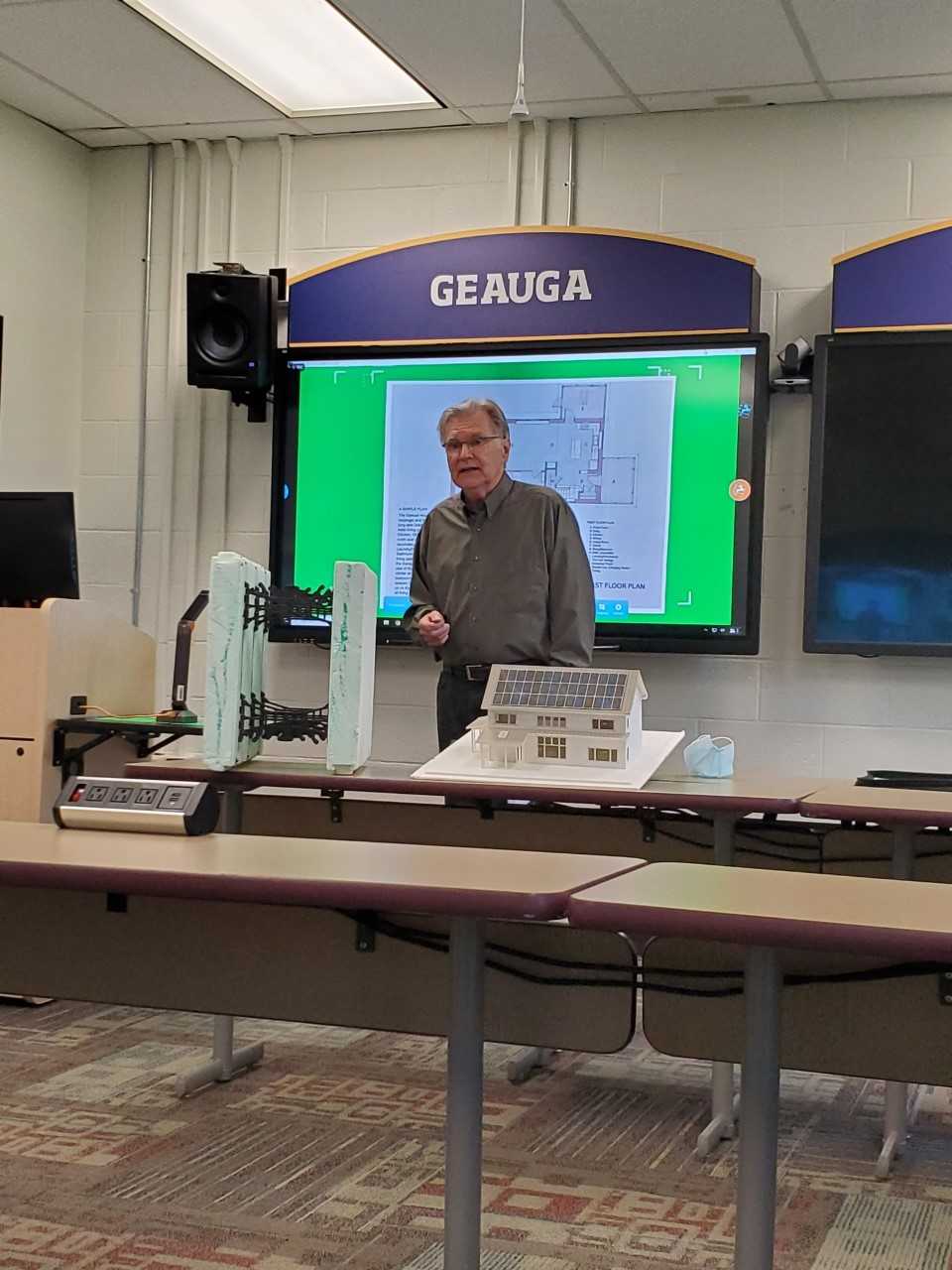
Penttila followed Samuel’s remarks with an explanation of the construction of her house.
“With a solar house, we try to achieve a shape, geometrically, that is very efficient,” he said, adding a two-story home is less expensive to build than a single storey house.
“The closer you get to a cube, the more efficient you are,” Penttila said.
The position of a house can make it more energy-efficient and Samuel’s lot fit the bill.
“The house sets on the property, so the living spaces flow into the southern portions of the property. The living spaces are on the sunny side,” Penttila said, adding a screened-in porch was added to the south side, as well, and the utility room, bathrooms and garage are located on the north side.
Although Samuel could live in a smaller home, the possibility of resale was a design consideration, Penttila said.
A larger family would probably make full use of the energy created by the solar panels, he added.
However, the second floor can be closed off and the first floor, built on a slab without steps or curbs, is livable and accessible for an older or disabled person, Penttila said.
Insulation, used in the construction of most houses today, was beefed up to make the dwelling more energy efficient.
“The best investment, I learned a long time ago and have proved, is insulation. The more insulation you put in the walls, floor and ceiling and good windows – that is where you get your greatest return on investment,” Penttila said.
The concrete slab was poured on top of 8 inches of insulation. The walls are made of insulated concrete forms, the doors and double-pane casement windows are tight and the attic has a 24-inch layer of cellulose insulation, Penttila said.
Overall, the house has an insulation rating of R45, compared to typical residential construction rating of R16, he said.
The ICFs have 2 inches of insulation on the outside. The inside of the forms is filled with concrete, creating very well insulated walls Samuel chose to cover with stucco.

“The ICF wall can be finished with any siding. We used stucco for durability and to discourage woodpeckers,” Penttila said.
Because the house is airtight, outside air is brought in and adjusted by an energy recovery ventilator that heats or cools it to the appropriate inside temperature, he said.
An air exchange system senses the need to change the interior atmosphere and brings in fresh air as needed.
“Typically, you would have six to eight air changes in 24 hours. It’s an incredible piece of equipment, new to the market,” Penttila said.
Double wall construction provides interior walls behind which wiring and pipes run, he
said.
Finding a builder took some time, but Penttila and Samuel settled on Ray Miller Construction because of the company’s collaborative nature and the subcontractors were comfortable with the myriad details different from common residential construction, Penttila said.
“Some contractors felt they couldn’t get their trades to handle the details. It’s a team — you have to have everyone pulling in the same direction,” he said.
The effort was rewarding, but he offered advice for listeners who aren’t planning to build.
“Most of you will never build a house, but you will buy an existing house,” he said. “You can retrofit those houses with features of a net zero house.”
Lighting fixtures can be replaced with LED fixtures, water sensing fixtures can reduce the amount of water used.
He said he favors electrical as opposed to gas heating and appliances because the amount of energy used can be measured.
“We need to really look at our energy consumption,” Penttila said.


