


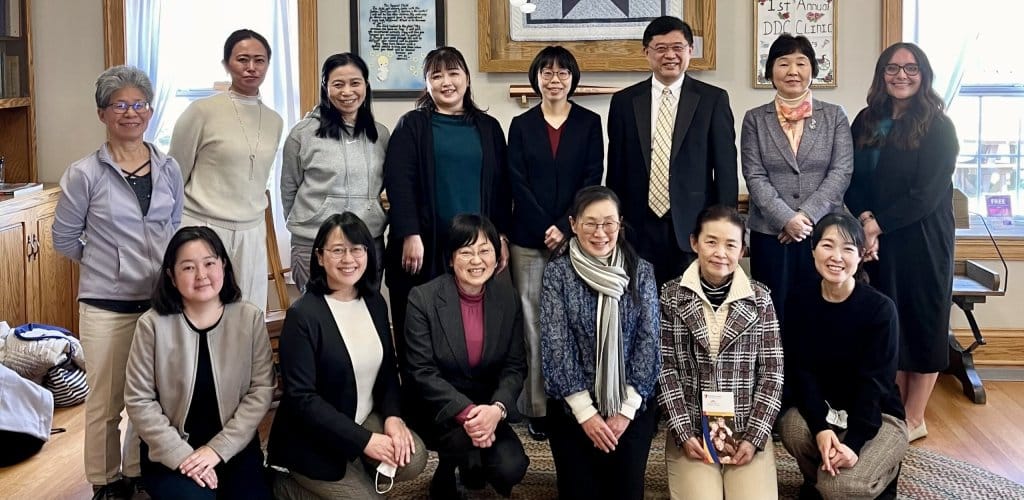
Cohen’s syndrome drew some very different cultures together at the DDC Clinic Center for Special Needs Children in Middlefield last week.
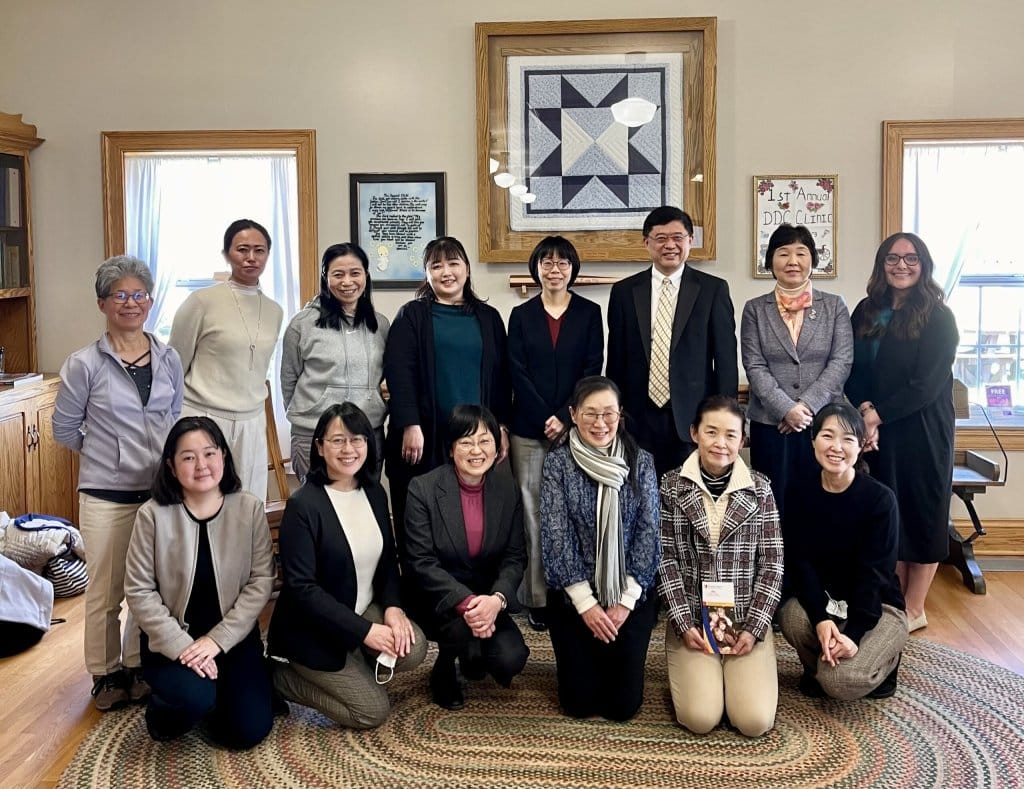

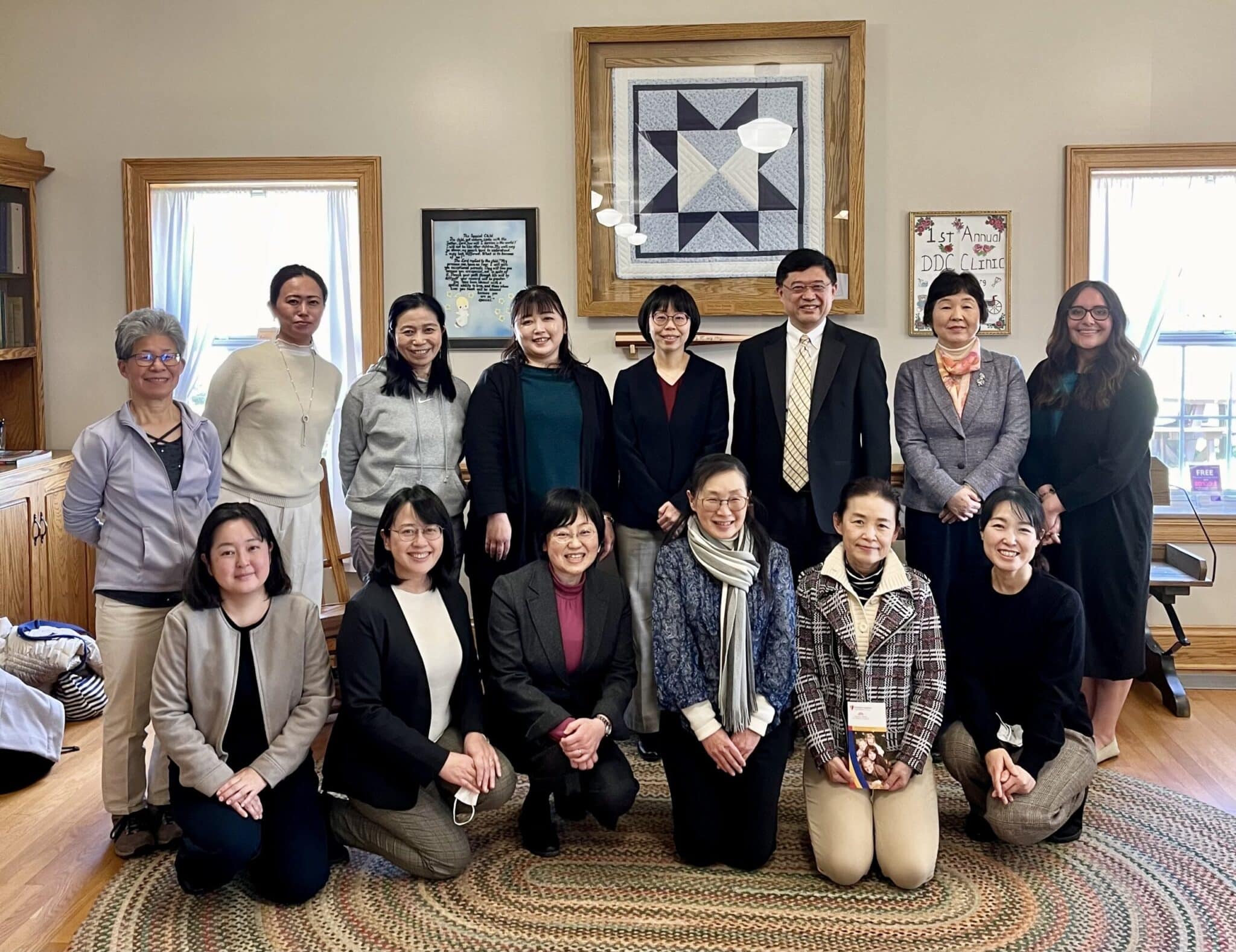

Cohen’s syndrome drew some very different cultures together at the DDC Clinic Center for Special Needs Children in Middlefield last week.
Eleven nurses from around Japan visited with the small staff at the clinic to learn how the center diagnoses and treats children and adults in the Amish community with Cohen’s syndrome, said Bea Fultz, the center’s registered nurse.
Individuals with the disease can have a variety of symptoms, but are usually intellectually delayed, have low muscle tone, are late starting to walk, are often sick and struggle in school, Fultz said.
“It’s very common here,” she said during a March 22 interview. “Our medical director, Dr. (Heng) Wang, is one of the leading experts in Cohen’s syndrome.”
The clinic, on state Route 528 in Middlefield Township, celebrated its 20th anniversary last year.
Because of the stable and growing Amish population, Wang has been able to study the genetic disease and develop a world-class lab for testing and treating the many children afflicted with Cohen’s syndrome, she said.
The small gene pool among the Amish means the disease is much more common in their communities, although other families come in from all over the country and from as far away as Australia for diagnosis and treatment, Fultz said.
“We see it the most in Middlefield. There’s quite a few children with Cohen’s,” she said, attributing the anomaly to the founder effect.
An online article titled “Understanding Evolution” from the University of California Berkeley said, “A founder effect occurs when a new colony is started by a few members of the original population. This small population size means that the colony may have reduced genetic variation from the original population and a non-random sample of the genes in the original population.”

The 11 Japanese nurses, accompanied by an interpreter, spent March 21 with the clinic staff learning the techniques used to diagnose and treat Cohen’s syndrome, Fultz said.
They also visited the Amish birthing center in Middlefield and had a tour of University Hospital’s Geauga Medical Center on March 22.
The nurses were especially interested in the nursing care the DDC clinic offers individuals with the disease, she said.
“The cultural differences were very interesting. Japan has no nurse practitioners or nurse midwives,” Fultz said, adding in Japan, the nurse’s main role is in daycare situations.
Researching heredity among the Amish is made easier by their practice of keeping careful records of family histories in volumes at the Geauga Historical Library on Nauvoo Road in Middlefield.
“The Amish can track their family histories back so far – it’s impressive,” she said.
Because Cohen’s syndrome is genetic, Wang encourages young Amish couples thinking about marrying to be tested for the disease so, if both carry the gene for it, they can be prepared, Fultz said.
“There’s a risk if both carry the gene,” she said, adding, in that case, they have a 25% chance of having a child with Cohen’s syndrome.
While a test isn’t usually done during pregnancy, parents can find out shortly after birth.
“We can have a genetic report done a few weeks after the baby’s born,” Fultz said.
Aware of the ongoing issues with Cohen’s and other genetic proclivities, five Amish families got together 25 years ago and hired Wang as their doctor, Wang said, adding the syndrome was unknown in the local medical world at the time.
“I started here from scratch,” he said in an interview at the clinic last Friday. “We decided to have our own clinic. I was the first physician they hired.”
He made 450 house calls that first year, the doctor said, adding families brought their children to a house where Wang set up shop.
Word got around and within a few years, the group had enough money to buy the land at 14567 Madison Road in Middlefield Township and the clinic, bright and welcoming, was built 20 years ago — a testament to compassionate care, Wang said.

“We built based on our needs,” he said, adding people began arriving and he has since met with families from 37 states and seven countries to consult, treat and learn.
“The impact is global,” he said. “That’s how the group from Japan found us.”
There is more research to do.
Wang, who has been a U.S. citizen for 30 years, said there are 273 different known genetic conditions, some of which are found among the Amish.
The clinic has a staff of 11, including Dr. Vincent Cruz, charge nurse Valerie Sency and Executive Director Eli Miller, who provides cultural advice and performs community outreach, Fultz said.
He also runs the daily clinic operations, she said.
Fultz said children with Cohen’s syndrome or other disabilities attend Amish schools for students with special needs, such as the Rainbow of Hope School in Geauga County or the Sunny Hope School in Garrettsville.
Once they are out of school, they are encouraged to contribute to the community.
A few years ago, the Sunshine Training Center was built near the center to teach each person an occupation and provide a workshop.
Fultz said she knows of at least two area individuals with Cohen’s syndrome who are in their 50s and are cared for by their community.
“There’s always someone in the family who’s going to take care of them,” she said.
DDC Clinic Continues Collaborations
Courtesy of ddcclinic.org
Our clinic is a unique collaboration of our Amish and non-Amish communities, dedicated doctors and experienced researchers all working together to find answers for parents and treatments for children.
Since our humble beginnings, our clinic has grown into a world-class medical facility with cutting edge research capabilities and an onsite certified molecular diagnostics laboratory serving patients, families and health professionals worldwide.
Our work encompasses three critical areas of medical services – patient care, research and education. We provide personalized medical care for special needs children with over 160 different rare conditions, and we have served more than 1,500 patient families in 35 states, Canada, Australia, Europe and Asia.
Our research efforts have contributed to new discoveries, improved treatments and greater global understanding of rare diseases. We’ve been recognized internationally for our state-of-the-art genetic research impacting broad-based health concerns such as heart disease, cancer and neurological disorders.|
Although our clinic has global reach, we remain firmly rooted in our Amish community. Our patients and their families are the very reason our clinic was established, and they will always remain at the center of our work.


