


Lane: ‘I Want to (Talk), I Do’
T.J. Lane — a mentally disturbed juvenile who “flipped out” the morning of Feb. 27 or an almost adult who was excelling in school, planning for a career in psychology, intell-igent, polite and respectful.
T.J. Lane — a mentally disturbed juvenile who “flipped out” the morning of Feb. 27 or an almost adult who was excelling in school, planning for a career in psychology, intell-igent, polite and respectful.
Both pictures were painted during last Thursday morning’s hearing in front of Geauga County Common Pleas Judge David Fuhry.
The hearing, which started an hour and 45 minutes late, was held to determine whether statements Lane made to law enforcement officers at the Geauga County Safety Center after his arrest should be thrown out.
Fuhry ruled Tuesday mor-ning in favor of the state, denying Lane’s defense cou-nsel’s request to suppress his statements (see sidebar on A4).
Defense attorney Mark DeVan had argued Lane, who suffered from mental illness — referring to his statement he had heard voices when he was younger — was never properly Mirandized and that he did not knowingly and voluntarily waive his rights to counsel before speaking with two Geauga County sheriff’s detectives and a Chardon police officer.
The prosecution, however, contested Lane was read his rights, reminded of them several times and did “voluntarily, intelligently and knowingly” waive his rights.
Geauga County Assistant Prosecutor Nick Burling called four witnesses who were involved in the arrest and interviewing of Lane on the day of the shooting — which took place in the Chardon High School cafeteria, killing three students and wounding three others.
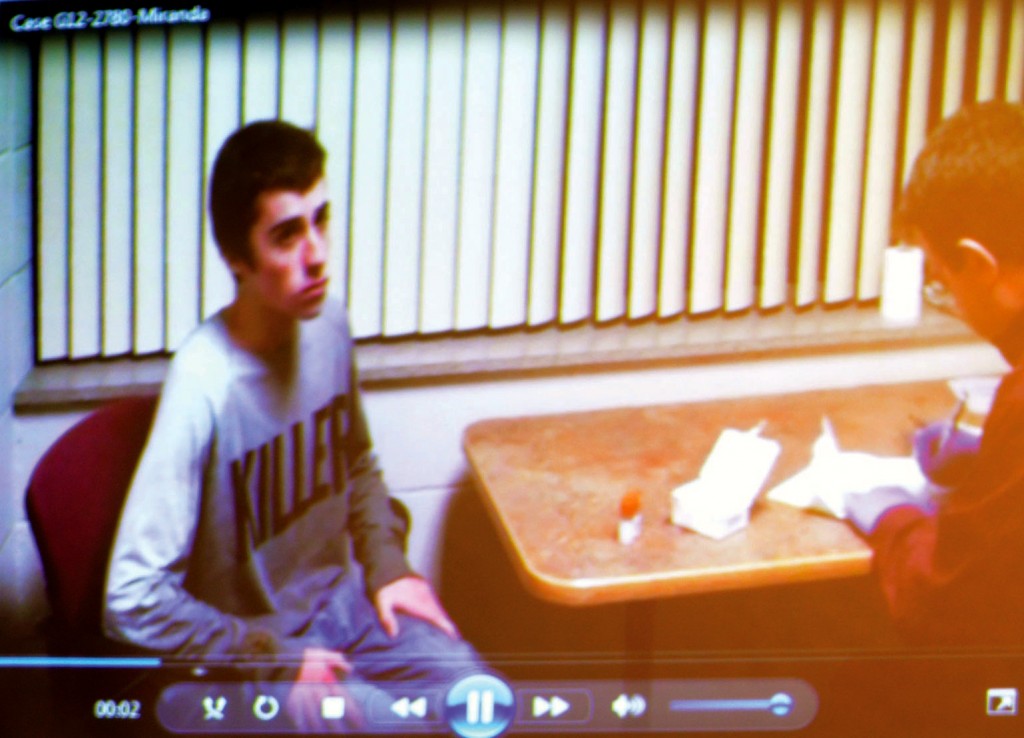
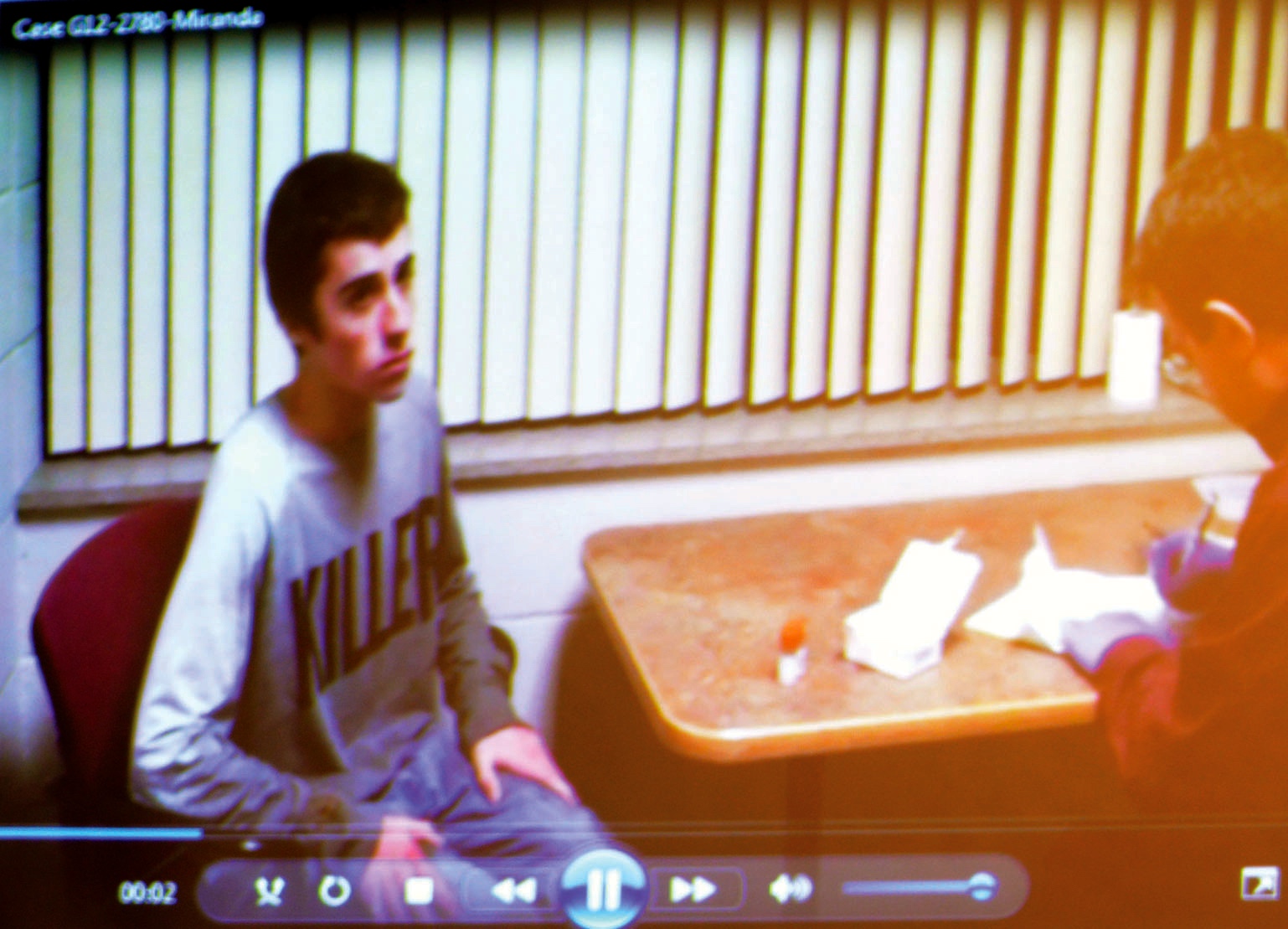
A total of 11 short video clips were shown, including one taken at the time of Lane’s arrest, when he was first read his rights at roughly 8:30 a.m.
Sheriff’s Deputy Jon Bilicic is heard at the end of the clip asking Lane what happened.
“I shot people,” said a wet and cold Lane, his voice shaking.
In more than one clip, Lane was shown wearing a gray shirt that read “KILLER” across the chest, before he had changed into dry clothes for the rest of his interview.
Another clip showed Lane, who referred to himself as a B-average student, saying he chose to attend Lake Academy so he could work while going to school, despite all the “negative” kids who went there.
“A lot of the kids go there for negative reasons, but in ninth grade … I was more motivated to work in, like, high school and it kinda sounded how Lake Academy would be like,” Lane said. “But after going there, seeing, like, the negative kids that go there, I kinda wanted to come back, but I guess I’m glad I stayed because now I have a college plan.”
Sheriff’s Detective Juanita Vetter said Lane was “cooperative, coherent, his answers were always on target … were always appropriate for the questions being asked.”
Fuhry asked whether Lane discussed the shooting with her openly.
“He did, in detail,” she responded.
All the clips, except for the one taken from Bilicic’s patrol car, were from Lane’s nearly five and a half hour interview at the sheriff’s office following his arrival around 9 a.m.
“We brought him into the sheriff’s office and put him in an interview room, where we conducted the interview. Initially when he came into our office he was handcuffed and he was wet and he was cold, so we decided we needed to make him more comfortable than what he was when he came in,” Vetter said.
She is shown in another clip reminding Lane he doesn’t have to talk to them.
“I want to, I do,” he said.
The other witnesses called were sheriff’s Detective Aaron Graley, Bilicic and Chardon police officer Matt DeLisa.
During his interview with Graley, Lane did bring up having heard voices when he was younger.
“A long time ago when I was younger when I would be extremely nervous, I used to hear like voices,” he said. “That hasn’t happened in forever and even though today, I was extremely nervous, it didn’t happen at all. It was when I was way younger, when I did something I shouldn’t have.”
Lane later told Graley and DeLisa that two weeks prior to the shooting, he felt he did have some mental issues, had dreams and thought about the shooting.
“Then I asked him at the time of the shooting up until our interview if he felt he had any mental problems or any mental issues. He said he did not,” Graley said.
In the video clip, Lane said he had “no feeling of psychological problems” the day of the shooting.
“I feel terrible, but that’s not a problem … the problem is I feel terrible I shot people,” he added.
DeVan repeatedly attempted to rule out other possible motives for the shooting, including drugs and alcohol, problems at home, bullying or girls, based on Lane’s statements.
He also asked all four witnesses — three of which have had experience dealing with people with mental illness — whether they believed Lane showed signs of mental illness at the time of the interview.
All four said no, adding Lane appeared polite, cordial, cooperative, respectful, intelligent and all of his answers were appropriate for the questions asked.
“You’re dealing with a 17-year-old kid who is involved in a shooting at the high school in which other kids are seriously injured and you didn’t think that hearing voices in the past and a shooting now might indicate some kind of mental illness here?” DeVan asked Graley during his cross examination.
“No, sir,” he said.
“It never occurred to you?” DeVan asked again.
“No,” he said.
“So you just went on with the interrogation?”
“I continued the interview, yes.”
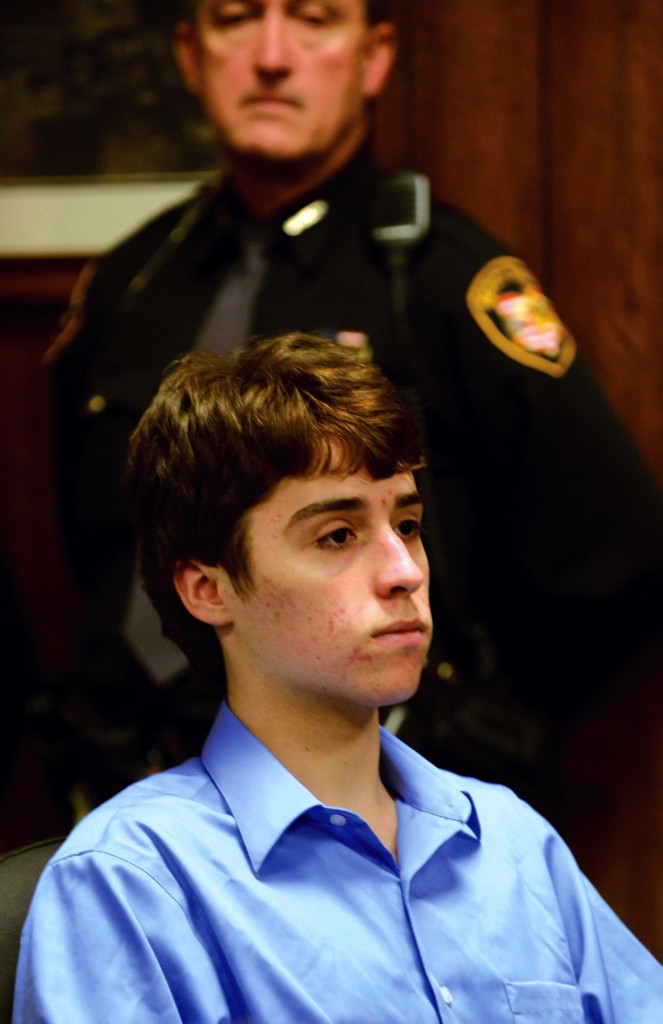
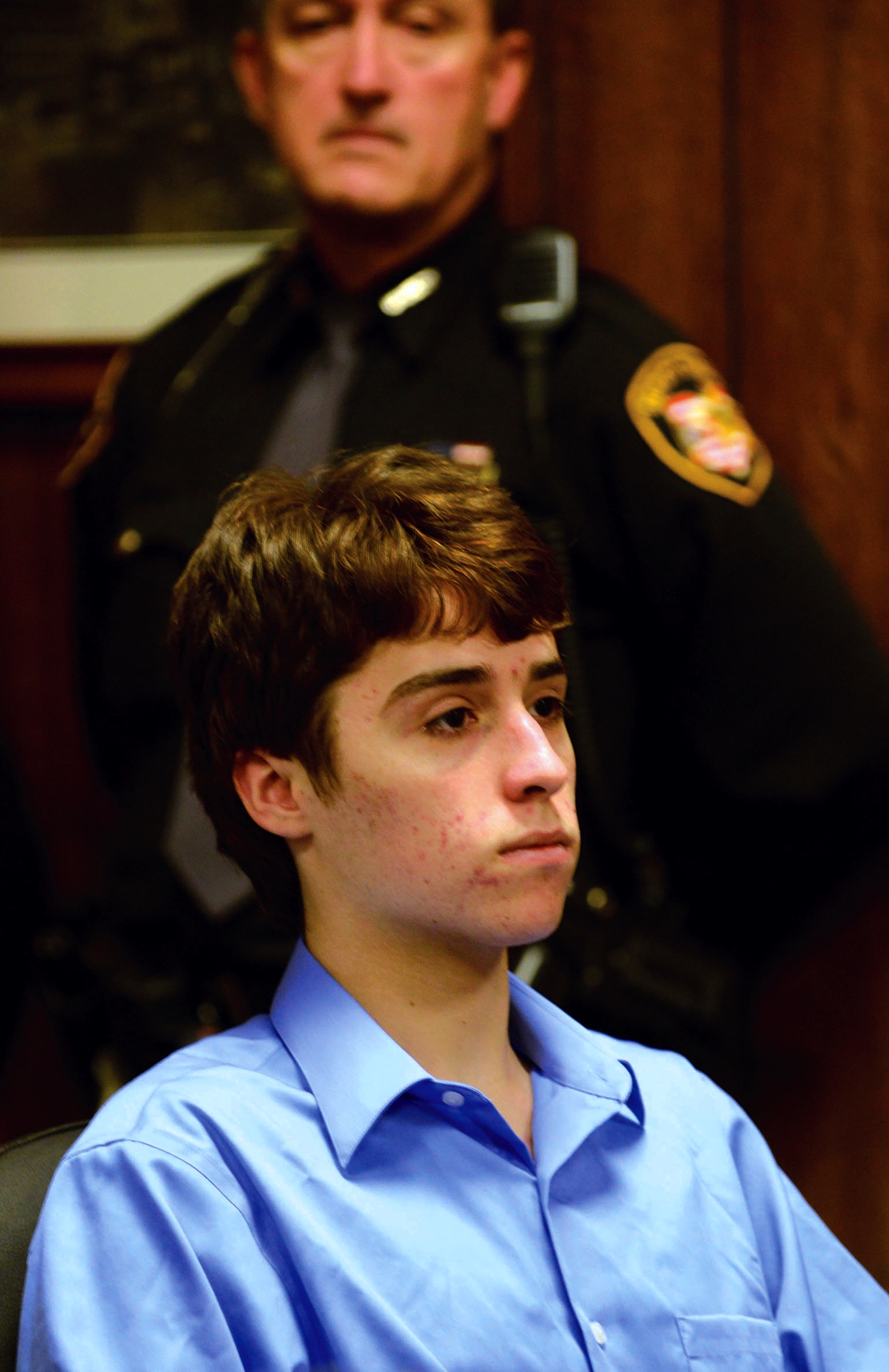
During the hearing, Lane, appearing outwardly composed save for period-ically bouncing his left leg, sat quietly as his own family members as well as members of the victims’ families sat solemnly in the backdrop.
DeVan also questioned the detec-tives’ form of interrogation, called the Reid method, which he said was manipulation and “very subtle coercion” to someone “who is mentally ill.”
“What was going on here was all kinds of mental health issues which only after full investigation we realize now the extent of what those were at the time,” he said. “And so you have a young man with an emotional state, he is arrested, he’s cold, he’s in cuffs for the first time in his life, he’s put in the back of a deputy’s cruiser and he’s transported downtown. He is surrounded by officers in a small room while asked those questions.”
Vetter, who conducted the initial interview at the safety center, said she conducted the interview the same way she has done interviews her entire 28-year career.
“The Reid technique is a method of interrogating suspects and trying to illicit as much information out of suspects as possible, correct?” DeVan asked Vetter.
“It’s to get to the truth,” Vetter responded.
One clip showed her asking if Lane knew the same rights Bilicic read him in the sheriff’s cruiser upon his arrest still applied in the safety center.
He said yes.
“This was a time, in fact, where re-Mirandizing would have been the better practice because T.J. Lane would have then been given his rights again and understanding them he may have, in fact, decided to waive them or he may have, in fact, decided to exercise his right and ask for an attorney or his right to remain silent,” DeVan argued.
Lane was re-read his Miranda rights three hours and 45 minutes into the interview, after he could not recite all of them himself, DeVan pointed out,
Burling, however, said the U.S. Supreme Court has held a defendant only has to have his rights read once.
“In this case, there was a sufficient advisement of Deputy Bilicic of the defendant’s Miranda rights. He said affirmatively that he understood them and then he continued to speak to the deputy,” Burling said. “There was no need for anyone else to bring up Miranda again.
“He was then taken to the sheriff’s office where the interview began there at about 9 a.m. and detective Vetter … about a couple of minutes she then went over with him again just to confirm that he had been advised of his Miranda rights and understood that they still applied in that interview room even though he had been taken out of the cruiser.”
Lane acknowledged he had been read his rights and understood they still applied, Burling said.
“He freely on his own choosing continued to talk to the officers,” he said, noting Graley also readdressed with Lane his Miranda rights, despite not having to.
“This was just another opportunity for them to again advise him of his rights and again he said he understood them and again he chose on his own to continue talking to the police,” Burling said, adding Lane never once invoked his rights or not answer a question.
In addition, Lane voluntarily gave a written statement to DeLisa toward the end of the interview.
DeLisa reviewed with Lane the Miranda rights printed on the form and Lane said he remembered them.
“At that time, I asked him if he wished to provide a statement,” DeLisa said during his testimony. “I said it was strictly voluntary on his part, he didn’t have to, but if he wanted to give a written statement, this would be the time.”
Burling closed saying Lane was a 17-year-old juvenile, but was six months away from being and adult.
“He’s going to Lake Academy where generally some poor students go, but … the reason he was going there was because he wanted to be able to get a job and work while he was in school and this offered him the opportunity,” Burling said. “He was a pretty intelligent kid. He was in 11th grade, but he was also taking 12th-grade classes and he said he was actually on course to graduate early. He was planning on going to college, attending Lakeland (Community College), in the field of psychology. It’s clear he was above average intelligence, he understood what was going on. There was no coercion again by the police, this was all by his own choosing to speak to the police aftering being fully advised of his rights.”
DeVan closed with a very different portrait of Lane.
“You had statements by T.J. … based upon his continued interrogation, more and more information came out and some of it contradictory. But most telling is his emotional state,” DeVan said. “He had been thinking about this for a couple weeks, that he in fact had heard voices in the past. He’s not hearing them now. He’s 17 years old and he’s going to Lake Academy, a school for at-risk students and yes, he is planning on going to college, but that doesn’t mean necessarily that he had a high level of intelligent function.”


