Maple Producers Face Irony of Great Season, But No Buyers
"The biggest obstacle to overcome is being able to sell the products. With most farmers’ markets on hold, direct to consumer markets are more difficult." – Kevin Holy
Some might say this past winter was a strange one weather-wise, but it was a solid season for maple producers, reported Ohio Maple Producer’s Association President Karl Evans.
Some might say this past winter was a strange one weather-wise, but it was a solid season for maple producers, reported Ohio Maple Producer’s Association President Karl Evans.
“There’s lots to be had,” said Evans, who owns May Hill Maple farm in Orwell. “We just need people to remember to get their syrup.”
Ohio’s stay-at-home order in response to the novel coronavirus pandemic has put a strain on local businesses and the maple industry is no exception.
In addition to the cancellation of the Geauga County Maple Festival, Evans said the cessation of local restaurant orders, pancake breakfasts at the county fire departments, and farm open house weekends to their sugarhouses are continual losses of revenue.
“I will store more syrup than I have in my entire career this summer,” Evans said.
Geauga County Farm Bureau President Kevin Holy agreed.
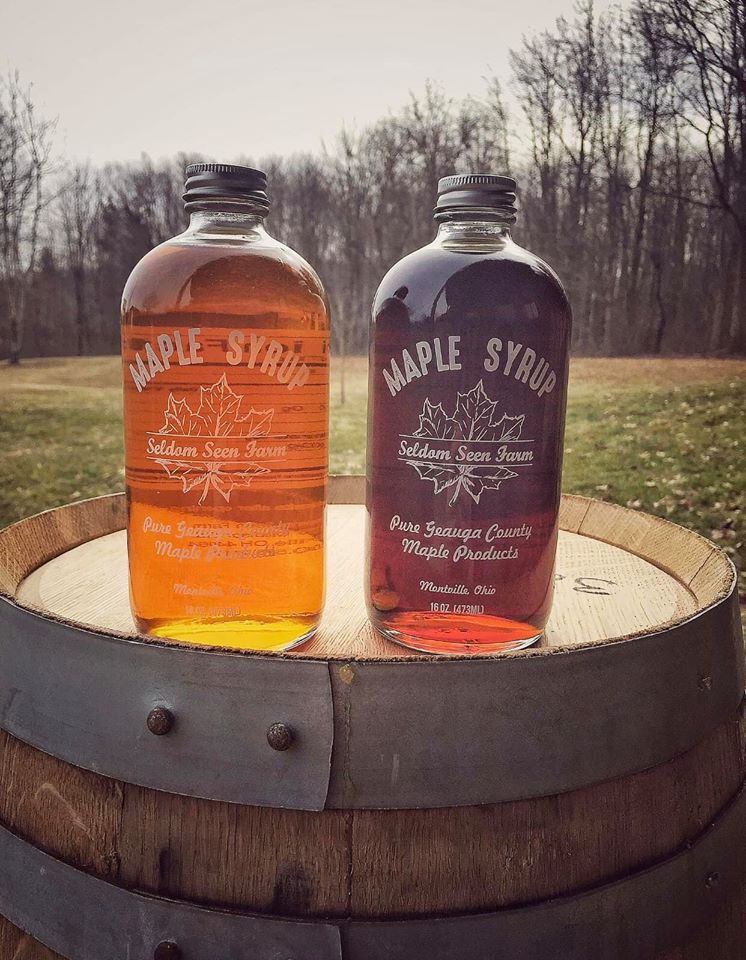
“The biggest obstacle to overcome is being able to sell the products. With most farmers’ markets on hold, direct to consumer markets are more difficult,” said Holy, who also produces maple syrup at his Seldom Seen Farm in Montville Township.
The COVID-19 health crisis seemingly could not have come at a more inconvenient time for maple farmers, as the typical syrup season in Northeast Ohio stretches from the beginning of February to mid to late March, Holy said.

In general, the maple crop has been stable for the past few decades, with this year’s yield summing up to average or slightly above, Holy said.
Factors that affect a good crop include the type of trees, forest’s health, a tree’s age, size and weather, but these factors usually hold their affect in combination. No one thing alone, like weather, will have an overwhelming impact on the crop as a whole, he said.
Evans relayed the instance he experienced with the crop of 2019, which was a rather wet season. As a result, the trees made less syrup, but a higher concentration of sugar was present in that smaller amount. In previous years, Evans had more syrup yield, but there was less sugar concentrated inside it, so his overall maple crop remained steady.
Water is removed from the raw maple sap through a process called reverse osmosis. This is the next step after the sap is collected from the trees. The water removed usually accounts for 50-75 percent of the sap collected, leaving the farmer between 4-18 percent concentrated sap, Holy explained.
“The most favorable conditions of a good maple season are cold nights and warm days to collect the sap that is moving up and down the tree,” he said. “I know that this past year we had ideal conditions in late January, then had a deep freeze for a couple weeks, helping out our season.”
Evans called these periods “freeze and thaw” cycles. He said the change in temperature allows the sap to run in the tree because when the tree thaws, the pressure inside is released and it pushes the sap out of the tree for the farmer to collect.
“The enemy is when there’s prolonged seasons of freeze or thaw,” Evans said, adding this is because the tree is unable to undergo its dormancy properly during the winter.
“The healthiest thing for the tree is if the winter is normal,” Evans said.
Any prolonged cold or extremely mild winter could put the tree under stress and a tree under stress gives less sap, he added.
There are several ways a farmer can visually tell if a tree is stressed — one being if the tree hasn’t grown as it’s expected to in a year, Evans said.
If the hole can’t be found where the tree was tapped the previous year, the tree is healthy because it grew over it. Otherwise, the unhealthy tree may not be worth tapping that year, he added.
Evans also said in a stressed tree, the leaves may change color sooner in the fall and be smaller than usual. A maple tree’s leaves are implicit to the production of sap, as they produce the sugar via sunlight, which will be stored into the tree in the fall. If there’s less sun in the fall, there will be low sugar content in the sap come harvest.

While this winter may have felt mild overall, the maples experienced the roller coaster of cold and mild days needed to keep the sap inside pulsing, and the crop prospered.
Now all maple syrup producers need are consumers.
Fortunately, syrup is a natural preservative due to its high percentage of sugar, Evans said, adding the bulk of his crop he is storing will last many years as long as its not exposed to heat, which buys him — as well as other maple producers — time before the pandemic ends.
Evans said the Ohio Maple Producers Association is pushing to host events in the fall to promote their products, hoping by then, life will be back to normal for Ohioans. Evans also hopes with the public mind on health, more people will consider buying local syrups as a healthy alternative to commercial syrup instead.
Holy seconded this.
“Pure maple syrup will appear to be ‘thinner’ to some consumers who are more familiar with table syrup, whose main ingredient is corn syrup,” Holy said.
Concerning the coronavirus, Holy said one way his farm is working through this is trying to promote their web sales through social media, since most people are at home on their devices during the quarantine.
“Many local farmers are coming up with unique ways to keep selling their crops, such as local call ahead pickup, where the farmers can leave the products at a specific location on farm so no interaction is present,” Holy said. “In my view, a local farmer’s ability to connect with his or her customers on a personal level is one of the most important things that will get them through these times. My hope is that we as a community can realize the importance of the American farmer and not use this as a time to worry, but a time to pull together as a community.”