


Amid Growing Partisanship, Joyce Looks for Middle Ground
Bainbridge Republican Looks Back at 10 Years on Capitol Hill
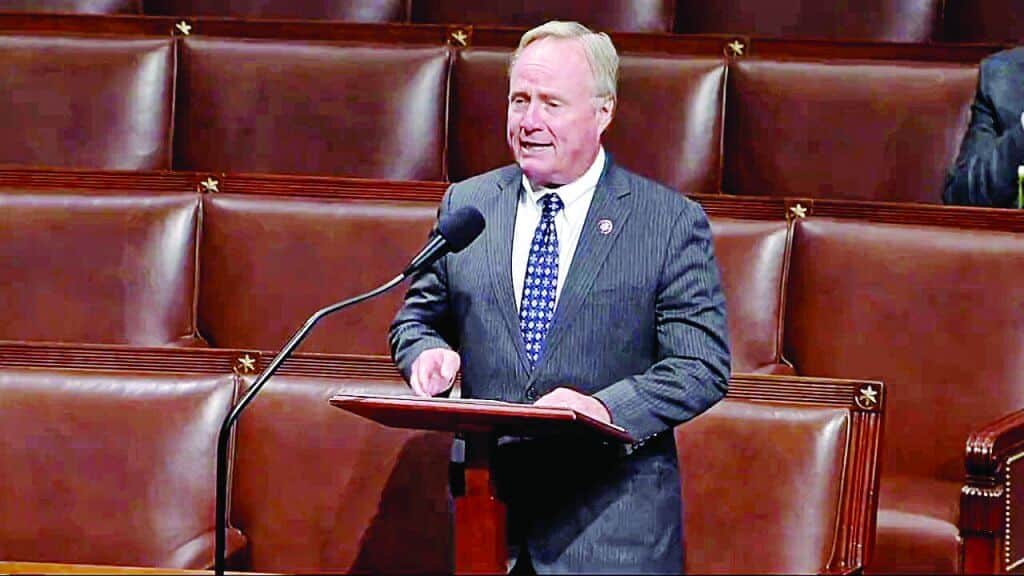
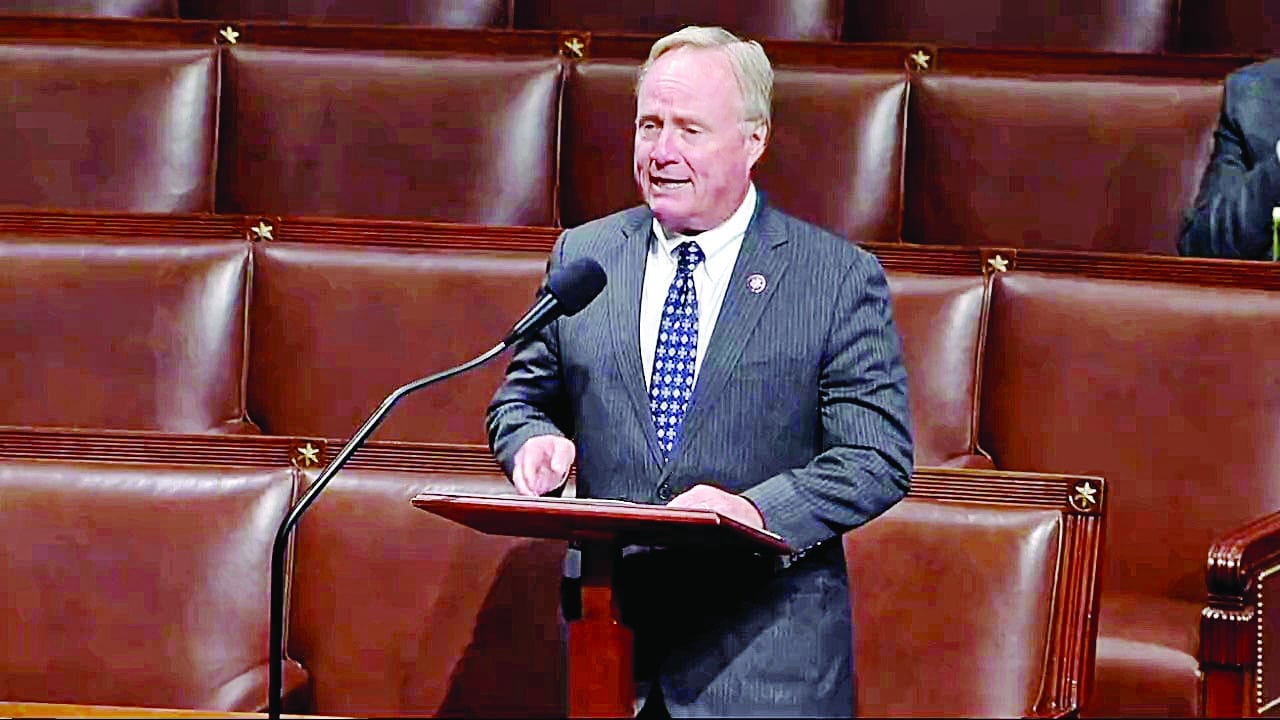
If constituents are wondering whether a decade in Washington, D.C. has changed Dave Joyce, his answer is no.
“I’m still the same person that was elected to my first term 10 years ago,” Joyce said during a recent interview. “And I’m ready, willing and able to work with everybody when I get there that’s trying to solve the problems of our country, as well as serving the people of Ohio’s 14th district.”
Since the Bainbridge Township Republican was elected to Congress in 2012, he has served under three presidents, four House speakers and witnessed some outrageous antics from his fellow legislators.
He prides himself on his bipartisan record, especially on the 2016 passage of his landmark legislation to create the Great Lakes Restoration Initiative. The bill provides funding to federal agencies, states, local communities and businesses with the goal of restoring the Great Lakes ecosystem and the economic health of the Great Lakes region.
“The first thing I sought out when I got (to Washington, D.C.) was areas of bipartisanship and I found that (with) the Great Lakes,” he said. “And so, you know, I made it a big thing because I believe in not only the recreational activities and the beauty of the Great Lakes, but also the economic drivers of it — the fact that it’s drinking water for 40 million people, that it has a lot of commerce on it during the summer or at least six to seven months of the year.”
Joyce said he worked to include voices and capture votes of representatives with districts along the Great Lakes regardless of their party affiliation. His bill was signed into law by President Barack Obama in 2016 and reauthorized in 2021 by President Donald Trump.
When he first arrived in Congress, Joyce joined several caucuses, each one helping him see the world through other people’s eyes and better understand where they are coming from. The Republican Governance Group, a pragmatic caucus committed to productivity and effective governance, has been the most impactful to him, Joyce said.
The RGG gives its 50 members — whose districts span the gamut from safe for Republicans to strongly in favor of Democrats — the chance to carefully weigh their stances and seek input from subject matter experts in a respectful and thoughtful manner, he said.
Members unanimously voted to elect Joyce chair of the RGG last July.
“I didn’t run for it, I was drafted,” he said. “But that’s also forced me to have to stand up and do more presentations and media (appearances).”
That role — along with his position as chair of the House Committee on Appropriations Subcommittee on Homeland Security and his seat on the Subcommittee on Financial Services and General Government and Subcommittee on Defense — has brought Joyce national media attention, as has his new position as lead investigator on a House Ethics subcommittee to investigate possible unlawful activity by Rep. George Santos (RNY).
The subcommittee will also examine possible violations of rules related to gifts by Rep. Alexandria Ocasio-Cortez (D-NY).
Joyce, who said it may sound crazy for someone in his line of work to be “media shy,” noted his role in the RGG positioned him for national media coverage during the early January battle to seat Kevin McCarthy (R-Calif.) as Speaker of the House.
Joyce made an early-morning appearance on CNN after McCarthy’s final victory, he said.
“And then, next thing I know, I’ve got, you know, Jake Tapper giving me his cell phone number,” Joyce said. “And Dana Bash (said), ‘Hey, you were great, can you come on again?’ Yeah — as much as I can get on TV to talk, it’s just not in my nature.”

‘Workhorses’
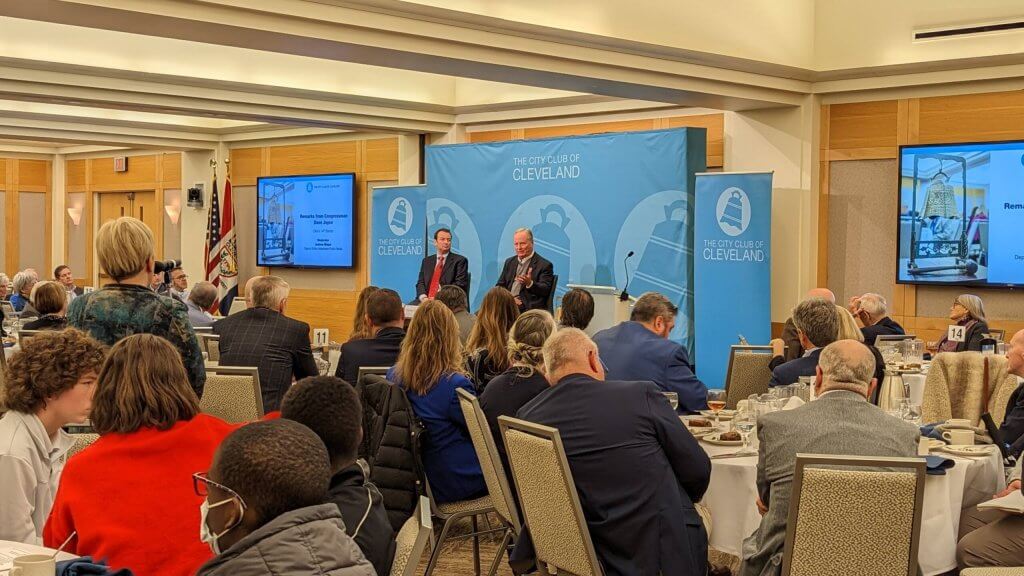
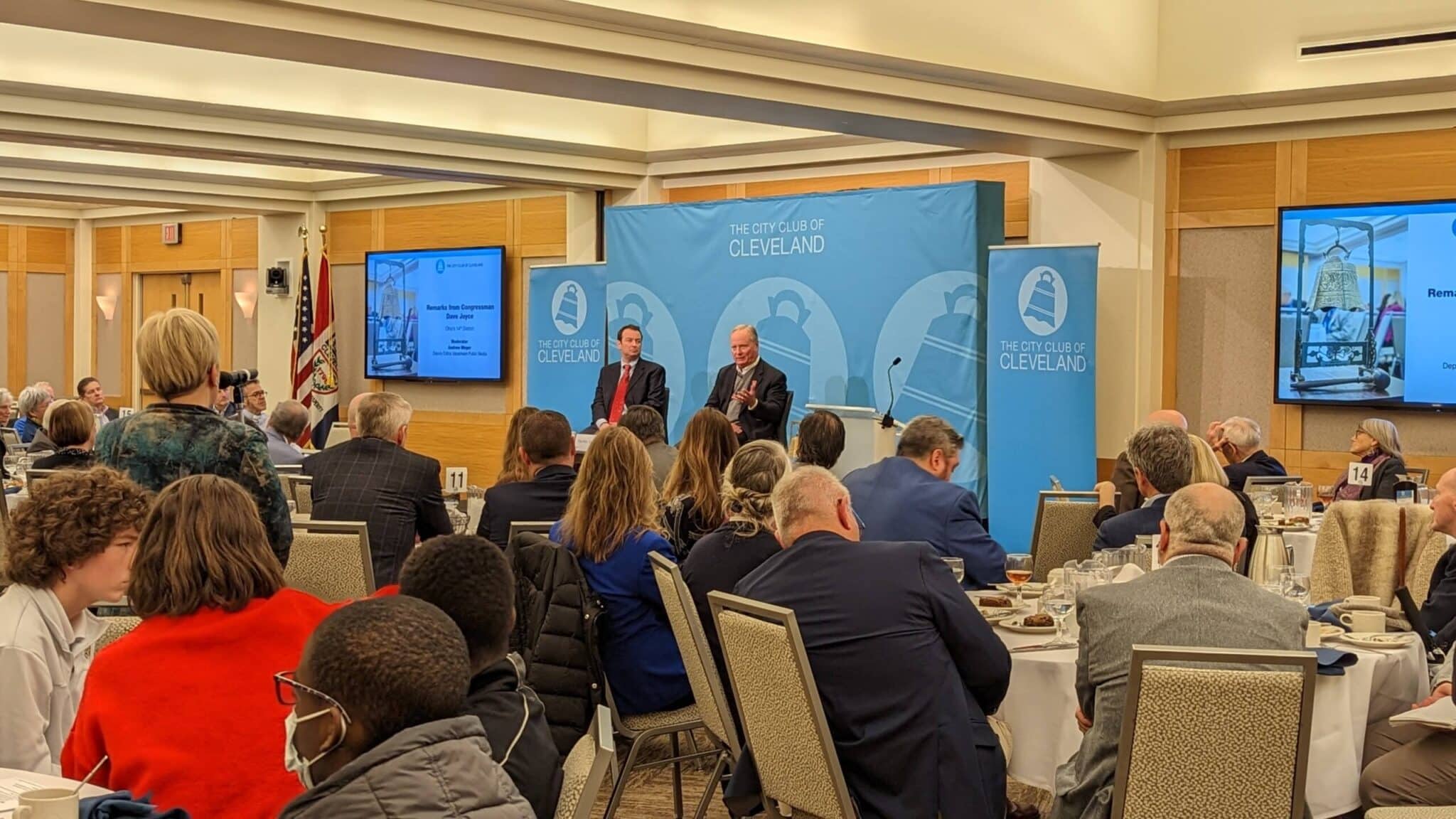
In a March 3 appearance at the City Club of Cleveland, Joyce said the quiet, behind-thescenes work of legislators is not the kind of thing that gets someone appearances on national media, but there are many members of Congress, across both parties, who are working hard on pragmatic solutions to problems faced by their constituents.
“There’s show horses and there’s workhorses,” he told moderator Andrew Meyer, deputy editor of Ideastream Public Media. “I like to think there’s a whole stable full of us workhorses that are just quietly trying to get our work done because that’s what you elected us to do.”
While Joyce said some members of his party, like Florida Republican Matt Gaetz, provoke discord to bolster their fundraising numbers, the majority of his party is there to get things done — as evidenced by their unwillingness to surrender to a faction, led in part by Gaetz, that sought to prevent McCarthy’s election to speaker.
Some in the public may have seen that moment as merely a spectacle, Joyce said, but it allowed Congressional Republicans a chance to hash out their differences via the democratic process and solidify their goals.
“It was ugly, but it was an exercise in democracy,” Joyce said during his Maple Leaf interview.
He said House Republicans, over 15 rounds of voting which steadily chipped away at the opposition to McCarthy, came to understand they are all conservative in nature.
“Some of us may be a little more socially moderate, but when it comes to the finances, we want to make sure that we’re responsible in how we finance our country, that we don’t overtax or over-regulate,” he said. “We think taxpayers have a better idea how to spend their money than bureaucrats do in Washington, D.C.”
Unfortunately, between the moment the GOP won the House majority in the November 2022 election and McCarthy’s January election, the party wasted time they could have used to set up committee assignments and develop legislative strategies, Joyce said. Instead, groups were meeting to figure out how to bring everyone in the party into alignment behind McCarthy.
“Up to January, we were meeting as groups, trying to figure out what is it that’s gonna take you to get behind (McCarthy) and (McCarthy’s GOP opposition) couldn’t beat somebody with nobody,” Joyce said.
Some members simply had a dislike for McCarthy, while others wanted the House to adopt new rules, including reopening to the public, Joyce said, adding those rules are good for the House as a whole.
However, Joyce still gets frustrated with some members of his party over what he sees as showmanship — those who view their time speaking on the floor of the House as “entertainment mode,” hoping perhaps to land a TV or radio gig after they leave Congress.
“Me, the last 10 years, I just go about my business. And if you come and ask me about my business, I’m glad to talk to you about it because my constituents deserve to know (my record),” he said, adding one main reason members of Congress continually fundraise is the need to explain their records.
“You have to explain your record because people who run against you are going to be distorting your record,” he said.
Joyce said while the far ends of each party “do all the talking in the media,” the middle — comprising moderate Democrats and Republicans — is capable of effectively governing.
“That’s how you know you’ve hit a perfect happy medium, when you can draw … people from both parties to the center,” he said. “I don’t think America is that far right or left. I think you’re center-right or center-left, depending on where you live.”

Bipartisan Agreement
Once members of his party and Democrats can focus on issues upon which they agree, Joyce said it’s much easier to close the distance and get things accomplished.
At the City Club forum, Joyce expressed displeasure with President Joe Biden’s comments during his State of the Union Address Feb. 7.
Biden said some Republicans want Medicare and Social Security to sunset every five years, adding those who do are not a majority of the party.
Joyce said March 3 Biden’s comments were “great political theater,” but complicated good-faith negotiations between the parties.
“All you’re ever truly worth is your handshake and your word on Capitol Hill,” he said. “People have to trust you to be an honest broker and if you’re going to say one thing in private and then go out and play to the media a whole different story, you’re not going to get a hell of a lot of people behind you to help you with the bigger issues that are coming forward.”
Problems with programs marked as mandatory in the national budget, including Medicare, must be addressed — especially if that program is to survive past 2034, Joyce said.
The last time the country had effective bipartisan leadership was under President Ronald Reagan, a Republican, and Democratic Speaker of the House Tip O’Neill, Joyce said, adding when he was first elected, he bought books about that period and studied to try and see how Reagan and O’Neill worked together.
“And that’s why I find it admirable that Speaker McCarthy and President Biden have sat down and … started talking about — where are those areas we can agree?” he said. “We know where we’re going to disagree, and where those areas are we can agree, and what we can do to change some of these things.”


