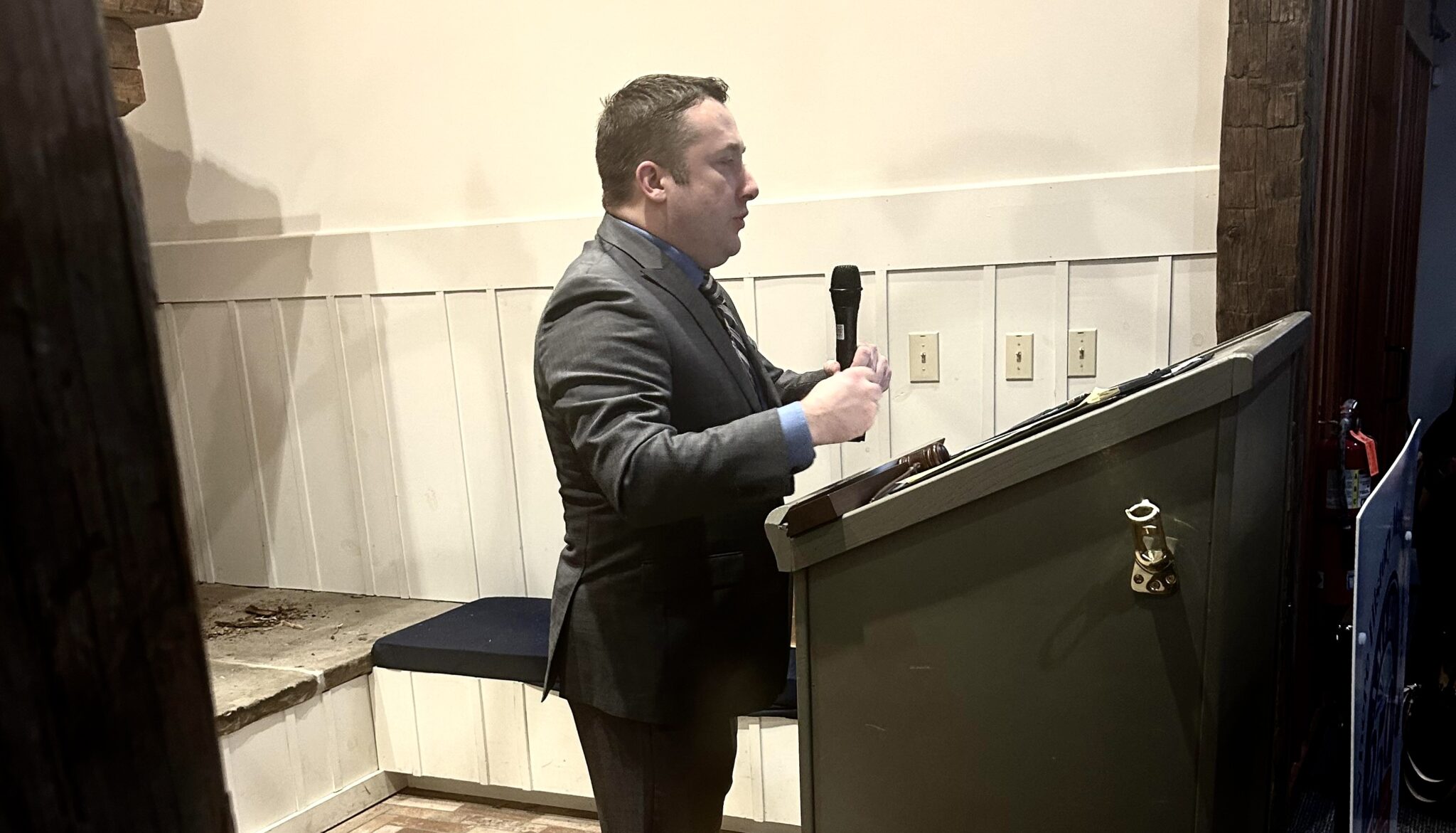
Chris Alusheff, zoning inspector for Claridon and Chester townships, warned more than 100 members of the Geauga County Township Association on Jan. 14 that Ohio House Bill 361 could significantly affect township zoning authority.
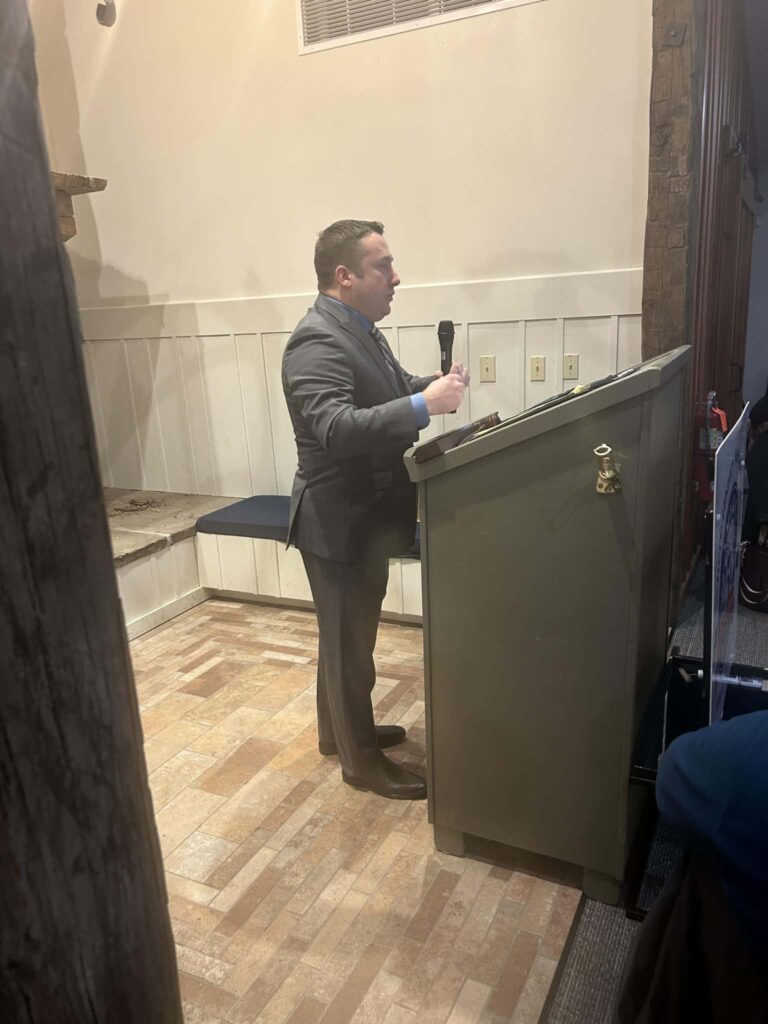
Chris Alusheff, zoning inspector for Claridon and Chester townships, warned more than 100 members of the Geauga County Township Association on Jan. 14 that Ohio House Bill 361 could significantly affect township zoning authority.
The proposed bill, currently in committee, would shorten timelines for zoning boards to hear applications and make decisions, require townships with populations of more than 5,000 to enact zoning and increase paperwork for township officials, Alusheff said.
Middlefield Township, the only township in Geauga County without zoning, has about 4,522 residents, Alusheff said.
Under HB 361, boards of zoning appeals would be required to rule on applications within 30 days submission, he said.
In a Jan. 15 phone interview, Alusheff said the proposed timelines are unrealistic. When an application is submitted, he first determines whether the proposed use or construction complies with the township’s zoning resolution.
If it does not, the matter must go before the board of zoning appeals and requires public notice, which takes three weeks, he said.
“When you actually have the hearing, if (the BZA) makes a decision that night, it doesn’t become effective for 30 days,” Alusheff said, adding he typically advises applicants to expect the process to take at least 60 days.
If the bill becomes law, boards of zoning appeals that currently meet once per month would need to meet much more frequently, potentially several times per month, he said.
BZA members in most townships receive minimal compensation and irregular or increased meeting schedules could make it more difficult to recruit volunteers, Alusheff said.
He also expressed concern about appeals that become contentious or require additional investigation. In such situations, meeting the proposed deadlines could be difficult, he said.
“Decisions other than variance requests shall be made within 90 days or will be deemed approved,” Alusheff quoted from the proposed bill.
If attorneys become involved and proceedings extend beyond the deadline, an appeal could be automatically approved, leaving the township with little recourse, he said.

HB 361 could also weaken township control over comprehensive plans, which guide where residential, commercial and industrial development are permitted, Alusheff said.
Most townships periodically update their comprehensive plans. Under HB 361, however, those plans would be required every 10 years by the Ohio Department of Development and reviewed by a committee, he said, noting it is not explained in the text what kind of authority that committee would have over the comprehensive plans.
“Not only do we have to do it, but do it in a way the state likes,” he said. “What if the Ohio Department of Development rejects your plan? Do they need to approve it?”
The bill would also require a written narrative statement for each board of zoning appeals decision explaining how it aligns with the township’s comprehensive plan, Alusheff said.
During last Wednesday’s meeting, GCTA Chair Jonathan Tiber said several bills moving through the Legislature appear to be shifting zoning control away from townships.
“(The bills) make it much more difficult to facilitate zoning, to a point where, if we can’t handle zoning, we will give (control) to the county,” Tiber said. “We have to be careful. Local governance always seems to be threatened.”
Rep. Tex Fischer, R-Boardman, the bill’s sponsor, has titled HB 361 the Pro-Housing Legislation to Modernize and Streamline Homebuilding in Ohio. In his newsletter, published on the Ohio House of Representatives website, Fischer outlined the bill’s goals.
According to his newsletter, the proposed bill would reduce delays in zoning and building approvals, increase transparency and public access to development decisions, empower property owners and developers to expedite processes while ensuring strict safety standards, and ensure local regulations align with state standards and deadlines.
The bill proposes that every application be subject to at least one public hearing within 30 days of submission and that application be approved or denied within 90 days.
It would also require notification to neighbors within 250 feet by postcard at least 14 days before the hearing and require the property to be posted with the hearing’s date, time and location.
The proposal removes the current requirement that public hearing notices be published in a local newspaper. Instead, townships could provide notice solely through their websites.
“I couldn’t find out what prompted all those changes,” Alusheff said last Thursday.