One of the changes NDES made this year was the addition of academic and special electives for junior high students...
Academic Electives
One of the changes NDES made this year was the addition of academic and special electives for junior high students. The goal is to expose them to many different academic and related art experiences so they can make better choices for high school electives and career plans.
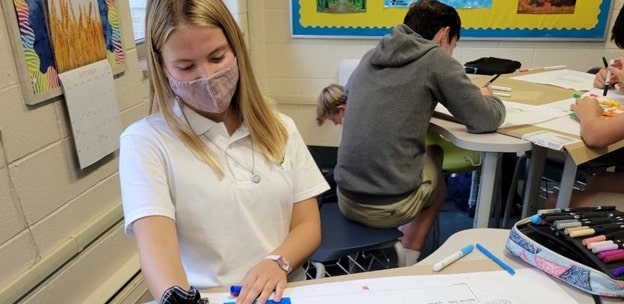
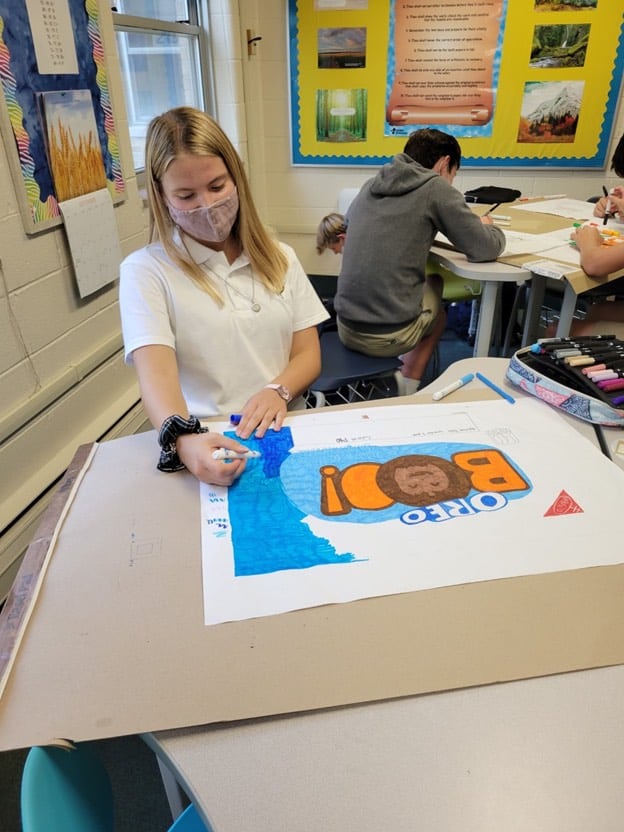
One of the academic electives for this quarter is The Art of Math, taught by Mrs. O’Brien. One of the first skills students studied was scale factoring. Students learned how to use a scale factor to make objects bigger. Students were then asked to use a scale factor to make a wrapper-of-choice into a poster. Students had to use math to measure and calculate dimensions using a scale factor to create a larger size of their wrapper.
The students are enjoying the Art of Math.
Zoey Myers loves this elective and comments, “I like drawing and math, so this elective is fun. We learn how famous artists used math in their paintings and we also get to draw using math.”
Marija Vukovic also loves this elective and adds, “I like how we get to have art in math. The behind the scenes of famous paintings and architecture is cool to see.”
Pen Pal Campus Ministry
NDES has added Campus Ministry to its junior high school class electives. Campus Ministry gives the students another opportunity to demonstrate God’s light in the world through service. This quarter, there are 14 junior high students who enthusiastically come to class each day with the intention of doing something good for someone else.
In Campus Ministry, students are encouraged to brainstorm projects that will potentially be helpful or help make connections between people in celebration of the NDES community.
The class has started a pen pal project with the fourth-graders, assembled bead boards for the first-graders as they learn to count and add and are putting the final touches on a scavenger hunt for the third-graders. The Campus Ministry elective is well on its way to being a beautiful place to spend some time serving one another and showing God’s love through good work.
Measuring Growth and Achievement
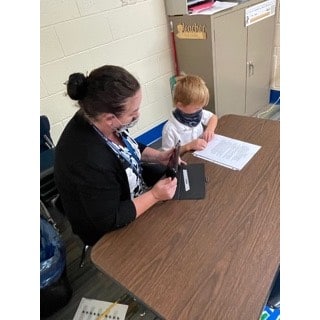
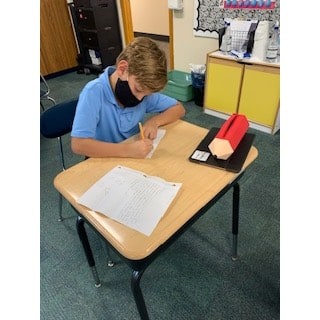
During the past three weeks, as part of a new reading program, the students in grades K-5 have been assessed using the mCLASS DIBELS. DIBELS are administered in a one-on-one setting and each screening measure is a one-minute snapshot of a student’s skill level compared to national grade-level norms in literacy benchmarks.
Every student completes grade level subtests that identify specific basic building blocks in literacy development. Embedded within DIBELS is the ability to identify specific areas for intervention and screen for elements of dyslexia. The mCLASS DIBELS also connect students to the Amplify reading program, which is individualized to meet students with intervention, on-level or extension activities.
The traditional MAP Growth assessments give teachers different information about a student’s learning. The computer adaptive nature of the tests means that every student gets a unique set of questions based on responses to previous questions. As the student answers correctly, questions get harder. By the end of the test, most students will have answered about half of the questions correctly per the norm on an adaptive test. The purpose of MAP Growth is to determine what the student knows and is ready to learn next. It also tracks student growth over time, wherever the starting point is.
Both forms of assessment are incredibly important for a teacher in order to plan instruction effectively for all students.