



“You have to believe in yourself. You have to think you can.” – Jim Tressel














Jim Tressel begins each day with an “attitude of gratitude.”
He served as head football coach of the Youngstown State Penguins for 15 years and the Ohio State Buckeyes for 10 years, winning five national championships between the two schools.
Tressel’s eight wins against Michigan place him second in school history to Woody Hayes, who had 16, and he is the only Ohio State head coach to win seven consecutive games against the Wolverines.
Today, Tressel is president of Youngstown State University and has embarked on a campaign to visit more high school students in Northeast Ohio.
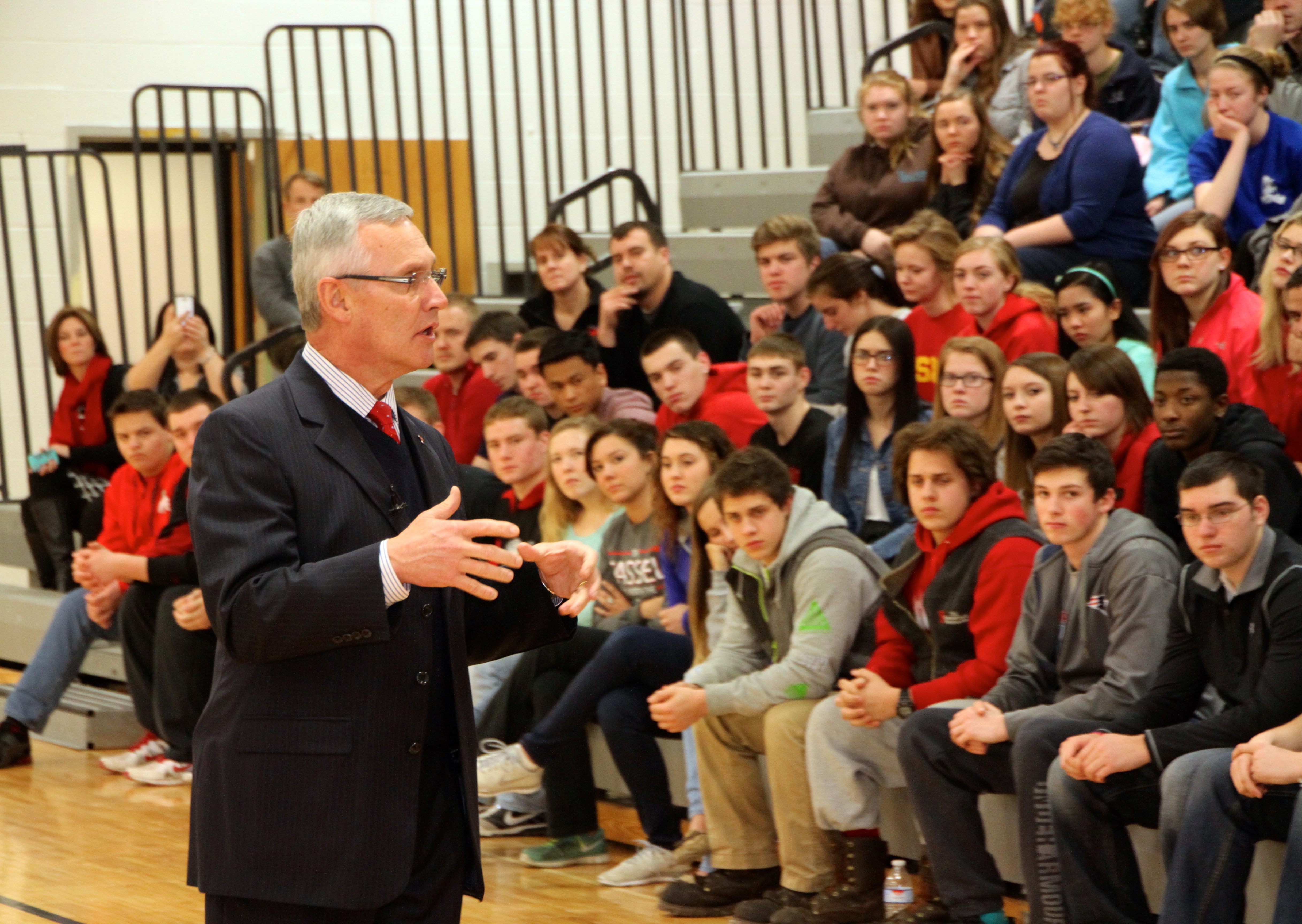
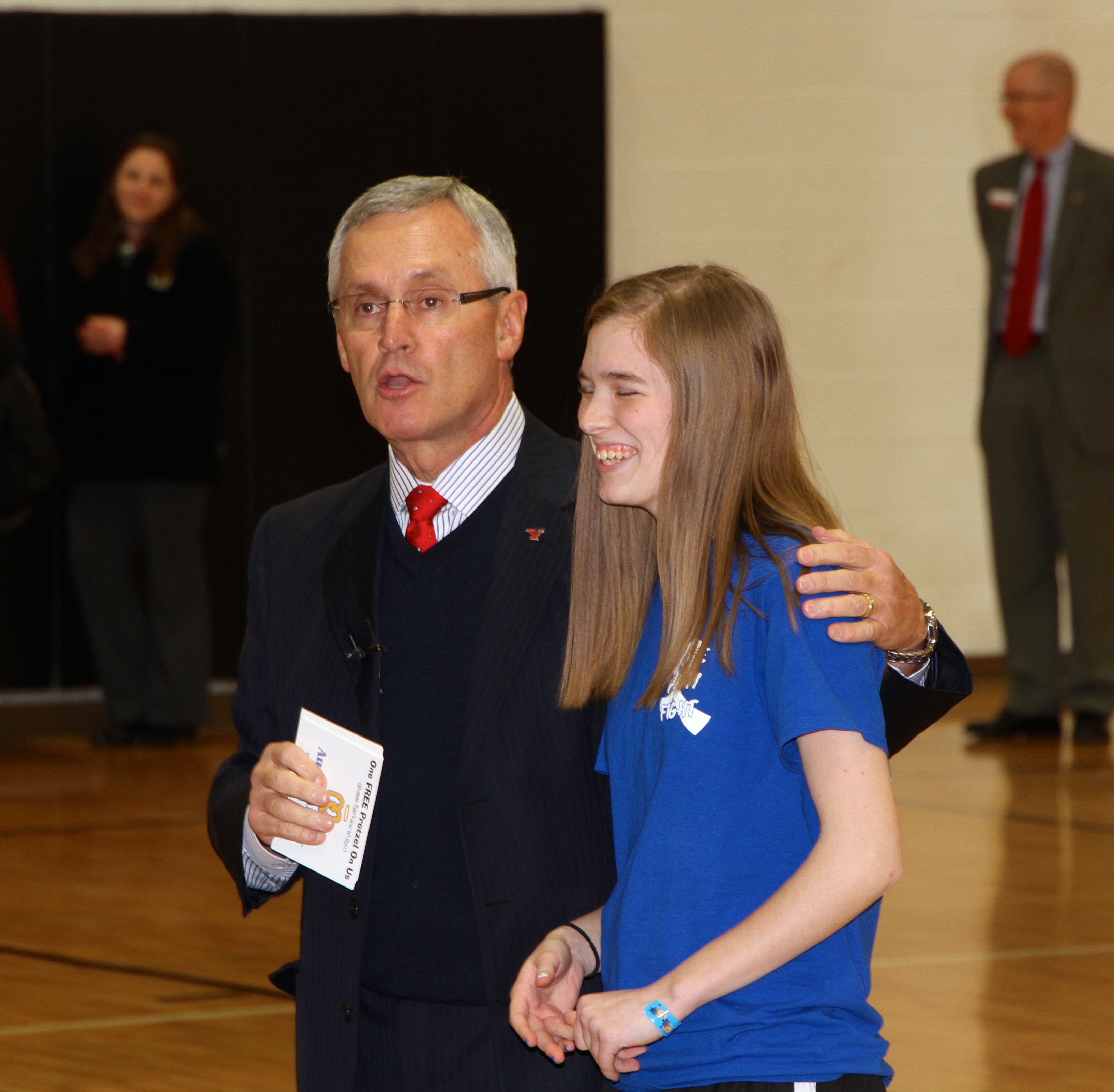
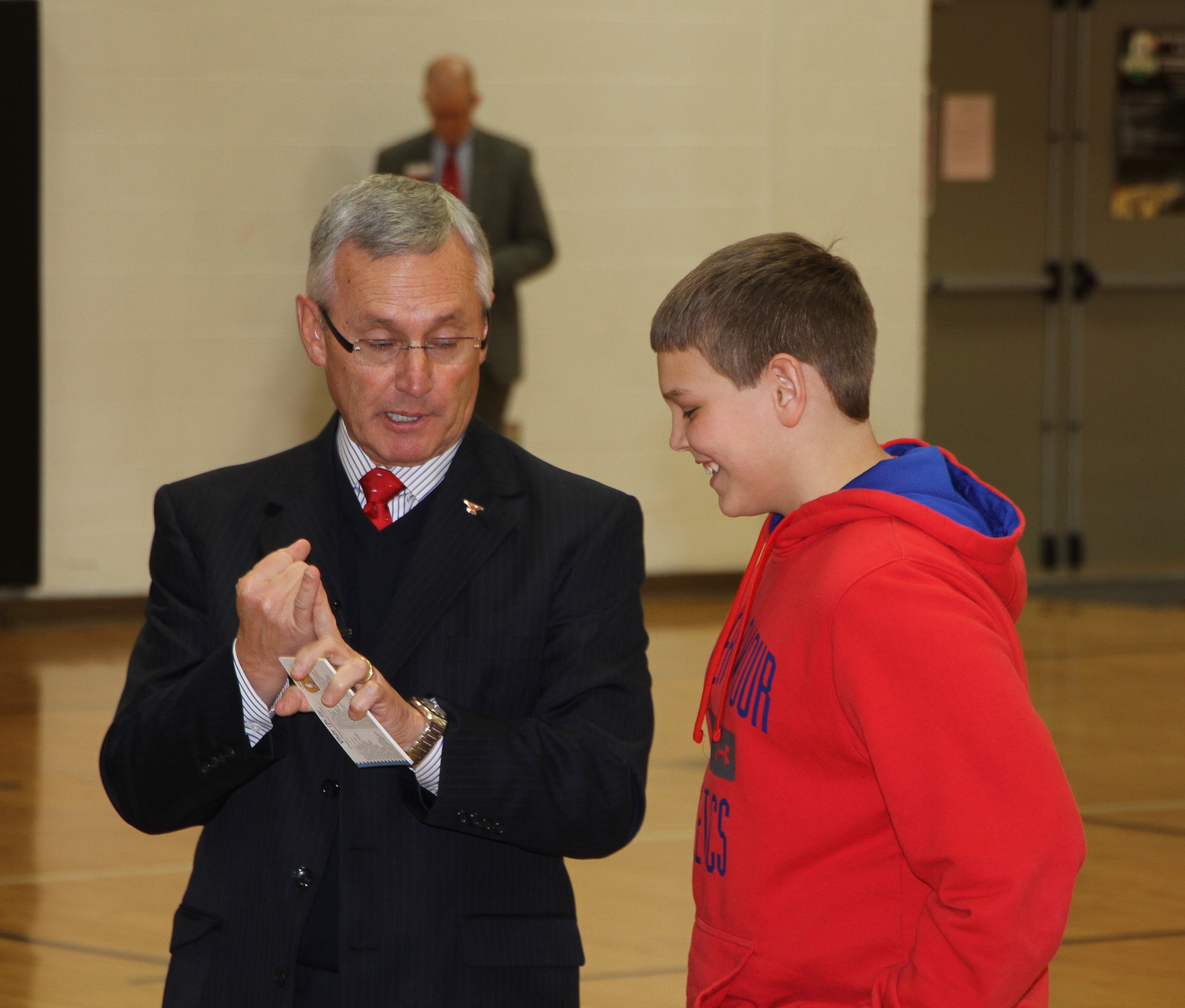
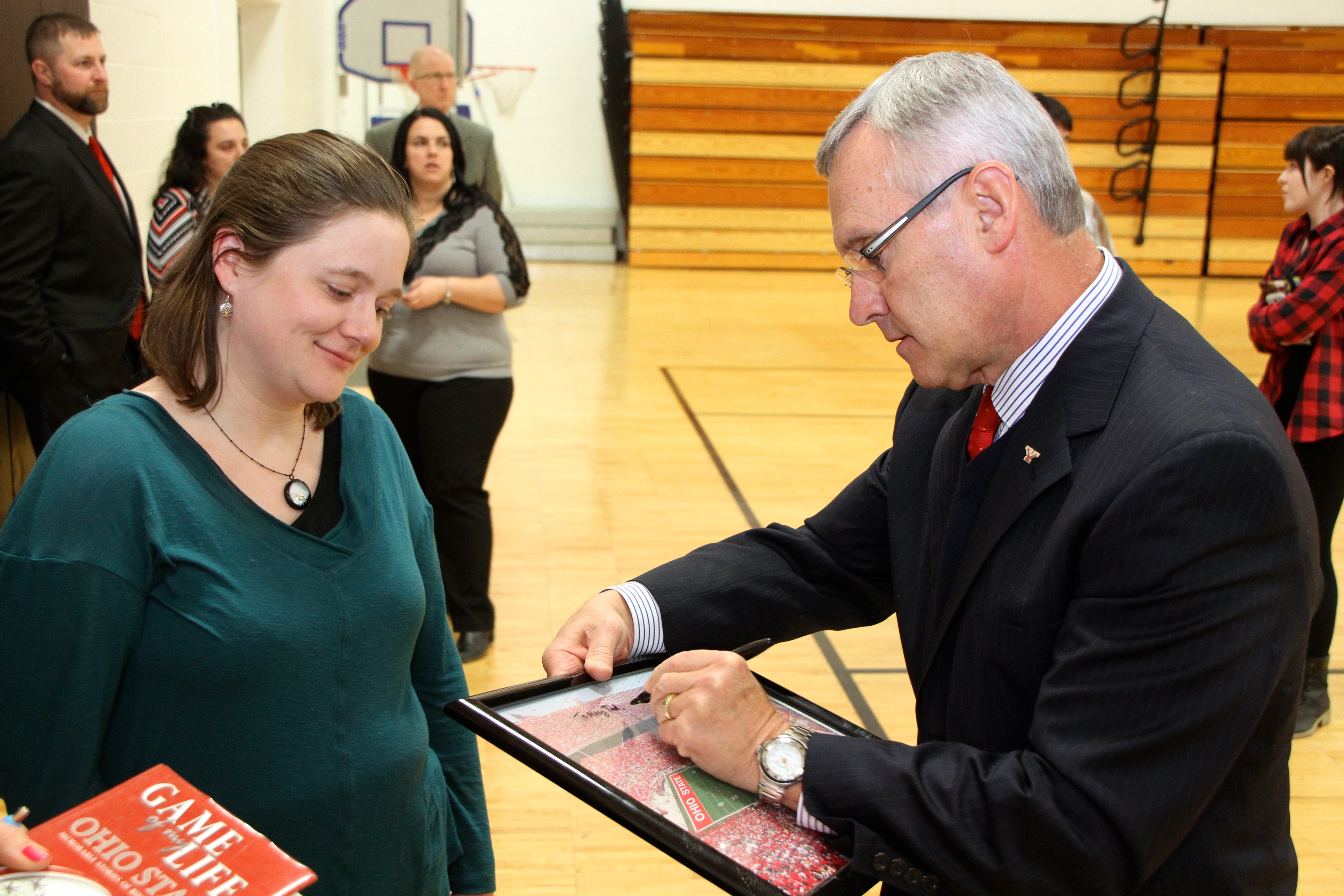
On Wednesday afternoon, he spoke to students at Cardinal High School about success for the future.
But before he shared what he sees as the four steps in the “journey of success,” he asked the students to reflect on their blessings every day.
Tressel said one of the things he learned throughout his 25-year head-coaching career was for his players to begin each day together with what he called “quiet time.”
“Quiet time was the time where there really weren’t any rules other than we spent 10 to 12 minutes quiet in our meeting room,” he explained. “We had a book we called our Winners Manual and you could read from your Winners Manual, or you could just think and reflect about the day, you could daydream if you wanted, you could pray if you wanted, you could do whatever you wanted to do, so long as it was in quiet.”
There was one thing, however, his players had to do as they began their quiet time.
“In your Winners Manual, you had to write down one thing that you were grateful for,” he said. “We always believed that if you begin the day with an attitude of gratitude, that there’s a good chance that no matter what comes up during the course of the day you’ll be able to handle it, because you began the day thinking about how fortunate you are.”
It is a lesson many of his former players still follow today.
On his Twitter account, @JimTressel5, Tressel said he begins each day with quiet time, sharing one thought or reflection.
“We think that it’s healthy that, in the midst of this crazy world … to step back at the beginning of the day, reflect on your blessings, begin the day with an attitude of gratitude and you’ll be able to take care of whatever happens from that point on,” he said.
‘Journey of Success’
Tressel told the students they needed to define success for themselves.
“Do not allow anyone else to define success for you,” he said. “Sometimes you can get caught up in success being what others are thinking.”
In athletics, for example, Tressel said players and teams often get caught up in rankings and depth charts, or reading about what others write about them in newspapers.
“I suggest that the healthiest success — and the beauty of our country — is that we can decide what our success is,” said Tressel. “You decide what’s going to make you happy; you decide what’s going to make you fulfilled.”
He added, “And, if you’ll do that, and live life with an attitude of gratitude, you’re going to have a happy life.”
The first step in the “journey of success” is to have “a dream, a vision, a plan, goals, a blueprint.”
“You have to decide where you want to go,” Tressel said. “It’s got to be your call.”
He urged the students to talk to and take advice from their parents, teachers, coaches and guidance counselors. But then, they need to decide for themselves how to begin that journey, understanding it may not end up as planned.
“And start dreaming about it, start having a vision, start making a plan, start drawing a blueprint,” Tressel said. “When anything is built, it first starts with an idea, then some goals as to what that idea should look like, and then someone sits down and draws a blueprint.”
The second step is to go to work.
“Anything that will fulfill you will take a lot of work,” he said, whether it’s becoming a parent, going to college, entering the workforce or joining the military.
“It takes a lot of work to do anything and don’t let anyone suggest to you there’s a shortcut of any kind,” he added. “There is not a shortcut.”
Tressel told the students they would be entering a “highly competitive” global world when they graduate from high school or college.
“The competition is stiff, regardless of what you want to do,” he said. “So, make sure that after you’ve made that plan in step number one, you’re willing to put the work in in step two. It takes work. Anything great takes work. Anything fulfilling takes work.”
Step number three can be complicated and confusing, Tressel said.
“One thing that I know for sure about all of you is that, in the rest of your life, there are going to be times when things are going the way you want them and times when they’re not,” he said, adding there will be good days and bad days, ups and downs.
“On your journey of success, on your journey of happiness and fulfillment, seeking that inner satisfaction, you’re going to have to handle the tough times, because there are going to be some,” explained Tressel. “I suggest that the most complicated, difficult step in the journey of success is handling adversity — and also handling success.”
For example, Tressel said a student might get an A on the first test in a class and become complacent and not study as hard for the next one. That student didn’t handle success very well.
The fourth and final step is to believe the journey will be accomplished.
“You have to believe in yourself,” Tressel said. “You have to think you can.”
He recalled taking over the football program at Youngstown State, in 1986, and proclaiming the Penguins would be national champions.
Everyone laughed, because the Penguins never had been national champions.
“Well, we thought we had a good plan. We knew we were going to work extremely hard. We were going to make sure we could handle the ups and downs that occur,” Tressel said. “And, you know what, we were going to believe in ourselves and we were going to believe in each other.”
In fact, he asked his players to memorize the poem, “It Couldn’t Be Done,” because Tressel knew their journey couldn’t be accomplished unless they believed it would.
Three Tips
Shifting gears, Tressel shared three tips for students once they leave Cardinal.
Tip 1: “Show me your friends, I’ll show you your future.”
He said who they choose to associate with would have a great influence on their future.
“Select your friends wisely. Select your friends who have similar goals in mind, who have similar values. Be around the kind of people you want to be around,” said Tressel. “And, also, be the kind of friend that someone should want to be around. A friend is someone who would be willing to tell me the truth and tell me when I’m not acting appropriately.”
Tip 2: “Wherever it is life takes you … get involved in activities outside of your normal classroom.”
He encouraged the students to get involved in group activities where they have to work with others, to communicate with others and to compromise.
Tip 3: “Really begin to develop your financial literacy.”
That means “do all you can possibly do to keep your debt low,” said Tressel, explaining college students are building up extraordinary amounts of debt, which is affecting them for years into their work life.
For those students planning to attend college, he urged them to begin saving now. For those planning to enter the workforce, he urged them to start learning how to budget now.
“The ability to handle your finances has a tremendous affect on you,” he added.


