


Geauga County Runs 1st and Only Drug Resistance Program for Amish
As the opiate epidemic continues to plague the nation, Geauga County’s Drug Abuse Resistance Education program is leaving no stone unturned in the schools — including the Amish.
As the opiate epidemic continues to plague the nation, Geauga County’s Drug Abuse Resistance Education program is leaving no stone unturned in the schools — including the Amish.
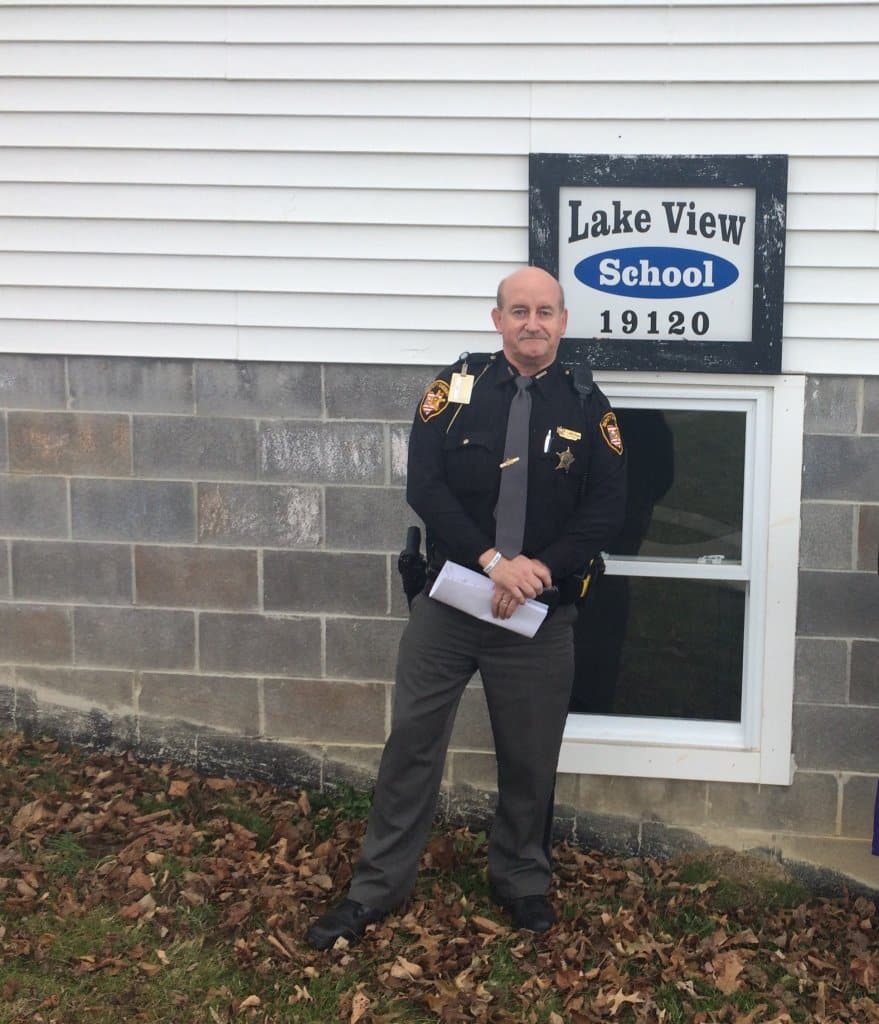
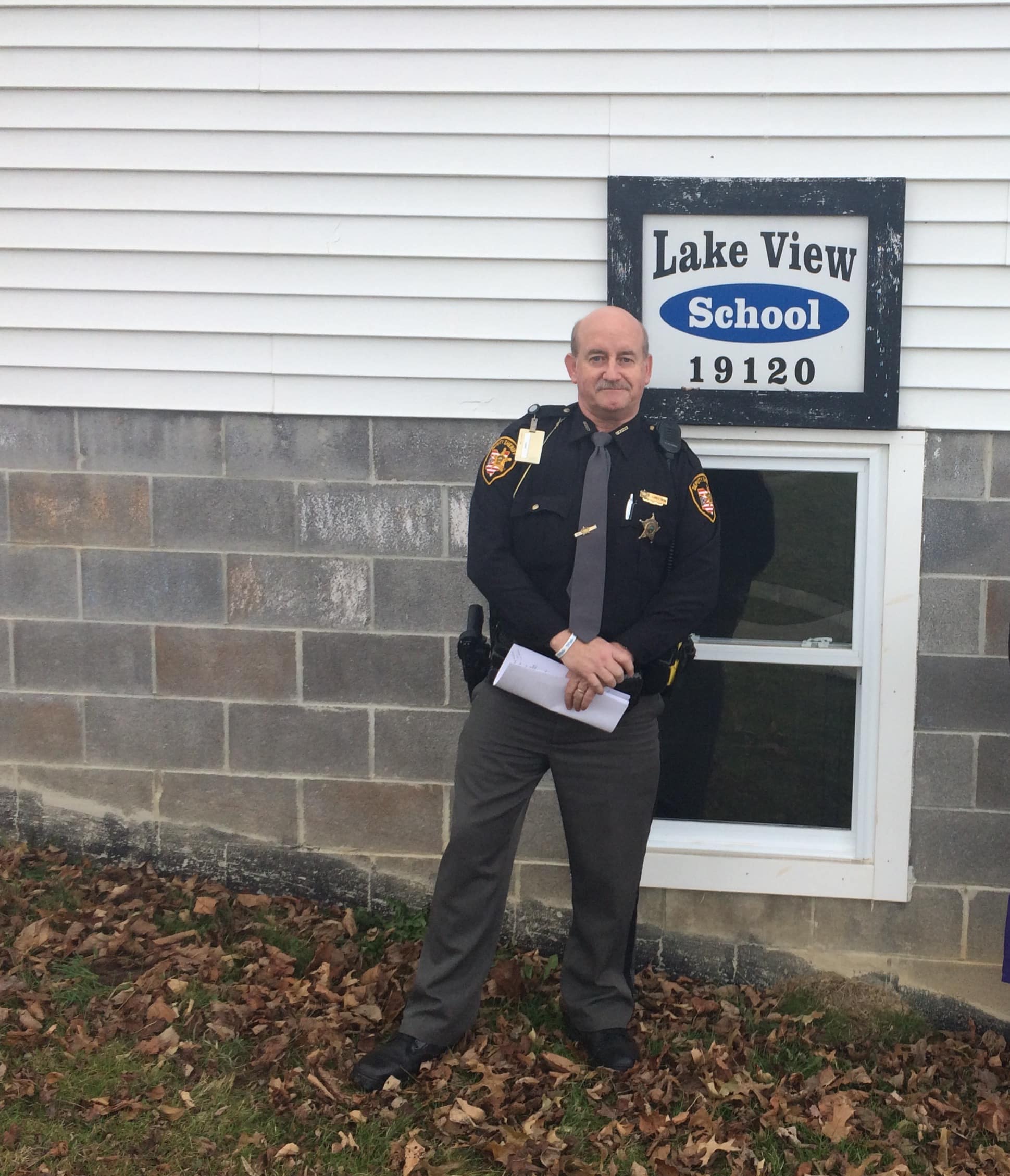
On a recent afternoon, Geauga County Sheriff’s Deputy Roy Lundstrom’s patrol car rolled to a stop in front of Lakeview School in Garrettsville, which serves Amish students from Middlefield.
“I think it is fantastic that we can build a relationship with the Amish and they trust us to teach their children,” Geauga County Sheriff Scott Hildenbrand said of the county’s D.A.R.E. program. “With the opiate problem we face in this country, it is one more tool to help to prevent further problems. We must start with the younger children to get a handle on it. We need to do everything we can to combat the drug problem.”
Geauga County has the first, and to this date, only Amish parochial schools in the nation to participate in the widely recognized D.A.R.E. program — which teaches students the dangers of drugs and alcohol and how to resist peer pressure.
The aim of the program, kicked off nationally in the early 1980s, is to affect critical life and social skills, including decision-making as it relates to the use of alcohol, tobacco and other drugs, as well as to enhance youth’s refusal skills and self-confidence.
The sheriff’s office provides instruction to elementary and middle school students in Geauga County with skills necessary to recognize and resist pressures to experiment with drugs and to avoid gangs and violence.
Program History
“The 1993 – 1994 school year proved to be a ground breaking one for the sheriff’s office and its D.A.R.E. program,” said deputy Jeff Powers, program facilitator. “This is when the first Amish parochial school programs were piloted.”
In response to requests from the Amish community, a parents’ night event was held in the gymnasium at Cardinal High School where the D.A.R.E. programs were initiated that year in four Amish parochial schools.
The county’s program has steadily expanded each year and currently, 32 Amish parochial schools participate.
The D.A.R.E. program has been supported by the last four sheriffs, James Todd, George “Red” Simmons, Dan McClelland and Hildenbrand.
“Without the support and determination of these law enforcement executives, the D.A.R.E. program could have gone the way of many other D.A.R.E. programs, and were cancelled to put manpower back on the road during budget crises,” Powers said. “Both Sheriff McClelland and Sheriff Hildenbrand believe the D.A.R.E. program is one of the most important community-oriented programs that the office has, and continue to support the deputies’ mission to provide Drug Abuse Resistance Education.”
During the 2016-2017 school year, 10 Amish schools, which rotate participation every three to four years, participated, along with nine public schools and three non-Amish parochial schools.
Lundstrom and deputy Jim Hudson are certified D.A.R.E. instructors by the state of Ohio.
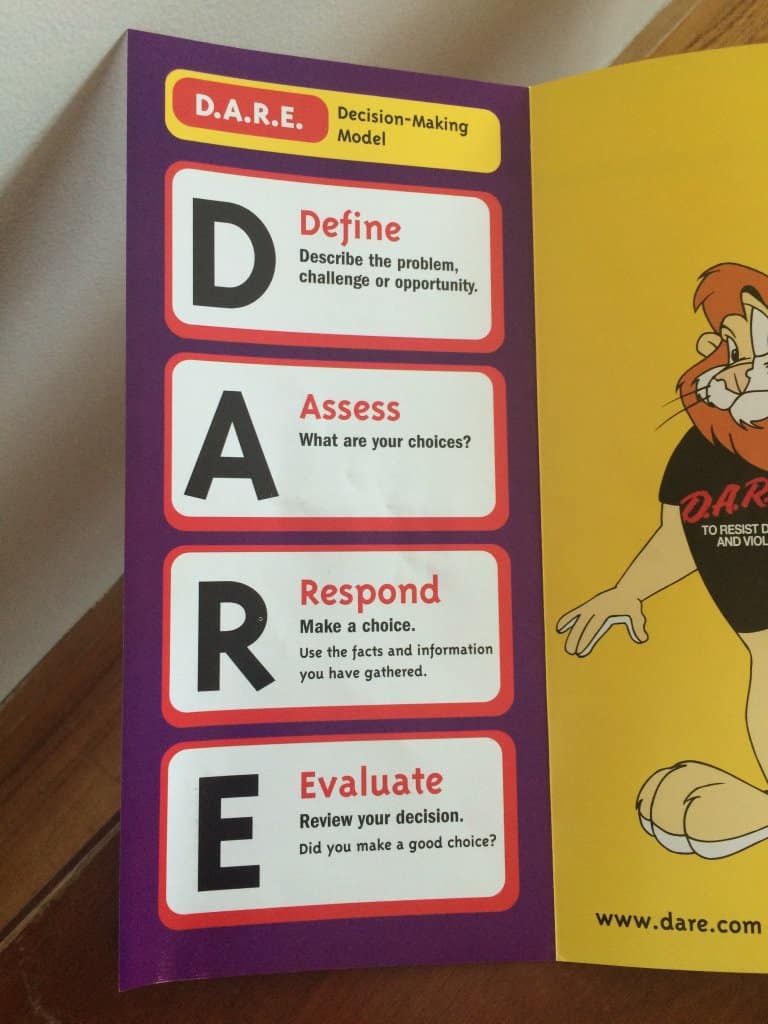
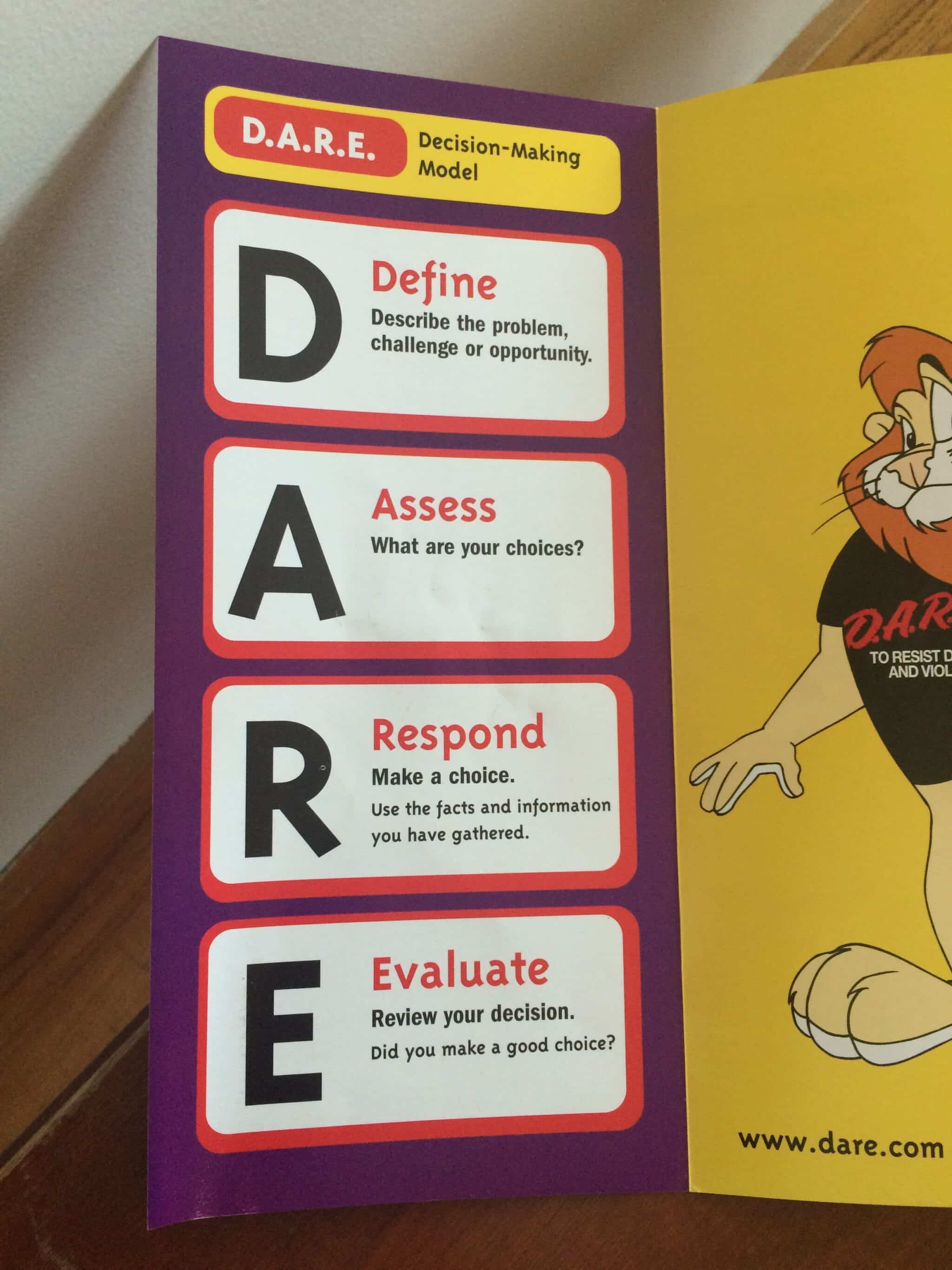
The old D.A.R.E. curriculum was updated and replaced in 2009 with a newer program that favors decision-making models over the former “Just Say No” campaign. This new curriculum teaches about 1.5 million students a year.
D.A.R.E Caters to Amish Culture
The sheriff’s office D.A.R.E. instructors have established a strong relationship with the tight-knit Amish group — one they do not take for granted.
“All of the D.A.R.E. programs are the same,” Powers said. “It is a research-based program. All of the information is reviewed to make sure that it is accurate before it is shared with the classes. It is also aligned with modern teaching practices and standards. The only difference between public school D.A.R.E. and Amish D.A.R.E. is being sensitive to the different cultures and, of course, the size of the classes. One of the biggest challenges is in the presentation in an Amish school.”
Lesson plans are designed for public school style technology-inspired settings with computers, projectors and PowerPoint presentations.
“You do not have that in an Amish School, it is just the deputy making the presentation and you either have a connection with your students or you don’t,” Powers said. “As the only prevention and education program that is allowed in the Amish school district, our deputies take the opportunity very seriously to present the information so that the Amish students are educated to the dangers of ATOD (alcohol, tobacco and other drugs) and content to try and prevent a substance abuse problem in the community,” Powers said.
The 12-week program at Lakeview recently neared an end as students read and shared essays on what they learned.
Lundstrom said all parents will attend the following week’s graduation.
“It makes us feel good,” said teacher Barbara Hershberger, of D.A.R.E.’s impact on students. “It is very important for us to learn everything about what drugs are and also the dangers of smoking.”
The program’s focus on ways to resolve conflicts and responses to peer pressure has also been beneficial.
“Many times our instructors have found that the classroom is the only information students get as far as conflict resolution and resistance skills,” Powers said.
Hudson has taught the program for two decades.
“The earlier the better,” he said. “Since a young brain does not fully develop until later in life (age 20-25), the best way to combat this is with knowledge. Young people are faced with choices about drugs at an earlier age.”
Student after student at Lakeview approached the front of the room and read their essays.
“My pledge is to never smoke or drink,” one boy said. “We learned how to get out of risky situations.”
“I enjoy having D.A.R.E. classes with Roy,” another student said as others expressed the same sentiments.
Beyond the Classroom
Chardon Municipal Court Judge Terri Stupica continues to be in the forefront of fighting the drug epidemic since taking the bench in Geauga County.
Stupica said she sees an average of 20 young people a week in her courtroom affected by drugs, including marijuana.
“D.A.R.E. is very important,” said Stupica, who started Geauga County’s Opiate Task Force in 2012. “The Amish community likes to keep self-contained for the most part. They are self-sufficient and like to handle all situations amidst their own community. However, they realize there are some matters they are just not that well-educated about and welcome information from the outside. If they see you are truly wanting to help them with an issue, they will be eternally grateful.”
She added the drug resistance program is a great starting point in all schools, but schools need to build on those principles in the education of substance abuse after D.A.R.E. officers leave.
“Everything is equal in fighting the epidemic,” Stupica said. “The Amish are really not that much different from us. They just live a much simpler life. They want help in fighting substance abuse like any other facet of the community.”
Measure of Success
Hildenbrand said they hope when D.A.R.E graduates are confronted by future choices, they will think back and remember what they learned and make smart choices.
Hudson trusts the program is making a positive difference.
“Every day I speak to adults that had the D.A.R.E. program when they were in school. Not every one of them may be able to say that all of their choices were the best, but all of them tell me they now see the benefit of what they learned in the class,” he said. “Also, if they have children of their own, I hear them say how glad they are that their children will participate in the classes. On one occasion, a parent thanked me for opening the door between him and his child. He told me he knew he needed to have a talk about drugs, but didn’t know how. He said that it was a lot easier to just answer the questions than to start a conversation. When I start a class, I can tell how apprehensive the students are. After a few weeks, the class loosens up and I can tell that they are more comfortable with me being in the classroom.”
Powers added, “As an instructor, you do feel pride in what you have done when a former student comes up and says, ‘You were my D.A.R.E. officer and what you told me helped.’”
Hudson said he couldn’t quite describe how it makes him feel to help the youth of the county.
“I guess the best way to describe it is to say, when someone of any age stops me and says thanks, it’s just that feeling that comes over you that someone noticed,” he said. “(Or) when I see one of the children that I had in one of my classes and they tell me how well they are doing. Every day is important. Every day has an interesting story, that’s why, after 20 plus years, I am still teaching D.A.R.E.”


