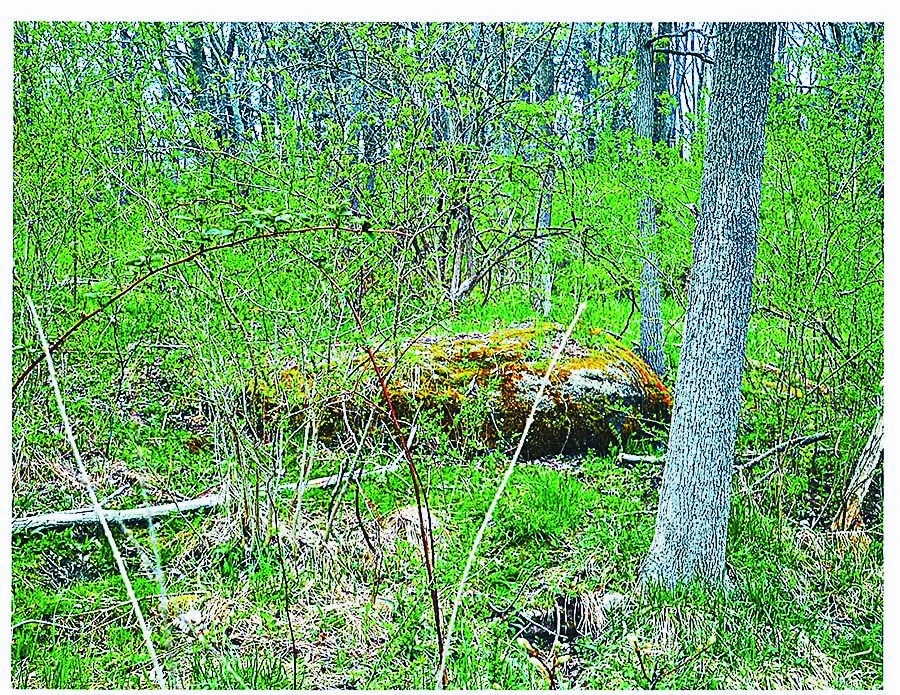
When the city of Chardon purchased 10 acres last year to extend the Maple Highlands Trail, the property came with Hanging Rock — the spot where Geauga County's first murder trial concluded with the public execution of a local blacksmith about 200 years ago.
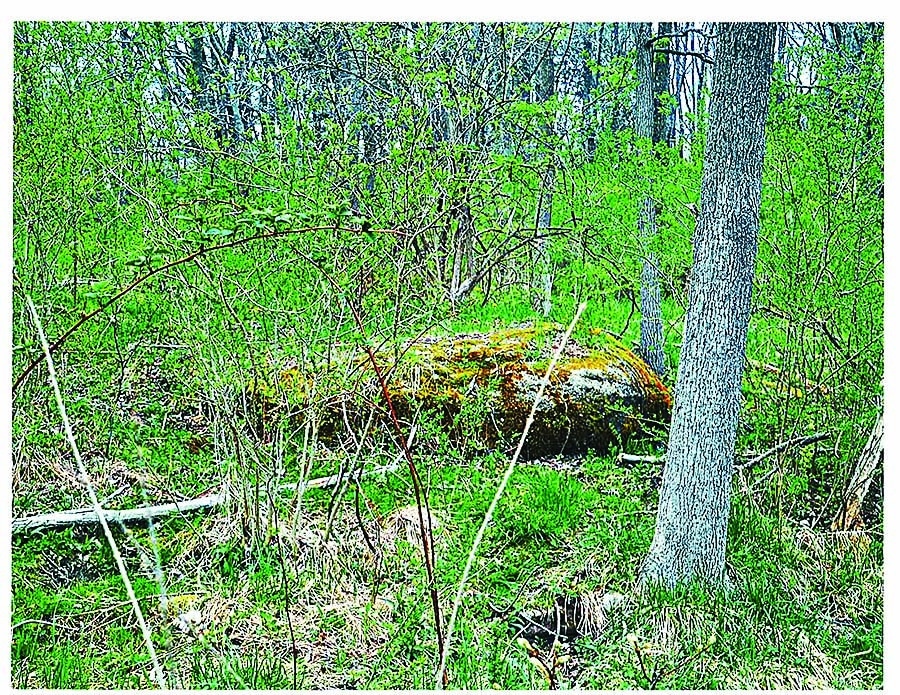
When the City of Chardon purchased 10 acres last year to extend the Maple Highlands Trail, the property came with Hanging Rock — the spot where Geauga County’s first murder trial concluded with the public execution of a local blacksmith about 200 years ago.
Chardon City Council is now moving forward with a plan to designate Hanging Rock as an Ohio Historical Marker, complete with a dedicated trail, benches and sign to explain the history and significance of the location.
Council unanimously approved the application to the Ohio History Connection to begin the process at its June 14 meeting.
As a lifelong resident whose family came to Chardon in 1815, Councilwoman Debbie Chuha believes “it’s a great probability” that someone from her family was among the hanging’s thousands of witnesses.
She’d heard about Hanging Rock throughout her lifetime, but was never sure of the location.
“This historical marker will be a fun novelty to add awareness of yet another Chardon historical happening,” Chuha said.

The rock sits on wooded land between Water Street and South Street. Hanging Rock is near the trail, but will be accessible via a smaller trail off the main trail.
“I mean, it’s not your typical thing to promote a public execution,” said Steve Yaney, the city’s planning and zoning administrator. “But it’s a cool little offshoot to break up the (bike) trip.”
According to the proposed text for the marker, the execution, crime and trial went like this:
On Feb. 1, 1823, Benjamin Wright Jr. stabbed Zophar Warner in the side over a financial dispute.
The mortal wound killed Warner and Wright was convicted after a four-day trial. A 12-man jury sentenced Wright — “he be hung by the neck until he be dead.”
On May 15, 1823, Wright was hanged publicly near the rock. This “hanging bee” was treated as an event and drew an estimated crowd in excess of 4,000 people traveling upwards of 50 miles to witness the spectacle.
Afterwards, the gallows were dismantled and used to build a porch at the residence of J.O. Worallo on South Street.
This event marks Geauga County’s only execution in its history, according to Claire Wilson, the archivist and records manager for the county.
Wilson found a 1903 edition of the Geauga Republican newspaper that offered the following first-hand witness account:
A “divine service” was held on Chardon Square before Wright was marched slowly to the “large stone” by local militiamen and “the notes of the ‘Death March,’ played by fife and muffled drums.”
Hanging Rock was “the large stone” that marked the spot of the gallows, but was not actually involved in the hanging.

On arriving to the gallows, Wright was asked by the sheriff if he wished to have his time extended.
He replied: “I do not wish to be kept in suspense. Do your duty.”
The death warrant was read, the cap drawn over his face, he shook hands with the sheriff and the rope was severed.
“Wright fell about six feet and died without struggle. The body hung for 25 minutes and was then lowered, placed in a coffin and taken to Leroy for burial.”
Wright is buried in the northern part of Leroy Township “near the bank of the Grand River, beneath the shade of an old apple tree.”
These type of first-person accounts are important, said Bari Oyler Stith, who was the Geauga County archivist for 18 years before becoming the director of the historical preservation program at Ursuline College.
Stith is also working with Yaney on the process.
“I think it’s important to look at the early justice system and how seriously people took it,” she said. “They didn’t subvert the process. They followed the process very, very carefully.”
Stith said the original 1823 trial manuscript still exists.
And Geauga County has been very good — especially given the fire that destroyed part of the Square in 1868 — at preserving its historical records.
Stith said the event even used to be taught in classrooms.
“(Wright Jr.) didn’t mean to do any harm, but he did,” Stith said. “It’s a great morality play about what can happen when you lose your temper.”
The trial was re-enacted during the city and township’s 2012 Bicentennial. The re-enactment of the trial was held inside the Geauga County Court of Common Pleas and was filmed by G-TV.
The deadline for the Ohio Historical Marker application is July 1. Approval by the Ohio History Connection could cost the city about $3,300 for the sign, although Yaney said grant money could be available to pay that cost.