


Newbury Schools Enrollment Down to 275 for 2019-2020 Year
Only 13 kindergarteners, out of a possible 47 living in the district, have registered for the 2019-2020 school year, Newbury Schools Treasurer Sarah Palm told board of education members during a special meeting May 20.
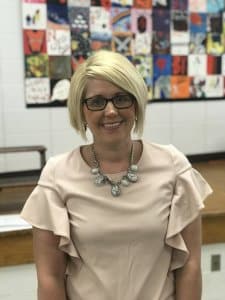
Only 13 kindergarteners, out of a possible 47 living in the district, have registered for the 2019-2020 school year, Newbury Schools Treasurer Sarah Palm told board of education members during a special meeting May 20.
According to Palm’s projections, if the school district remains independent, with no influx of new students, the Newbury High School Class of 2032 would have just over a dozen graduates.
During Monday’s Newbury Schools Board of Education meeting, Palm updated her semi-annual five-year forecast, mandated by the State of Ohio. The report does not reflect any changes to the district if it transfers territory to West Geauga Schools and just showed projections if it remains independent.
About 10 people attended the meeting.
Open enrollment figures for next year show the district losing 50 students, many of them transferring to West Geauga ahead of the possible transfer.
“Additionally, we have 13 open enrolled to Berkshire, however their open enrollment does not close until Sept. 1, so it is not unlikely to assume that we could lose another five students to Berkshire in that timeframe,” Palm said.
Board of education members have said previously if the district’s enrollment falls below 275 and the district remains independent, it would be subject to a state takeover, with the Ohio Department of Education determining its fate, which would likely be a merger with another district or other districts.
“This year, the school district will lose $539,030.80 to open enrollment out to other districts,” Palm said. “Berkshire and West Geauga account for the two largest amounts with Berkshire at 54 percent and West Geauga at 32 percent.”
Staff reductions, announced at the previous board meeting, will save the district approximately $900,000 per year, leaving it with an ending balance of $4.8 million and $3.7 million in 2020, Palm said.
“Over the past five years, revenues have grown by 4.25 percent,” Palm said. “This was primarily driven by the emergency levy that was passed by the voters in 2014. Over the upcoming five-year period, revenues are expected to decline by more than 6 percent because of the non-renewal of the two levies that expire at the end of 2019.

“Also, state revenue is expected to decline in the future as falling enrollment in the district is expected to lead to a reduction in state guaranteed funding. Other operating revenue is declining because of drops in students open enrolling into the district,” she said.
Palm said the district received about $200,000 this school year in state funding for students open enrolling into the district, but that number is expected to shrink because seven fewer students are coming into the district next year through open enrollment.
Board member Marty Sanders asked Palm whether the projected deficit spending in 2022 could be offset by passing one of the two renewal levies the board had decided last year to let lapse.
“One of the two levies would keep us in the black until 2023. Either one,” Palm said, adding she had confirmed her figures with the state auditor’s office.
Sanders said “destabilization” of the district has resulted in losing many students to open enrollment, at the cost to the district of about $6,000 annually per student, plus $2,354 in state funding.
Board member Maggie Zock said the report did not address the question of needed capital outlay in the future, which would include major building repairs, such as windows, the board has put on hold.
Zock thanked Palm for the report.
Four board members — Zock, Sanders, Terry Sedivy and Kimya Matthews — voted to approve the forecast. Board member Kirk Simpkins did not attend the meeting.


