


Ending Inherited Trauma
Kids learn through observation. So if mom or dad goes to therapy to get themselves better, then if a kid gets into a tight spot, they’re more likely to reach out. – Jessica Martin
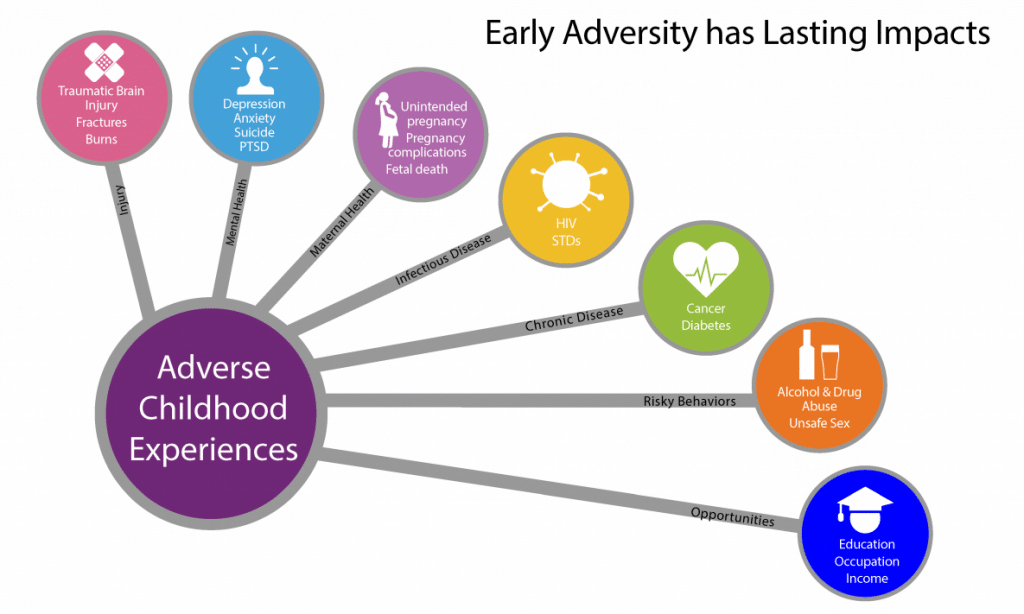
The Ohio Department of Health considers adverse childhood experiences a critical public health issue.
In their 2020-2021 budget request, ODH said Ohio is among five states where as many as one in seven children have experienced three or more ACEs, a number significantly higher than the national average.
ACEs are potentially traumatic experiences and events occurring in the first 18 years of life, and the Centers for Disease Control has said they can include emotional, physical and sexual abuse, witnessing abuse of a parent, substance abuse or mental illness in the household, parental separation or divorce, having an incarcerated household member, or emotional or physical neglect.
The CDC reports these experiences have lifelong impacts, which can correlate to risky health behaviors, chronic health conditions, low life potential and early death.
Jessica Martin, chief clinical officer with WomenSafe in Chardon, said impacts on mental health could start before birth.
“If your parents are fighting or hurting each other while you’re in the womb, you could be experiencing (trauma),” Martin said.
Children learn how to respond to adversity by observing how their parents react. A child growing up in a home filled with constant explosions or emotional battles will not thrive at school because their brains are stuck in a “fight, flight or freeze” state, Martin said.
“When they go to school, are they learning? No – not at all, not even a little bit,” Martin said. “Their brain is not going to stop looking for danger.”
The sound of a slammed door, a sudden change in plans or even the look on a friend’s face can be enough to trigger a response in a child who has experienced trauma at home, she said.

Children living with trauma can also be exhausted or extremely ill because their immune system “turns off,” Martin said.
“A lot of things stop working because your traumatized brain thinks you don’t need them in that moment,” she said.
Some children react to perceived threats or triggers by becoming shy and withdrawn, and others anxious. But some react with anger and Martin said those children are the most likely to be removed from school, which sets them even farther behind their peers.
Those who manage to stay in school, however, still struggle, especially if they do not have a strong support system at home. They are less likely to be admitted to college, or graduate if they are, she said. This lack of education access limits employment prospects, meaning fewer financial resources and more difficulty in accessing mental or physical health care, Martin said.
The Ohio Department of Education recognizes the impacts of trauma on learning. In recent years, it has worked with school districts to create trauma-informed schools.
The ODE tasks these districts with building partnerships with community agencies like hospitals and mental and behavioral health agencies; providing ongoing training and professional development on chronic stress and trauma; providing instructional techniques for teaching traumatized students; nurturing relationships with students; creating safe and respectful environments; and providing de-escalation techniques.
In everyday life, however, Martin offered a simpler explanation for what it means to be trauma-informed.
“It’s changing ‘what’s wrong with you’ to ‘what happened to you,’” she said.
The most important thing to remember, she added, is that it’s never too late to help reduce trauma in your family.
“Kids learn through observation,” she said. “So if mom or dad goes to therapy to get themselves better, then if a kid gets into a tight spot, they’re more likely to reach out.”
Parents may avoid asking for help in ending a cycle of trauma, but Martin said it’s important not to look into the past and judge yourself based on information you didn’t have at an earlier time.
“You have to be able to tell yourself, ‘I forgive myself’ for things that have happened in the past,” she said. “Whether they’re your fault or not.”


