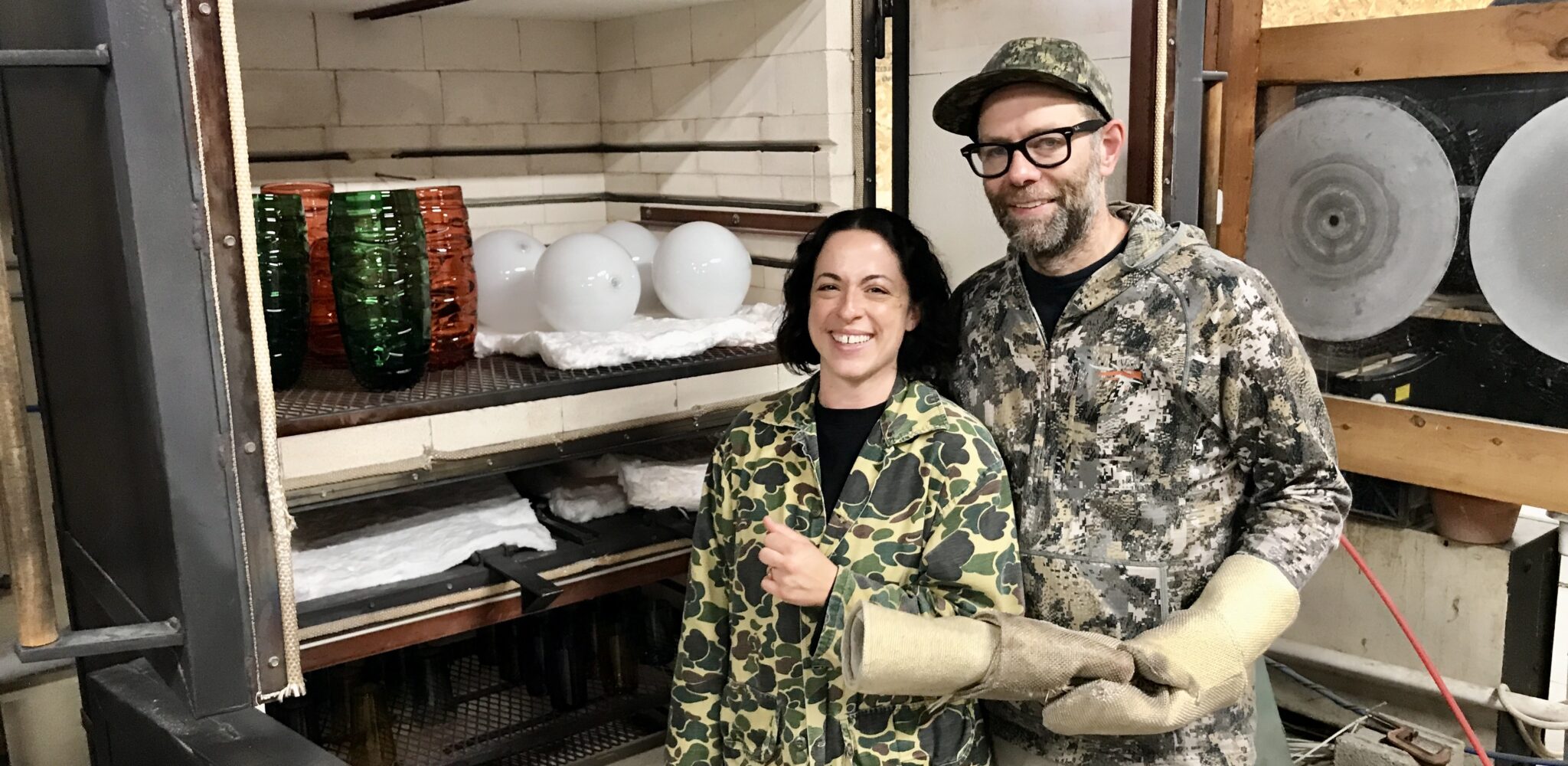
On an unassuming stretch of Bass Lake Road in Munson Township, behind a ranch house, ellipsoidal dollops of milky white glass line the edge of a gravel driveway.
On an unassuming stretch of Bass Lake Road in Munson Township, behind a ranch house, ellipsoidal dollops of milky white glass line the edge of a gravel driveway.
Like spores of an extraterrestrial fungus, the 3-foot-wide forms glow softly in the grass, leading visitors to a converted horse barn where Nate Cotterman creates handmade glass artwork.
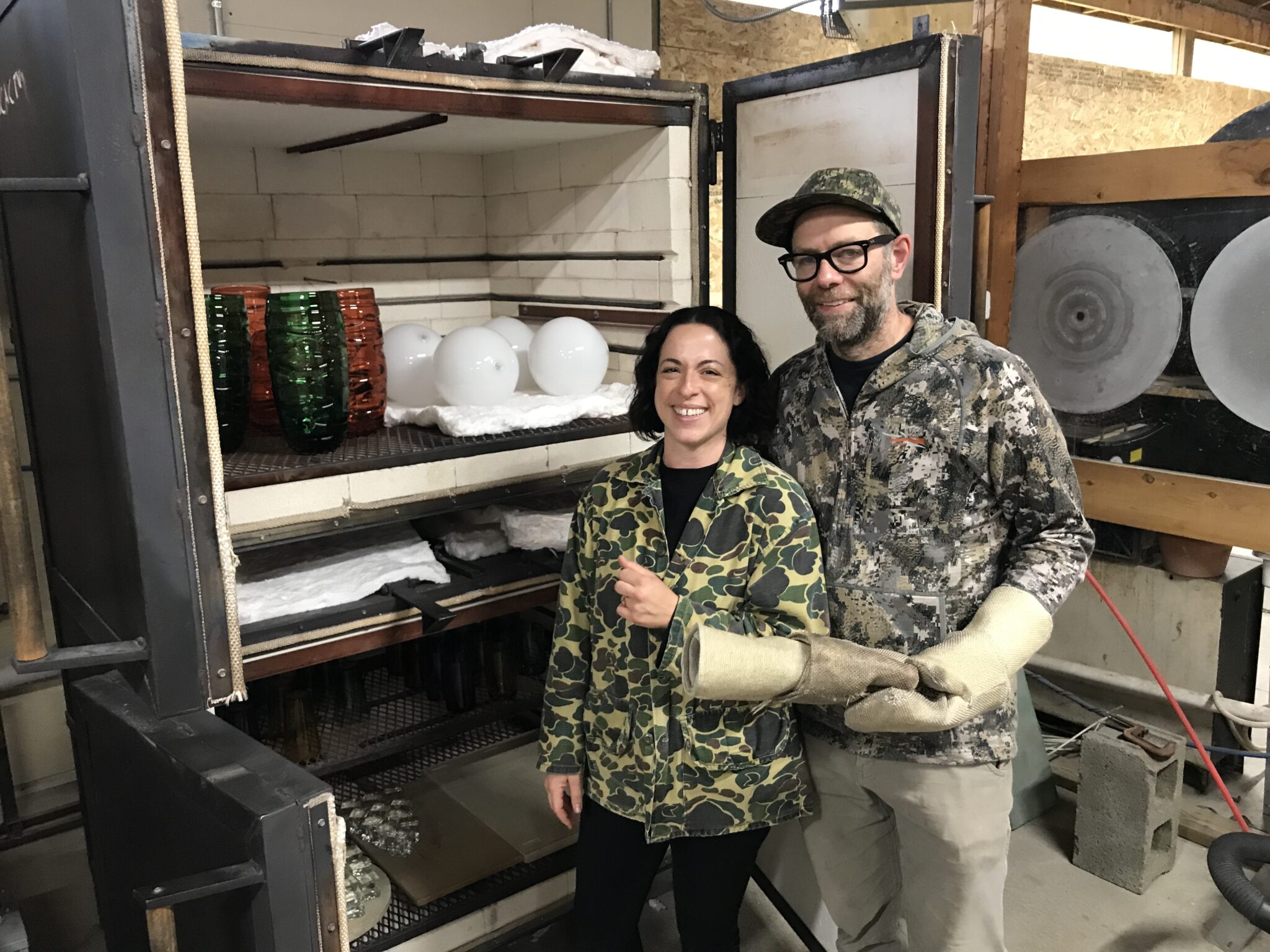
Since 2021, Cotterman and his wife and business partner, Antonia Campanella, have operated Nate Cotterman Glass in Geauga County, building a business and lifestyle centered on collaboration, creativity and family.
Inside the cozy barn studio, the atmosphere is warm and intimate. A furnace burns continuously at temperatures exceeding 2,000 degrees Fahrenheit.
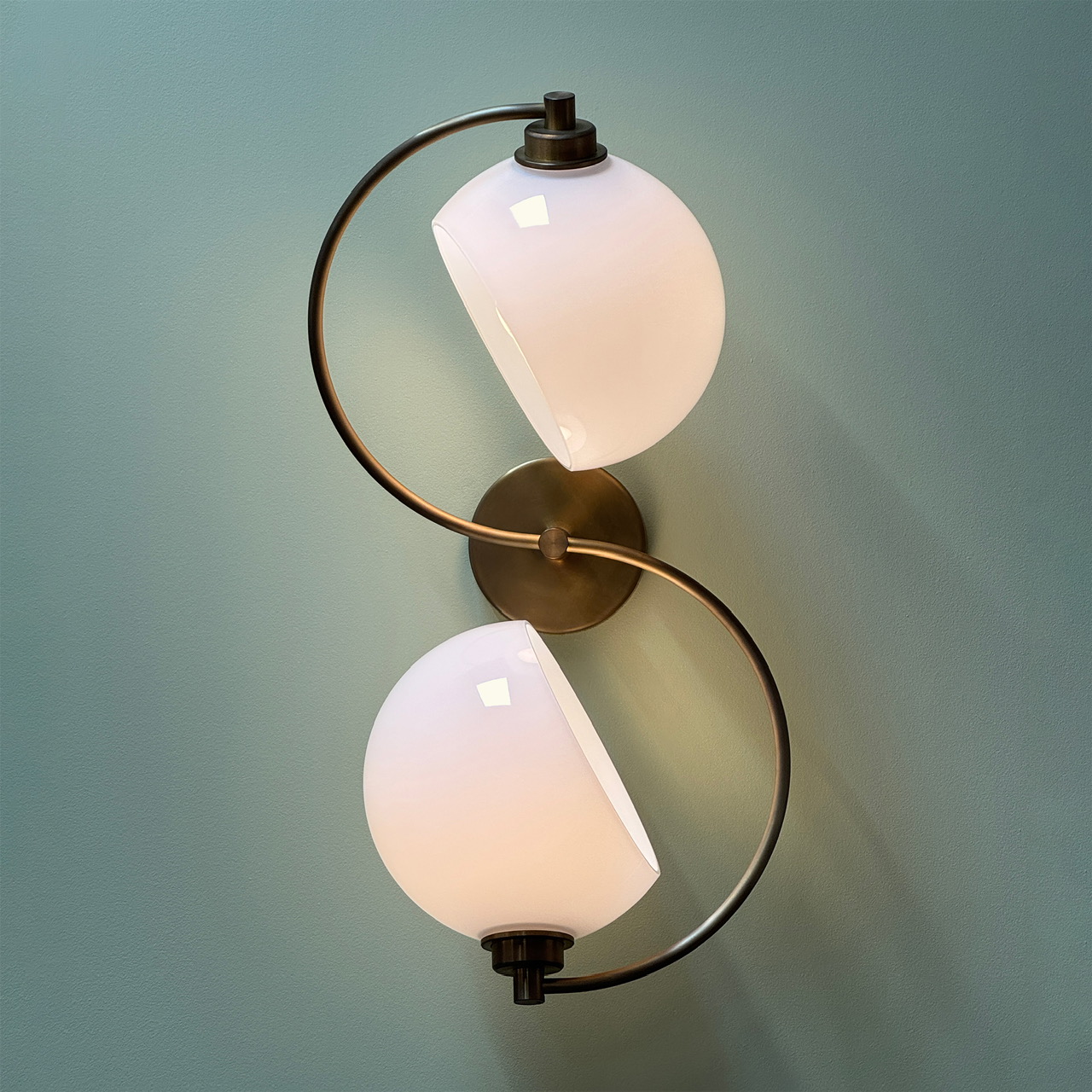
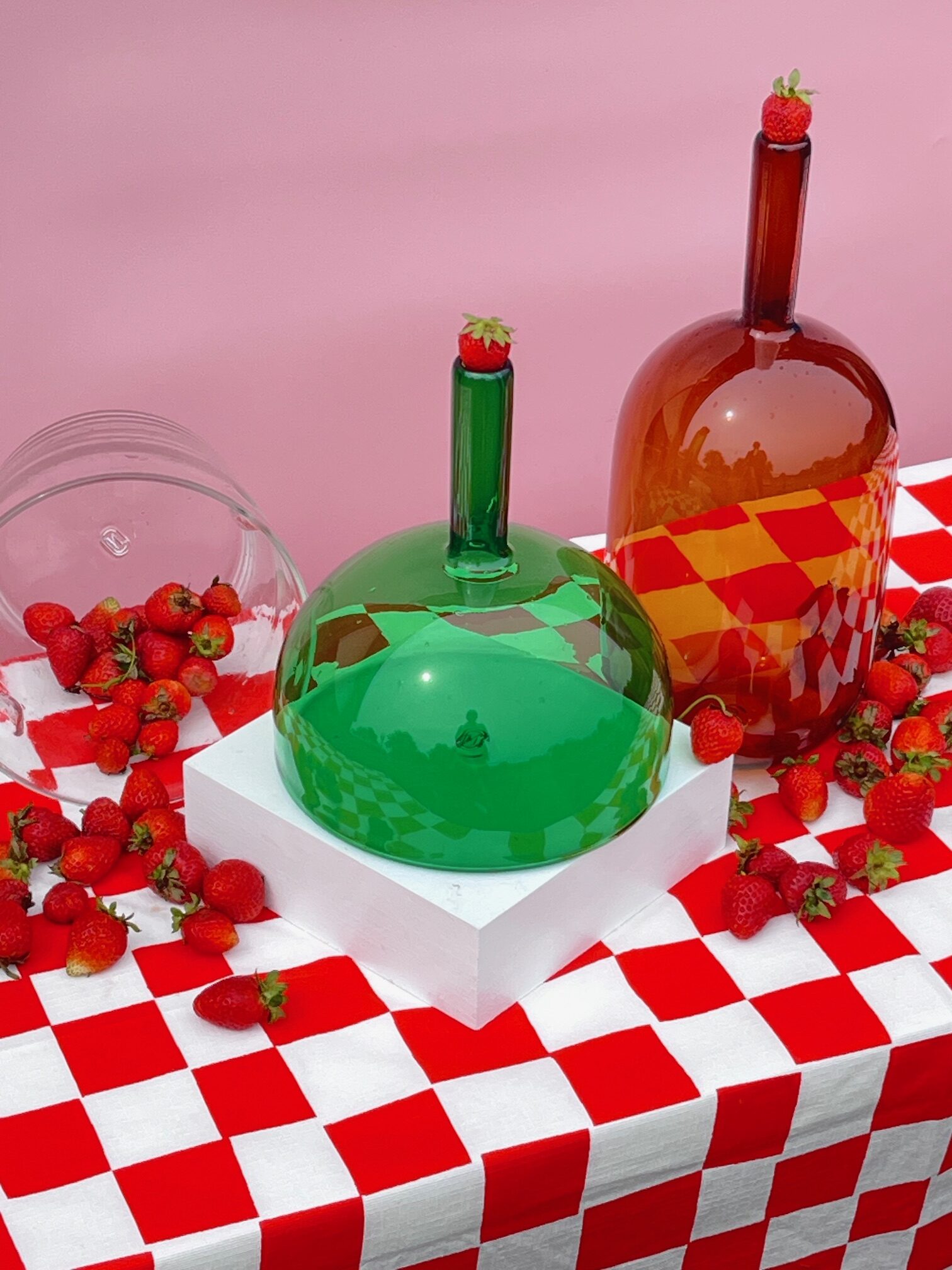
Examples of Cotterman’s work adorn the walls and shelves — lighting fixtures, lamps, bottles and drinking glasses in various stages of production and packaging.
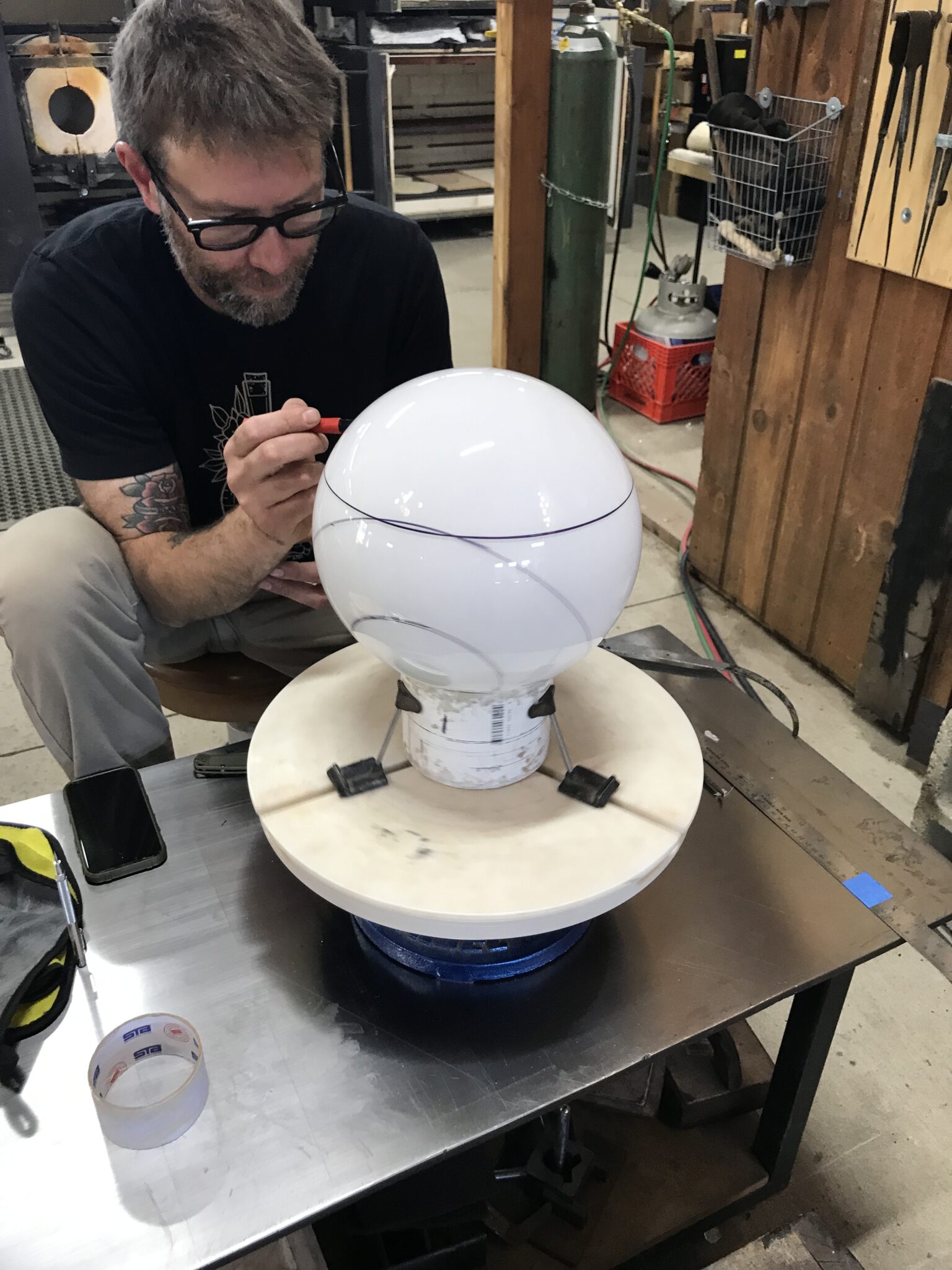
One suspended installation of split glass orbs, designed for Wonderful Pistachios, hangs above Cotterman’s workbench and glassblowing equipment. His free-blown glass creations can be found locally at Basil Place Farm and Venue in Munson Township, where he recently installed a chandelier, as well as in hotels and commercial spaces across the country and internationally in France and China.
Cotterman and Campanella met while studying at the Cleveland Institute of Art. Cotterman hails from Coshocton, Ohio, while Campanella grew up in Chester Township. After Campanella graduated from CIA in 2010, the couple relocated to Los Angeles, where they lived for eight years, married and founded their company in 2014.
After the birth of their son, Arlo, they moved in 2018 to an artist residency in Penland, N.C., near Asheville. There, Cotterman built the furnace he still uses today.
Their search for a property that could house both a residence and a hot shop eventually brought them back to Geauga County, where they found their current home. Through years of experimentation and persistence, the couple said they have built both a successful business and a sustainable lifestyle.

Routine and Process
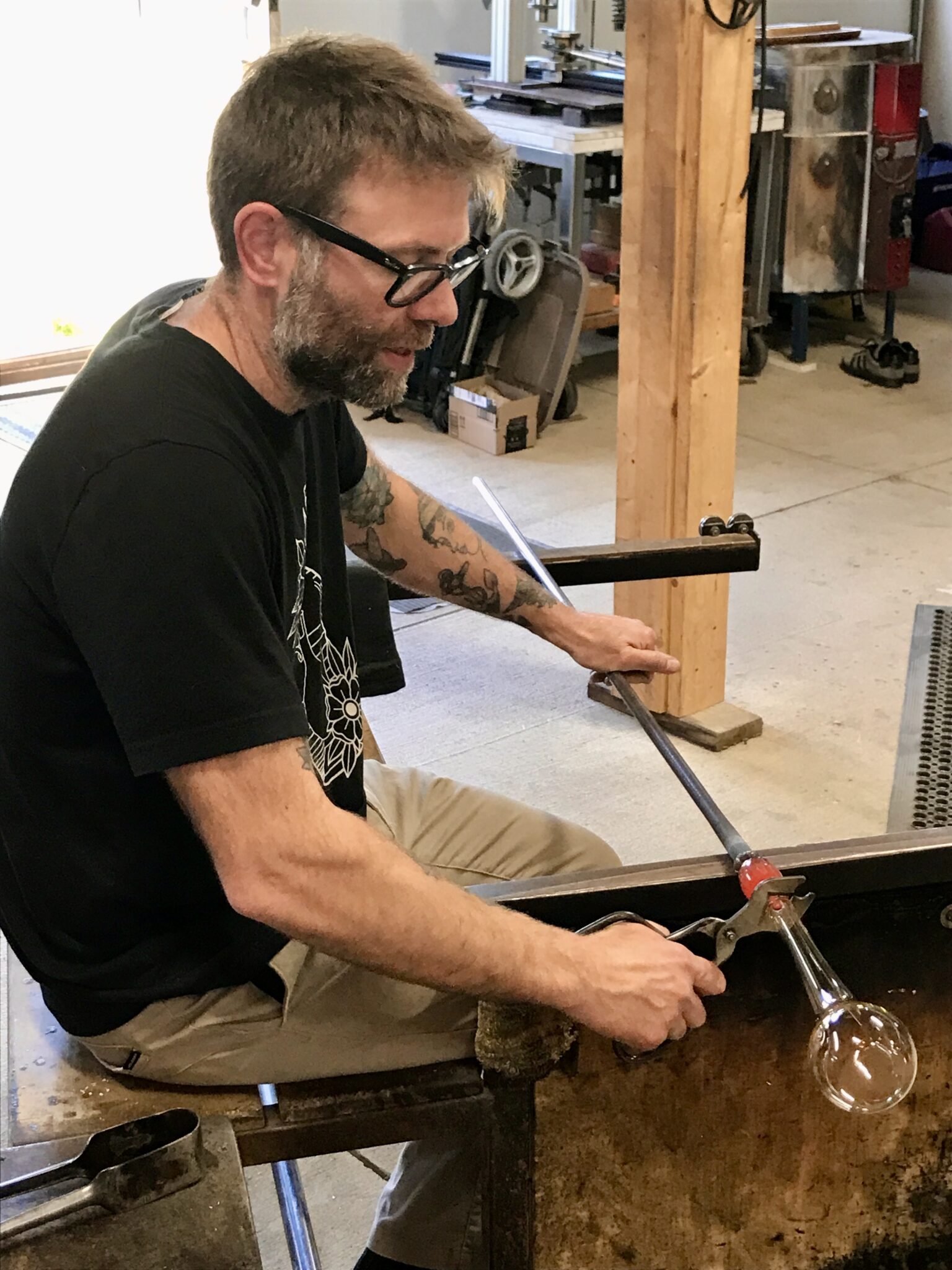
Cotterman blows glass from 7 a.m. to 3 p.m., Monday through Friday, and said the craft requires total concentration and physical coordination.
“It’s super-engaging,” he explained. “In order to do it, you can’t not focus. It’s a lot of up and down, a lot of movement and outside of that, you get to learn a lot of stuff, like metalworking, electrical.”
A former skateboarder, Cotterman said glassblowing requires a similar level of repetition and intensity.
“It’s a mix of muscle-memory,” he explained. “There’s instant gratification with glass, you can see what you’re working on.”
The process begins on Fridays, when Cotterman charges the furnace by feeding 50-pound batches of ground silica, potash, soda, lime and other compounds into a 300-pound crucible, where the materials liquify. By Monday, the molten glass has reached a honey-like consistency and is ready to use.
Using a long hollow rod, Cotterman gathers glowing globs of glass from the furnace before blowing, twisting and shaping the material into budlike vessels, spheres and other forms at his workbench.
“What really put Nate on the map was the cube glass,” Campanella said.
The idea originated after Campanella’s brother, Tommy Campanella, also a CIA graduate, who was living in Kentucky at the time, told Cotterman about demand within Kentucky’s bourbon industry for a non-diluting drinking vessel.
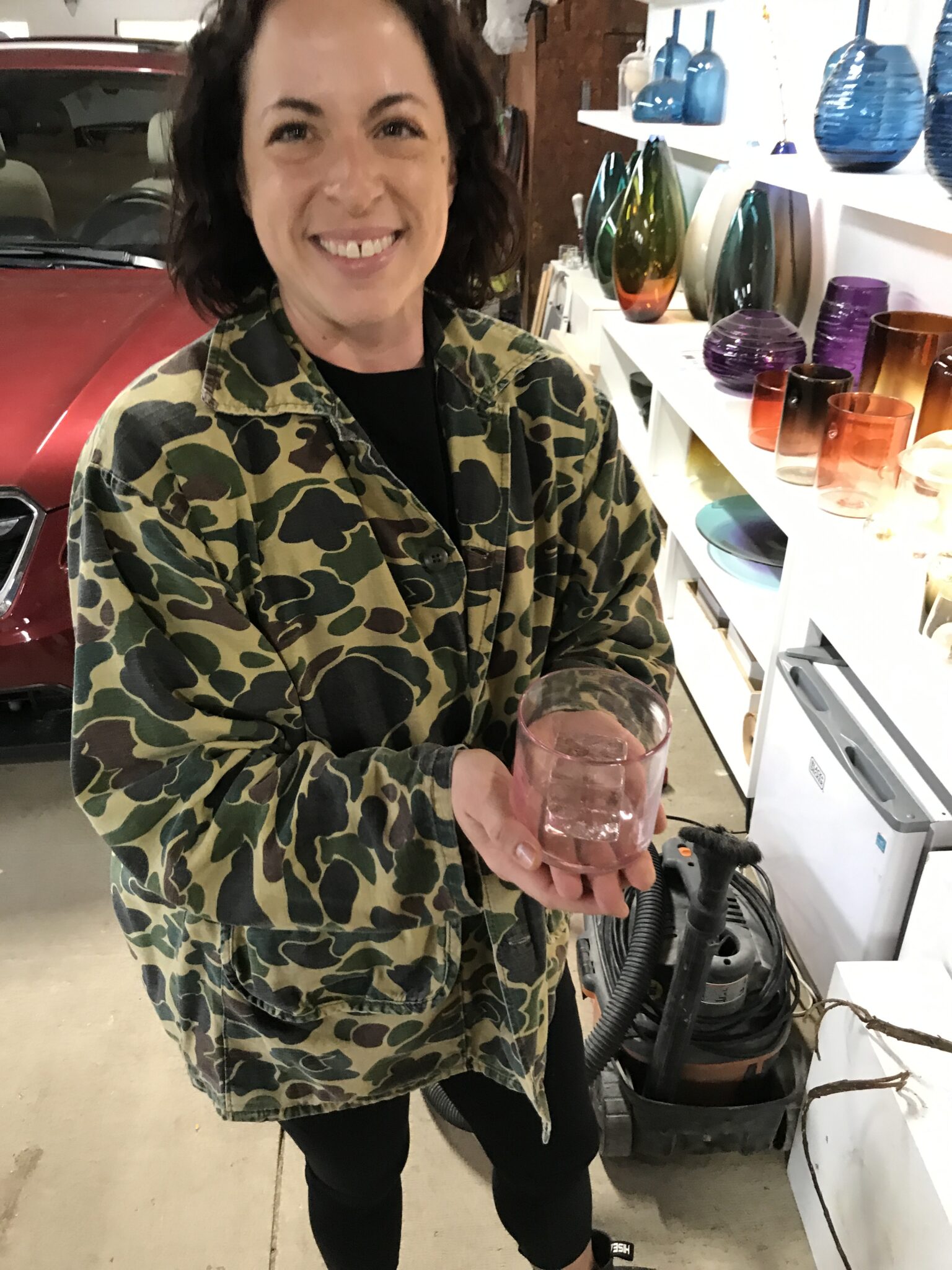
“Nate came up with this: a solid glass cube, fused to the bottom of the glass and you store the whole piece in the freezer,” said Campanella. “It started from this very simple clear cube design and then we’ve grown the family in shape and size. We developed something that can all be one thing and now it’s a patented design.”
The cube glass design has since appeared in several high-profile projects. Cotterman created a set of glasses resembling the floating green at the 17th hole of the Tournament Players Club at Sawgrass in 2020, produced a custom collection for the Cleveland Cavaliers in 2024 and designed glasses for the Biltmore Estate.
“The cube glass series is what put us on the map,” Campanella said. “It started at trade shows with the vessels and then it was the lighting, which started small and has grown. Nate makes custom lighting parts for other makers, other designers, companies will come to us and say, ‘Can you make this?’ We have a lot of close relationships with that side of the business.”

Redefining the Starving Artist
Campanella contributes to both the design and business operations of the company, handling much of the public-facing work.
“She tells me to do stuff, I say ‘No’ a bunch and then eventually, I do it,” Nate said.
“So that we can continue having a business,” Campanella added with a chuckle.
Though she studied ceramics, Campanella said she was always drawn to the “forward-facing side of the art business.”
While working in Los Angeles for a studio specializing in midcentury dinnerware, Campanella gained experience in sales, design and how to navigate boundaries and expectations with clients.
“So much of that sensibility translated to what we wanted to do,” she said. “We started growing a wholesale business through that.”
Campanella later applied those skills to the couple’s glass company, expanding from trade-show sales into broader wholesale and retail operations.
“Over those years, we’ve now built-up inventory (where) we can start doing more direct retail sales,” she said.
Campanella said building a financially sustainable artistic career became a personal goal.
“It is a rare thing to have working artists making a respectable living,” she said, crediting her parents’ with inspiring her to follow her passion while also finding success.
“My parents had their own business when I was growing up, so I experienced that entrepreneurial thing,” she said. “I wanted to say (to them), ‘No, I’m redefining the starving artist.’”
That philosophy eventually led Campanella to launch OLRA Creative in 2020, a consulting resource for burgeoning artists.
“I say it’s (about) connecting, creating and advocating for the handmade,” she said. “You can be a successful artist if you take yourself seriously, if you treat yourself as a business, if you hold yourself accountable.”
The couple said they have worked intentionally to create a manageable pace of life while raising their two children and caring for aging parents.
“We’ve gotten to a place where we try to make it so it doesn’t feel too busy,” Campanella said.
She coaches her son’s basketball team at the Geauga Family YMCA while Cotterman can move easily between the family home and the studio. They also said they have found strong support within the Geauga County community.
“We came back at a very kismet time, with small businesses surging,” Campanella said. “There’s a real desire that people have right now, and maybe it’s our age group, where they want to invest in cool stuff.”
Campanella said she remains proud of what the couple has accomplished while continuing to refine their craft and business practices. She credits their success to a willingness to learn from mistakes and refine technique.
“We’re just trying to cover the bills,” she said. “(Success comes from) just being open to things. We’re trying to partner with local small businesses, women-owned and family-owned businesses.”
Cotterman said artistic growth requires constant reflection and revision.
“When I got out of school, I thought I knew how to blow glass, and now, 20 years later, I realize I didn’t know how to blow glass,” Cotterman said. “It’s a cumulative process, every time you do it, you have new experiences, so you kind of never stop learning.”