


Commissioners Vote to Appeal Grendell’s Ruling
Two Berkshire Estates subdivision residents’ persistence may have saved the neighborhood’s 114 homes from being assessed more than $4 million for construction of a wastewater treatment plant, sewer lines and connection costs.
Two Berkshire Estates subdivision residents’ persistence may have saved the neighborhood’s 114 homes from being assessed more than $4 million for construction of a wastewater treatment plant, sewer lines and connection costs.
Geauga County Probate Judge Tim Grendell’s Aug. 26 ruling decreed the judgment in favor of Berkshire Estates residents Joanne Eging and Charles “Chuck” DiCillo and against the Chardon Township wastewater treatment plant and sewer project.
Grendell found Geauga County’s plan — which required Eging’s and DiCillo’s properties be included in the project — to be “arbitrary and unconstitutional” because Geauga Public Health failed to test their septic systems to see if they were contributing to contamination of the East Branch of the Chagrin River.
The case has its roots in a Chardon Township Trustees’ decision in 2013 to inform the Ohio Environmental Protection Agency of possible contamination from the Berkshire Heights homes. The OEPA discovered unacceptable levels of fecal coliform and E. coli at five locations along Henning Drive and Thwing Road, according to the judgment.
“The source of that effluent is still unknown to date,” it reads in bold print. “No Geauga County entity has taken steps to inspect any of the 114 household wastewater (septic) treatment systems within the Berkshire Heights subdivision to determine whether any … are the source of the effluent or contributing causes to the effluent.”
The OEPA issued findings and orders, and the Geauga County Commissioners at the time waived their right to appeal the agency’s order to build the plant and sewers, Grendell wrote.

Eging filed her appeal with the probate court in November 2019 and in December, Grendell consolidated her case with that of DiCillo. The following information is taken from Eging’s copy of the court findings, but DiCillo said on Sept. 7 the findings were essentially the same in his copy.
On Jan. 6, 2020, the court heard testimony from DiCillo, who represented himself and Eging, Dean Stoll from the OEPA, David Sage from Geauga Public Health and Gerry Morgan, Geauga County administrator, who was the county director of water resources when the case originated.
In the summary, Grendell notes Stoll reported no individual systems were tested, as did Sage, who also said the health department was concerned about the systems that drained off the homeowners’ properties.
Morgan testified the stream flowing from housing development goes through Legend Lake Golf Course on the southwest corner of Thwing and Auburn roads across Thwing from Berkshire Heights.
Steven Oluic, director of the Geauga County Department of Water Resources, testified at a hearing on March 10 that subsequent tests were conducted at 27 outflow pipes in the subdivision and 22 of those tests did not rise to the level of being a public nuisance, according to the judgment.
A footnote adds “…there were no health issues on Olmar Drive, Helmut Drive and Howard Drive.”
During the trial on May 26, Morgan said the original cost of the proposed wastewater treatment plant and sewer project would have been about $4.5 million, with each property owner to be assessed $28,000 over a 30-year period.
By the time the case came to trial, the environmental assessment report raised the estimated cost to $5.1 million, according to court records, with the county seeking grants to assist with the cost.
“The median household income in Geauga County is $77,104. As for the costs being assessed to the individual property owner, it is now estimated $33,000 to $35,000, which would be paid over a 30-year period,” the document reads.
In addition, each homeowner would be charged about “… $6,500 to $10,000 for abandonment of their household sewage treatment system and for extending the house lateral from the building to the main sewer in the public right-of-way.”

“The Ohio EPA, from the five drainage ditch locations, recommended that a wastewater treatment plant be installed because individual residential sewage treatment (septic) systems are inherently more dangerous to public health than a central sanitary sewage system,” Grendell wrote.
Eging, who was 90 at the time of the trial, testified she had her septic system replaced in 2012 and she is concerned, since she is on a fixed budget, the payments would be burdensome. She also said the sewer project would not benefit her property or increase the value of her home, according to the court document.
In his legal analysis and conclusions, Grendell said the matters under consideration were boundaries of the assessing district and the tentative apportionment of the assessment.
On the basis of her testimony, he agreed the value of her property would not be enhanced and her septic system conforms to county and state regulations.
Forcing a homeowner to tap into a costly central sewer treatment system when it is unknown if the septic system contributes to the effluent problem, “…is, by definition, arbitrary,” he wrote, adding that, since none of the tests were conducted on Eging’s property, there is no evidence her septic system fails to conform to regulations or causes a public health nuisance.
“Without testing a single household wastewater treatment system, Geauga County claims, based on the topography of the area, that the entire Berkshire Heights subdivision is appropriate for the wastewater and sewer project. This is speculative and arbitrary, at best,” Grendell said in his conclusion.
The county legally can build the system but the cost “…could not be assessed to the individual homeowners with properly-operating residential septic systems,” he wrote.
At the end of his order, he states “…since the Geauga County Commissioners cannot proceed in such a manner, as their actions are considered arbitrary and unconstitutional, (they) are enjoined from including any household or residential property in the Berkshire Heights subdivision to the proposed wastewater treatment and sewer project as it relates to the boundary and assessment, unless and until the county conducts tests determining that a specific household wastewater treatment system is causing a public health nuisance.”
Interviewed at her home Sept. 5, Eging said she bought her home on Howard Drive in 2010 and replaced her septic system in 2012.
She said she was offered a deal whereby her property could be grandfathered in and she wouldn’t have to hook up to the new system, but the conditions the deal imposed would cost nearly as much as the $1,000 per month or more she would have to pay the county, and still her neighbors would be “stuck” with the assessments.
Her limited income would not support that, she said.
“Everybody in this community is living on the same kind of budget,” Eging said.
She said she understands the county could appeal the decision to a higher court.
“If they appeal, they need a lot more information than they have now,” she said, citing Grendell’s insistence all septic systems should be tested. “I don’t think they have much of a leg to stand on.”

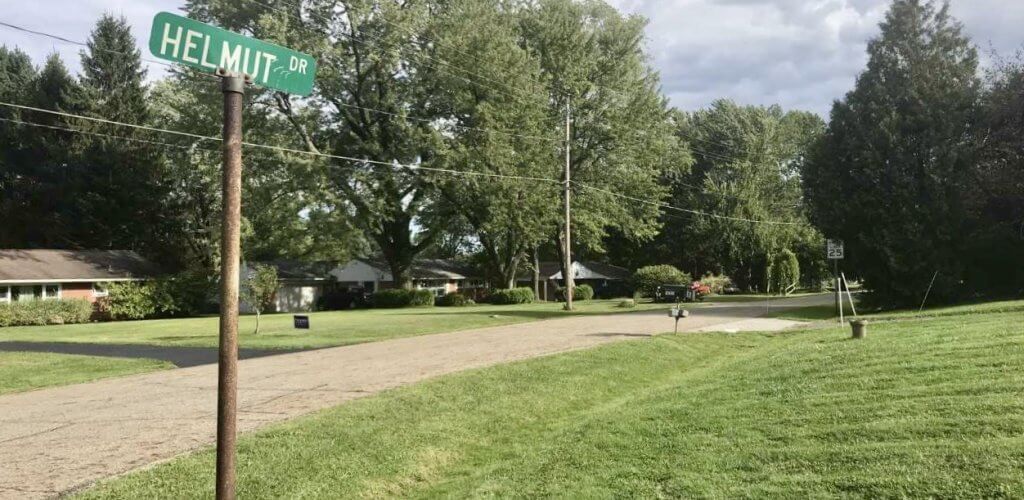
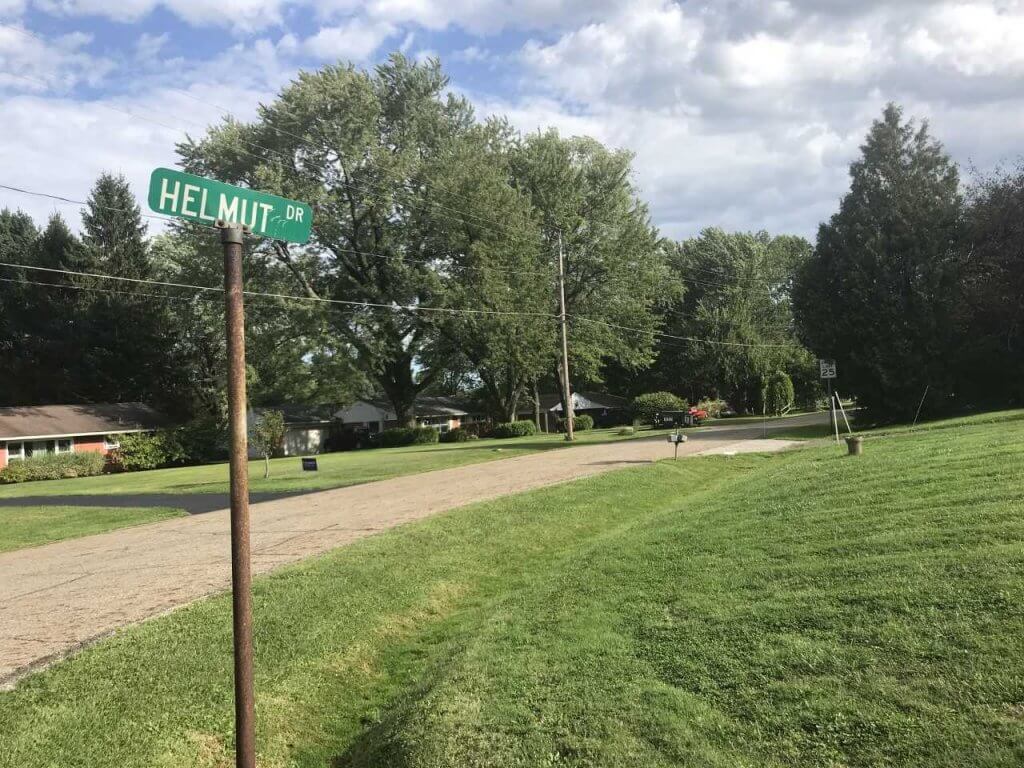
DiCillo, who lives on Helmut Drive, said in a phone interview last week, he visited every property in Berkshire Heights and 97 of the 114 have fully functioning septic systems.
While he has no legal training, DiCillo said he worked with Eging’s attorney and represented himself and Eging at the trial, despite being told by attorneys he contacted that “you can’t fight the EPA.”
In a transcript of the Sept. 1 county commissioners meeting, Morgan informed commissioners he’d received the judgment entries from the probate court regarding the Chardon Township sewer project.
“We’re looking to appeal those decisions,” he said. “From our perspective, the decisions were not in accordance with the Ohio Revised Code. The judge was not permitted to rule on the necessity of the project because it’s an EPA finding.”
When Commissioner Ralph Spidalieri asked for clarification “in layman’s terms,” Morgan said Egan and DiCillo filed appeals to the assessment, but the decision was based on the necessity of the project.
“(The judge ruled) … nobody in the area should be assessed … because the project shouldn’t be done until everybody in that area is tested. So we’re going to appeal that decision,” Morgan said. “There’s nothing in the decision that keeps us from moving forward with the project. But it’s basically, nobody can be included in the sewer system. We know … at least 50% of the septic systems in that area will fail based on the history and that over 50% of them are original, from the ‘50s and ‘60s.”
Over the last 10 years, all the homes with original systems that had point-of-sale tests failed, he said.
Oluic said Geauga Public Health is planning to issue a notice to proceed with the project.
“Because we’re still under the (OEPA) findings and orders,” he said.
Morgan said there were statements in both the Eging and the DiCillo rulings that were factually inaccurate, as well.
Commissioners Ralph Spidalieri and Jim Dvorak voted in favor of filing an appeal of the judgment entry regarding the Chardon Township wastewater treatment plan sewer project. Commissioner Tim Lennon was not present at the meeting.


