


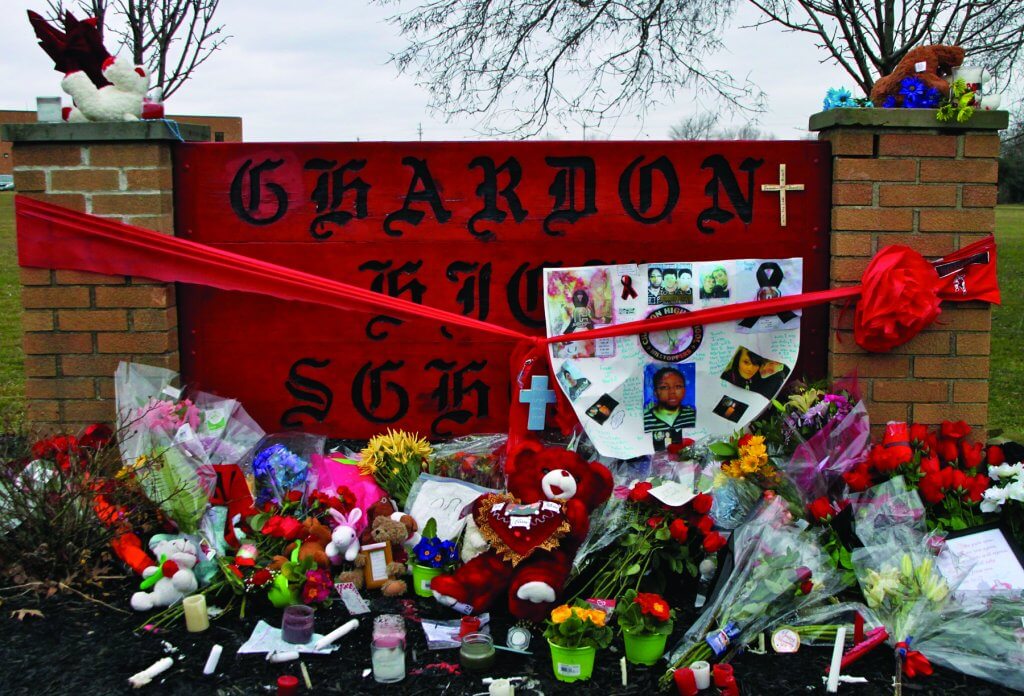
Tim Armelli's first-period class had just finished morning announcements in the Chardon High School cafeteria on that fateful day.
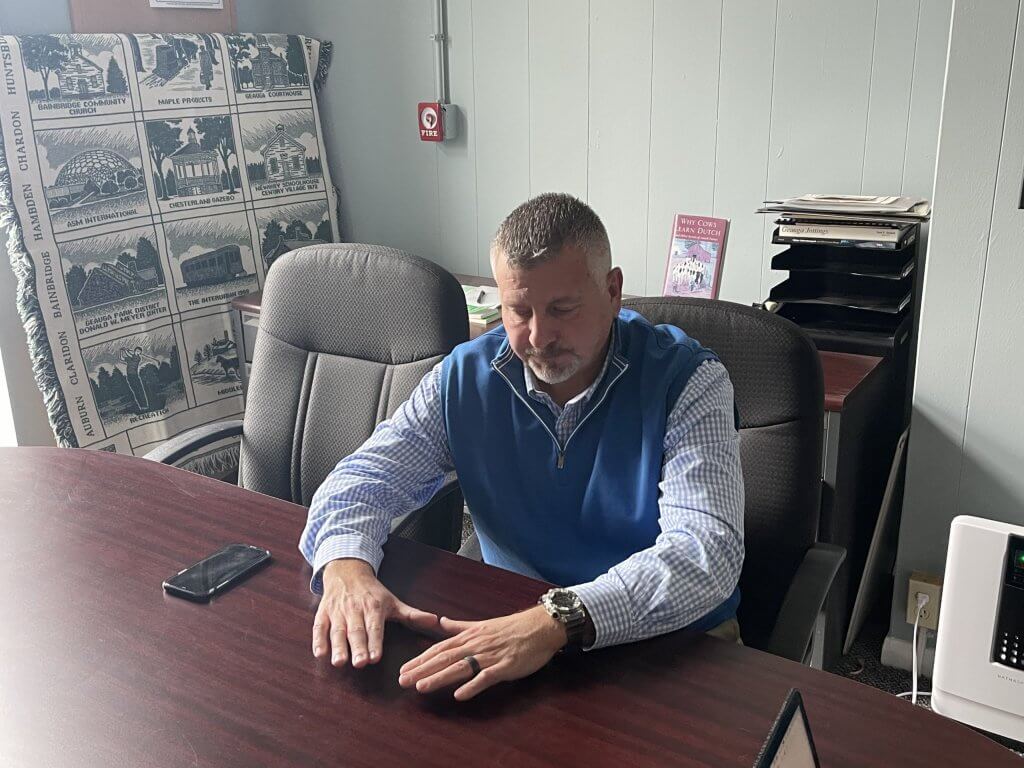

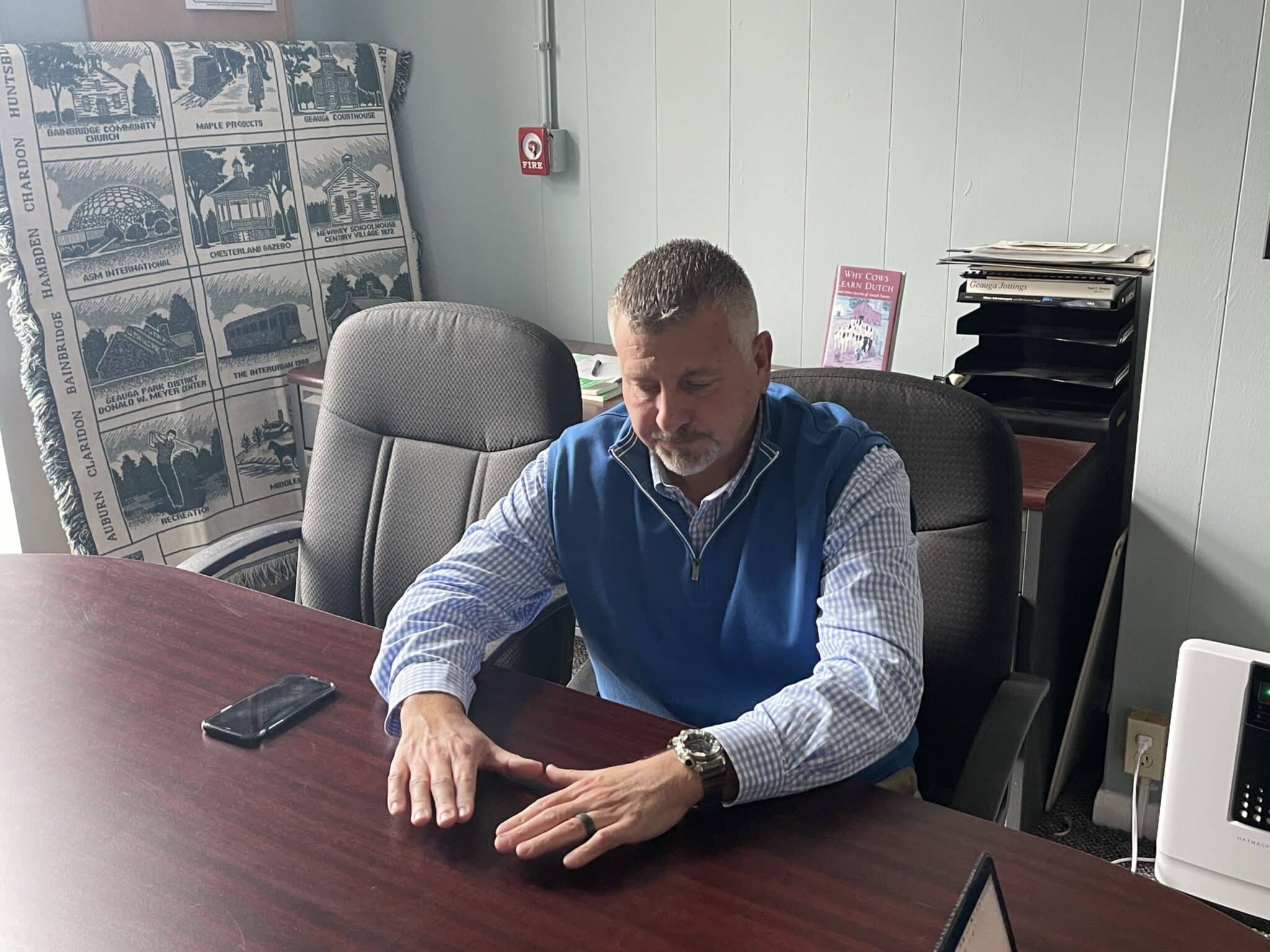
Tim Armelli’s first-period class had just finished morning announcements in the Chardon High School cafeteria on that fateful day.
His next stop was a mobile classroom behind the high school. Armelli stopped in the main office to make copies for the day’s lesson when he heard the shots.
“I didn’t know where they were coming from. My kids were in the hallway,” he said.
Armelli remembered the drill and grabbed the PA system.
“Lockdown! Lockdown! Lockdown! We are in lockdown.”
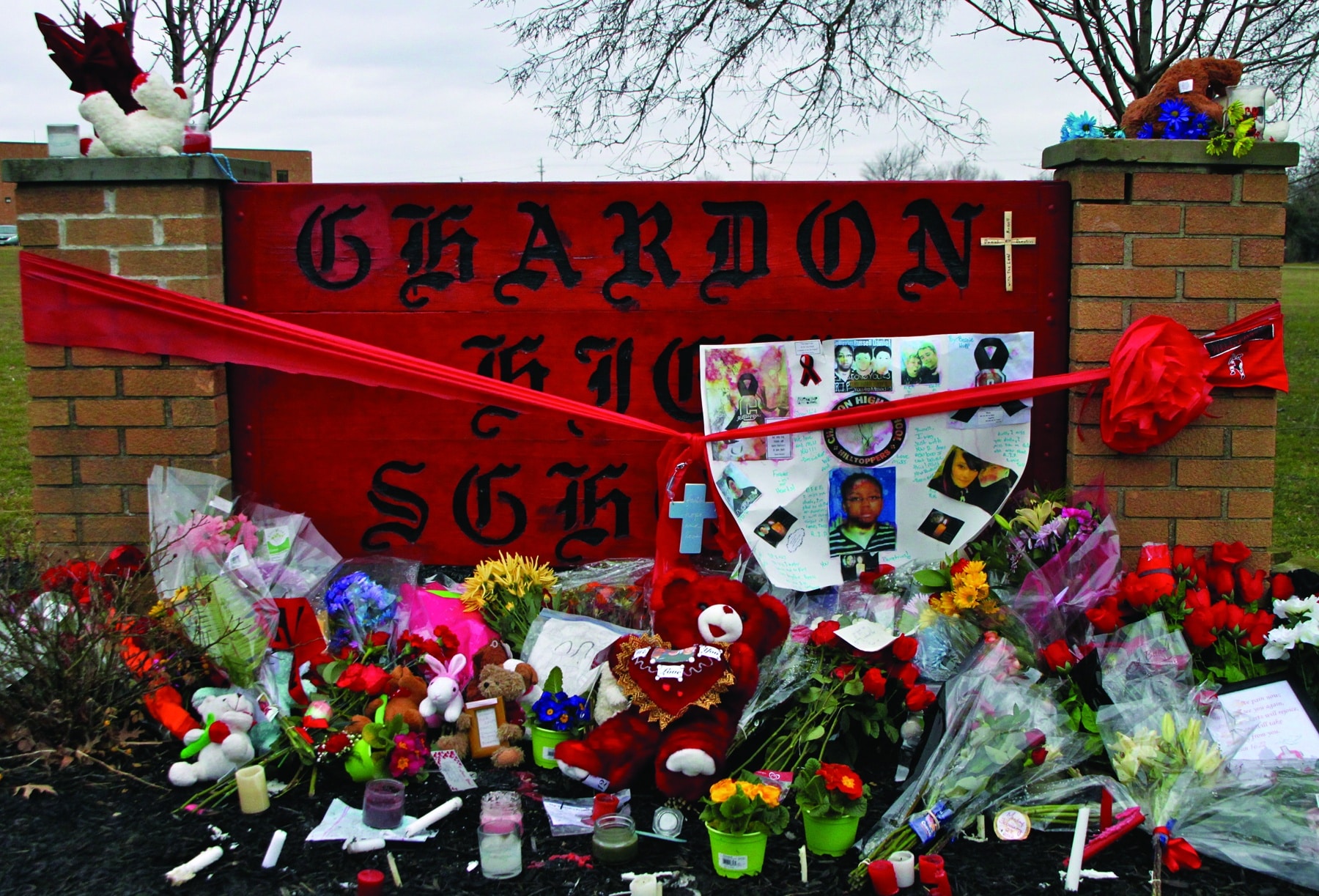
At the time, he did not yet realize he was in the midst of the deadliest school shooting in Ohio history, to date. The tragic attack on Feb. 27, 2012 claimed the lives of three students – Daniel Parmertor, Russell King, Jr., and Demetrius Hewlin – and injured three others.
As moments ticked by, Armelli grabbed kids from the hallway and pulled them into CHS Principal Andy Fetchik’s office.
“That day, you feel pretty helpless, frightened,” Armelli said in a recent interview. “There was such a mixed bag of emotions. You’re stunned that this was really happening in your community, your school, the place that felt like a home.”
While no one anticipated what the school and community would go through that day, staff was as prepared as they could be, having held an active shooter drill two years prior — one of the first in the state, Fetchik said in a recent interview.
“That drill was pretty controversial at the time. There were a lot of people that were upset and thought it was a bit over the top, but it was all done in conjunction with local law enforcement, a variety of first responders, from EMS to fire and police, different law enforcement groups,” Fetchik said. “And that drill, to this day, I believe saved lives. Because those kids that were there, and even the ones that weren’t, were part of a culture that kind of knew what to do in the event of an emergency.”
What they were not prepared for was life after the shooting.
“You don’t practice that,” Fetchik said. “That was the unknown. And the thing I take away from the most, from all of that, was the input that we got from the students. It was really their voice that led our next steps.”

Remembrance
From the beginning, Chardon Schools let the students affected by the tragedy determine the trajectory of their recovery, Fetchik said.
In the years following the shooting, students continued to take ownership. They emphasized the word “anniversary” is for a celebration, whereas, a “day of remembrance” is about reflecting on those whose lives were lost, and the impact on their families and the community.
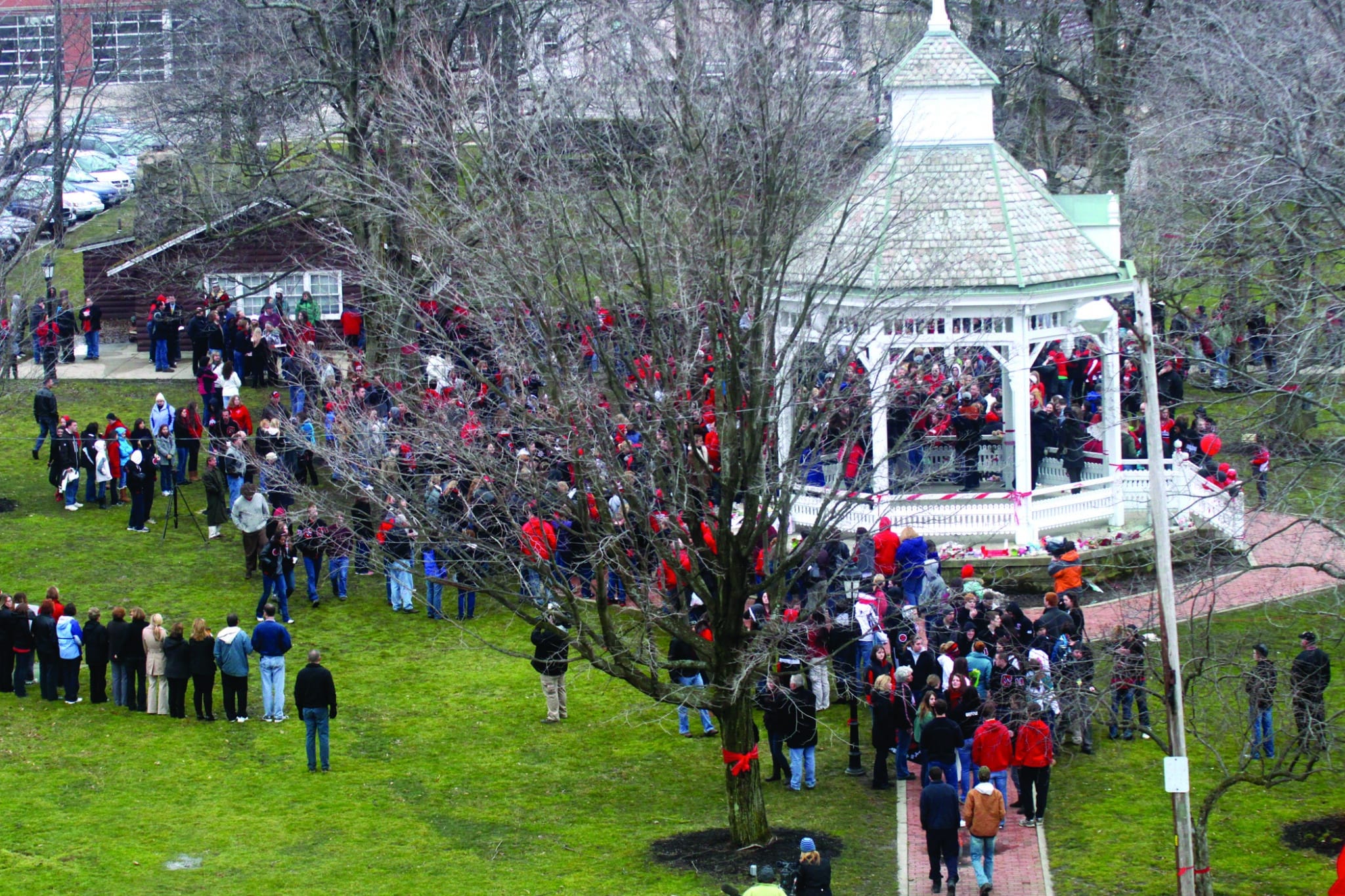
“I learned that on that Thursday (March 1, 2012), when the kids came and met on the square on their own, and marched back, they were very clear that this was our school and it was not going to define us. We were going to define what our school was,” Fetchik said.
Frank Hall, then coach at CHS, was also in the building when shots rang out. In the years since, he has been celebrated for chasing the teen gunman out of the building, but he declaims the title.
“The hard part is, you know, some people call you a hero, and I’m not, by any stretch of the imagination, a hero,” Hall said in a recent interview. “I was just there that day.”
Armelli, who retired from teaching last year, said there were so many heroes that day.
“It was the worst day you can imagine, but the best came out in a lot of people,” he said.
Hall founded the Coach Hall Foundation — of which Armelli and Fetchik serve as president and vice president — which aims to prevent violence in schools.
“After we were recovering and healing, the anger sets in,” Armelli said. “What are we going to do? How do we get better? That’s what our parents taught us.”
Initially, the CHF was focused on school safety issues like training, preparedness and encouraging districts to employ — and governments to fund — school resource officers. But over the years, the group has evolved into promoting kindness above all else, as seen recently in their 27 Days to Be the Change campaign, Hall said.
Students were the driving force behind the first 27 Days of Kindness event, leading up to the 27th day of February each year, Fetchik said.
“The goal (was) all of these people out here that have supported us, let’s do something and give back,” Fetchik said. “So we thought it was time again to bring that back. It was a great student initiative and so the Coach Hall Foundation is supporting that again.”
Besides his role at the CHF, Fetchik is a founding member of the National Association of Secondary School Principals’ Principal Recovery Network, a group of current and former school leaders who have experienced tragedies in their buildings and who work with principals in the aftermath of a crisis.
The network has helped NASSP put together a manual providing guidance for school leaders faced with a tragedy. The manual is something no one ever wants to open and includes advice on what to do and expect post-tragedy, Fetchik said.
“It could be anything from a tornado to a school shooting, but it (describes) when to talk to the media, how to deal with everything from, you know, empty chairs in a classroom and being able to talk to teachers about that,” he said.
Both Hall and Fetchik singled out former Chardon Schools Superintendent Joe Bergant — who passed away in 2019 after a three-year battle with Lou Gehrig’s disease — and former Geauga County Sheriff Dan McClelland, who died in 2021 from brain cancer, for their roles in helping the community recover.
“Sheriff Dan was obviously integral in the investigation and being able to wrap those things up quickly so that we were able to get back to school. And quite frankly, without Joe’s leadership, it could have certainly taken a different direction,” Fetchik said. “He gave me autonomy to follow my gut and our lead and what we thought was right. Certainly, he didn’t leave us alone and was there as a resource, and dealt with a lot of bigger issues outside and in Columbus … but he gave us the ability to do our job and to work with the kids. It could have been much different with different leadership, that’s for sure. I think about Joe a lot.”
Hall said, in his role with CHF, he has visited schools all over the country, but Chardon is unique.
“I’ve been all over this country from Connecticut to California, and a lot of places in between, talking about school safety and recovery, and I’ve never seen it done better than here in Geauga County,” he said. “I’m just so proud to be part of Geauga County and what the people did here. And we did it ourselves. Our kids led and the adults and everyone followed, and it was a tremendous thing to see and a blessing, and we did it the right way.”
Fetchik, who now works for Mayfield City Schools, is forever grateful that in 2008, Bergant gave him the chance to be a high school principal.
“I was fortunate to be principal at Chardon High School for eight years, and other than one day, it was probably the best eight years of my career.”

Students Take the Lead
One change Fetchik has seen in the decade since the shooting is students feeling more comfortable about speaking out and going to a trusted adult to let them know there when there is an issue or a concern.
“There’s a lot of negativity towards social media, but that has certainly been an outlet for a lot of kids, good and bad,” he said.
Using social media, students can more quickly unify and coordinate with each other than in the past, and can pass on concerns to adults, he added.
The kind of student leadership that grew organically at Chardon has become more acceptable in other school districts, Fetchik said. Student leadership roles have matured, and support and funding are more available now for districts to incorporate social emotional learning into curriculums.
Fetchik added he has kept in touch with a few students who were in the building on Feb. 27, 2012 throughout the years. Some struggled with recovery from grief and trauma, which takes a different course for each person. A few students got in touch during their college years to let him know they used their experiences in Chardon to spur them to take action and make changes at their universities.
“I’ve heard tremendous success stories from a lot of (the students),” he said. “You know, many of them now are married with children, and that certainly dates me. But it is wonderful to hear (them) reflecting back on their community as a place where they were able to grow.”
Hall said he continues to build on the foundation laid by his namesake foundation, but it gets tough.
“I truly believe that God doesn’t call the qualified, but He qualifies the called,” he said. “And I’ve always had the idea of my life, that if not me, who?”
Every day, the tragedy is not far from his mind, he added.
“But, you know,” Hall said, “for Danny and Demetrius and Russell, you just get up every day and try and do good.”
Jamie Ward and Cassandra Shofar contributed to this article.


