


UH–Geauga Meeting Challenges Since 2020
Over the last two years, University Hospitals Geauga Medical Center in Munson Township has grown despite and because of the COVID-19 pandemic, said Jason Glowczewski, chief operating officer for UH Geauga, Conneaut and Geneva medical centers.
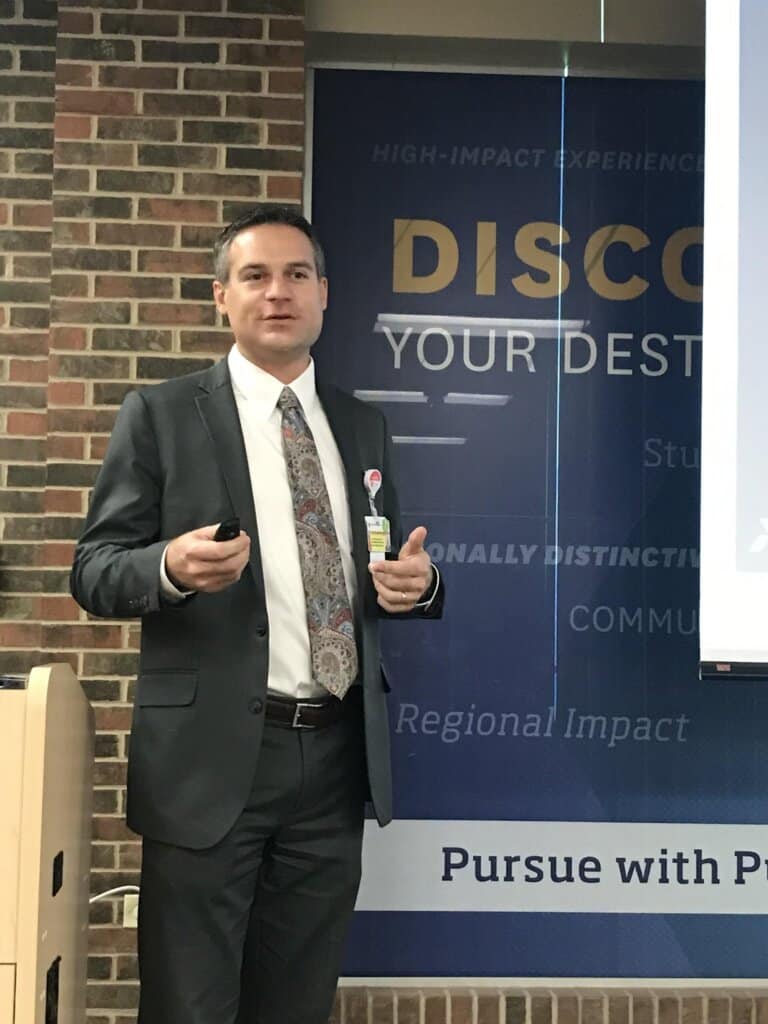
Over the last two years, University Hospitals Geauga Medical Center in Munson Township has grown despite and because of the COVID-19 pandemic, said Jason Glowczewski, chief operating officer for UH Geauga, Conneaut and Geneva medical centers.
He spoke at length Oct. 7 at the Geauga Economic Leadership breakfast at Kent State University – Geauga about the challenges and opportunities to be found from the fallout of COVID-19.
As awful as the pandemic has been, it activated some positive changes within the UH system, he said.
“The silver lining of the pandemic is we did things — things that would have taken two to three years — overnight,” Glowczewski said.
Technology in the form of virtual visits became the preferred method for getting medical advice and even treatment during 2020.
About 15 million virtual visits were made by UH patients who didn’t want to risk coming to the office or the emergency room, he said, adding, however, there was a serious down side to it.
“Did people get the health care they needed during COVID? I don’t think they did,” Glowczewski told the audience of about 60. “People didn’t get diagnosed. People delayed care. It created a dual crisis because they came to the emergency rooms far sicker than in the past.”

It has been a stressful two years in the healthcare industry. Global stressors, volatile demand, health system mergers and investment in technology and innovation are disrupting the healthcare industry as new strains of COVID emerge, he said.
Those issues have led to some reorganization.
The residency program was moved temporarily to UH-Geauga Medical Center, where the ICU expanded from 12 to 25 beds in January 2022, Glowczewski said.
“The residents had two to three weeks notice,” he said.
Inpatient units at the hospital were increased and elective surgeries were cancelled to support inpatient and emergency care.
In February, UH-Geauga Medical Center integrated with regional hospitals allowing residents to stay there, he said.
St. Vincent’s Hospital in Cleveland closed in November, with Geauga absorbing some of that business and personnel, as well.
The next month, UH-Portage merged its obstetrical department with UH-Geauga Medical Center’s, so up to 1,500 babies may be delivered here in 2023, compared to a usual 1,000. Providers from UH-Portage have also been welcomed, Glowczewski said.
The medical center now has more than 400 credentialed providers, he said, flashing slides naming current and new doctors and specialists in numerous fields. He commented the challenge now is to find places in the facility for everyone who works there.
One problem became even more obvious when COVID hit Northeast Ohio — a dangerous shortage of nurses.
“Demand for RNs is outpacing supply in Northeast Ohio. In 2020, the region had a shortage of 2,900 RNs,” he said. “Workforce population in Northeast Ohio is declining and the region produces 20% fewer graduates than the national average.”
More than 50% of those nursing program graduates leave the area and two out of five nurses working in this region plan to leave the profession within two years. UH-Geauga Medical Center has openings for 40 RNs and a total of 100 open positions, Glowczewski said. Nurses and other healthcare providers are aging out of the workforce or changing careers at an alarming rate.

One strategy formulated by UH leadership is to create partnerships, such as the nursing program at KSU – Geauga and making the community aware of the problem, he said.
UH needs to ensure it provides competitive salaries and benefits and a positive work environment and culture.
Glowczewski listed many programs, services and departments found at UH-Geauga Medical Center.
“UH-Geauga brings in over 100 patients from out of the area to our community from across the country for bariatric surgery,” he said, noting the hospital has a wound center, a sleep center and the Seidman Cancer Center was opened in 2017.
In addition, the hospital’s emergency department is stroke certified and has a chest pain accreditation. The hospital also provides pediatric services, treats level 3 trauma and sees about 20,000 visitors a year, Glowczewski said.
UH is not for profit and relies heavily on philanthropy and grants for expansion and capital equipment replacement, he said.


