


Claypool Rants on Mental Health Spending, Targets LGBTQ Support Group
Geauga County Board of Mental Health and Recovery Services member Skip Claypool said Feb. 8 the board should drop funding for local agencies that “confuse” children in schools.
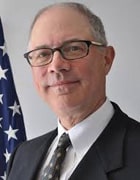
Geauga County Board of Mental Health and Recovery Services member Skip Claypool said Feb. 8 the board should drop funding for local agencies that “confuse” children in schools.
Claypool made the remarks during a mental health board Policies and Planning Committee meeting, adding he recently sat in on a presentation by Lori Criss, director of the Ohio Department of Mental Health and Addiction Services, that made his blood boil.
“All I heard was money, money, money. We’re giving $30 million here, we’re giving $70 million here. We’re gonna grow this agency, we’re gonna grow that agency,” he said. “The reason that angers me is because we’re acting as though money solves problems. Money does not solve problems.”
Claypool said Criss emphasized the importance of following the data on mental health outcomes.
“The problem with following science is that science follows the money,” he said. “Many of our agencies are businesses and they’re in practice or they’re in business to make money. And their practices oftentimes are to generate more money.”
Board member Alberta Chokshi cautioned the connection between spending and the results he cited is not necessarily causational.
Claypool proposed the committee create a policy whereby all mental health board members could weigh in — and bring in medical experts or agency representatives — to evaluate the funding process for different agencies and improve outcomes.
“Because what I’m seeing is we’re not improving the outcomes. They’re going in the wrong direction. I don’t know what to do about it,” he said.
Board member Kathy Johnson said agencies that are funded through the mental health board must already meet specific criteria.
While there are no policies established for the type of review Claypool proposed, there are already processes put in place by the service providers, she said.
“(If) you want to be a home care agency providing services and you’re getting (paid by) Medicare and Medicaid, you have to do a test of at least two or three cases and follow them over a six-month period to show them that you’re following the Medicare and the Medicaid guidelines,” Johnson said.
Claypool — who said he is “involved with Medicare and Medicaid” and is disappointed in government-provided healthcare — pivoted to singling out the Geauga Sexual Orientation, Gender Identity Support Network, which does not receive funding from the mental health board. In the past, GSSN held support group meetings at Ravenwood Health, which does receive reimbursement from the board.
GSSN is “harming kids,” he said.
“I’d like to put a policy in place that says if you have anything to do with SOGI, we are not funding you,” Claypool told the committee.
Chris Steigerwald, president of the Geauga SOGI Support Network board, said as Claypool has served on the mental health board since 2020, he is aware the organization has never received funding from the mental health board.
In an email to the Geauga County Maple Leaf Feb. 14, Steigerwald said GSSN’s funding comes from individual donors, family foundations, business foundations and a grant from the Cleveland Foundation.
“This is a falsehood that Mr. Claypool insists on spreading,” she said.

SOGI Support
Claypool said he was approached by a psychiatrist from Beachwood the night before the committee meeting who is “livid” about the way his peers approach gender and sexuality because he fears they are making the problem worse and not better.
“We have a lot of activity going on in and around our young people today having to do with LGBQT, transgender — and that was not even a term,” Claypool said. “That’s a made-up concept, by a bunch of (psychologists) — look at the history about it — that are trying to explain a psychological condition.”
Steigerwald said among the public there are myths and a lack of understanding about transgender people.
The American Psychological Association is working to advance knowledge on gender identity and sexual orientation to benefit society and improve lesbian, gay, bisexual and transgender people’s lives, she said, adding guidelines for transgender care are currently set by the World Professional Association for Transgender Health, the American Academy of Pediatrics and other organizations.
SOGI is an established acronym the board chose to describe the focus of the organization, and everyone has a sexual orientation and gender identity, Steigerwald said.
After Claypool aired concerns about children being harmed by the organization last year, four GSSN board members were asked to give a presentation before the mental health board in June 2022, outlining its mission and activities.
“Since that time, Mr. Claypool has continually used the term SOGI, an acronym for sexual orientation and gender identity, to refer to our organization rather than our actual name. This causes confusion about his meaning,” Steigerwald said.
During the meeting, Claypool said some agencies that receive funding from the mental health board are making things worse.
“(The agencies are) going into the school system and teaching our kids, at a very early age when their minds aren’t developed and they’re not even able to comprehend some of these ideas and thoughts, (which) makes it worse, not better,” he said.
GSSN has never gone into schools and taught youth, Steigerwald said.
“GSSN provides peer support groups for youth in a neutral location, when parents seek it, a peer support group for adults, education, resources, and events,” she said.

Discrimination
Chokshi raised concerns that creating a policy prohibiting funding or working with a specific organization, such as GSSN, may violate anti-discrimination laws.
Claypool refuted this, saying while he is not an attorney, he does not believe the board could discriminate against an organization.
“If we discriminate against people of color, people of a certain age, people of a certain ethnicity, those are all groups of people, as are LGBTQ, and I think we tap dance on the line for sure, if not actually step across it,” mental health board member Ann Bagley said.
“SOGI is an organization. It’s not a group of people. It’s not a class, like LGBQT,” Claypool replied. “Us not providing funding to an organization is not discriminating against individuals. We would always provide care to those folks in the LGBQT-whatever class. Those folks always receive service.”
Claypool said if the board were to eliminate funding to groups who work with GSSN, it would not be discriminating against anyone in a protected class.
“We’re just saying that that non-profit corporation, and its practices, are leading to worser outcomes because of what they’re doing to our kids. They’re confusing our kids in school and then they’re becoming depressed and become suicidal, blah blah blah,” he said.
In her email Steigerwald questioned Claypool’s intent to prevent agencies from working with GSSN.
“If the board of mental health creates a policy denouncing our organization with respect to other agencies, will the LGBTQ population feel comfortable seeking mental health care in this county? Such a policy would further alienate this population, and likely increase anxiety, depression and suicide,” she said.
Claypool’s opinions regarding the cause of the challenges facing youth were provided without facts or data, added Steigerwald.
“The Trevor Project, a respected national organization and authority on LGBTQ youth, has clear data showing that depression and suicidal thoughts/attempts are caused by lack of support for and acceptance of LGBTQ individuals,” she said. “Respected authorities in this field have demonstrated that lack of support for LGBT and other diverse youth is associated with greater mental health challenges.”
The funding discussion was tabled as the committee ran out of time to continue their meeting.


