


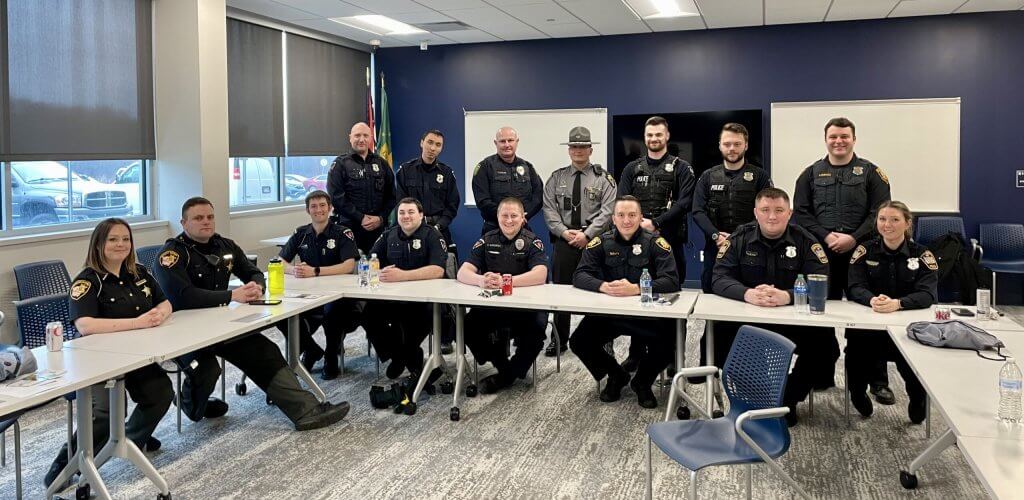
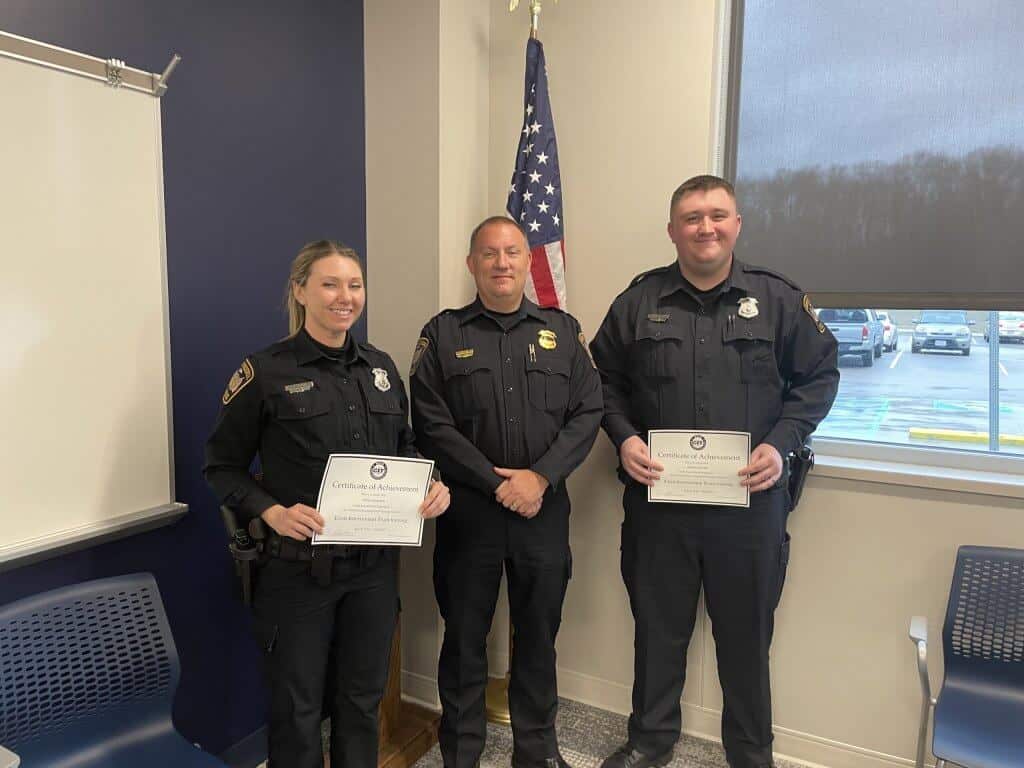
South Russell Village Officer Kailey Gavanditti is sworn to serve and protect her community.
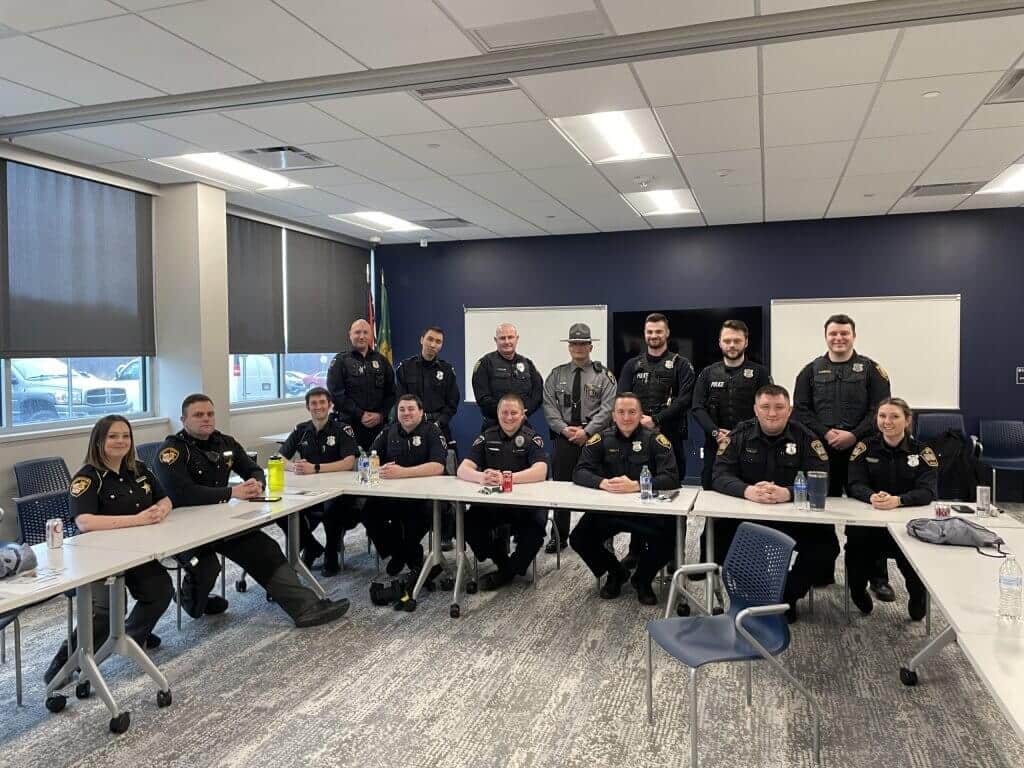
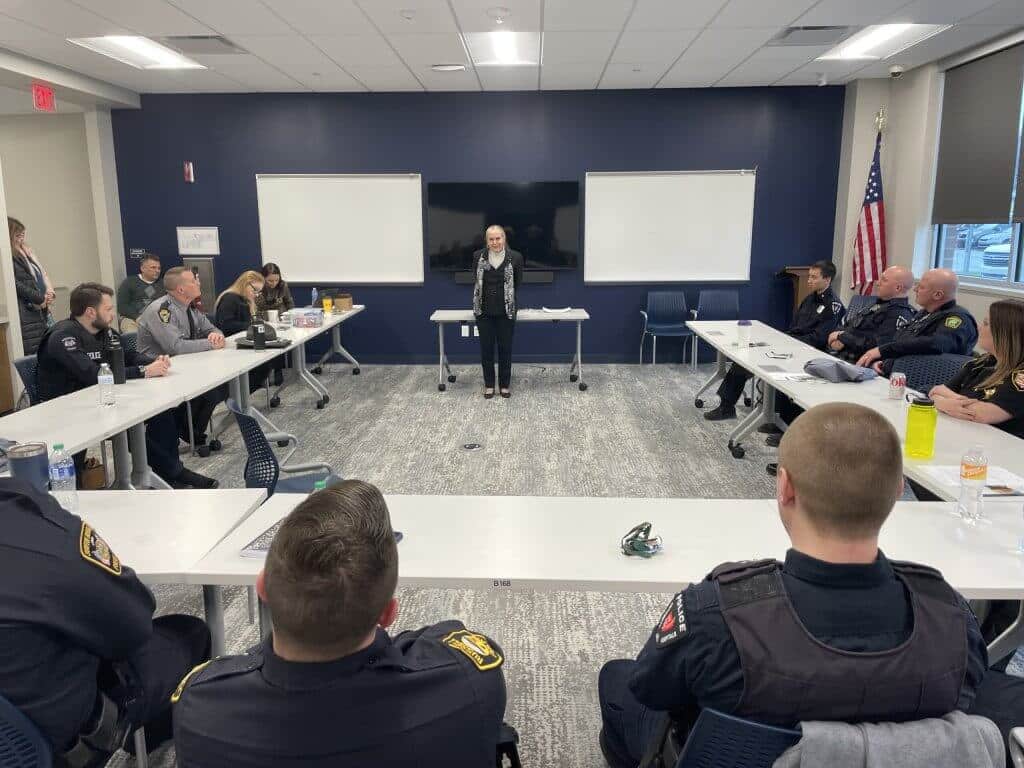
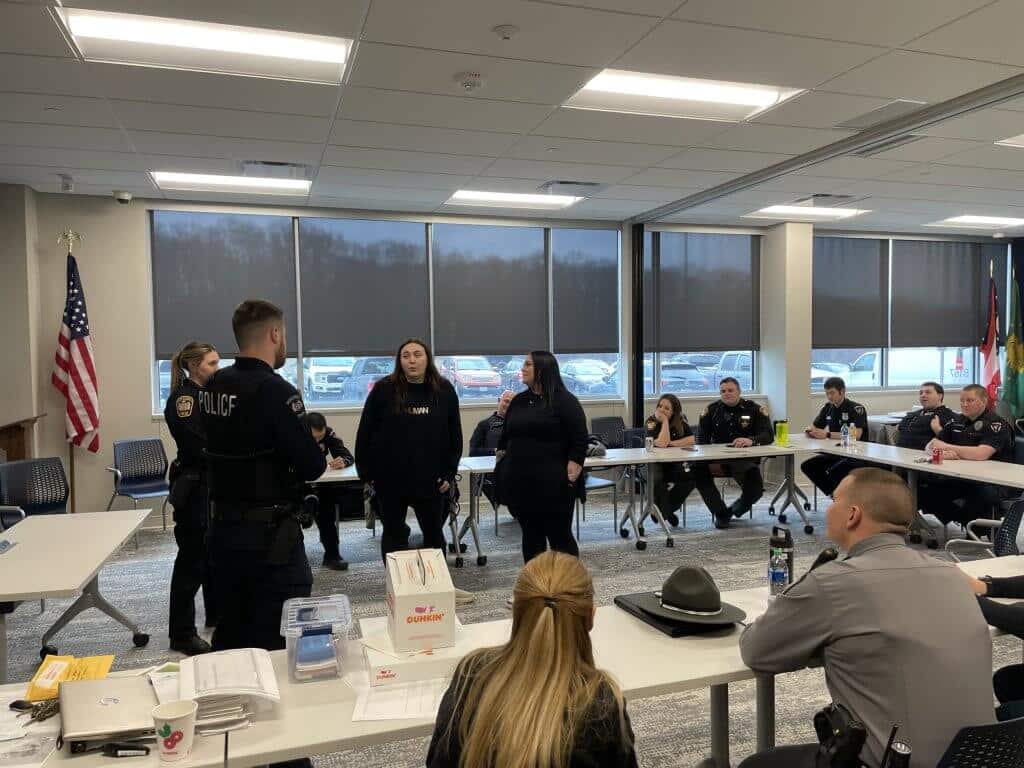
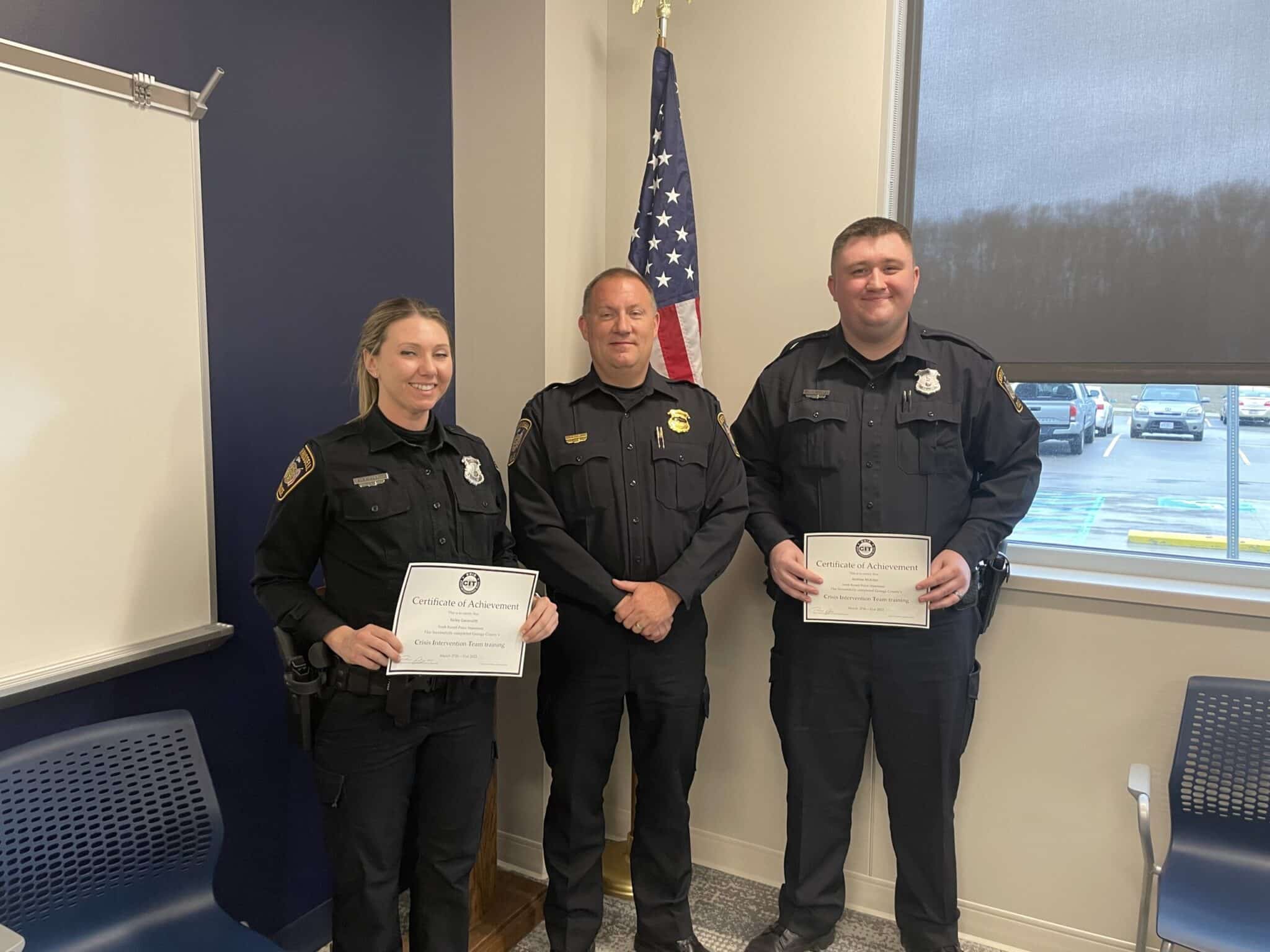
South Russell Village Officer Kailey Gavanditti is sworn to serve and protect her community.
But, as she learned recently, that protection goes beyond the physical.
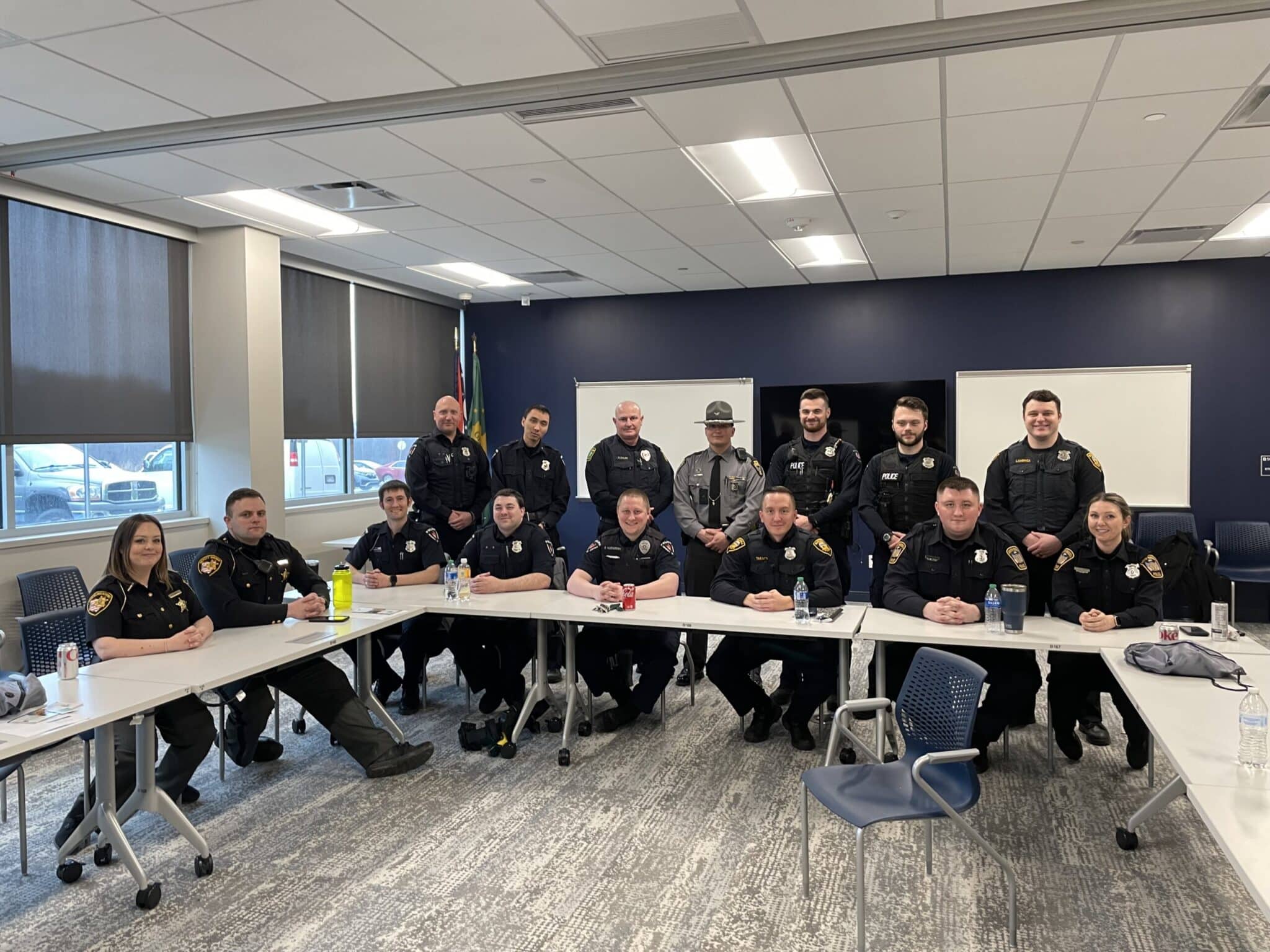
Gavanditti joined a host of local law enforcement March 31 as a graduate of the Geauga County Crisis Intervention Training program inside the county office building in Claridon Township.
“This class has changed my view on mental illness,” Gavanditti said.
The program is a 40-hour comprehensive training on mental health provided to law enforcement to teach them how to de-escalate situations where an individual is in crisis.
The training is a collaboration between local law enforcement agencies and behavioral health providers.
Leaders included Geauga County CIT Coordinator Brian Ayer, of Geauga’s Ravenwood Mental Health Center; Chardon Police Chief Scott Niehus; and National Alliance on Mental Illness Geauga Executive Director Kimberly Carter.
Just as Seconds Count, So Do Words & Actions
Carter said CIT improves outcomes.
“What I mean by that is if the de-escalation techniques taught in class are used, then fewer people will end up in jails and/or hospitals if those locations are not warranted or can be avoided,” Carter said. “The techniques in extreme cases save lives because a mental health crisis can go sideways and become out of control very quickly. Then, officers must respond with their tactical training to keep everyone safe. But, if those crises can be de-escalated before they become out of control, then everyone is safer.”
Gavanditti learned someone experiencing a crisis doesn’t need a person in a uniform — they just need a person.
“I have learned how much of an impact the words you speak to someone can be and may be one of the best tools you can have as an officer. My ah-ha moment was the moment I realized how much people crave human attention and sometimes, people just want to be seen and heard,” she said.
Fellow officer Andrew McKillen had his own “ah-ha” moment in a class scenario with Gavanditti involving the portrayal of a suicidal woman who had possibly been the victim of domestic violence.
“As we were talking to her, we discovered that this female was afraid of talking to men,” he said. “And we were able to catch that, so I backed up a bit and let Officer Gavanditti talk to her and the victim ended up opening up more to her. My point with this story is that these small observations and adjustments to those observations can go a long way in real-life situations involving crisis intervention.”

Police Make Differences Daily
“The lack of mental health crisis services across the U.S. has resulted in law enforcement officers serving as first-responders to most crises,” according to NAMI. “A CIT program is an innovative, community-based approach to improve the outcomes of these encounters.”
There are more than 800,000 sworn officers now serving in the United States, the highest figure ever, according to the National Law Enforcement Officers Memorial Fund.
In midst of a crisis, giving law enforcement as many tools as possible to do their jobs safely and effectively makes them an integral part of the solution, NAMI said.
“This is the darn best class we ever had,” Ayer told the new graduates. “You were engaged and asking questions and know some cases we’ve shared. I know our residents will be better off.”
CIT began in 1988 in Memphis, Tenn., and in Ohio in 2004 in Akron.
Geauga County’s program kicked off in 2006 and has held 18 classes with more than 250 individuals completing the program.
South Russell Village Police Lt. Todd Pocek attended the recent graduation.
“Law enforcement is not just about enforcing laws,” Pocek said. “It’s about helping a person through a crisis. That crisis could be they locked their keys in their car and are late for work, or they could be experiencing a manic episode. We can buy tools to unlock a car and train an officer to use them. We cannot buy a tool to help someone in distress, but we surely can train officers how to properly recognize signs and help resolve these issues.”
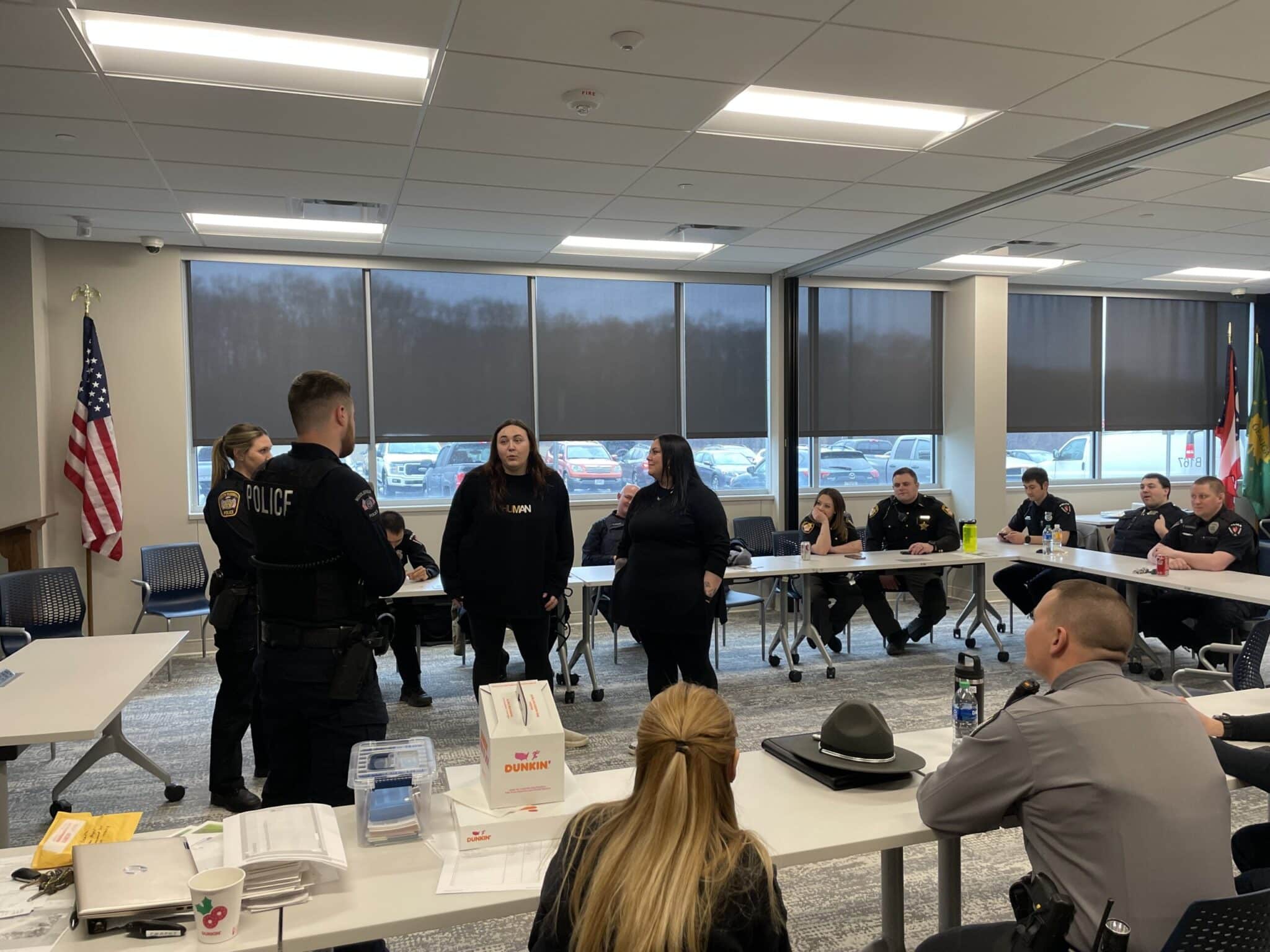
Role-playing is utilized as an integral part of the training and done in a way to make the experience as close to reality as possible.
“My ‘ah-ha’ moments were all the resources available in Geauga County,” said officer Kyle Raznoff, of University Hospitals Geauga Medical Center Police Department. “What I learned will make me a better officer going forward.”
Ayer said he hoped attendees could see those experiencing a mental health crisis through a lens of compassion and obtain new skillsets to provide support and assistance.
“We also want them to know that they have the help and support of a number of agencies … 24 hours a day, that can come alongside them to provide the individual, and families at times, the help that they need in a time of crisis,” Ayer said. “Geauga County residents should know that there is a great amount of collaboration between law enforcement and mental health providers in an effort to provide help to those in the county experiencing a mental health crisis in a manner that shows the person dignity and respect.”
He added, “Families should know that law enforcement in Geauga County is committed to helping their loved ones in times of crisis get the help that they need. We know that their loved ones before their illness had hopes and dreams, and still have these in their lives, and at times, simply need some help and support.”
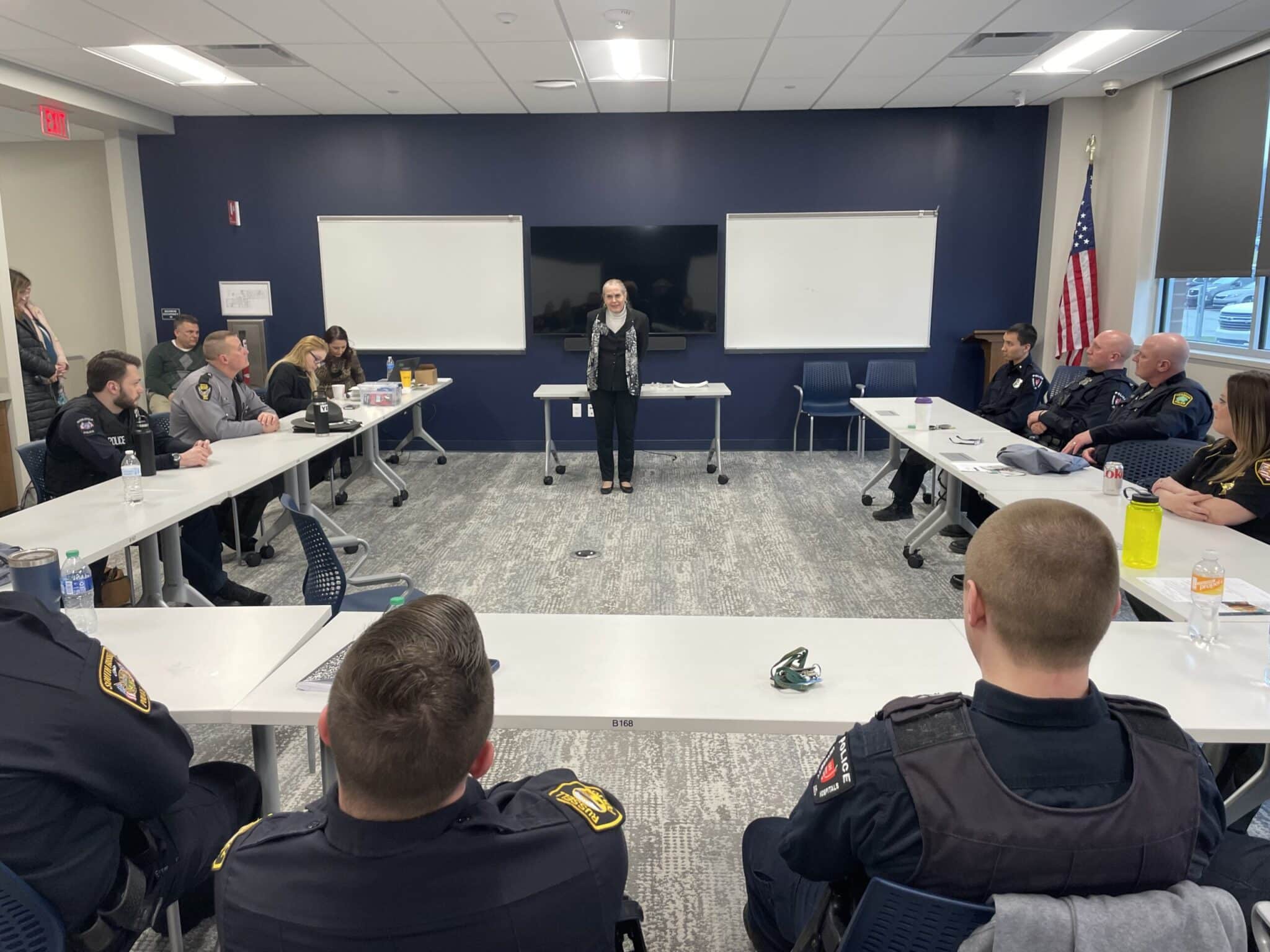
The group’s graduation keynote address featured retired Ohio Supreme Court Chief Justice Evelyn Stratton, who spoke about the Stepping Up Ohio initiative to reduce the number of people with mental illness in jails.
Middlefield Village police officers Paul Esposito and Jacob McIntee were hired last year and their completion of CIT meant every one of their department’s officers have graduated from the training.
“Law enforcement officers can sometimes fall into a habit of treating particular calls for service like a formula,” Esposito said. “CIT’s biggest takeaway is to not fall into that trap and ask more questions, look harder at details and use resources to try to help this person in a more lasting way.”
He said the training gave him significantly more tools to use on calls, which will translate to better results not only for the people he works with, but also for himself and his department.
“There was a point in the training, when dealing with a particular mental illness, that I saw some of my past interactions with individuals in a different light,” Esposito said. “It showed that, without this information on hand, I had been completely oblivious to signs, which could have changed my perspective of what was happening.”

Cookie-Cutter Solutions Don’t Exist in Crisis
McIntee said he most valued learning how to interact in different ways with people in a mental health crisis, depending on the situation, and about the myriad resources available in the county.
“The training really opened my eyes to the definition of mental health crisis,” McIntee said. “I am able to recognize a mental crisis easier now and have a better understanding of how to interact with the person in crisis.”
The training explained how symptoms of certain mental illnesses can mimic symptoms of drug usage.
“Looking back at calls I’ve been on involving someone in a mental health crisis, I am now able to piece together why that person was displaying the symptoms they were,” McIntee said, adding he thinks everyone involved in public services should take a CIT class because of how helpful it was to him, personally.
“Mental health has been a long and ignored part of the job and through programs such as CIT via the county, we’re not only able to recognize persons in need of assistance, but we are trained to help them through a variety of situations, and if we can’t help, we can find the right organization who can,” said Pocek, also a past CIT graduate. “With any situation, in order to fix/help/solve a problem, we must first understand the problem. This class gives the officers the ability to start understanding, which ultimately helps us guide persons through a difficult time.”
McKillen echoed his classmates on how the class changed his perspective on a lot of things.
“At the end of the day, everyone is a human with emotions,” he said. “And people in crisis/mental health situations are scared of what’s happening to them. If I can be the person that makes their day a little better because I’m listening to them and trying to get them help, then that’s great. Having these resources that this CIT class provided on my tool belt will overall make me a better law enforcement officer.”


