The West Geauga Schools Board of Education unanimously rejected a resolution to partner with the Ohio Facilities Construction Commission in developing a master facility plan during its Oct. 16 regular meeting.
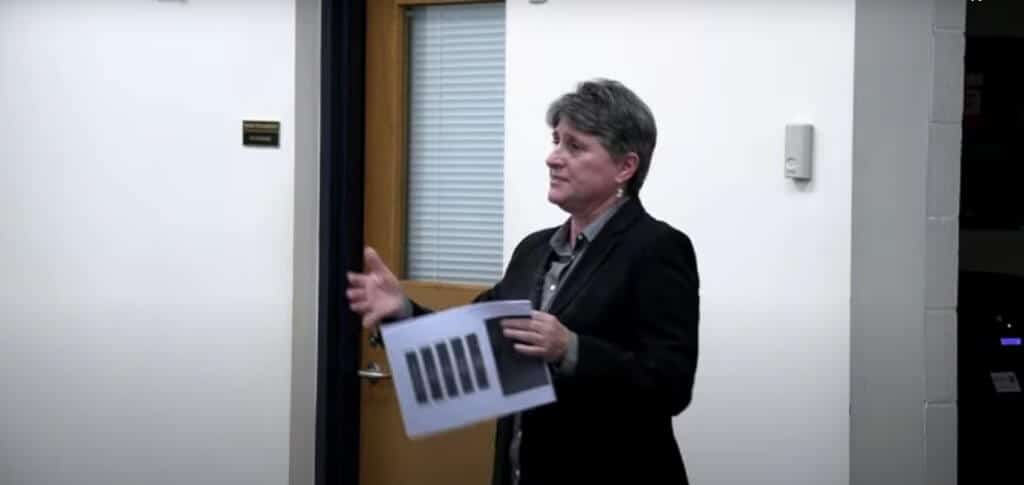
The West Geauga Schools Board of Education unanimously rejected a resolution to partner with the Ohio Facilities Construction Commission in developing a master facility plan during its Oct. 16 regular meeting.
The vote means the district will not enter into a school building project agreement under the OFCC’s Expedited Local Partnership Program, which included a 0.5-mill maintenance levy requirement.
“If we were to vote for this, I feel like it’s limiting what the board can do,” Christina Sherwood, board vice president, said.
According to the OFCC website, ofcc.ohio.gov, the ELPP allows school districts to enter into a program through which the commission assesses the district’s facilities. A facility master plan, which covers the entire needs of the district, is then created.
District Treasurer Karen Pavlat provided details of the OFCC program requirements to board members, adding OFCC has been working with the district for some time.
“The first part of an OFCC project is to really focus on what the buildings are, to do an assessment, to do enrollment projections — and that’s what they did,” she said. “Upon the enrollment projections, they come back with a recommendation.”
Pavlat said the OFCC recommended building one new elementary school to house pre-kindergarten through fifth grade, and one new middle or high school to house grades sixth through 12.
In order to move forward with the project, the district would have had to agree to use a final facilities assessment report, revised in August 2022, and used to estimate the budget scope of the project without locally funded initiatives.

The district would also have to agree to the ELPP’s enrollment projections through 2030.
Pavlat said it could take between 10 and 15 years before the project would be funded by the state, once it enters the construction facilities assistance program.
“I think we are looking at a minimum of 10 years,” Pavlat said. “You would move ahead with the project, but you are not going to see those dollars 10 years from now.”
The state would have also provided only a 5% share of the total project budget, she said, which would be allocated to the first phase of the project. Funds would be passed to the district for the next phase of the master facility plan, or paid over a three-year period starting at year 10, if the next phase is significantly delayed, according to Pavlat’s presentation.
“If you are a low-wealth district and you are going to get 60% to 80% of your construction rate by the state, this is a no-brainer,” said Superintendent Richard Markwardt. “But, when you are a district that is only going to receive 5%, are you willing to pay the price tag in terms of the stipulations and conditions of participation in this program?”
Pavlat noted other disadvantages of the ELPP.
“They are looking at what the state budget will fund for construction. They do about 10 schools a year. (The OFCC) doesn’t have enough funds currently to cover the schools that have already passed their bond issues and either started or finished construction,” Pavlat said, adding funding is not guaranteed.
“People are waiting,” she said.
Other disadvantages included the OFCC requiring a 0.5-mill maintenance levy or its equivalent to be added to the project funding for 23 years — which is approximately $11 million, exceeding the total funding received.
“If we were to take a 0.5-mill levy and move it from the general fund to the permanent improvement fund, we would have to restrict it,” Pavlat said. “You would have to do that for 23 years. Our valuation will continue to go up.”
The maintenance levy would only be permitted for use on the OFCC-approved portion of new construction, and not for local funding initiatives or existing buildings.
Building materials and square footage would also be dictated by the OFCC, Pavlat said, adding to the cost of construction and limiting the size of common areas.
“If we entered into this agreement, for instance, you noticed they had limitations on common space and so, if for some reason we had a very good reason for having larger common space, we would get no money for that,” board President Ben Kotowksi said, adding there is a lot of cost containment the district can do without the OFCC being involved.
“The biggest thing to me is there’s no assurance that we would get this money, but there’s every assurance that they would be able to dictate an awful lot about this project,” he said.