


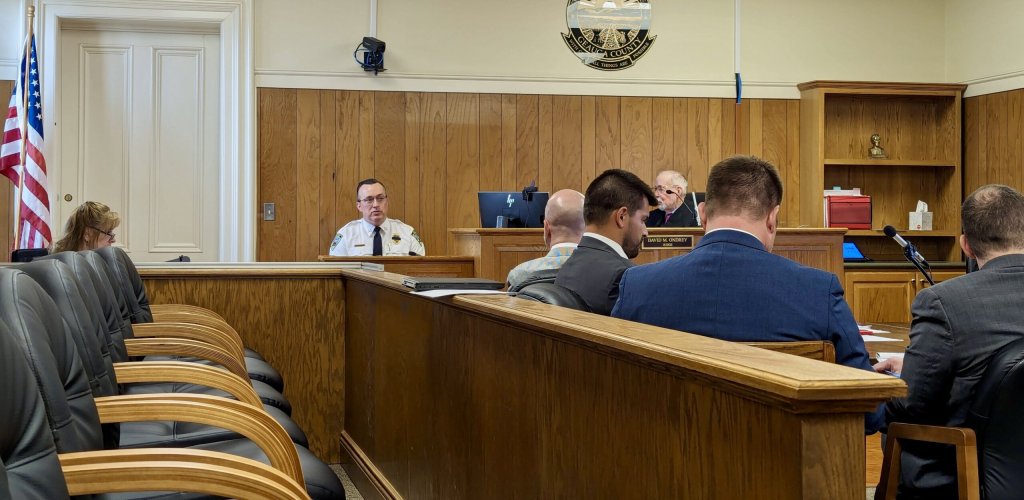
Prosecution Lays out Timeline of Offense, Arrest
In oral arguments May 14, defense attorney Ian Friedman sought to probe whether the rights of former Chester Township police officer and West Geauga Schools Resource Officer Nick Iacampo were violated during an investigation into charges he sexually abused a minor last August.
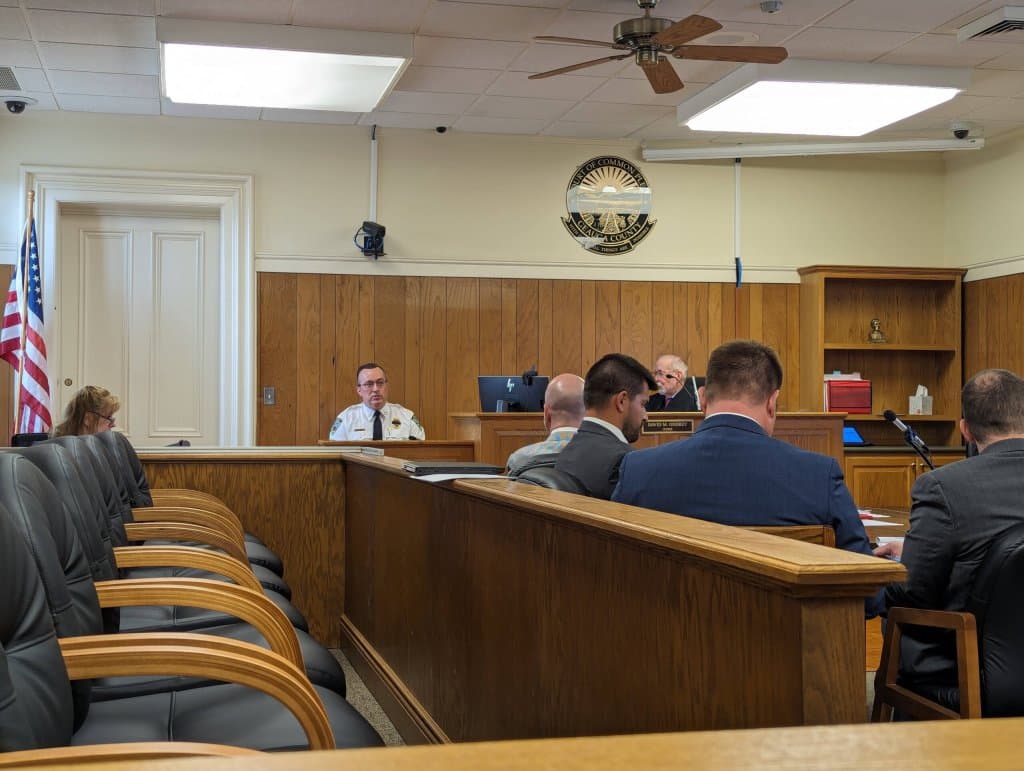
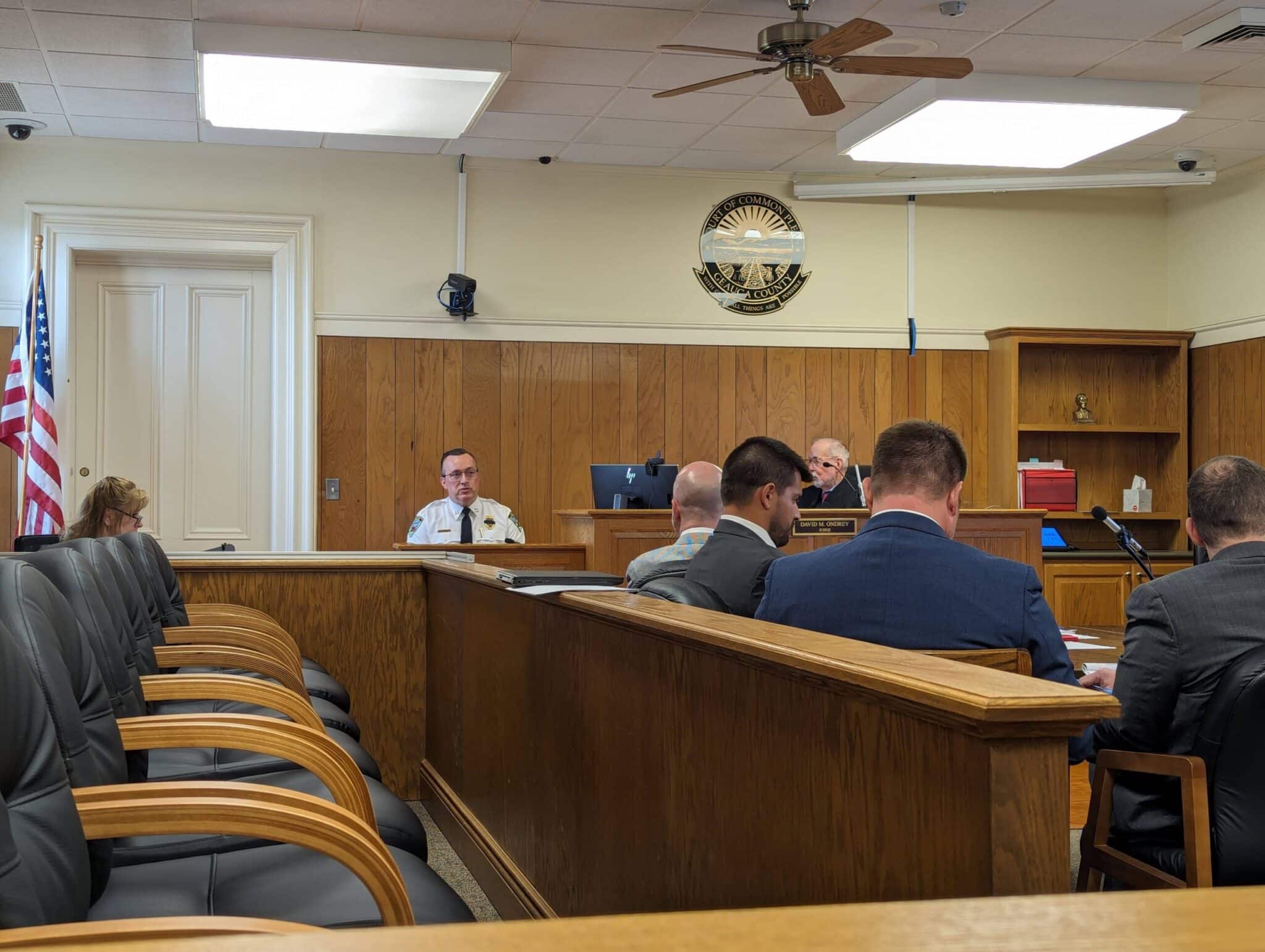
In oral arguments May 14, defense attorney Ian Friedman sought to probe whether the rights of former Chester Township police officer and West Geauga Schools Resource Officer Nick Iacampo were violated during an investigation into charges he sexually abused a minor last August.
Iacampo, 29, who lives in Painesville with his wife, pleaded not guilty in December to charges of felony sexual battery and unruliness or delinquency of a child, a misdemeanor, for an alleged Aug. 6 incident with the 16-year-old girl.
The hearing, originally scheduled for April 26, was set to consider two motions to dismiss the charges — one asserting Iacampo was not acting as the SRO at the time of the offense, and the other based on a 1967 ruling by the U.S. Supreme Court in a case involving a New Jersey police officer named Edward Garrity. That ruling said employees of the state cannot be compelled to incriminate themselves under threat of termination.
Along with the Miranda warning, suspects in internal investigations should be issued a Garrity warning to alert them to their right not to speak without jeopardizing their employment. In later cases, the court expanded those protections to include the collection of evidence.
In their filings, Iacampo’s defense attorneys argue data from his iPhone, which he turned over to investigators, and a DNA swab fall under Garrity protections.
Witnesses Take Stand
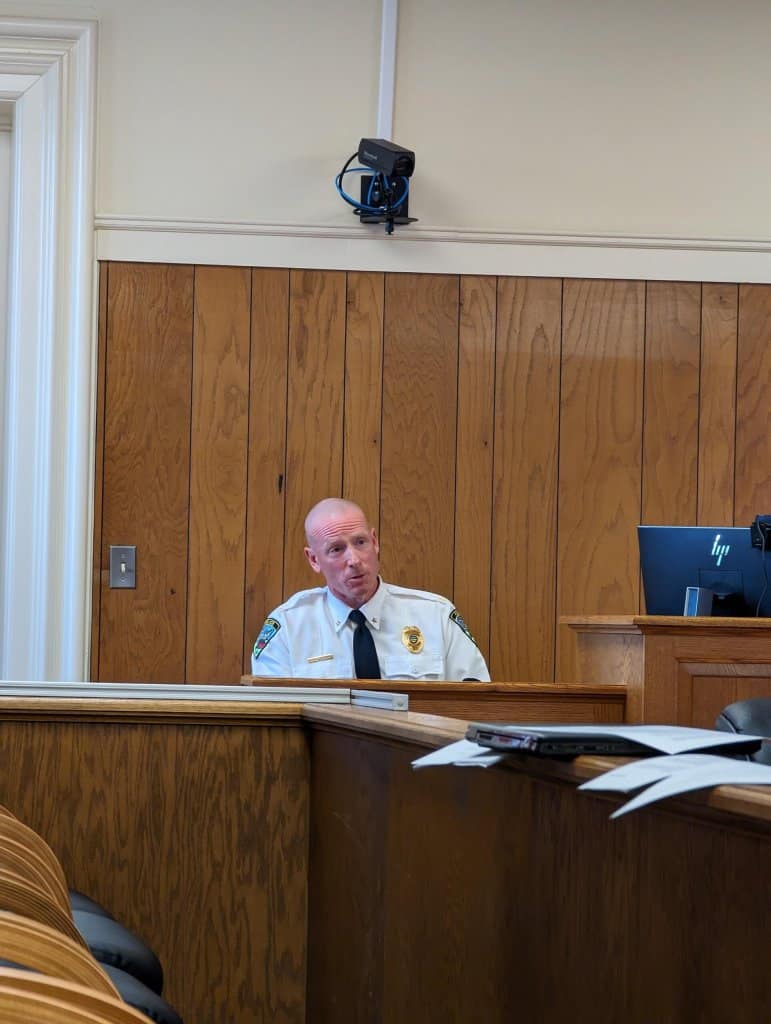
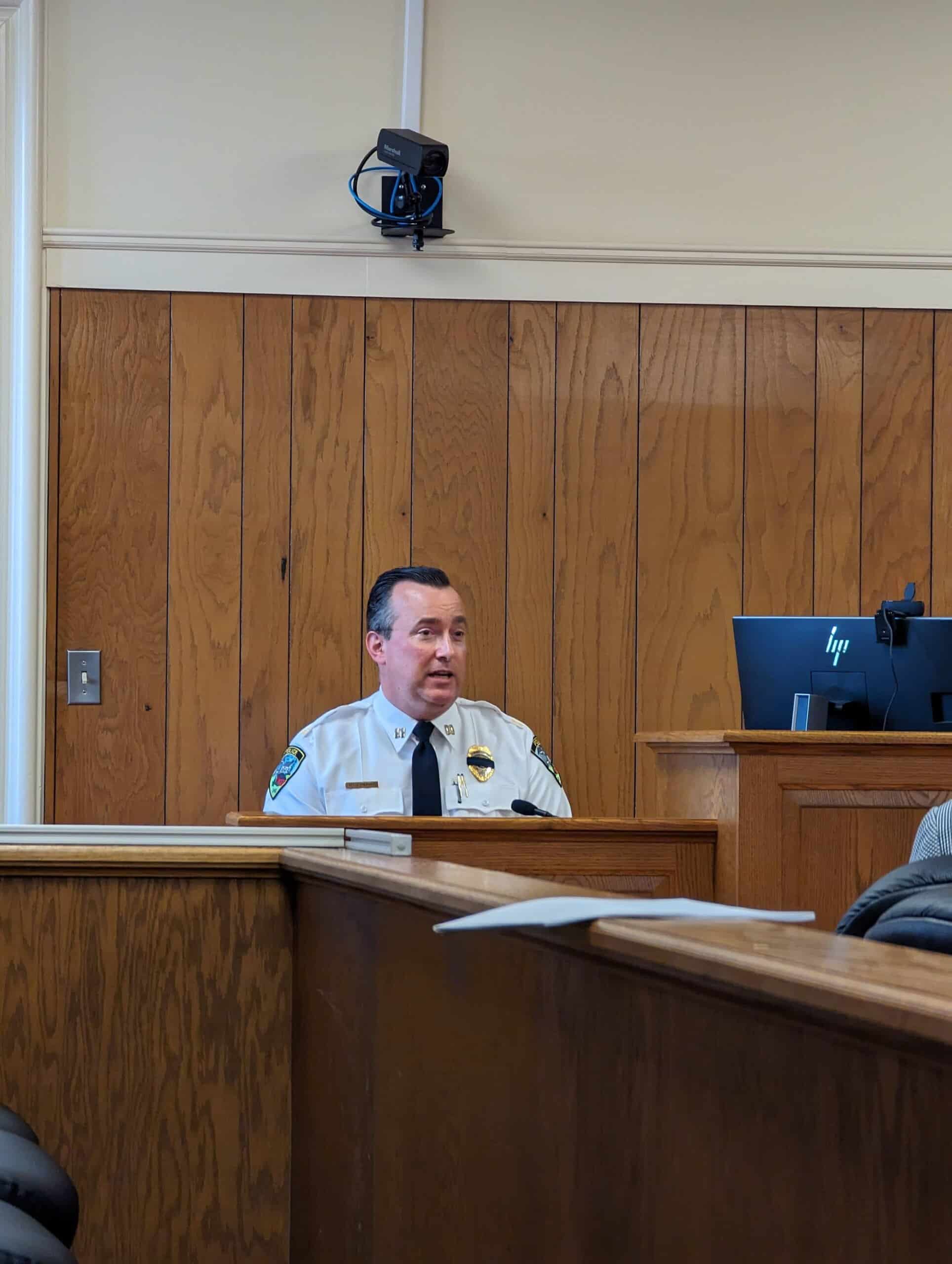
The first witness to take the stand last Tuesday was Chester Police Capt. Jeff Sherwood, who described events that took place during the early morning hours of Aug. 7, 2023, after the alleged victim’s father called 9-1-1 from the Chester Township Police Department lobby and was routed to a Geauga County Sheriff’s Office dispatcher.
Sherwood said GCSO investigators took the initial complaint and notified Chester police of the situation.
“(It was a) pretty serious allegation. So, we decided that we would contact an outside organization to cover the investigation right from the start,” Sherwood said.
Lake County Assistant Prosecutor Adam Downing asked why Chester police turned the investigation over to the Lake County Sheriff’s Office.
“It’s a smaller department that’s obviously — you know — you get to know people, and you develop relationships and friendships with people, and you want to be as impartial as possible,” Sherwood said, adding he believed an outside third-party investigator would ensure impartiality.
Sherwood’s main job that night was to disarm Iacampo — a necessary step taken when an officer is under investigation, whether criminal or administrative, he said.
Iacampo’s rights under the Garrity ruling were not invoked that night because a criminal investigation — in which the accused is advised of their Miranda rights — always supersedes an administrative investigation, he added.
“So, it’s a criminal case, Miranda’s going to apply, and that’s what we’re going to go with until that criminal investigation is over,” Sherwood said. “Once that’s over, the administrative review can start, then Garrity can play into it.”
Iacampo’s defense team said when LCSO deputies interrogated him, he was told to “keep in mind that this isn’t voluntary now.”
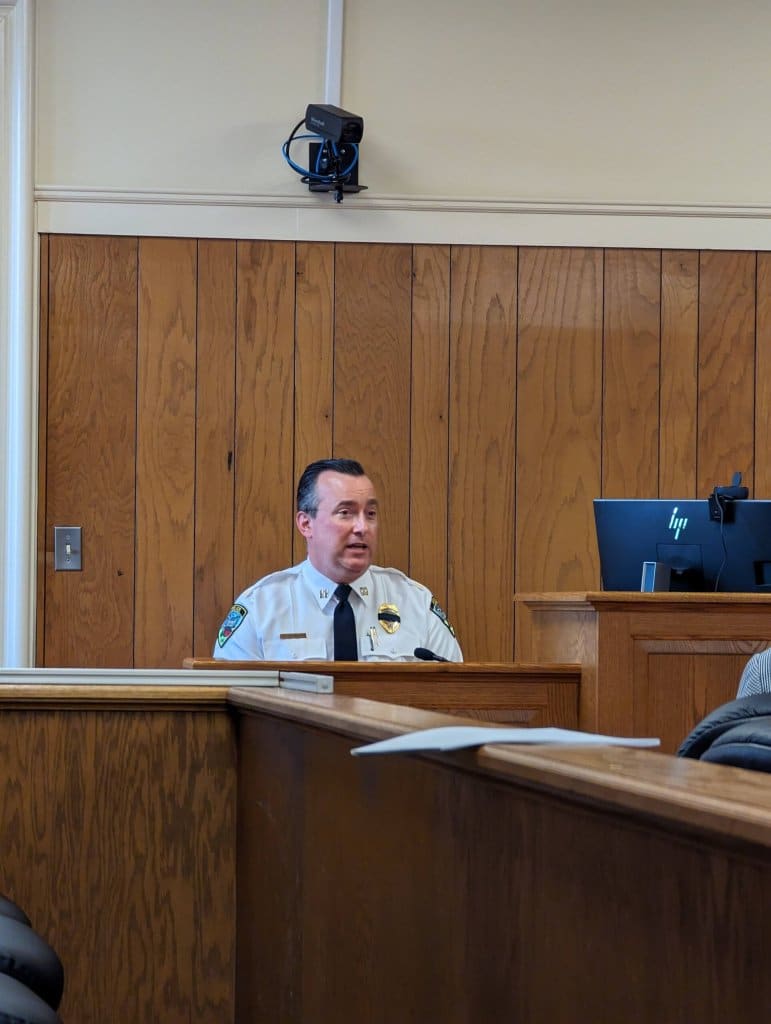
Both Sherwood and Chester Police Chief Craig Young testified they were neither present in the room, nor watching the interrogation when that statement was made.
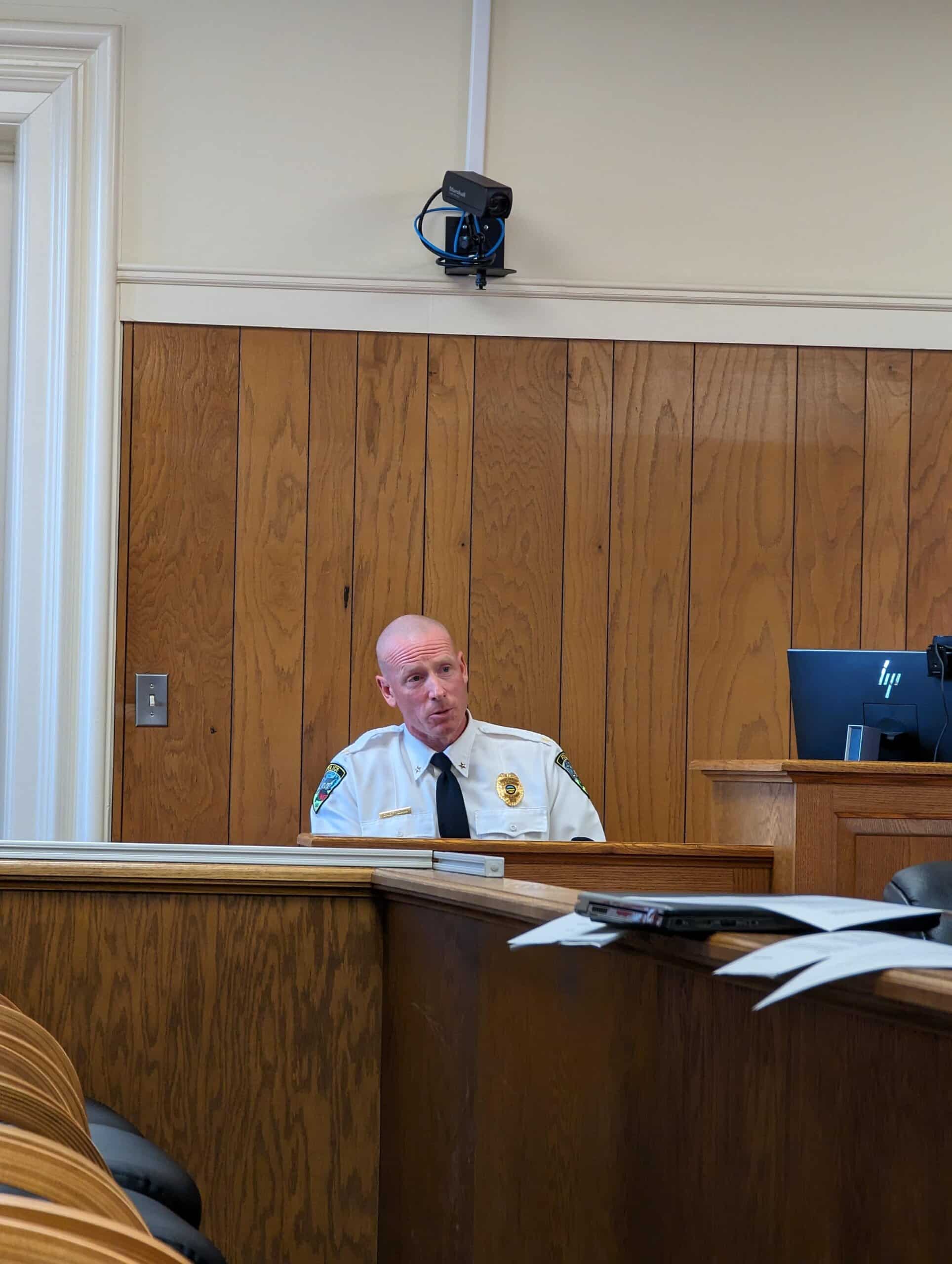
In his testimony, Young reiterated Sherwood’s earlier point — Iacampo had signed off on a policy manual outlining the consequences of subordination, as well as acknowledging he had been trained on his rights, including Garrity.
Downing walked Young through Iacampo’s disciplinary records. The records, also obtained by the Geauga County Maple Leaf, show that in September 2020, Young issued a letter of reprimand to Iacampo for repeatedly refusing to enter a missing license plate into a database for stolen vehicles.
The complaint was placed into abeyance, meaning disciplinary action was postponed until and unless another disciplinary issue was raised, Young explained.
In April 2022, he was given a two-day suspension after an “avoidable traffic crash” at the intersection of state routes 306 and 322 in Chester Township.

Defense Claims Rights Violated
In his cross examination, Friedman asked Young whether there were any conversations within the department about terminating Iacampo prior to his Aug. 7 arrest.
Friedman also probed whether Iacampo was employed as an SRO at the time of his arrest. Young said Iacampo still held the phone and school keys issued to the SRO, but was not performing SRO duties at the time.
Young echoed Sherwood, telling Friedman Iacampo’s Garrity rights were not invoked as part of the criminal investigation. Friedman pushed Young, asking him to confirm Iacampo was placed on administrative leave after being questioned.
“And that was based upon what was said back … during the interrogation, correct?” Friedman asked.
“It was based on the fact that he was placed under arrest,” Young responded.
“Okay. So, if we just flip that on its head for a moment, Mr. Iacampo gives information to the Lake County Sheriff’s Department … That information leads to an arrest, correct?” Friedman asked. “That arrest then leads to him being placed on administrative leave, correct?”
“Absolutely, he (would be) placed on administrative leave,” Young said.
“And, you would agree with me that being placed on administrative leave is part of (an) … administrative process, correct?” Friedman asked.
“It’s an administrative process, but not an inquiry in and of itself,” Young said.
As the hearing reached its third hour, retired Portage County Common Pleas Court Judge John A. Enlow, who is presiding over the case as a visiting judge, asked for the next witnesses to be scheduled for a later date.
All parties agreed on the afternoon of May 28 for the remaining testimony and cross examination.


