

When Geauga Park District Biologist Paul Pira first walks around a potential new GPD property, he likes to use his imagination and dream big.
When Geauga Park District Biologist Paul Pira first walks around a potential new GPD property, he likes to use his imagination and dream big.
It’s especially easy to do at Veterans Legacy Woods, home to one of the best panoramic views in Geauga County with a vista of possibilities.
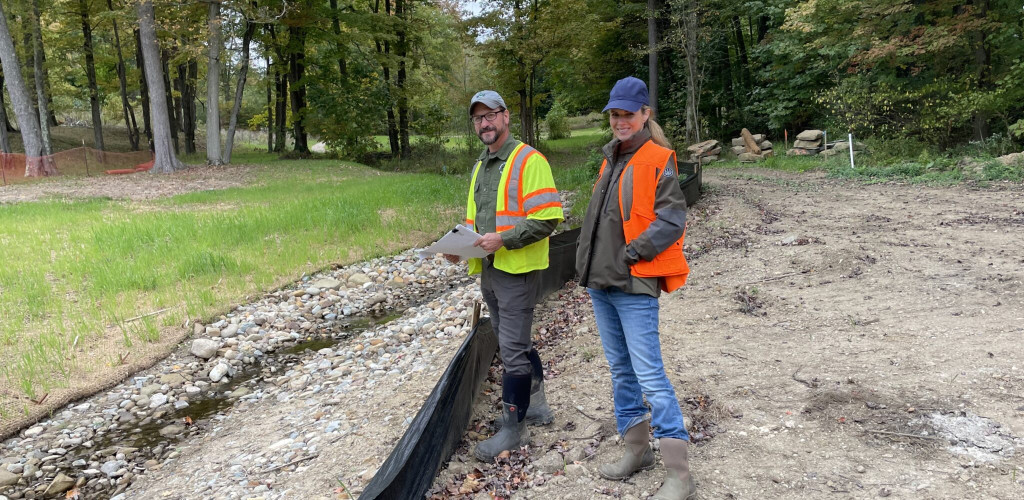
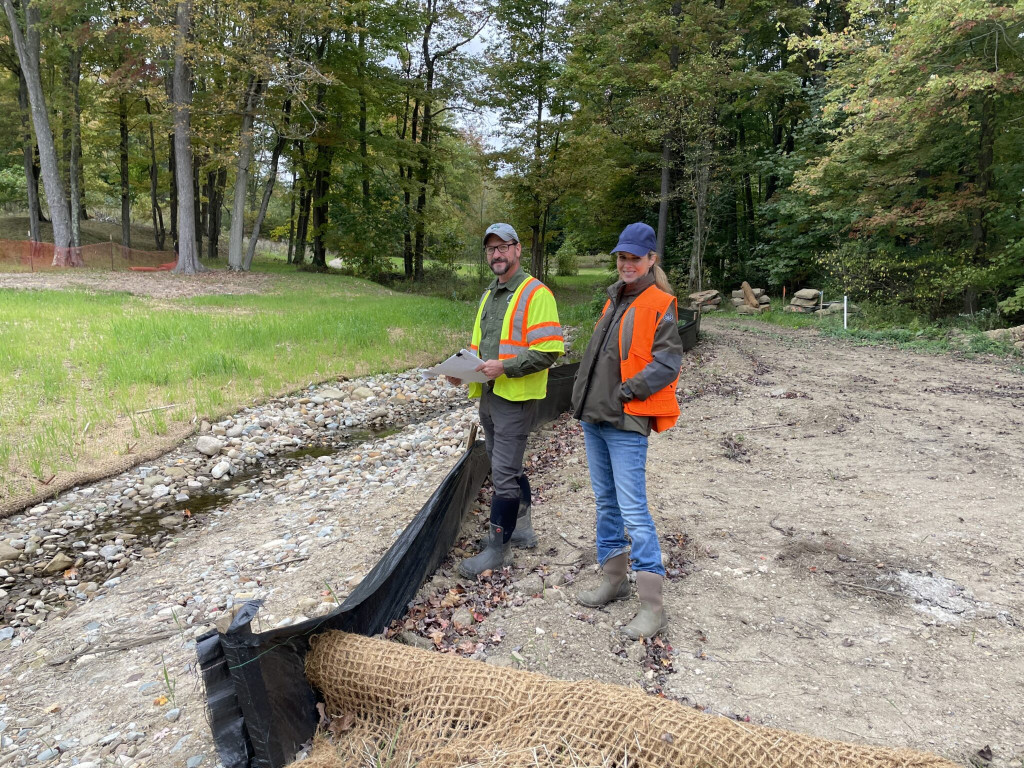
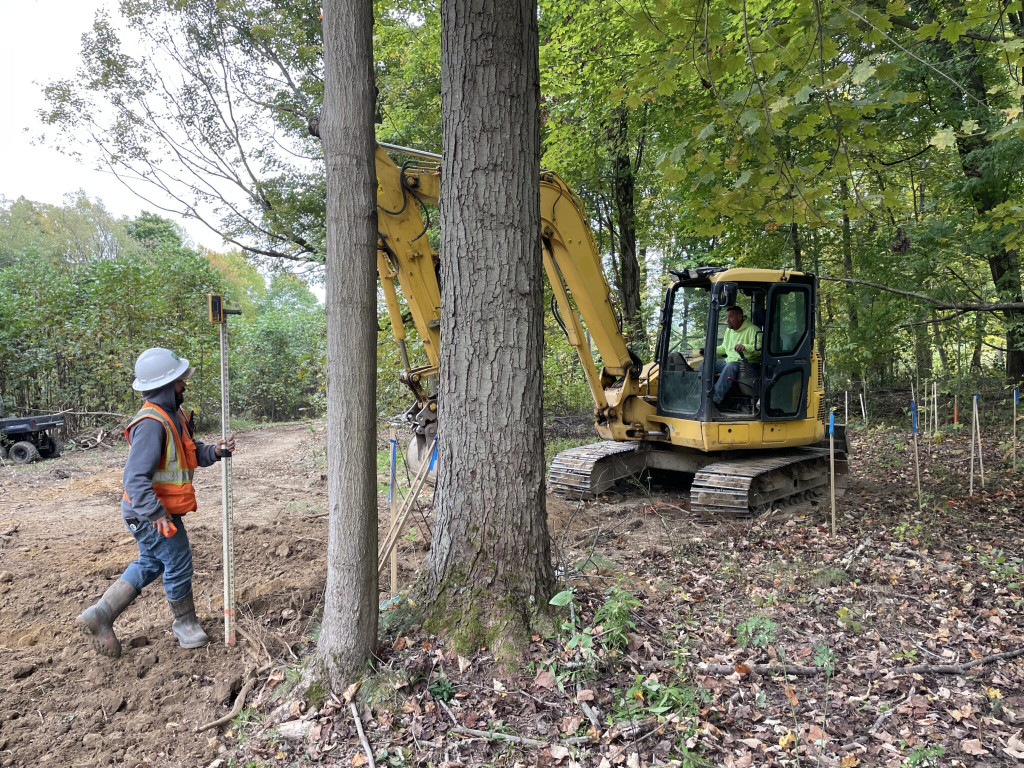
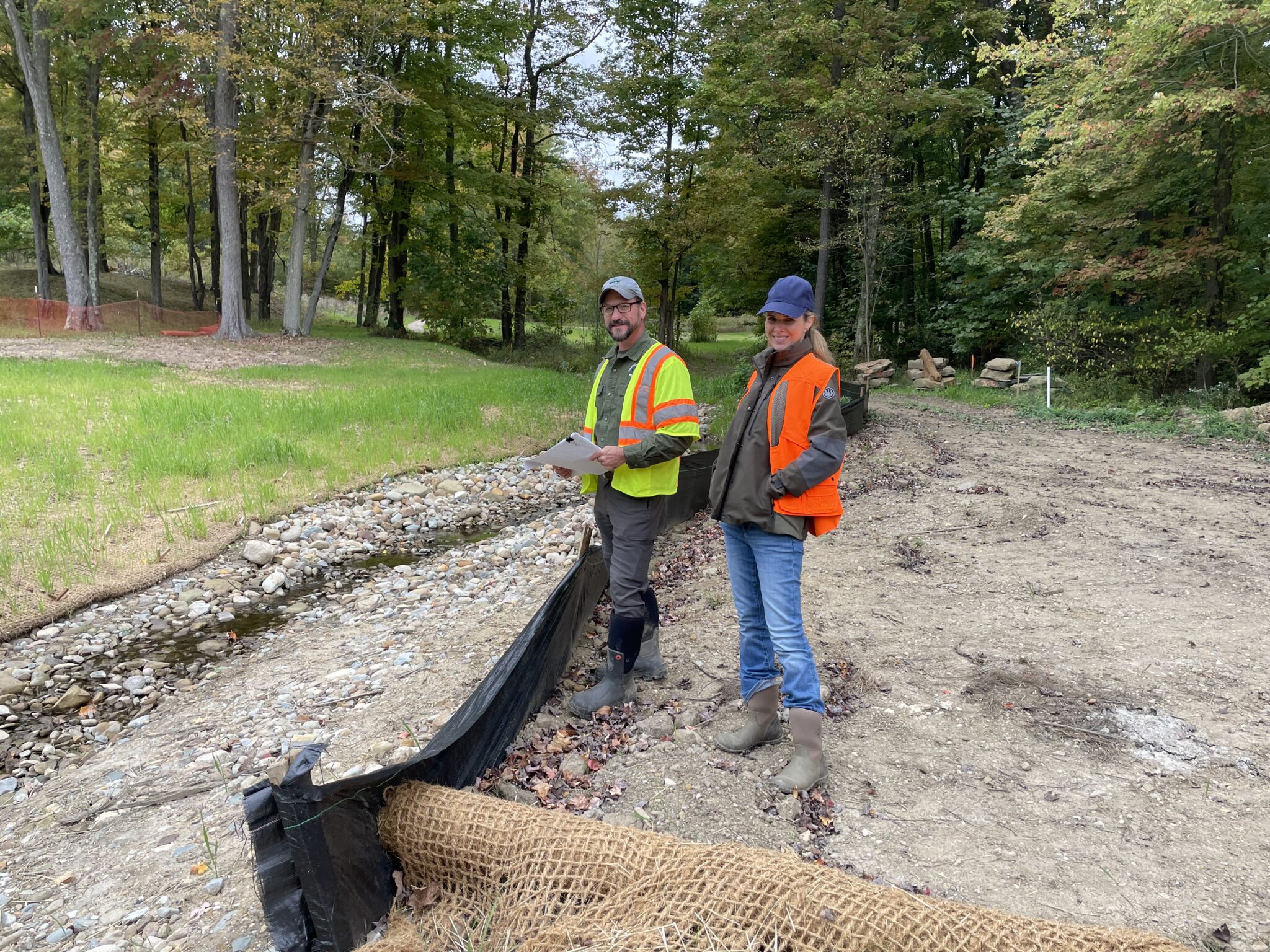
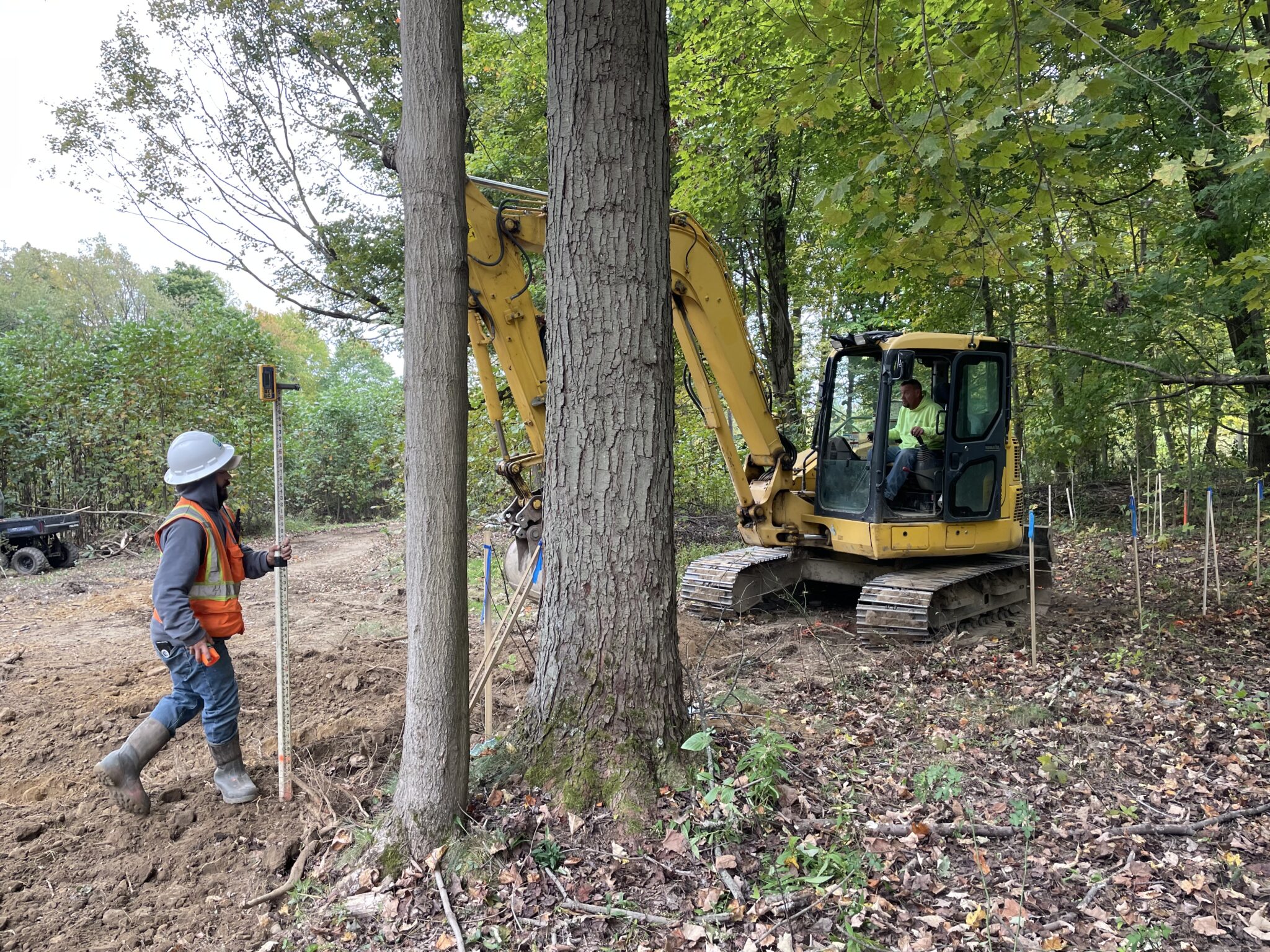
Signs of the once rolling golf course, on the border of Newbury and Burton townships, is the 180-acre parcel of land the GPD purchased in 2018, which now gives way to rolling trails, saplings skirting legacy trees and large construction equipment creating a brand new stream from scratch.
The stream project has been in the planning process for more than a year with consultant RiverReach Construction, EnviroScience Inc. and GPD with the goal to restore three headwater tributaries to the West Branch Cuyahoga River, Pira said.
Construction began in September 2024 and will continue into early November, and portions of Duty Trail and Courage Trail have been closed as a result, according to GPD.
The project aims to restore these tributaries back to natural valleys free from the alterations caused by the former golf course, which included riparian tree removal, two in-line ponds and a large culvert causing erosion, Pira said.
The project will divert a captured spring as a water source for a new cold-water stream with the long-term goal of supporting endangered brook trout, he said.
Shortly after GPD acquired the park, Pira worked on a detailed natural resource management and restoration plan with ideas about how to return the property to a more natural state, while maintaining it as a public park.
Some of these ideas were then solidified into a park master plan and concepts developed by GPD’s planning department.

Spawning of Ideas
“One extremely unique idea that I presented to people was the large stream restoration project that is currently taking place right now on about 32 acres of the northeastern portion of the park,” Pira said. “The water source was always there, which is a beautiful spring that allows ice-cold ground water to come to the surface. Unfortunately, this cool, clean, unpolluted groundwater was quickly intercepted by warmer streams and ponds which thermally polluted (raised the water temperatures) and ruined the unique cold-water aspects of the stream.”
Cold-water streams are very special and rare habitats supporting fragile aquatic life, he said, adding he was initially puzzled by how to remedy the situation and return the stream back to cold water.
“Then, it hit me … why not just disconnect it totally from the warmwater influences and re-direct it into a newly-created stream,” Pira said.
At first, he was hesitant to propose his ideas because he had never heard of doing something like it.
He consulted colleagues — such as long-time ecological restoration specialists and aquatic biologists, and they had never heard of this idea either.
However, many were intrigued by the possibility of it.
Pira discovered one other stream in the United States totally created out of nothing for the purposes of preserving a cold-water stream — Hatchery Creek located in Wolf Creek Dam, Jamestown, Ky.
“It took some convincing, but after a few years and with help of great partners like the Chagrin River Watershed Partners, Ohio EPA (Environmental Protection Agency) decided to fund ($1.1 million) GPD’s totally unique Veterans Legacy Woods cold-water stream restoration project,” Pira said. “The Ohio EPA has a great program entitled the Water Resource Restoration Sponsorship Program, whereby they are able to fund large water projects and ecological restoration.”
At the helm of ecological restoration for this project is EnviroScience’s Director of Ecological Restoration Julie Bingham.
“This project is special because of the potential to create a new cold-water stream,” Bingham said. “Cold-water streams in Ohio are rare and becoming rarer as development and warming climate stress these habitats. Using the spring water to support cold-water species in a completely constructed stream is unique with only a few other examples existing in the Midwest. These fish are endangered in Ohio and however we can help this beautiful species continue to survive is our duty.”
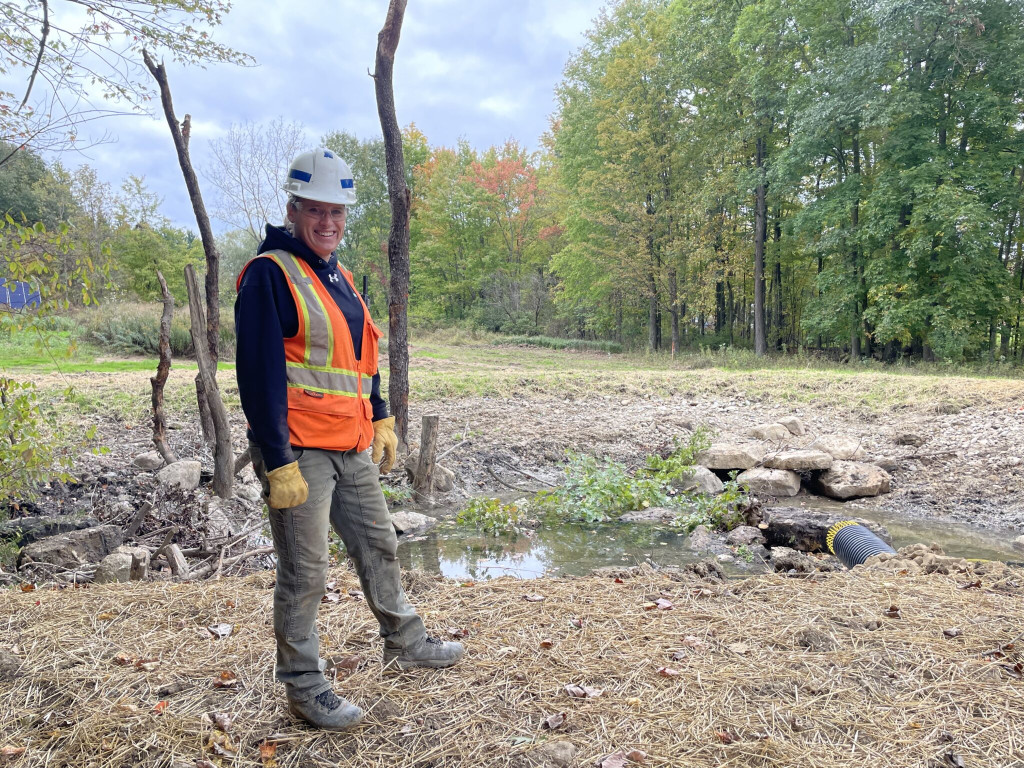
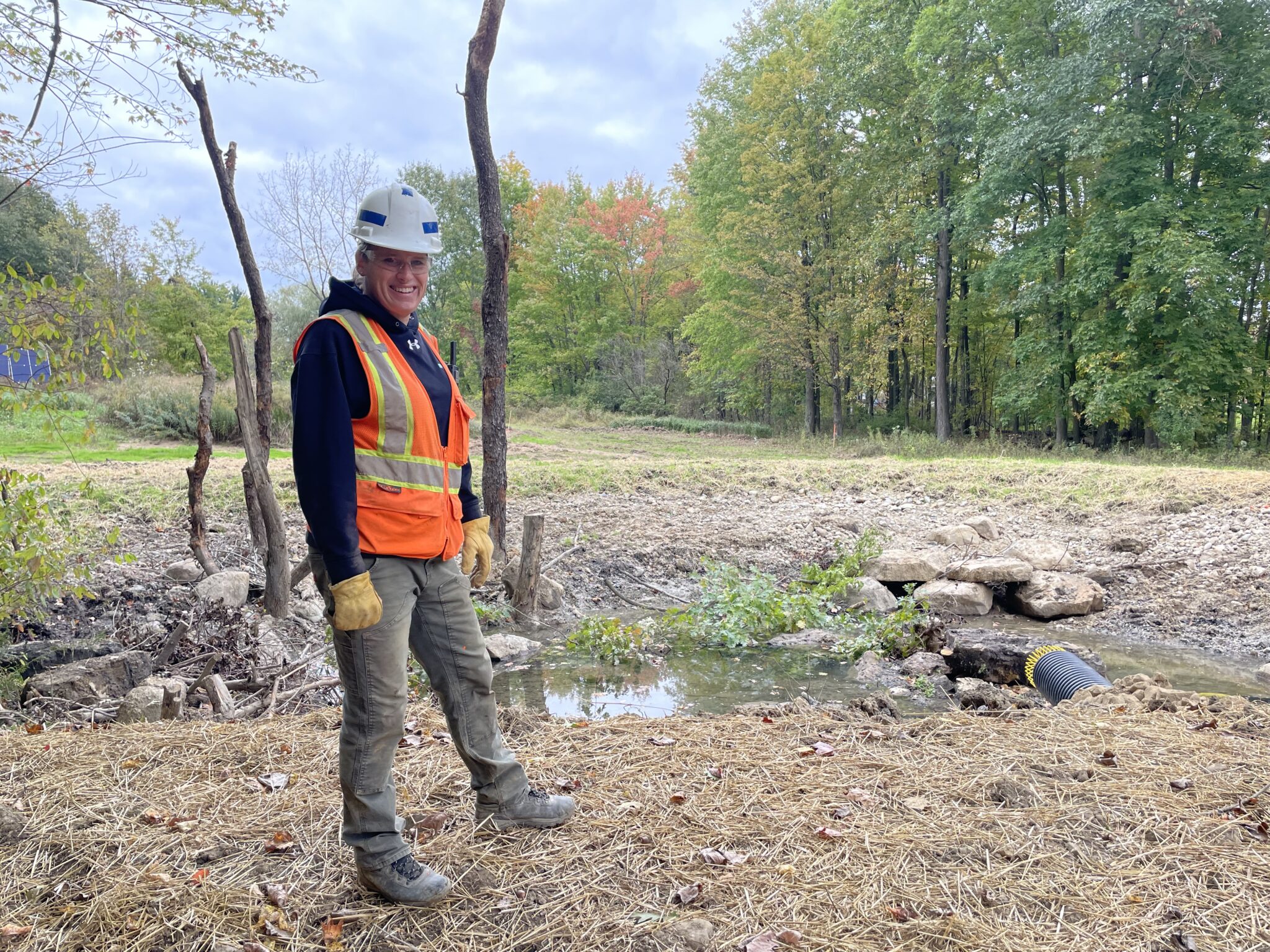
Native brook trout can thrive in small streams, but also commonly inhabit beaver ponds, Bingham said, adding a small pond was constructed with deeper water refuge, submerged wood, brush piles and boulders for the fish.
The main-stream outlet is positioned such that fish can move freely in and out of the pond, mimicking potential migration patterns, she said.
“The pond also has a secondary valve-controlled outlet to simulate a high-flow event, which, otherwise, would not be possible with only a spring-fed hydrology,” Bingham said. “The design intent for the streams is to re-establish forested stream corridors. In five to 10 years, the site will become more shaded, and evidence of the construction and past golf course will be faded into the landscape. Also, in that timeframe, it is hoped that the cold-water stream will support a native brook trout population.”
GPD Board Commissioner Jolene Carnabuci is very excited about the project and met Pira on Oct. 7 to tour ongoing progress.
“Cold stream restoration is vital for sustaining the diminishing brook trout populations in Ohio, specifically Geauga County, and maintaining the ecological integrity of their habitat,” Carnabuci said. “I look forward to seeing the completion of this project and the opportunity for the Geauga Park District to share its importance with park visitors. This project truly aligns with the mission of Geauga Park District. I am impressed with GPD’s Chief Biologist Paul Pira’s efforts in developing the concept for this new project.”
GPD Executive Director John Oros said acquisition of VLW proved beneficial from the get-go.

Rare Species Conservation
“When I first looked at the property, I saw signs of cold-water habitats,” Oros said. “Fast forward to 2024 and we are privileged to work with our funding partners, Ohio EPA, to expand and restore cold-water streams on the property. Our goal is to create a habitat that will benefit a very special fish, the native brook trout.”
Pira said Ohio’s state endangered native brook trout are only found in three viable streams in Geauga County — all owned and managed by GPD.
“There are many, many people (state agencies, conservation organizations, trout clubs, etc.) from around the state (and outside Ohio) paying close attention to this project and the fate of this special fish,” Pira said. “I’ll admit that building the cold-water stream and helping the super rare brook trout are the ‘hook’ that grabs everyone’s attention, but there are other really interesting and appealing components to this project, such as removing two ponds, restoring and improving several other existing warm water streams, improving wetlands, removing old asphalt golf cart paths, and planting lots of native trees and shrubs.”
He thanked the Ohio EPA, a sponsorship from Sandusky, West Creek Land Conservancy and Covia (Best Sand in Chardon) for donating tons of locally-quarried sandstone rock for this project and Arms Trucking for donating time and trucks to haul the stone.
“This project is truly an amazing example of cooperation among agencies, organizations and businesses all for the sole purpose to help improve water quality in Geauga County and the Cuyahoga River watershed,” Pira said. “With everyone working together, (we) may even be able to help save one of Ohio’s most beautiful native fishes. Geauga Park District is truly thankful for such a fantastic effort by so many folks to make this dream a reality.”
Pira also views the project as a great educational opportunity for area schools on the importance of clean groundwater, protecting stream health and helping with rare species conservation. Once complete, the area will have a primitive trail around it, allowing wildlife viewing and a chance to study just how resilient nature can be if given the chance.
“Who knows … some of these young students may be future biologists that are going to help continue to preserve Ohio,” Pira said. “The most rewarding part of this job is knowing we are making a real difference for wildlife and also future generations to enjoy the parks.”


