Program Preps Teens for Farm Work, Meets Certification Requirements
With summer approaching and Geauga County’s farmland beginning to green up, a long-dormant youth tractor safety program has returned to help train the next generation of agricultural workers on safe equipment operation.
With summer approaching and Geauga County’s farmland beginning to green up, a long-dormant youth tractor safety program has returned to help train the next generation of agricultural workers on safe equipment operation.
Geauga County Farm Bureau President Bob Rogish, a certified instructor with the National Safe Tractor and Machinery Operation Program through Penn State University, helped revive the course with support from local volunteers, the Geauga County 4-H program, businesses and the Ohio State University Extension office.
The class had not been offered in the county for nearly three decades.
“This class is incredibly important to the future of agriculture in our community,” said Mandy Orahood, organization director of Ohio Farm Bureau Federation of
Ashtabula, Geauga, Lake and Trumbull counties. “It equips young people with the skills and confidence to safely operate equipment while also meeting the requirements needed to work on farms not owned by their family. With agriculture facing an ongoing labor shortage, programs like this help bridge the gap by preparing motivated youth to step into real roles. Just as important, it reinforces safe habits early, which benefits not only the individual but our entire agricultural community.”
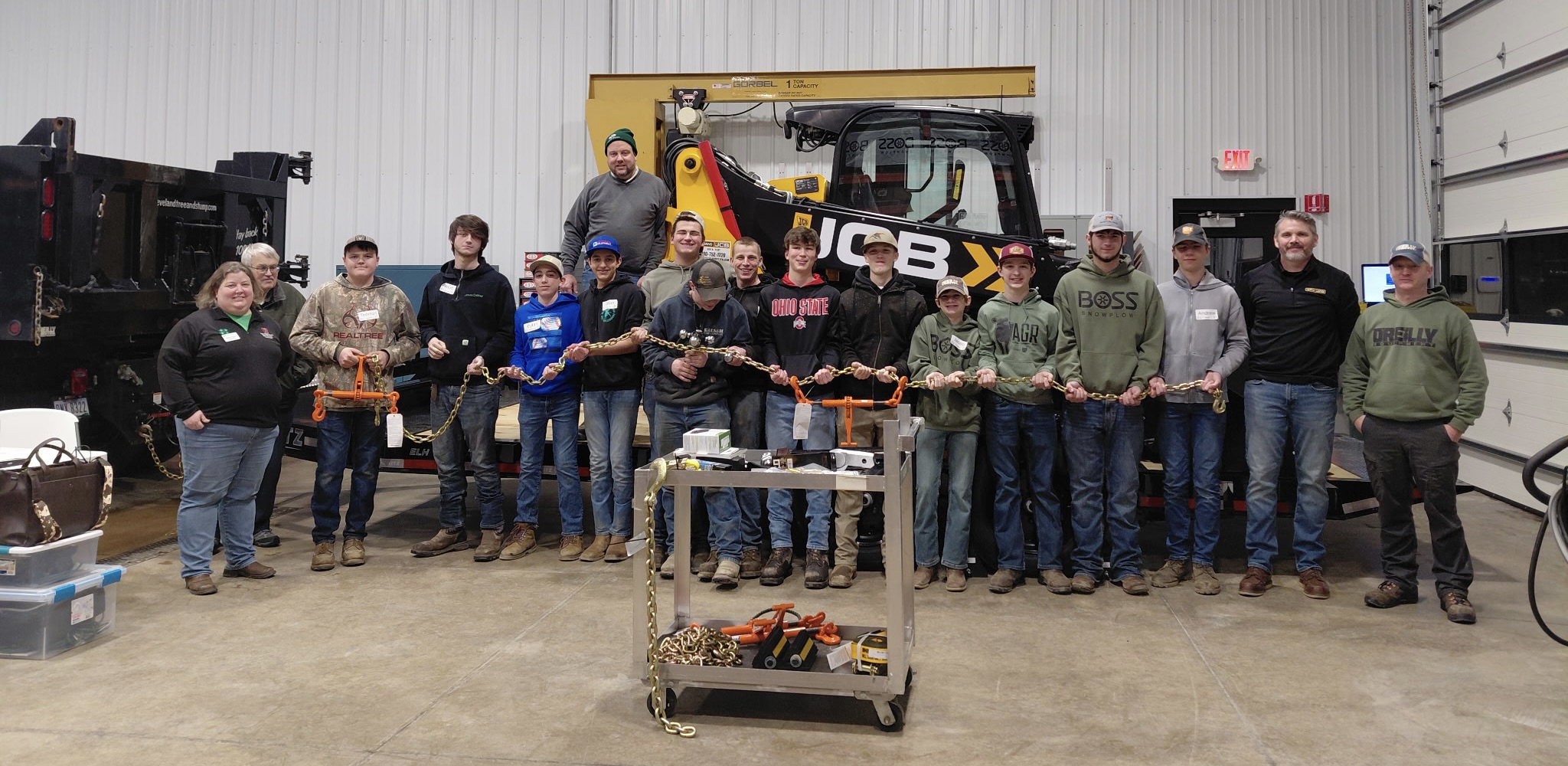
Twelve students, primarily ages 14 and 15, completed the 12-week course April 11 at Patterson Fruit Farm in Chester Township, earning certification to work safely on local farms. Participants ages 16 to 18 also took part, Rogish said.
Each graduate received a certificate, a U.S. Department of Labor certificate for employers, a wallet card and a gold hitch pin, he said.
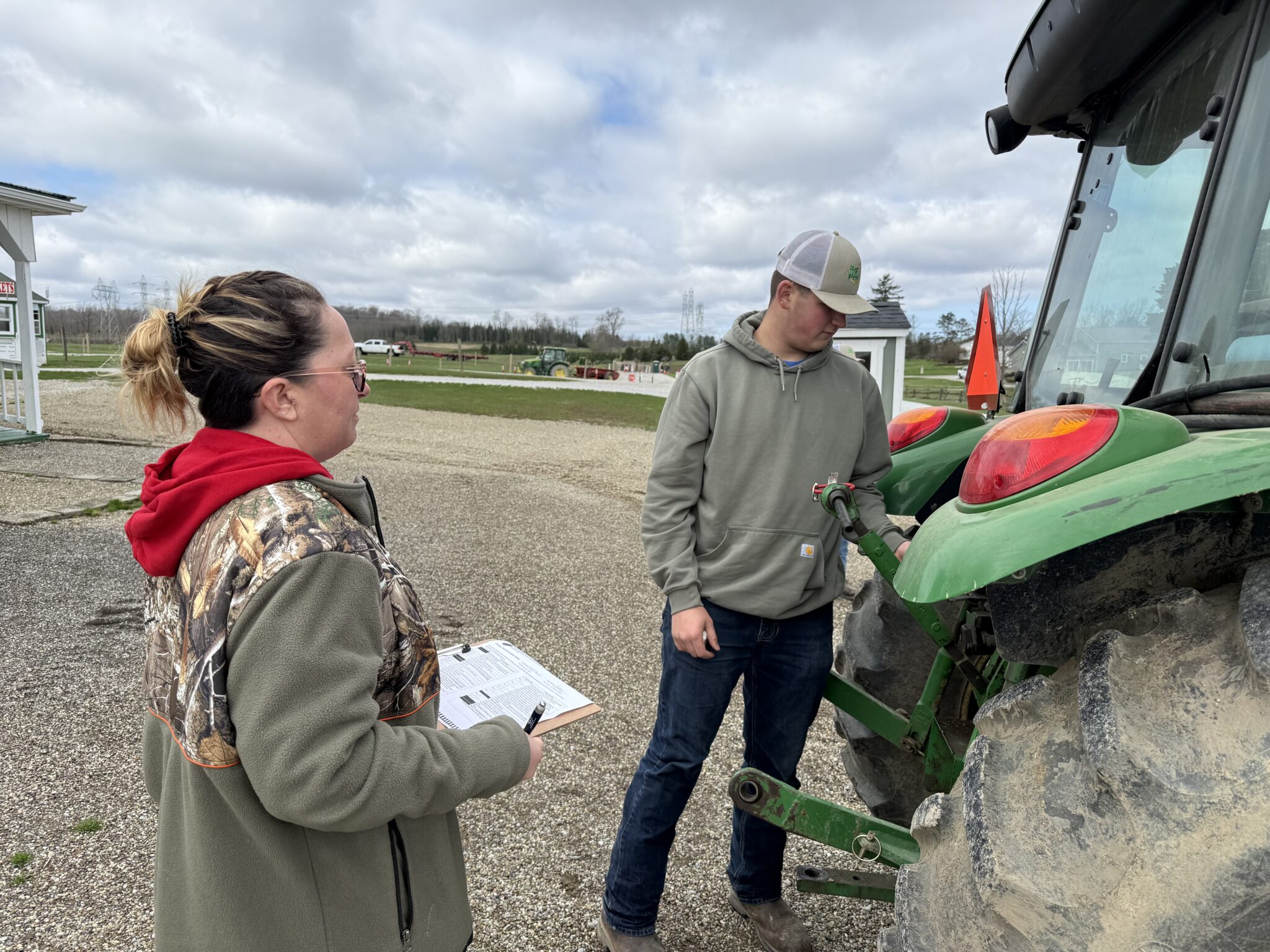
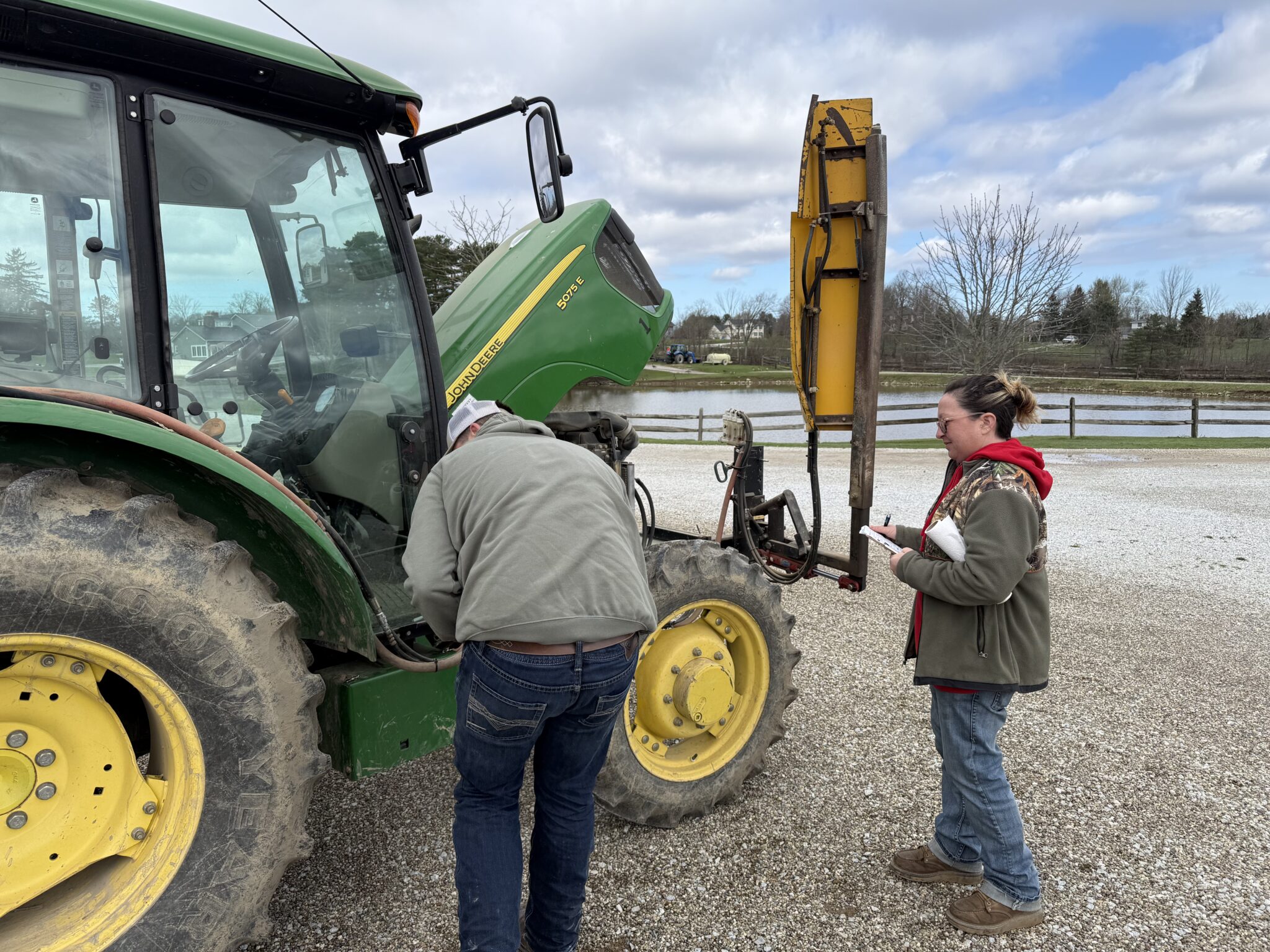
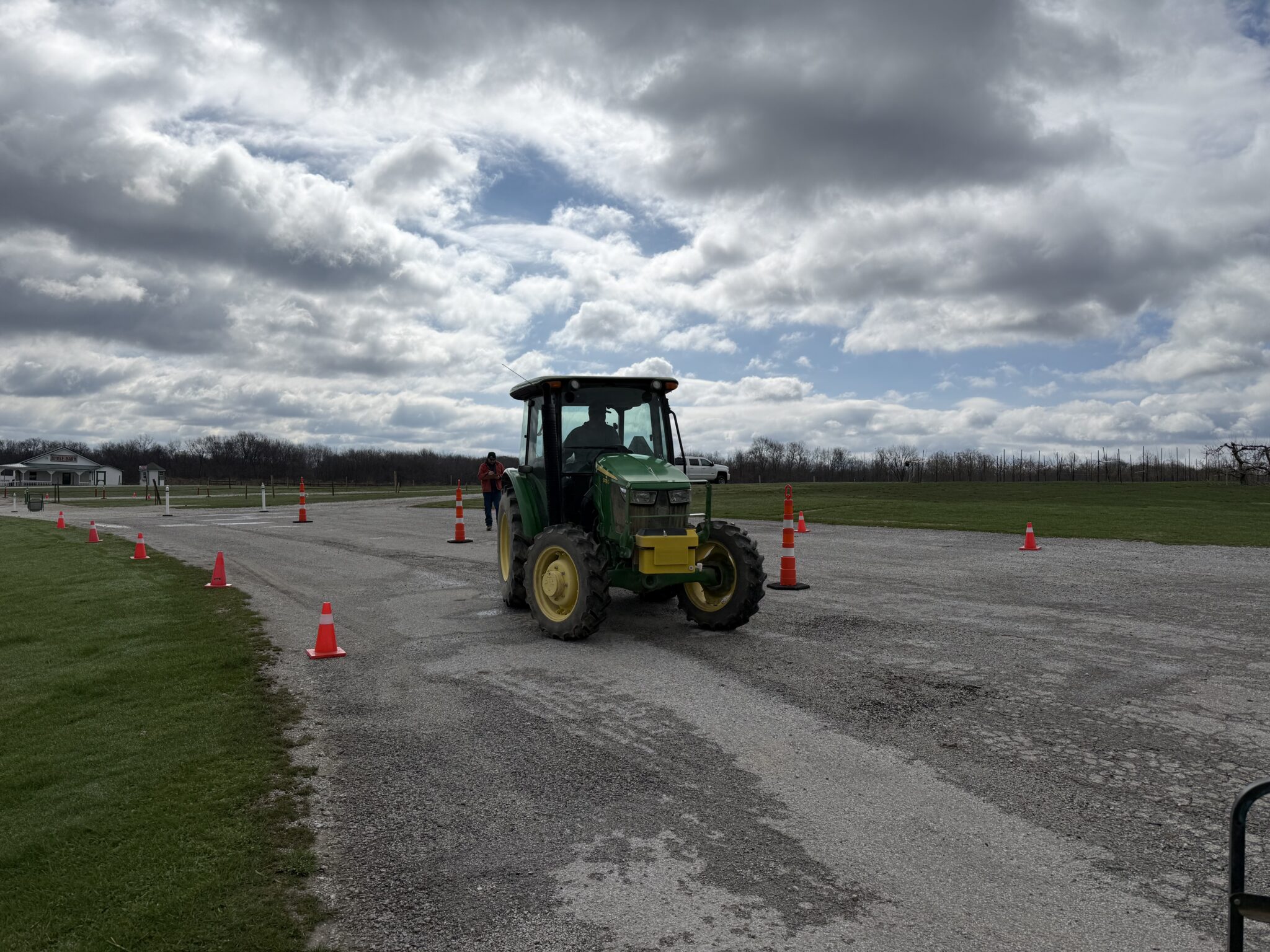
The program included classroom and hands-on instruction held over 12 sessions beginning in late January, along with practice exams and a final test, Rogish said, adding students were trained in general farm safety, first aid, tractor and equipment maintenance, pre-operation and safe operation procedures, animal safety, pesticide safety, roadway safety and ATV safety.
The planning committee included Orahood, Kristen Sirna, Jim Timmons Jr., Abbey Averill and Les Ober of Ohio State University Extension in Geauga County, Rogish said.
Host locations included OSU Extension, Robison Equipment Company, Ag-Pro Chardon, University Hospitals Geauga Medical Center, O’Reilly Equipment and Patterson Fruit Farm, he said.
Sirna said the program is valuable for youth whether they plan to farm, help family operations or pursue agricultural work.
“I actually took the class myself over 30 years ago with Jeff Burr and Jim Timmons as my instructors,” Rogish said.

Back in the Day
Ober said the program dates back to the 1980s, when new agricultural labor laws required training for youth operating farm equipment.
“They told the local farmers that the students would have to go to class for 12 weeks to learn how to safely run a tractor,” Ober said.
Local farmers volunteered to teach the course, using a certification manual and providing their own equipment.
“At first, there was some hesitation on both sides, but the law is a law,” Ober said. “Over the years, the tractor certification classes faded away as did the interest in working on a farm, especially in counties where farm numbers were starting to disappear.”
Despite declining participation, Ober said safety remains the top priority on farms.
“A farm safety class is beneficial to everyone whether they own the farm or live next door and work on the farm,” he said. “Every time there is a farm accident, fatal or not, you have to ask, could this accident have been avoided with a little time in the classroom.”
He noted that Ohio law prohibits individuals under 16 from operating farm equipment unless they are certified.
Orahood said Rogish’s leadership was central to bringing the program back.
“Bob did a great job planning and bringing back this opportunity, going above and beyond,” Orahood said. “This program is successful because of a strong team effort that we are proud to be part of. The support and involvement of Farm Bureau, Ohio State University Extension and partners like O’Reilly Equipment, Patterson Fruit Farm, (University Hospitals Geauga Medical Center), our sheriff’s office and more are essential in making this opportunity available in the future. It truly reflects what can be accomplished when individuals and organizations come together with a shared goal of supporting the next generation in agriculture.”
She added that continued investment in youth agricultural education will remain critical as the industry evolves.
“Programs like this not only help address workforce needs but also strengthen the foundation of our agricultural community by encouraging responsibility, safety and pride in the work,” Orahood said. “With continued collaboration and support, this program will remain an important piece of agriculture’s future both locally and beyond.”

Young Farmer’s Positive Perspective
Parker Reese, president of the ACE Academy FFA chapter and a member of the Breeders and Feeders 4-H Club, said the training reinforced skills he already uses on his family farm.
“Through both organizations, I’ve developed a strong foundation in agriculture, leadership, and service,” Reese said. “I am also a proud farm bureau member alongside my family (the Pattersons), which reflects our shared commitment to agriculture and advocacy.”
Reese said the class emphasized the importance of careful decision-making around equipment and livestock.
“Whether I’m working with livestock, operating equipment or helping around the barn, I understand that small decisions can make a big difference in preventing injuries,” Reese said. “This course reinforced the importance of slowing down, thinking through each task and using the proper safety practices instead of taking shortcuts.
He added that farm safety extends beyond individual protection.
“It’s about looking out for everyone around you,” Reese said. “As someone with more experience, I want to help create a safer environment by sharing what I’ve learned and reminding others that safety should always come first.”
He added, “A lot of kids our age are already around equipment, livestock or jobs where things can go wrong fast and knowing how to handle that can prevent serious injuries. This course isn’t just for farm kids either, it’s for anyone who might be using a lawn mower or working around power equipment. It really just helps you be more aware, responsible and think before you act.”
Rogish said he hopes to continue offering the course annually in late winter or early spring, when farm activity is lighter.
“Farming and farm equipment are potentially dangerous,” Rogish said. “Accidents can be unforgiving, causing serious injury or death. By making youth aware of the hazards, how to avoid them and how to react if something happens, it can hopefully lead to better outcomes. This class is incredibly important to the future of agriculture in our community.”