


Debbie Palmisano boiled down an intensive, 50-hour course on urban forests to about 20 slides and 20 minutes last Tuesday for the benefit of Burton Village Council.
Debbie Palmisano boiled down an intensive, 50-hour course on urban forests to about 20 slides and 20 minutes last Tuesday for the benefit of Burton Village Council.
A member of the Burton Tree Commission, Palmisano shared some of the main points from the Tree Commission Academy course that affect the 1,200 maple trees along village streets and in the park.
As she proceeded through a selection of colorful slides focusing on maple trees, she noted the five-member tree commission was reactivated for safety reasons after a boy was killed in another community when a tree branch broke unexpectedly.
The $8,000 per year of village funds allotted to the commission is supplemented by rental income from the cell phone tower on the village water tower, Palmisano said.
The many trees in the village forest still need a lot of attention and the stand itself is at risk as a monoculture, she added.
“The goal is to create some diversity within the monoculture of sugar maples” while maintaining the trees that support the only municipal sugar camp in the U.S., Palmisano said.
“If we lose our maple forest, it would have a devastating effect on Burton tourism,” she said, adding it’s a possibility if the forest becomes infested with the Asian longhorn beetle, which has a voracious and eclectic appetite.
“It has been found in Ohio and merits our utmost diligence,” she said. “We need to take care of what we’ve got.”
That includes an elderly population that will eventually become lumber or firewood, a middle-aged population with suicidal tendencies and at-risk youth that needs training, Palmisano said.
As she went through the class, she learned that planting is the least important priority in creating a sustainable urban forest.
Removing old or dangerous trees, providing enough water in dry seasons, pruning and site preparation are several other aspects of forest management, Palmisano said.
“Only trees grow in value as they age,” she said, adding however, most require proper care for that to happen.
She recommended an inventory be made of the forest using the tree academy software and a forest management master plan be created in accordance with the tree commission resolution.
Besides attention to safety and concern for the village’s tourism future, Palmisano said the trees around the village have a positive effect on residents and visitors.
“The numerous benefits trees provide are well-documented,” she said. “There are social, emotional and psychological benefits. They are key to the vitality of our community.”
Council has been mulling over the idea of hiring a part-time arborist to fulfill the recommendations of the tree commission, but they did not take any action last week.
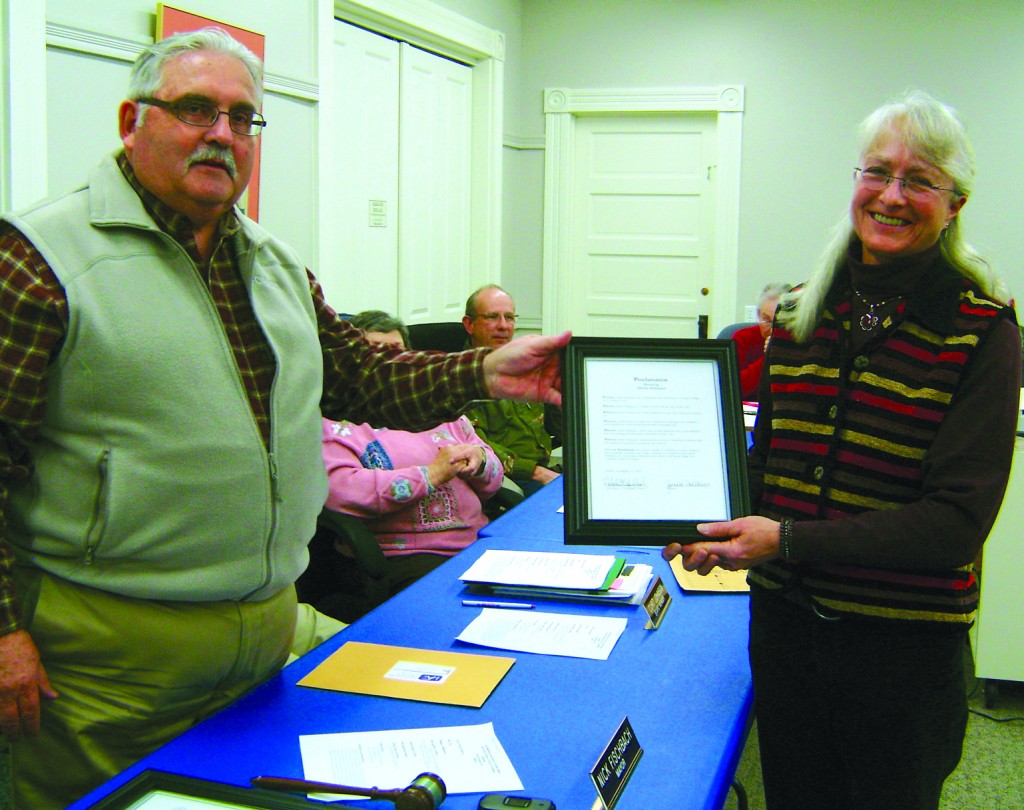
Mayor Nick Fischbach commended Palmisano for all the hours and work she put into the Tree Commission Academy — which is supported by the Ohio Department of Natural Resources, the Urban Foresters and others — presenting her with a certificate from council for her completion.
“Debbie has been a great help and has brought a lot of knowledge to our employees. She is an asset to the board,” Fischbach said.
Later in the meeting, Councilman Jeff Coleman made a case for council to consider hiring a part-time arborist or contracting with someone to take care of the village trees.
“I think this would be money very well spent because of Debbie’s presentation,” he said. “Debbie would do a fantastic job. I think the village needs her expertise to take advantage of the (software) program we just purchased.”
He recommended council take action to create an arborist position in December and noted the tree commission annual budget is $8,000 per year, so there is money available for a part-time arborist.
Fiscal Officer Chris Paquette said council would just have to cover the position in the budget for 2013, not create a position through legislation.


