


Inquisitive observers gathered under a nearly full moon Oct. 23 for a last chance peek inside a Geauga County gem before its historic preservation begins."I…
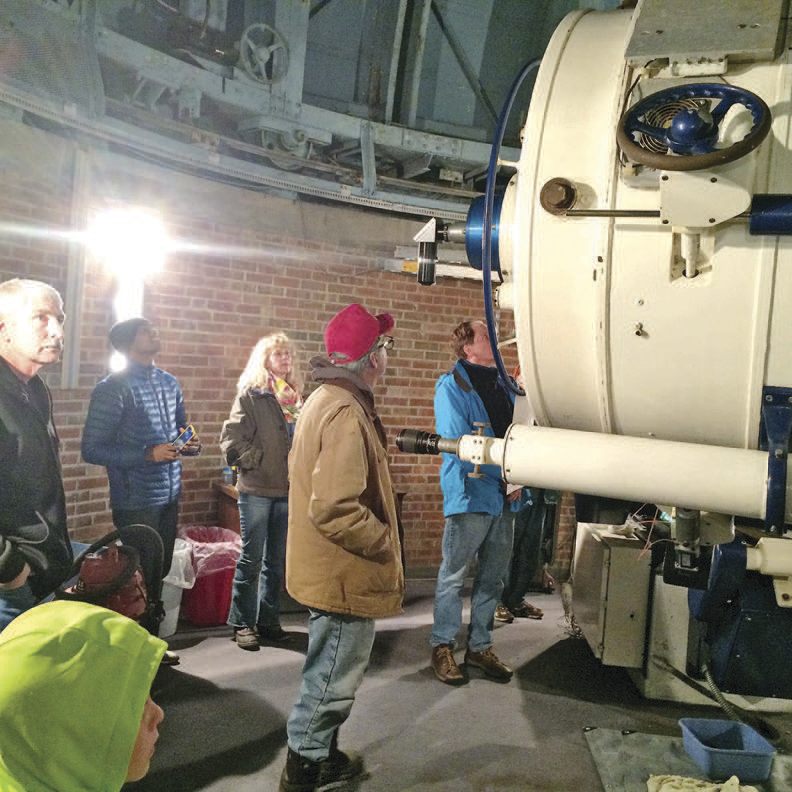
Inquisitive observers gathered under a nearly full moon Oct. 23 for a last chance peek inside a Geauga County gem before its historic preservation begins.
“I am interested in astronomy and I wouldn’t miss it,” Vienna’s Bill Lavin said.
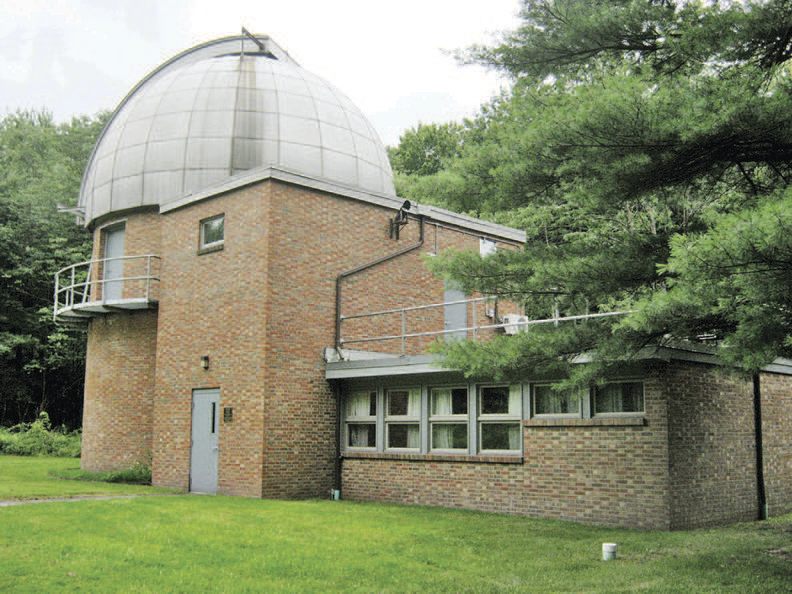
Five van loads of visitors for the free Geauga Park District program viewed the interior of Montville Township’s Observatory Park’s Nassau Astronom-ical Observing Station — under initial restoration — before being closed to the public for extensive restoration kicking off next year.
The park district purchased the station and its 280-acre property in 2008 for $915,000 from Case Western Reserve University.
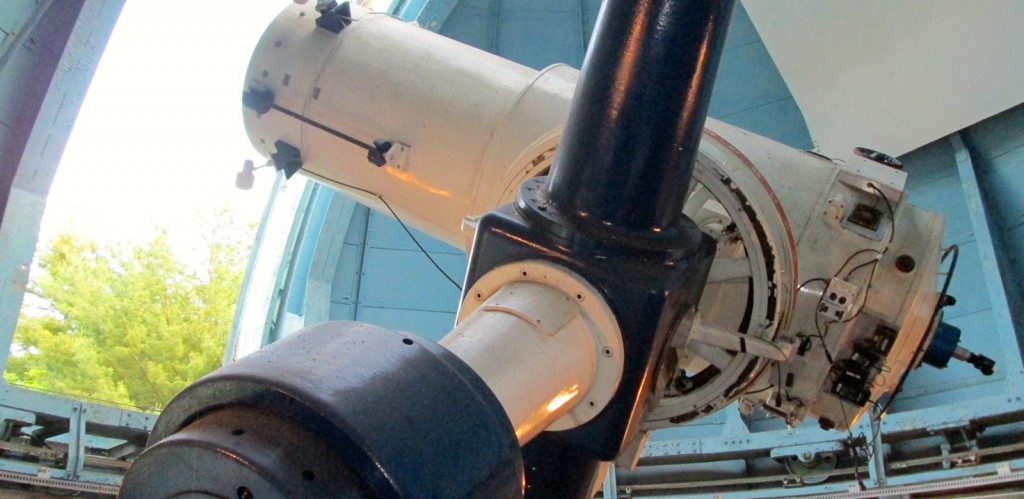
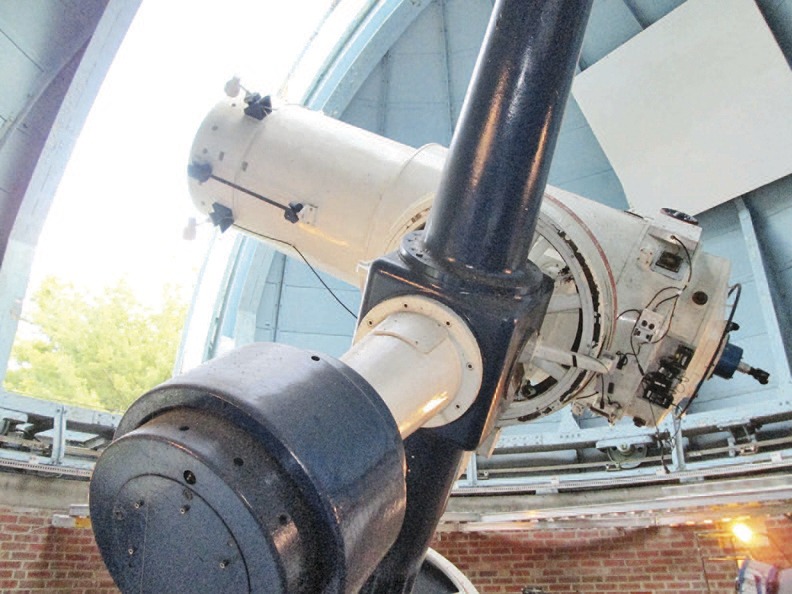
It’s central instrument is a 36-inch Cassegrain telescope built in 1957 by Cleveland’s Warner and Swasey Company. For a time, it was operated remotely via the Internet until a lightning strike destroyed critical components now carefully being refurbished.
The station’s telescope dome is sheltered, offering greater year-round visibility than the much visited 25-inch Oberle Observatory telescope more suited to planetary observation on the main campus of Observatory Park.
Observatory Park is recognized by astronomers as one of the few regions left in Northeast Ohio not yet affected by light pollution. It has been granted status as a select Silver-Tier International Dark Sky Park, which is designated to land possessing an exceptional or distinguished quality of starry nights and a nocturnal environment that is specifically protected by its scientific, natural, educational, cultural heritage and/or public enjoyment.
“It’s great to see historic preservation in action,” said Chris Mentrek, Observatory Park naturalist. “Now-a-days, most astronomical observatories are located in the most remote wastelands possible, on mountaintops, on islands, in outer space, so it’s very hard for the public to visit them.
“What’s more, those observatories located near cities are often locked up tight and any public outreach is an afterthought. It’s only a few lucky folks who get to have a publicly-accessible observatory practically in their own backyards.”
Program-goers filtered inside the McCullough Science Center building, perusing educational materials before heading to be called for a tour. A scattering of stargazers soon rushed back outside at mention of a possible sighting of a 6:51 p.m. Space Station flyover.
“We do a lot of these Geauga Park District programs,” said Helen Stow, of Huntsburg Township, with husband Tom in tow. “It’s a nice educational tool.”
After construction, visitors will be able to access Nassau via a two-lane driveway and parking area very similar to the park’s main entrance.
Park district volunteer Cyndi Bradley welcomed tour-goers.
“I enjoy hearing all of the enthusiasm from visitors,” Bradley said, of the planetarium shows.
A plaque at the site described Nassau Astronomical Station as being named in honor of Dr. Jason John Nassau, director of the Warner and Swasey Observation, Case Western Reserve University, from 1924 to 1959. Under his leadership, it became a great center for research and a place to share the excitement of astronomy with the general public.
The crater Nassau on the moon is named after the pioneer in galactic structure, who also discovered a new star cluster.
“The Warner and Swasey telescope is amazing,” Bradley added.
Viewers surveyed the first floor, housing a laboratory and living quarters where 1960s researchers could remain for days at a time.
Future plans call for this room to be left mostly as it is, with the addition of “desktop exhibits” on the table that highlight research undertaken at the observatory. The largest change will be outside of a screen door in the living quarters, with plans calling for a small addition.
The added-on room will feature a public restroom and an elevator reaching the second floor.
At the far side of the living quarters, two doors led to sleeping rooms. The windows were said to be built small so astronomers could sleep during the day, and now store archival materials from the Cleveland Astronomical Society that Nassau founded.
Part of restoration plans call for a peaked roof over the current flat roof in the east room, targeting an effort to help shed rain and snow, keeping the place drier. This will be a re-creation of Nassau’s office, housing a small library with historical items.
“Next, we’ll head up to the observation floor,” Bradley said, marching upstairs.
“Wow, this is amazing,” said Thompson Township’s Dave Schmid, who grew up in Euclid. “We used to see this in field trips in the fourth grade. It’s like seeing an old friend again.”
Tour-goers soon took turns peeping “down the barrel” of the telescope and tarnished condition of the mirror, a key phase in restoration.
“Starting in January of 2016, the ‘hard hat’ phase of the project begins, requests for qualifications, bids and actual construction work,” Mentrek said. “Since this is when the dust will start flying, the interior of the Nassau building will be closed to the public throughout 2016. The goal is to have construction work completed by mid-2017.”
Lavin snapped memories of the before, which included a swarm of Ladybugs on the telescope room wall.
“The tour was great,” Lavin said. “It was nice to see the original installation before it gets updated.”


