


When Geauga County Sheriff’s Office deputies respond to a domestic violence call and there has been an injury or death, oftentimes, it wasn’t the first time it happened.
A somber Sheriff Dan McClelland said while it might be staggering to hear their office receives, on average, at least one domestic violence call per day, it is the calls they don’t receive that concerns him most.
“We encourage, we beg, we plead, if you see domestic violence or you yourself become a victim, male, female, young or old — call,” the sheriff said Sept. 29 during the county’s domestic violence awareness program at Geauga Lyric Theater in Chardon. “We can stop the violence … 24 hours a day, seven days a week, holidays, you name it, we’re here.”
McClelland implored people who witness or hear domestic violence to call police.
“You yourself may not be a victim of domestic violence, but may have occasion to see it. Maybe it’s at the gas station, maybe it’s coming from the apartment next door. Maybe it’s someone you know,” he said. “Law enforcement cannot be on every street corner watching everybody. We need the citizens in our community to help us by calling and letting us know what’s happening. Oftentimes, young children will be the victims. They don’t have the wherewithal to give us a call. We, fortunately, have received phone calls from someone witnessing a confrontation in a store, a gas station, a parking lot or next door. Protecting our community, protecting our families is a job everyone has to help with.”
The sheriff said making that call could be done in several ways.
“Calling 911 is certainly one of the best. Calling allows the dispatchers to stay on the line with the caller … giving instruction,” McClelland said. “If you can’t do that, you’ve all heard recently (about how) a victim of domestic violence ordered a pizza from a dispatch center for law enforcement. The dispatch picked up there’s something more going on here than pepperoni and mushrooms and was able to work with the victim and got a response immediately going to help. If you can’t talk, dial 911 and set the phone down. We also have the ability to receive text messages to 911. Someone who can’t speak, a physical impairment or perhaps they’re in hiding and they don’t want the perpetrator to hear them, can send a text message to 911. The officer receives those and responds back with text messages as well.”
The sheriff mentioned a new program called the “Knock Knock” program, which refers to the officers’ follow up process after a domestic call where they make sure to reach out to the victim.
“It might be by phone, a knock at the door, but often the next day, that reassurance they’re not standing alone … can be a huge impact on the human process,” McClelland said.
The sheriff talked about a newly developed phone app called “Are You Safe” that people can use to contact police.
“It will help them in a checklist form assess their situation,” he explained. “That assessment can lead to a 911 call. That assessment can lead to a call to WomenSafe, that assessment will help the victim stop that cycle.”
‘Domestic Violence is a Crime’
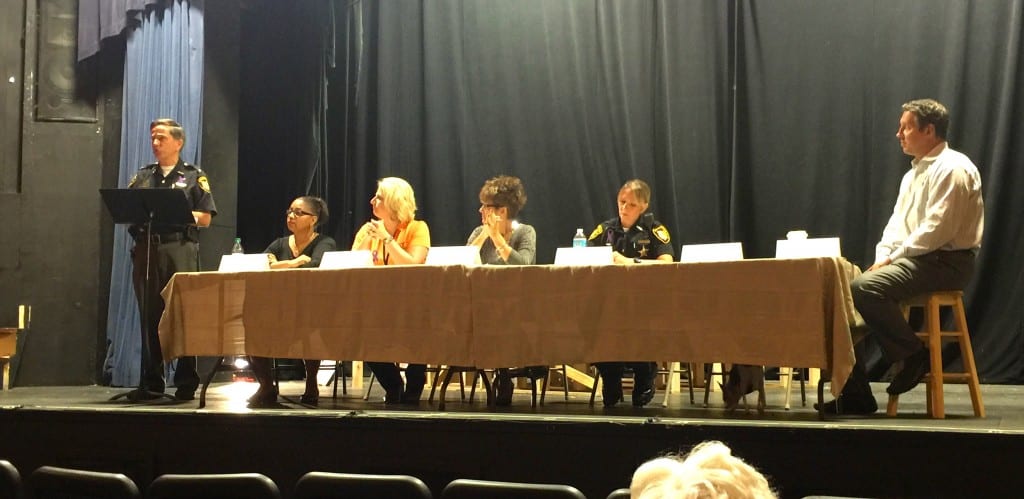
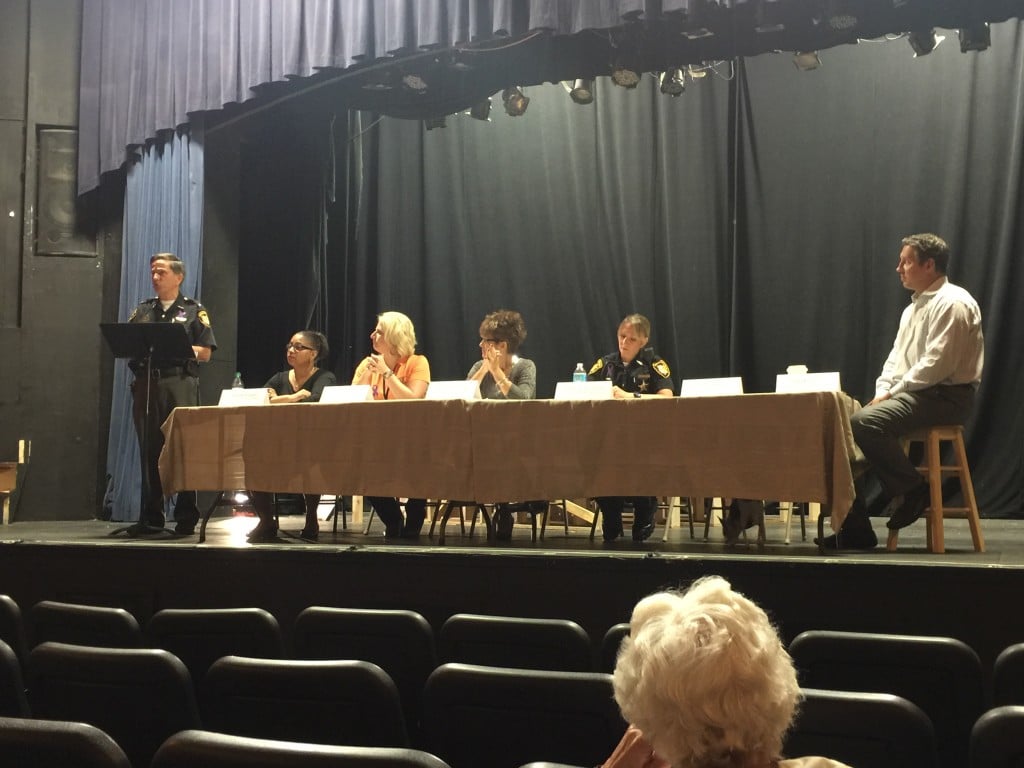
McClelland spoke last Thursday alongside deputy Robin Taylor, WomenSafe Executive Director Andrea Gutka, Chardon Municipal Court Judge Terri Stupica and Deborah Vaughn, constituent liaison for Ohio Attorney General Mike DeWine’s office.
The county sheriff’s office receives grant money under the Violence Against Women Act, which allows Taylor to primarily focus on investigations involving violent crimes against women and train deputies on investigations as well as their response to these crimes.
“It is important to train law enforcement on domestic violence cases,” Taylor said. “Abusers often attempt to distract and manipulate law enforcement who have responded to their home. I have been told many times, ‘She is mentally ill’ or ‘She stole my money,’ ‘She is cheating on me.’”
These cases are dynamic, Taylor said, adding they can turn deadly for the victim as well as the officer responding to the call, especially when the victim is leaving the relationship.
“Law enforcement officers are injured and killed every year responding to calls of domestic violence,” Taylor said.
The deputy also pointed out some misconceptions about domestic violence and its victims.
“We all have probably heard at one time in our lives off color humor involving domestic violence, like the television-born (phrase), ‘He was wearing a wife-beater shirt,’” Taylor said. “Or the misconception that domestic violence only occurs in trailer parks or that these cases are family issues they need to work out on their own. The reality is, not all abusers wear white tank tops, not all cases occur in the trailer parks and domestic violence is not a family issue. Domestic violence is a crime.”
She emphasized this is why training law enforcement and community outreach is important.
“The residents of Geauga County are sometimes the first responders to domestic violence,” Taylor said. “They may have a loved one who is a victim or a neighbor. And that victim might have reached out to them instead of calling the police. Our community needs this information so they can point victims in the direction for help.”
Many people ask the question, “Why does she stay?” Taylor noted.
“Or they blame the victim for staying or returning to their abuser. The reality is sometimes the victims stays or returns because simply, they have to,” the deputy said. “Many victims do not have the finances to leave. Many victims are not allowed to work or simply own a car. Some victims are elderly that are abused by their children or they suffer from mental illness or a disability. Some domestic violence victims are children and teens.”
She added she has worked with victims who do not even have access to a bank account or their abuser disabled their vehicles so they could not leave.
“Women have told me they would rather live with the abuser because they believe if they were to leave, the abuser will be alone with their children and possibly hurt their children during visitation,” Taylor said. “Some victims believe they can protect their children if they are there with them. Some victims are afraid to leave their pets or other animals out of fear their abuser will kill them or because the abuser has killed their pets in the past.
“Put yourself in the shoes of a victim and ask yourself these questions,” Taylor continued. “Can I just pack a suitcase of clothing and leave or just leave my home with the clothes on my back? How can I afford a divorce attorney when I do not work? How can I work if I do not have a car?”
Taylor said fortunately, victims in Geauga County have access to services, which means they have access to hope.
“I am grateful that when I have a victim of domestic violence … I can pick up the phone and call multiple agencies for assistance,” she said. “That includes WomenSafe, Job and Family Services, Ravenwood Mental Health Center and the Cleveland Rape Crisis Center. I am also thankful that in Geauga County, victims of domestic violence have access to excellent attorneys who are ready to help them.
“Today, I remember the victims of domestic violence who lost their lives. And I look forward to serving the community and helping more victims of domestic violence,” she concluded.
Protective, No Contact Orders Important
Stupica touched on the court process to obtain a protective order and/or no contact order.
“When domestic violence cases come in, I have bond conditions and I do, at the very least, a risk assessment. And that’s through our wonderful agencies in our county … and that tells me if the probability of reoccurrence is low or moderate, moderate to high, high,” she said. “And what that does is, until I get that risk assessment, I cannot allow contact between the parties for numerous reasons. A lot of times the next day, people are in love again and the woman wants to drop it so I don’t allow that. It also prohibits contact so that the defendant is not contacting (the alleged victim) saying, ‘You gotta drop this.’”
The protective order or no contact order extends beyond just the alleged abuser, Stupica pointed out.
“No one has challenged me on this yet, but if there is a protection order issued, it says, ‘You cannot have a third party do what you are prohibited to do.’ I actually take that to my no contact orders (as well),” she said.
Victims: Believe What You are Saying
Gutka said the first thing she tells advocates who are training victims of abuse is to emphasize to them to believe what they are saying and not second guess themselves.
“Because the average survivor leaves about seven times before they leave for good. WomenSafe fortunately and unfortunately is the last stop people make,” she said, referring to the county violence shelter and resource center that has been in service for 36 years. “They’ve already couch surfed.”
She said currently, their shelter has two males, 10 females and the rest are children.
“So it’s very, very busy, but that early intervention is key,” she said. “We have a great team at WomenSafe that pulls together to meet the client where they are. Help is available. It is free at WomenSafe. We’re a certified agency … so we can assure you when you refer someone to us, they are in good hands.”
Vaughn also spoke briefly about benefits victims of domestic violence may be eligible for through the victim’s compensation fund, which assists with things such as attorney fees during the court process to obtain a protective order, reimburse for mileage to and from the courthouse, or reimbursement for clothes that are ruined when receiving treatment in the hospital, gas money, moving expenses, food, etc.
She encouraged people to apply for compensation online at www.ago.state.ms.us under the “Victims” tab.
“We are the pros. We know what we can compensate for. We know what we can’t compensate for, so we don’t want anybody to say that you may not be eligible,” Vaughn said. “Have them call me, call somebody at our office and we can walk them through the whole process.”


