


GPD Naturalist, Land Owners Band Together to Help Species
Tiny, but mighty, a unique bird of prey needs help in Geauga County.
Tiny, but mighty, a unique bird of prey needs help in Geauga County.
Over the last half a century, the American kestrel’s population has plummeted by 50 percent.
These beneficial birds characteristically perch on electrical wire adjacent to their favorite habitat of expansive grasslands that harbor their main prey — insects, rodents, small birds and snakes.

“It is a drop that is puzzling scientists, but it is most likely due to more than one factor, which may include loss of habitat needed to sustain hunting, loss of nesting sites, pesticide build-up in their systems, predation by other hawk species and climate change, causing them to nest earlier than normal,” Geauga Park District Naturalist Tami Gingrich said.
As result of the decline in the bird’s population, Gingrich has increased efforts to give them a needed boost in Geauga County.
“Why? Because it occupies an important niche in its environment,” Gingrich said, who is leading the American Kestrel Nest Box Project along with some local landlords willing to accept nesting boxes given to them by the park. “Its appetite for rodents, insects, small birds (mainly House Sparrows) and snakes offers benefits to local farmers.”
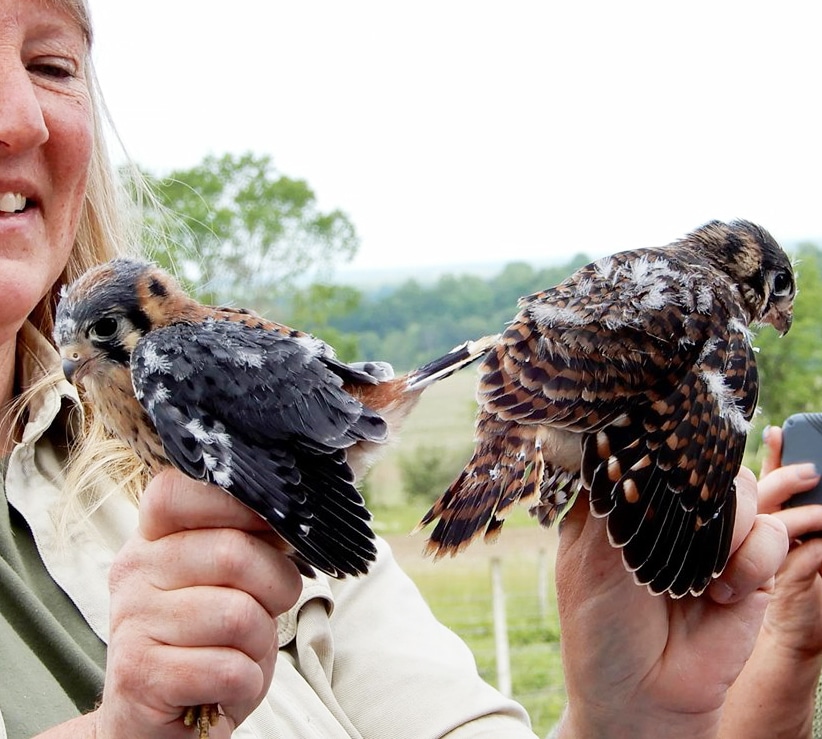
The American Kestrel is not a hawk, but rather, a falcon.
Standing around 10 inches tall, it is roughly the size and shape of a Mourning Dove.
According to The Cornell Lab, the birds are gracefully buoyant in flight and are small enough to get tossed around in the wind.
It took four years, but after Gingrich placed three American kestrel nest boxes within Geauga Park District, two pairs finally laid claim, nested and reared young in 2018.
This success story is just what Gingrich had been waiting for and in 2019, it led her to launch a much more ambitious project.
In Geauga County, prime kestrel habitat lies mainly in the rural southeastern quadrant and the majority of those landowners are Amish.
“Since many Amish have an interest in birds, it was a pleasure visiting with them and discussing the project,” Gingrich said.
The majority of those offered a box, accepted.
Harvey Byler Jr., of Burton, an avid birder, helped get the project off the ground.
He rode around with the naturalist, scrutinizing possible nesting habitats and locations and, in turn, helped pitch the project to the local landowners.
“I enjoy nature and birding a lot,” Byler said.
In addition, Henry Mullet, of Middlefield, took on the task of constructing the nest boxes to be used, Gingrich said.
Gingrich explained the project has many benefits — including giving Geauga Park District an opportunity to work closely with county residents and local businesses; giving residents a chance to see up close and learn, in depth, about a unique, beneficial species; and giving the American kestrel a chance to regain a foothold in Geauga County.
In selecting a location for a box, Gingrich’s first priority was looking for the actual birds themselves.
“I live in southeastern Geauga County, so have seen several pairs of kestrels over the years in that area and knew where to start my search for potential box locations,” Gingrich said.
Her second priority, if no birds were present, was to look for the perfect habitat. Large expanses of grassland with scattered trees are preferred by kestrels, so landowners who met this type of land criteria were approached and offered a box.
Out of 11 boxes installed, seven were located on Amish farms and two of them were placed in Geauga Park District’s Swine Creek Reservation, Gingrich said.
The final two boxes were placed where known pairs of kestrels were hanging out, she said.
Gingrich said of the busiest intersections in Middlefield, state routes 528 and 87 has had a pair of kestrels perching on the wires and hunting the fallow fields for years.
“It’s the place to go for a sure look at the species,” Gingrich said.
Gold Key Processing on the northwest corner quickly invested in the project.
“Within days, the kestrel pair was seen perched on top, and currently, they are feeding four youngsters,” Gingrich said.
Another pair was seen perched on wires along Nash Road near Laleure Winery, where owner Rich Hill, who has a healthy interest in birds, had the box up within a week.
“They are such a beautiful falcon,” Hill said.
Gingrich said, sure enough, the kestrels moved in within a matter of days.
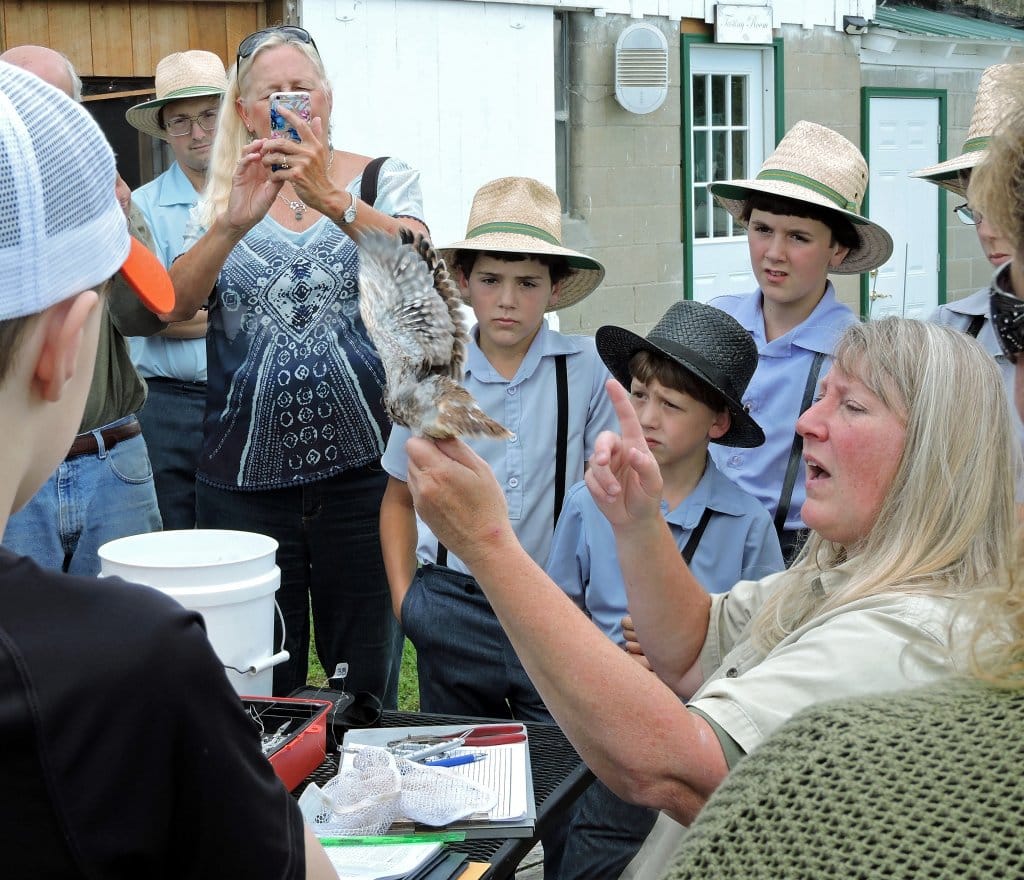
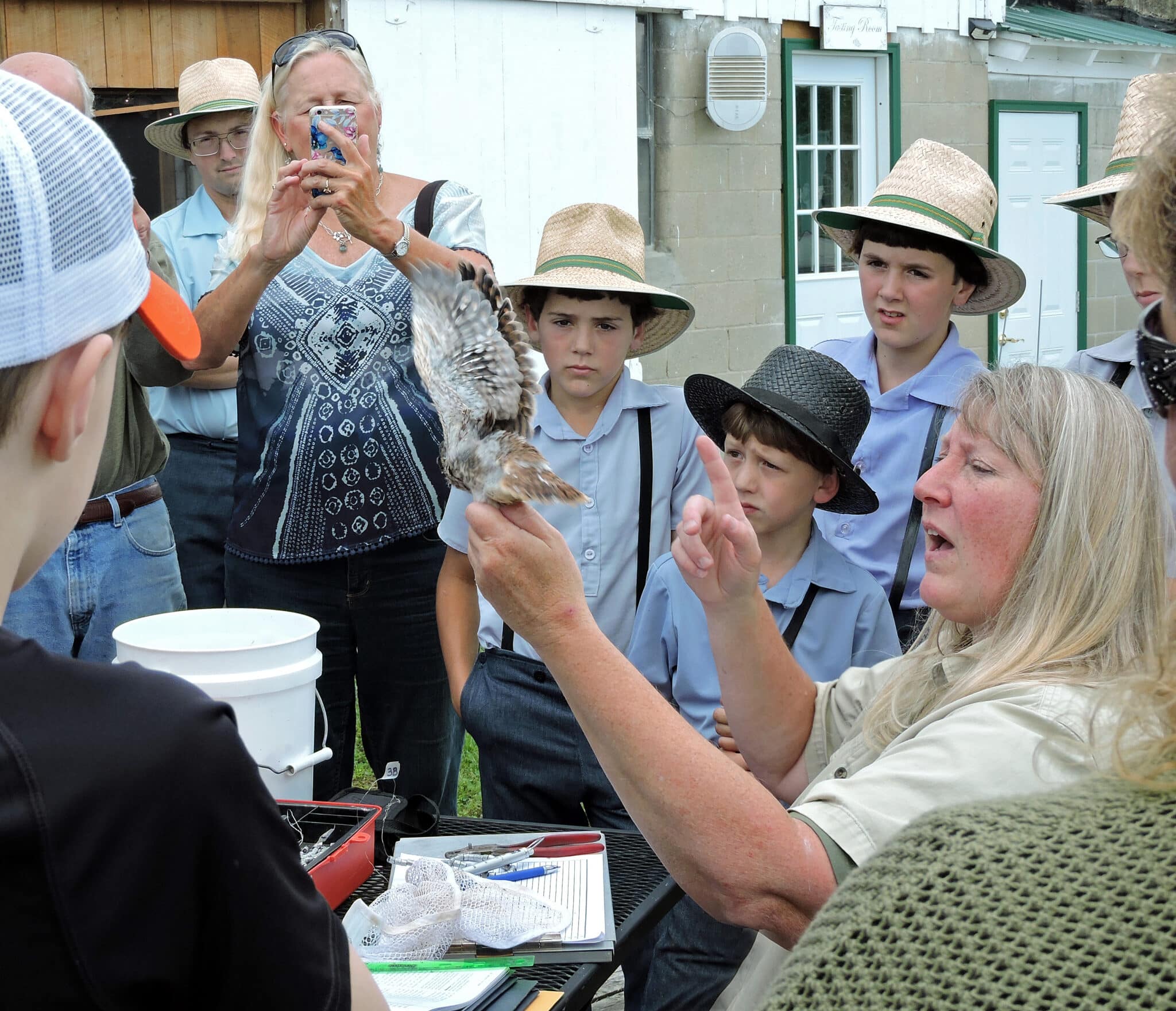
As a way to thank new kestrel landlords and to further their knowledge about the species, Gingrich offered mini banding programs when the babies were old enough, at around 23 days of age.
Gingrich has been a licensed bird bander for 30 years.
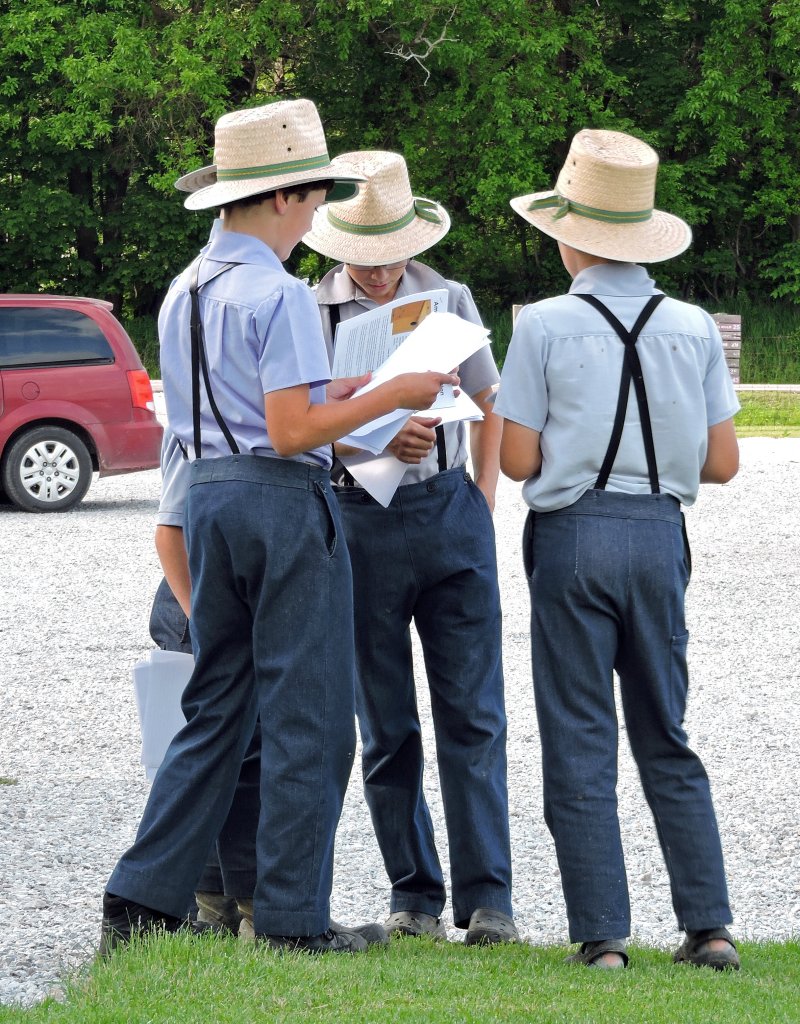
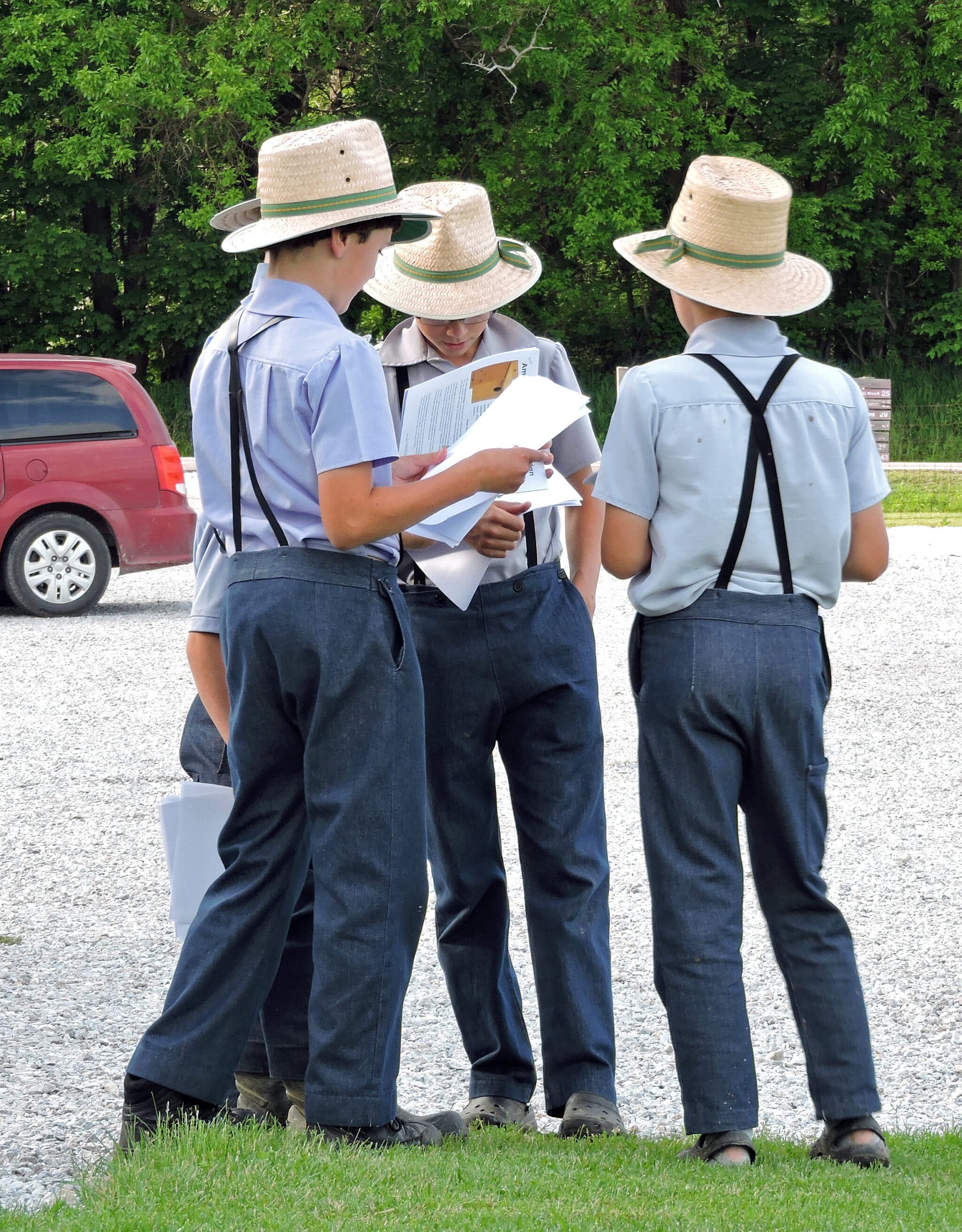
The first two bandings, one on Amish land and the second at Swine Creek Reservation, were held exclusively for the seven Amish landowners who installed boxes along with any of their interested neighbors, friends or family.
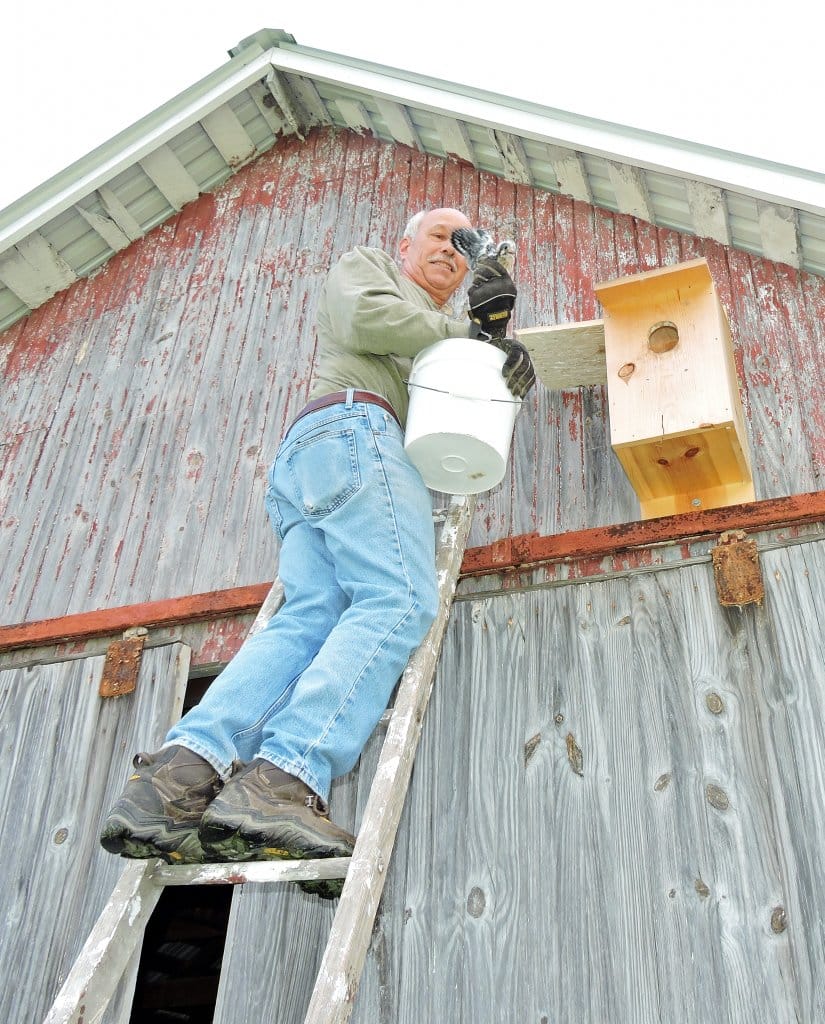
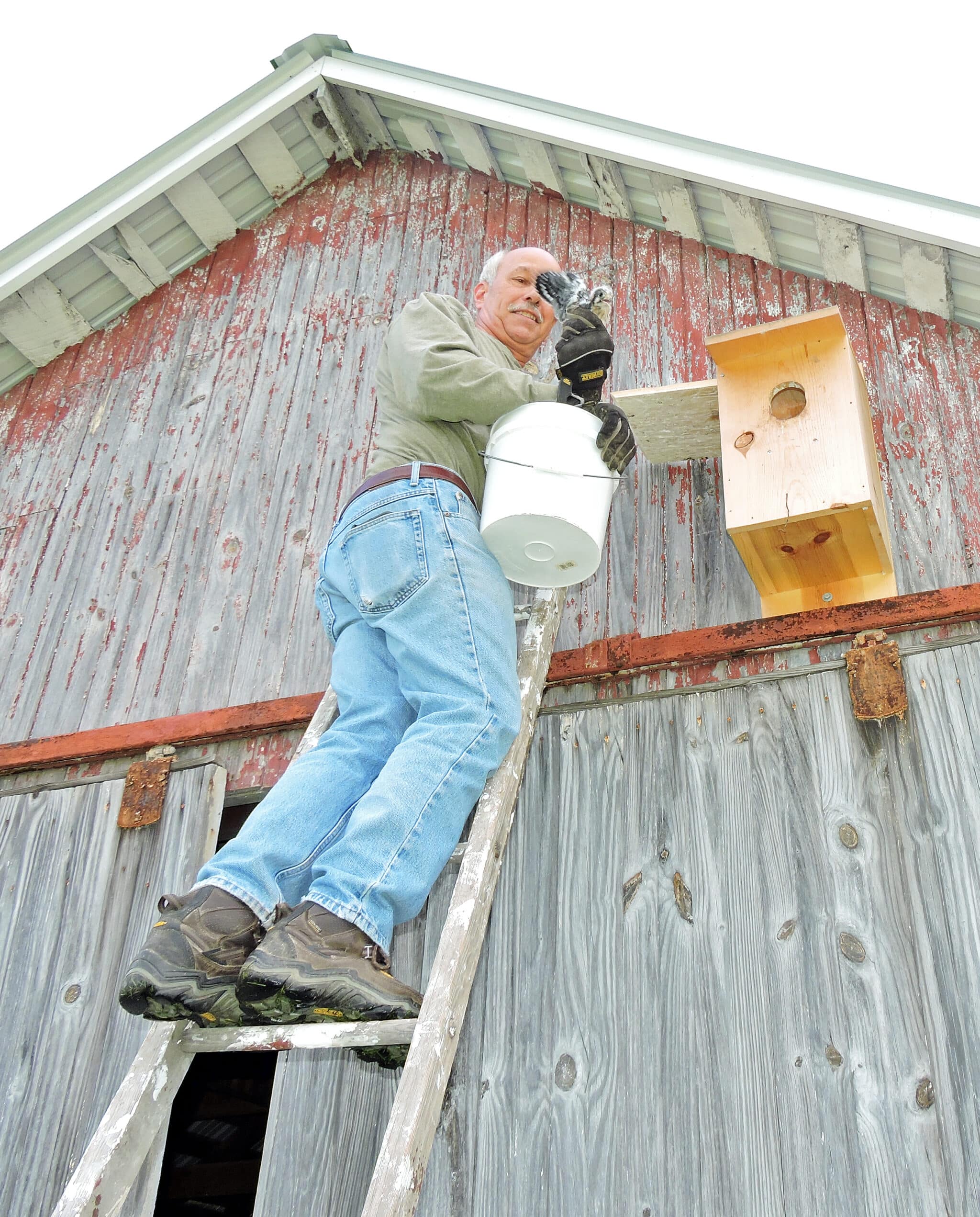
Laleure Winery posted the third banding event on their Facebook page and around 40 people came out and sipped wine while viewing the chicks as they were lowered down from the box in a bucket, banded, measured, sexed, weighed and photographed before being safely returned.
“I was the lucky one to take the chicks out of the nest and into a bucket for Tami to band,” Hill said. “They were returned to the nest and the parents continued to feed them. June 12, we did still see a chick peeking out of the box. Seems they are getting ready to fly.”
A final banding session is planned exclusively for the employees of Gold Key Processing.
Gingrich said for its first year, this project was a huge success.
“To have nearly 40 percent of the boxes utilized on the first try is amazing,” Gingrich said.
Should this project be expanded in 2020, Geauga Park District would like to know of anyone who might have the perfect kestrel habitat for a box. Plans to build your own box are also available. Contact Gingrich at tgingrich@geaugaparkdistrict.orgfor more information.


