


The school is going to be terraced and built into the side of the hill. We achieved a design that is very exciting. This is probably one of the most complex 3-D school buildings ever done. – Eric Risinger
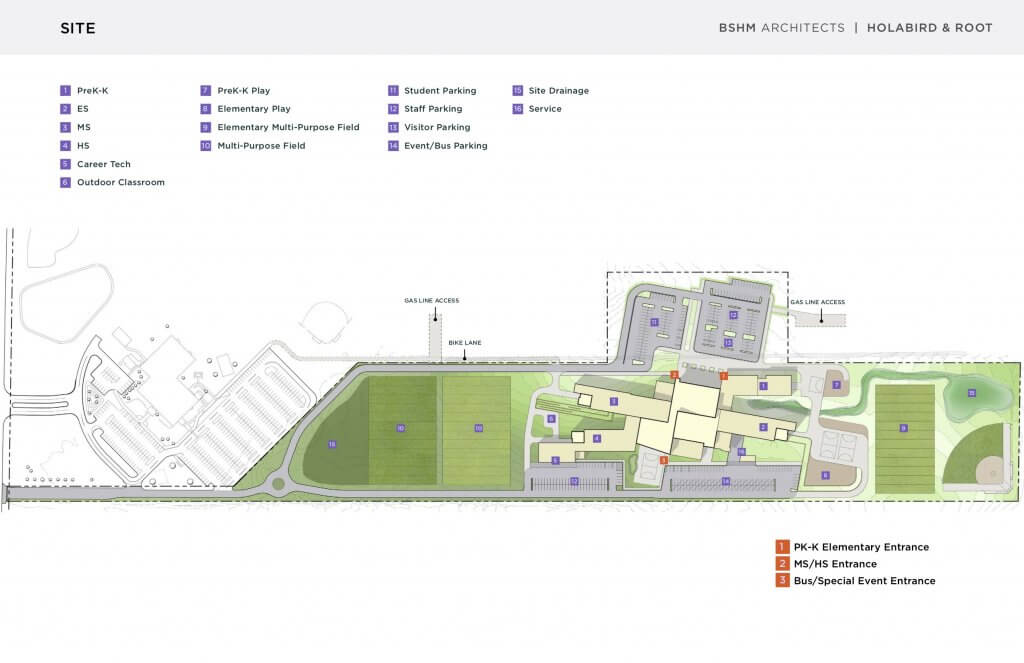

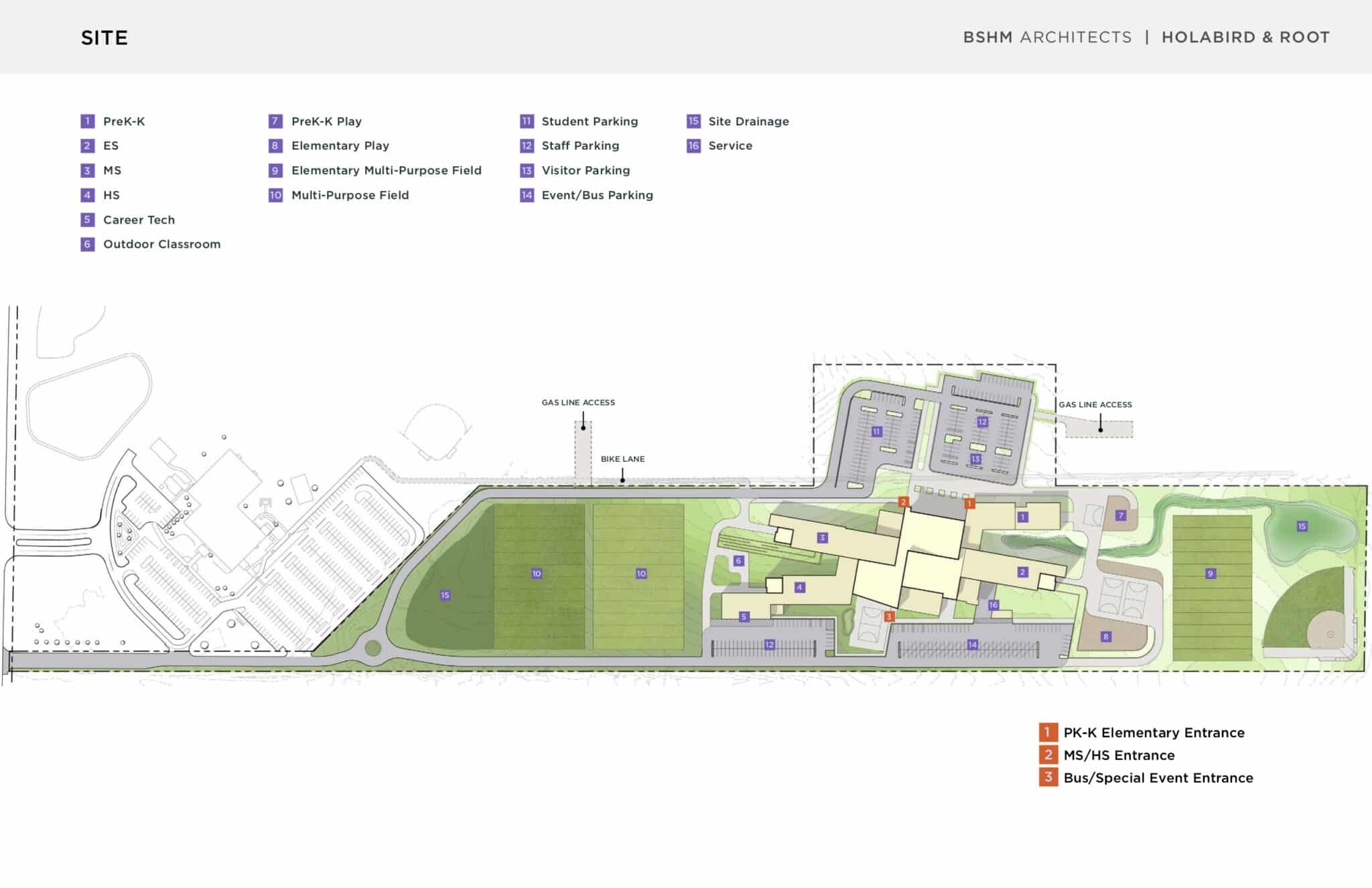

All eyes were glued to the screen Feb. 11 as the design of the much-discussed new all-grade Berkshire school were revealed to the public for the first time.
Rusty Walker, principal with the architectural firm Holabird & Root, LLC, of Chicago, discussed in detail the plan from roof to basement, athletic fields, transportation and security during the Berkshire Schools Board of Education meeting.
In particular, he talked about how the contour of the 25-acre section of the Kent State University – Geauga property, where the school will be built, slopes and how it contributes to the layout of the structure.
“I call this building a ‘squished X’,” he told a crowd of about 40 people. “We want the school to have a great, strong presence on the site.”
The school, slated to open in August 2021, will be situated east of the KSU – Geauga buildings, with athletic fields on either side of it, Walker said.
“We want you to come in by Kent State into a campus of kids participating in activities,” he said.
The grade of the acreage figured into the design.
“Your site, believe it or not, is 20 feet different from west to east. It’s actually a big hill. We incorporated the hill into the design of the building,” Walker said. “Because we have a squished site for your building … we get a really neat design feature. We have created courtyards between the wings.”

Architect Eric Risinger said building on the slope has advantages.
“The school is going to be terraced and built into the side of the hill,” he said, adding the architects pulled the building apart and put it back together during the design phase to account for the grade.
“We achieved a design that is very exciting,” Risinger said.
Walker called the center of the X the heart of the building, which would house the auditorium, three gymnasiums, the dining area and all administration offices.
The four, two-story wings would be dedicated to high school, middle school, elementary school and kindergarten/pre-kindergarten classes. Activity areas would be included at the far ends of the wings. Large windows would provide maximum sunlight.
A basement under the center would be used for locker rooms, storage and utilities. The first and second floors of the wings have flexible classrooms and labs to allow for the project-based learning being included in the Berkshire curriculum.
Berkshire Superintendent John Stoddard said the plan includes five classrooms per level per wing.
“When you remove the walls, you create bigger spaces for collaboration,” he said, adding the corridors could be used for small groups, as well.
“It’s all teachable space,” he said.
Risinger said the new school in Champion was designed along the same lines and their halls are used for project-based learning, but Berkshire would not have the space for that, with full-length lockers planned for the hallways.
In the mornings, buses would enter the campus from the driveway to the south of the KSU entry and release students into the large dining area from which the students would disperse to their own wings. Staff and teachers would enter the school on the north side of the building.

In response to a question about security, Stoddard said the building is designed so the wings can be cut off from the center.
Large double metal doors can be shut and locked from the secretary’s desk and occupants would not have to go through the middle to get out, he said.
“This is probably one of the most complex 3-D school buildings ever done,” Risinger said, adding it has been designed to encourage community involvement as well as project-based learning.
Other details included two elevators, with most occupants using stairs to the basement and second floor, gently-sloping roofs, five science labs, outside learning spaces and plenty of parking.
Risinger said the Ohio Facilities Construction Commission only allows for so many parking places, but he expects there would be about 300 spaces around the campus.
Berkshire Schools and Partners in Rural Innovative Models of Education worked together on a 3.65-mill bond issue the district voters passed in May 2018 to raise $28 million — the district’s 45 percent of the estimated cost of construction. The OFCC is covering 55 percent of the project due to legislation passed to help districts that consolidate. Berkshire and Ledgemont school districts merged through a transfer of territory several years ago.
The multi-story performance gym would hold up to 1,200 people and be right in front of people as they enter the building, Walker said, adding the auditorium would seat 350. When the dining area is not in use, the dining area and auditorium could be combined.
“In the center of the building are all the shared things,” he said. “It is very well thought-out and planned. It’s a smart way to have spent your money.”
In other business, the school board voted unanimously to appoint Jody Miller to fill the fifth board position. Robin Stanley resigned last month for personal reasons. Miller was chairwoman of the Berkshire Levy Committee, according to her resume.


