


Chances are if you lived in Geauga County, Aug. 6 and the days that followed were less stressful if not everything was left to chance.
Chances are if you lived in Geauga County, Aug. 6 and the days that followed were less stressful if not everything was left to chance.
Five EF-1 tornadoes and widespread straight-line wind damage swept throughout Northeast Ohio, causing lengthy power outages and downed trees throughout the area.
For local safety forces, the storm served as a powerful reminder of the importance of being prepared.
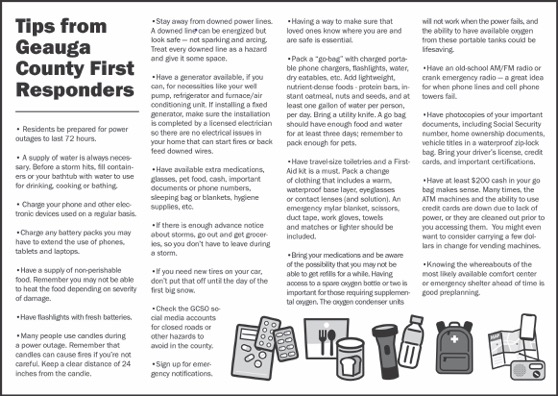
“With September being Emergency Preparedness Month, we would like to highlight that last month’s storm was a good example of why having an emergency preparedness kit and a plan is a great idea,” said Chardon Fire Department Capt. John Blauch in a recent interview.
Blauch has been involved with fire and emergency services for 41 years, helping in disaster planning for amusement parks, universities, high schools and special events such as large concerts, festivals and visits from dignitaries.
As a public safety instructor at Auburn Career Center, he teaches students about disaster and terrorism response.
After 9/11, several major courses related to the National Incident Management System were developed, which all fire and EMS personnel are required to take for certification.
“Tornadoes and other natural disasters do happen here,” Blauch said. “For us, the most common disaster is a sustained power outage due to a summer storm or a winter snowstorm.”
On the front line of any natural, man-made and technological disaster is the Department of Emergency Services of Geauga County. The integrated emergency management system coordinates emergency response organizations, support services and the private sector to help save lives and protect property.

ESGC Director Roger Peterson said by Aug. 7, between 63-68% of FirstEnergy customers in Geauga County were without power.
ESGC works with local government agencies, county government agencies, police, fire and private agencies in coordinating the county’s resources in events such as these, he said.
The Geauga County Sheriff’s Office dispatch center monitors weather alerts and provides advance notice to area-specific events, notifying first responders.
“Even though our role may be specific, our deputies are out there 24 hours a day, seven days a week,” GCSO Chief Deputy Thomas Rowan said. “In fact, during the last storm, we had deputies using chainsaws to help clear roads. Our guys did an amazing job to help open roads up for ambulances and fire apparatus to get to where they need to go.”
Chester Township got hit the hardest with a tornado.
“We had approximately 50 calls for service, mostly wires and trees down,” Chester Township Fire Chief William Shaw said. “We did have some EMS calls, as well. Thankfully, most of the calls were not severe. The storm came through around approximately 5:30 p.m. and we began receiving calls soon after. We delayed response to calls until conditions were safe for responders.”
In the following days, they continued to receive calls for wires and trees down and also noticed an increase in the number of open burning complaints.
“Fire personnel walked some of the hardest hit areas to check on residents and assess if we could assist them,” Shaw said. “We did find the residents of Chester Township are very resilient and self-reliant in trying circumstances.
Support Networks Are Key
“During times of disaster, you may not be able to sustain all your needs,” Peterson said.
“This is truer the longer the emergency lasts. This is why having a great support network is vital to your success.”
He recommended people who do not have access to certain resources create a list of contacts who do offer those resources.
“This is something that everyone can do that doesn’t require lots of money,” Peterson said. “You should also have a few backups just in case your first sources fall through.”
Look to family, friends, neighbors and community partners to make up a network, Peterson said.
“The larger your network, the better chance you have to successfully endure an emergency situation,” he said. “Remember, you can be a big help to others, as well, being in their network. This is probably the most important thing people can do, especially senior citizens.”
By Aug. 9, only 32% of customers in Geauga were without power.
“So, the utility did a good job of restoring power to about 36% of Geauga County customers in about three days,” Peterson said. “For how widespread the issue was, there was a fairly quick response in restoring 50% of the lost power.”
It took the next week to restore power to the remaining customers and took longer to restore power to homes where lines were ripped from houses.
“We saw and heard of many instances where neighbors helped neighbors and strangers helped strangers during the last storm,” Shaw said. “The community really pulled together to help each other, which we don’t see often enough now.”

Lessons Learned
Peterson recounted several lessons learned from the August storm, particularly addressing misinformation and confusion on resources.
“Water was a big concern for lots of people. This was for drinking, as well as other uses like flushing toilets or bathing,” he said. “Even though this was a big concern for many, there was water still available at most stores for purchase.”
Disaster assistance was a huge point of misunderstanding for most people, Peterson recalled.
“There were lots of misconceptions. First, it should be known that any potential financial assistance that may or may not be available is not going to be immediate,” he said. “In reality, if there is financial assistance, it may take weeks or months for something to materialize. Second, financial assistance is largely a reimbursement, meaning that people will need to upfront funds themselves regardless.
“Another major point regarding assistance is that disaster assistance has to do with damage to homes — not to your lawn,” Peterson added. “The county needs to meet a threshold of uninsured damages to dwellings before being able to apply for assistance, and even then, there is no guarantee of reimbursement.”
In the case of last month’s storm, the county had major storm damage to roadways and properties, but not a lot of damage to homes, he said.
Private property cleanup was also a challenge for many, Peterson said.
“Many people had lots of downed trees in their yards that created messes that were too big for them to handle. Municipality departments were focused on clearing roadways and helping the utility companies access power lines,” he said. “These departments cannot clear private properties. This is the biggest gap in government disaster aid.”
However, groups like Crisis Cleanup and other volunteer groups, can help, he said, adding Ready.gov is also a good resource to learn about emergency supply kits.


ROSE NEMUNAITIS/KMG
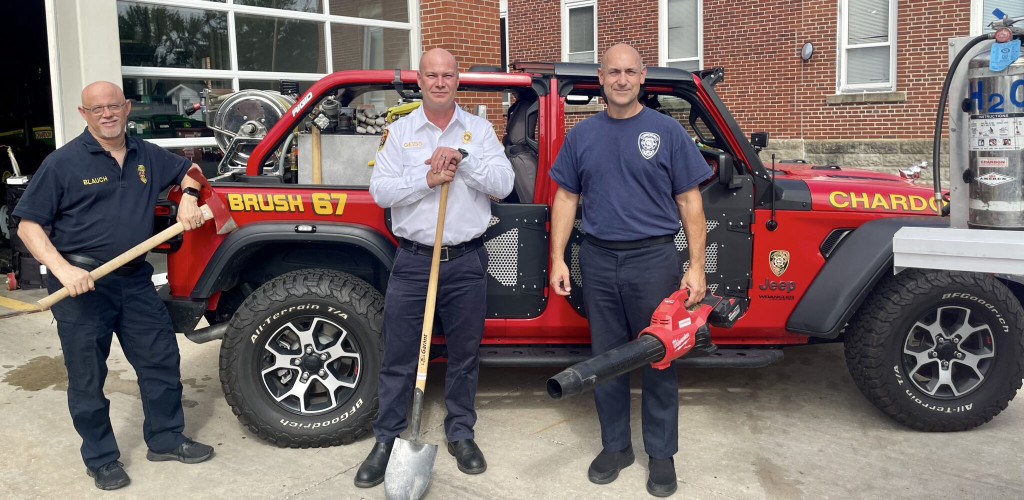
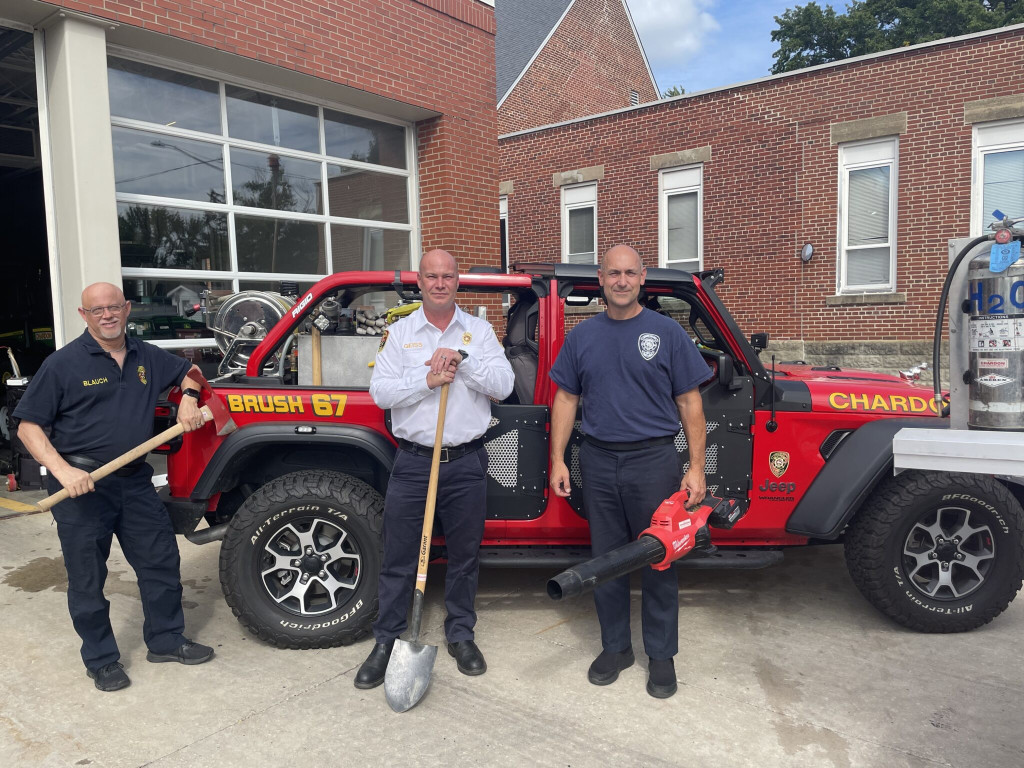
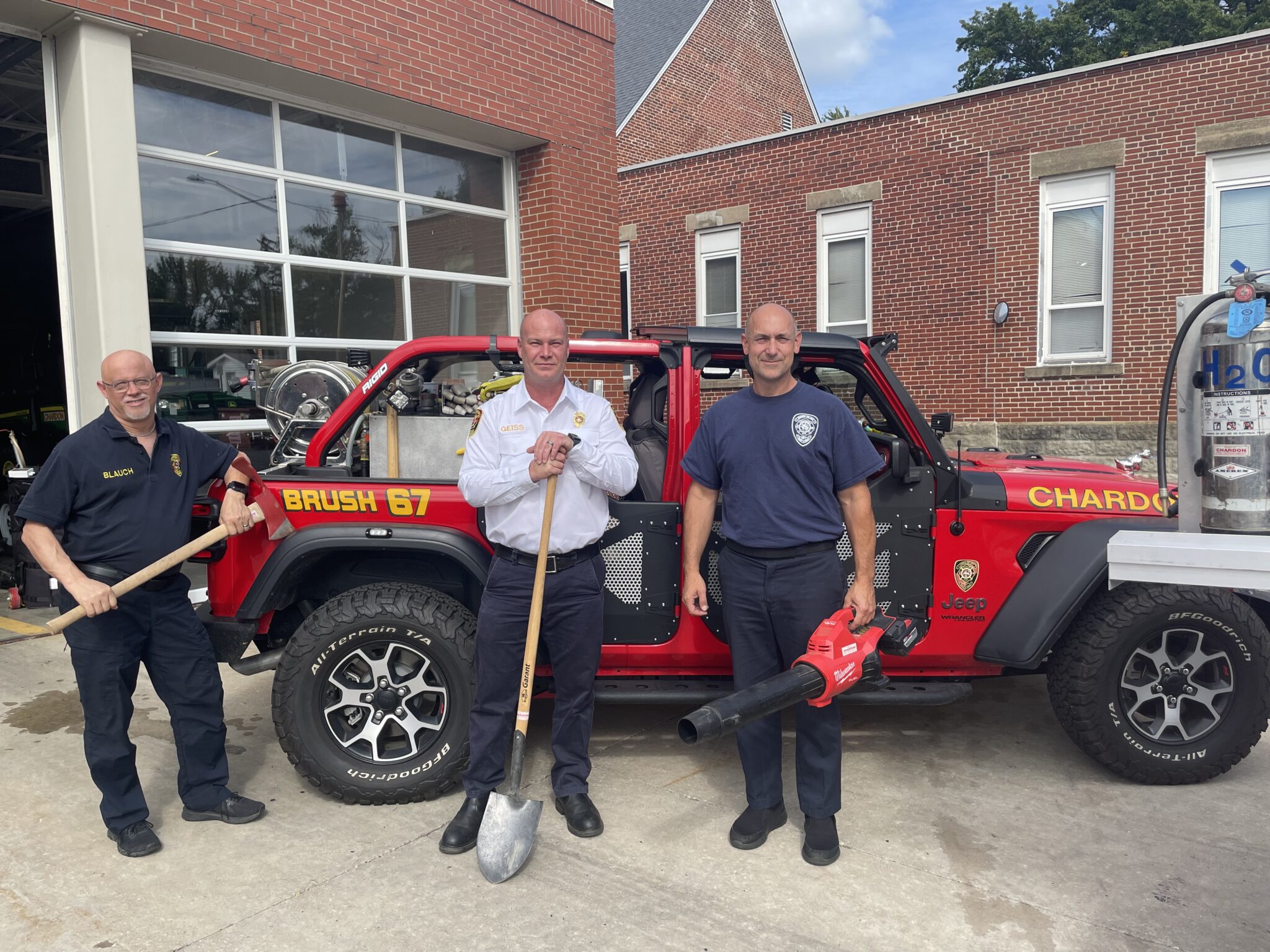
Chardon Fire Department joins an elaborate system of Geauga County first-responders and agencies ready to go in preparation for an emergency.
1501 – Left to right: Chardon Fire Captain John Blauch, Chardon Fire Chief Justin Geiss, Clayton Kovats – head of Geauga County dive team.
1512, 1515 – Chardon Fire Chief Justin Geiss, Clayton Kovats, John Blauch
1499, 1501 – John Blauch, Justin Geiss, Justin Kovats


