


Bergansky, Flaiz Quarrel Over Kenston Budget Comments
Kenston Schools Board Education member Dennis Bergansky recently called Geauga County Prosecutor and Budget Commission member Jim Flaiz’s comments about the district's permanent improvement projects disappointing.
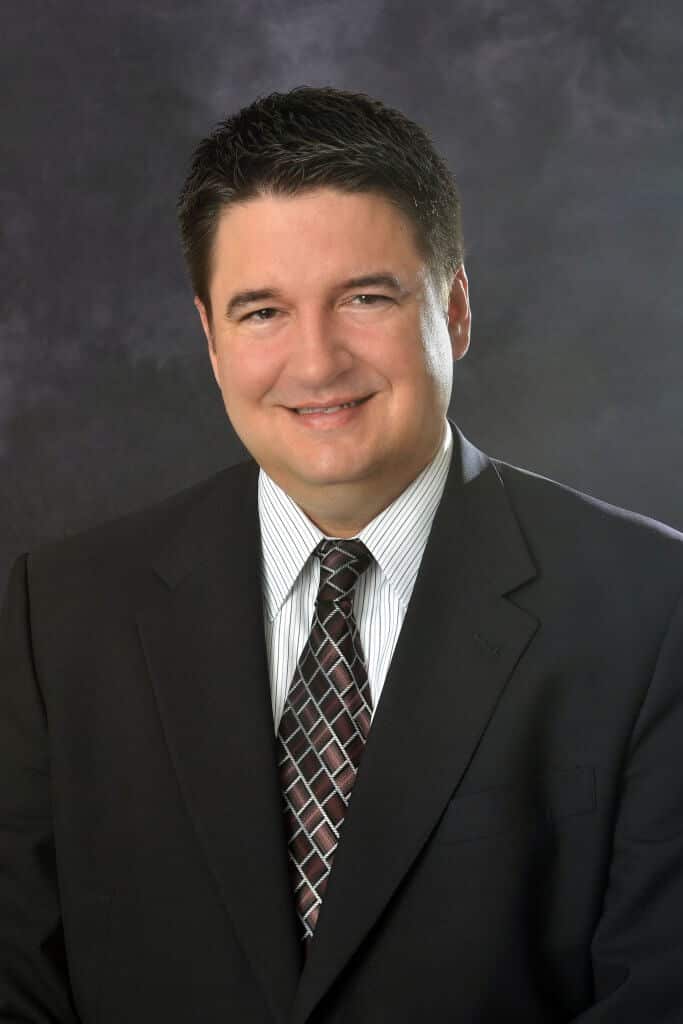
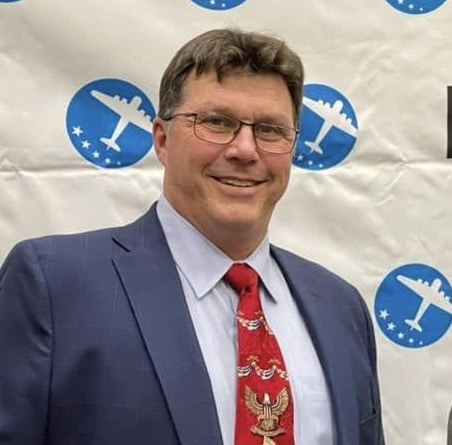
Kenston Schools Board Education member Dennis Bergansky recently called Geauga County Prosecutor and Budget Commission member Jim Flaiz’s comments about the district’s permanent improvement projects disappointing.
“(He) basically accused us of spending money on capital improvements. I’m getting phone calls from people going, ‘What are you guys wasting our money on? the prosecutor said this in the paper.’ I was very disappointed,” Bergansky told school board members during their March 18 meeting.
Superintendent Steve Sayers, Treasurer Seth Cales and board President Tom Manning fielded several questions from the budget commission, comprising Geauga County Auditor Chuck Walder, Flaiz and Treasurer Chris Hitchcock, about the district’s permanent improvement fund Feb. 27.
Walder asked Cales about a $1.2 million cash transfer from the general fund to the PI fund not being included in the district’s budget despite showing a $1.16 million increase in inside millage from a recent property tax reappraisal.
“A PI levy failed and you need $1.2 million and some change in a PI fund,” Walder said. “Why isn’t there a transfer in the general fund of that increase in inside millage into the PI fund to basically satisfy what the taxpayers voted no on?”
Geauga County voters rejected an additional five-year, 1.35-mill permanent improvement levy last November that would have generated an estimated $1,265,000 per year and would have cost homeowners $47 per year per $100,000 property valuation, according to the Geauga County Auditor’s Office.
Flaiz said during the meeting he looked forward to seeing if Kenston dumps over $1 million into permanent improvements next year, but raised caution regarding the district’s cash carryover.

“You have got to start thinking about what you are doing with these permanent improvement projects. Because that’s what’s driving your increases and your deficit,” Flaiz said. “Your expenses seem to be pretty flat, so if the board is making a decision of, ‘Hey, we’ve got to address these capital projects,’ that’s fine. But, that’s what is going to eat away at your cash carryover and if you eat away at it for a couple more years, you are going to get into a difficult situation.”
Bergansky explained Flaiz’s comments make the district look like they are spending money on capital improvements they don’t need.
“Since I have been on the board, we haven’t done anything but repairs and necessary maintenance. For him to make that comment was a little reckless on his part,” Bergansky said.
He also addressed Flaiz’s comment about the district’s expenses being flat.
“If you look at our raises every year, that’s not flat when it increases by $750,000 to $800,000 per year. I don’t look at that as flat, like we’re not spending anything there and we’re wasting money on capital improvements,” he said. “I’m stunned that came out of his mouth.”
Flaiz expressed disappointment April 1 regarding Bergansky’s sentiments.
“While some school board members did make the time to attend our budget commission hearing, Mr. Bergansky did not bother to attend. Instead, he decided to call one of my comments, taken out of context, “reckless.” When I review budgets, I look at facts,” Flaiz said.
He highlighted the district’s general fund expenses, which the district reported to the budget commission were $40,650,127 in 2020-2021; $40,827,723 in 2021-2022; and $40,396,521 in 2022-2023.
“The school treasurer (Cales) commented that operating expenses were rising. I pointed out that they have been flat,” Flaiz said. “We were then told that the $1 million plus inside millage windfall was being spent on capital expenses. I never suggested that this was a waste of money. I would suggest that Mr. Bergansky actually look at the budget and invest time in attending a budget commission meeting before making comments based upon what he hears second hand.”


