Berkshire’s Makerspace Productive, Evolving
When Berkshire Schools Superintendent John Stoddard proposed adding a makerspace while planning the new school a few years ago, it sounded like a cross between the woodshop of days gone by and a high-tech art room.
When Berkshire Schools Superintendent John Stoddard proposed adding a makerspace while planning the new school a few years ago, it sounded like a cross between the woodshop of days gone by and a high-tech art room.
The concept has evolved exponentially and captured the imagination of teachers, staff and administrators at all grade levels.
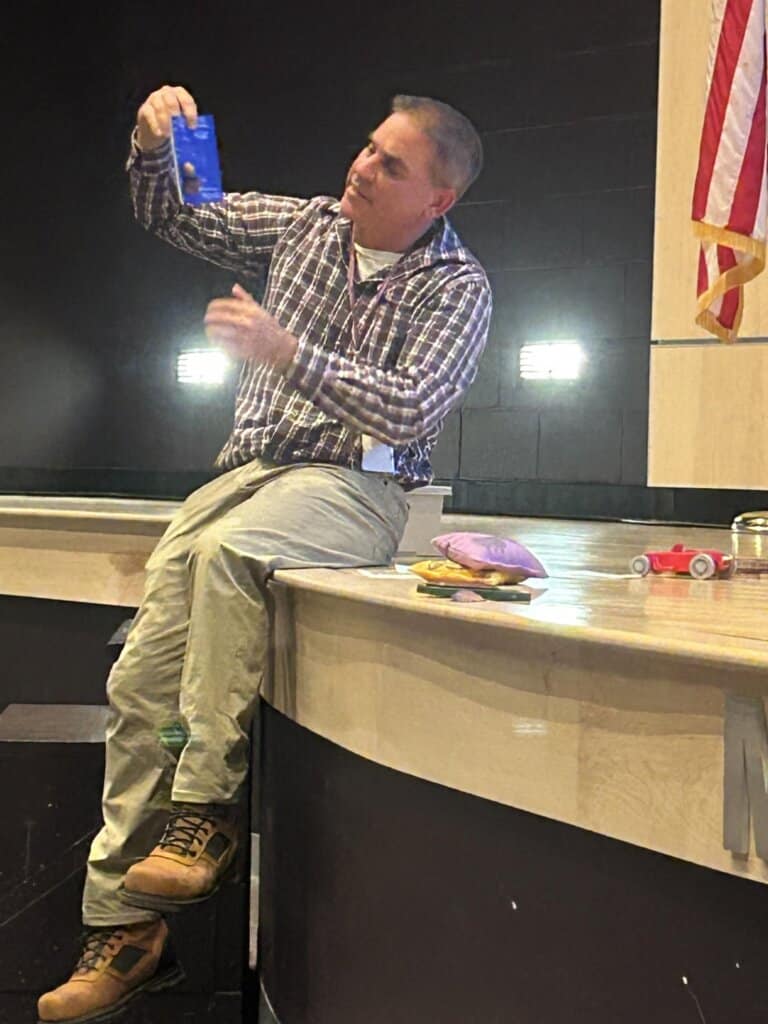
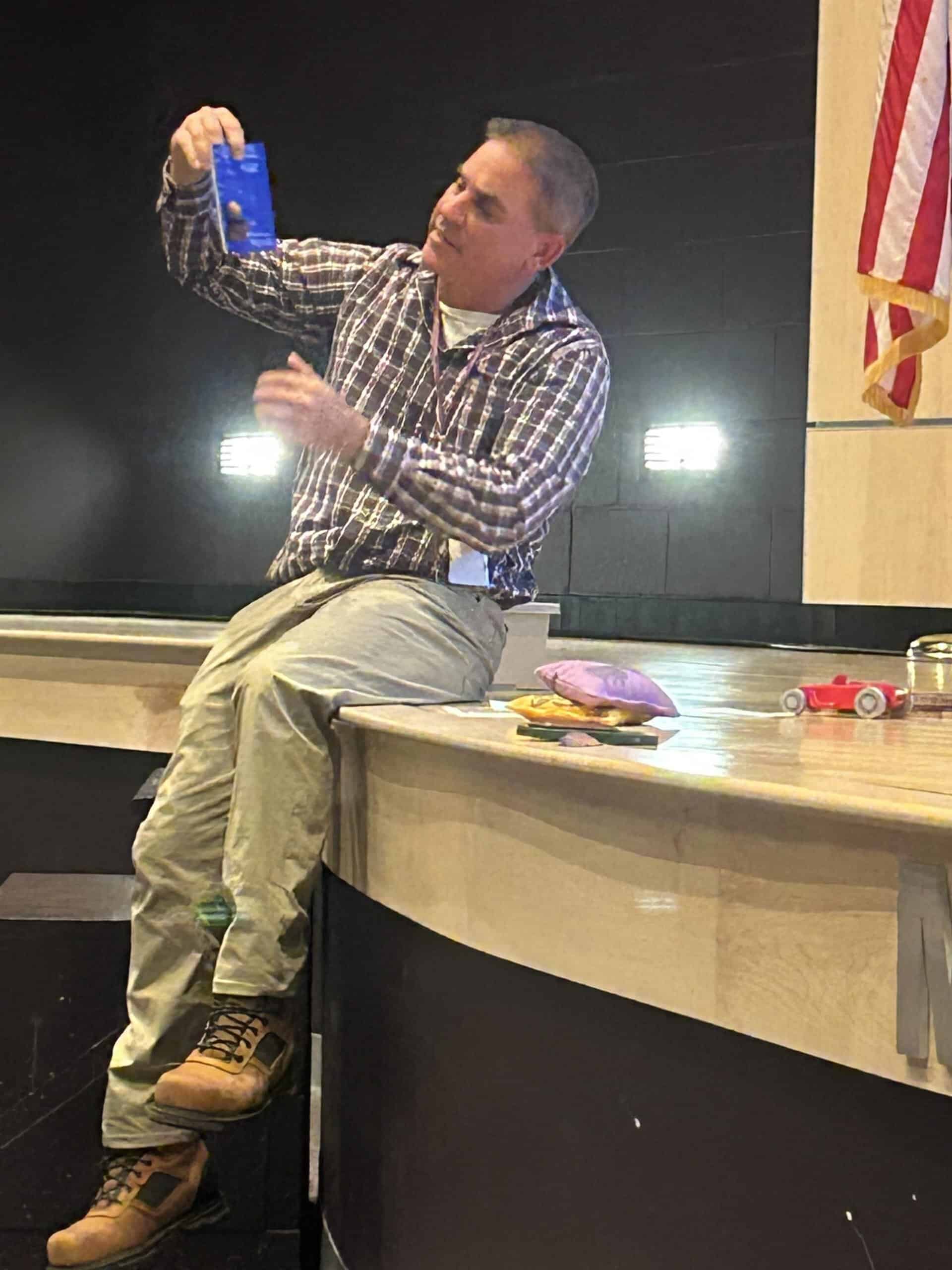
Perched on the corner of the stage in the all-grade school building, Christopher Kostiha and several of his middle school students presented hard evidence to Berkshire Schools Board of Education at their Sept. 1 meeting that the whole community has benefitted from access to the equipment in the space — which opened last fall.
“It is all-inclusive, from Badger Lab and Auburn (Career Center) students to our Kent State (University) partners and, in a short time, the space has grown to include a plethora of additional users and partners,” Kostiha said.
Middle school students learn how to use 3D printers, vinyl printers, computer numerical control machines, laser engravers, and a variety of hand tools, power tools, saws, drills, chemicals, adhesives, drones, audio/visual material, builder consumables, computers and software during their time in the makerspace, Kostiha said.
Designed as a support clinic for students in kindergarten through grade 12 for the district’s project-based learning assignments, the makerspace provides a launching pad for independent, inventive minds to explore and create all kinds of items, he said.
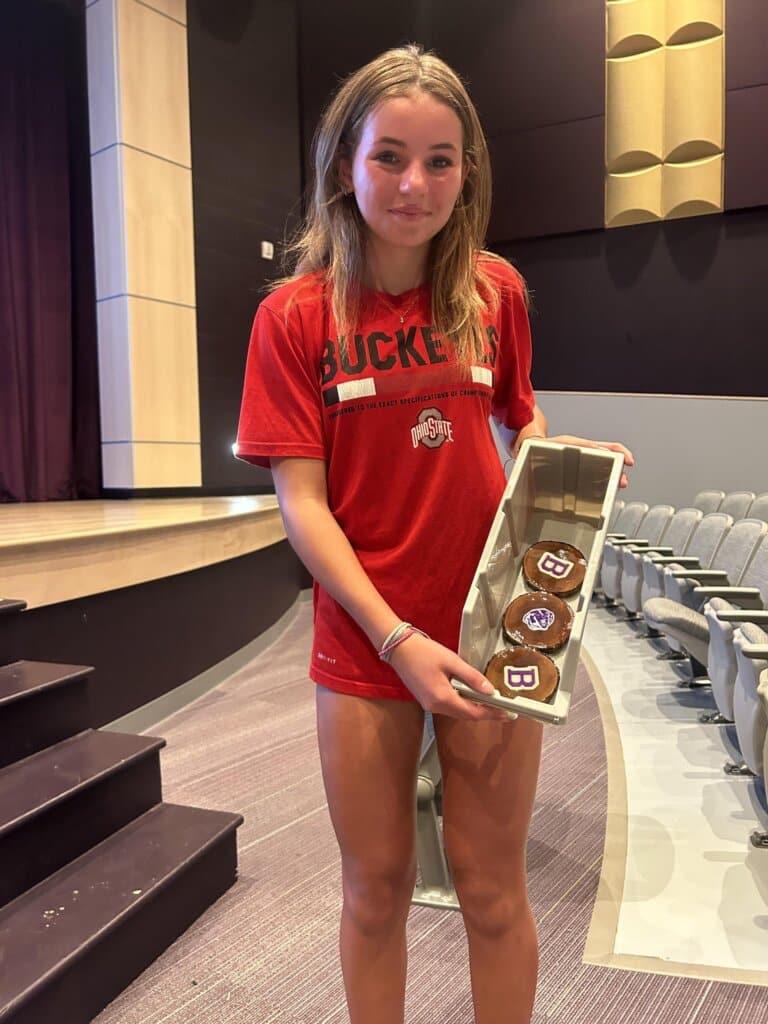
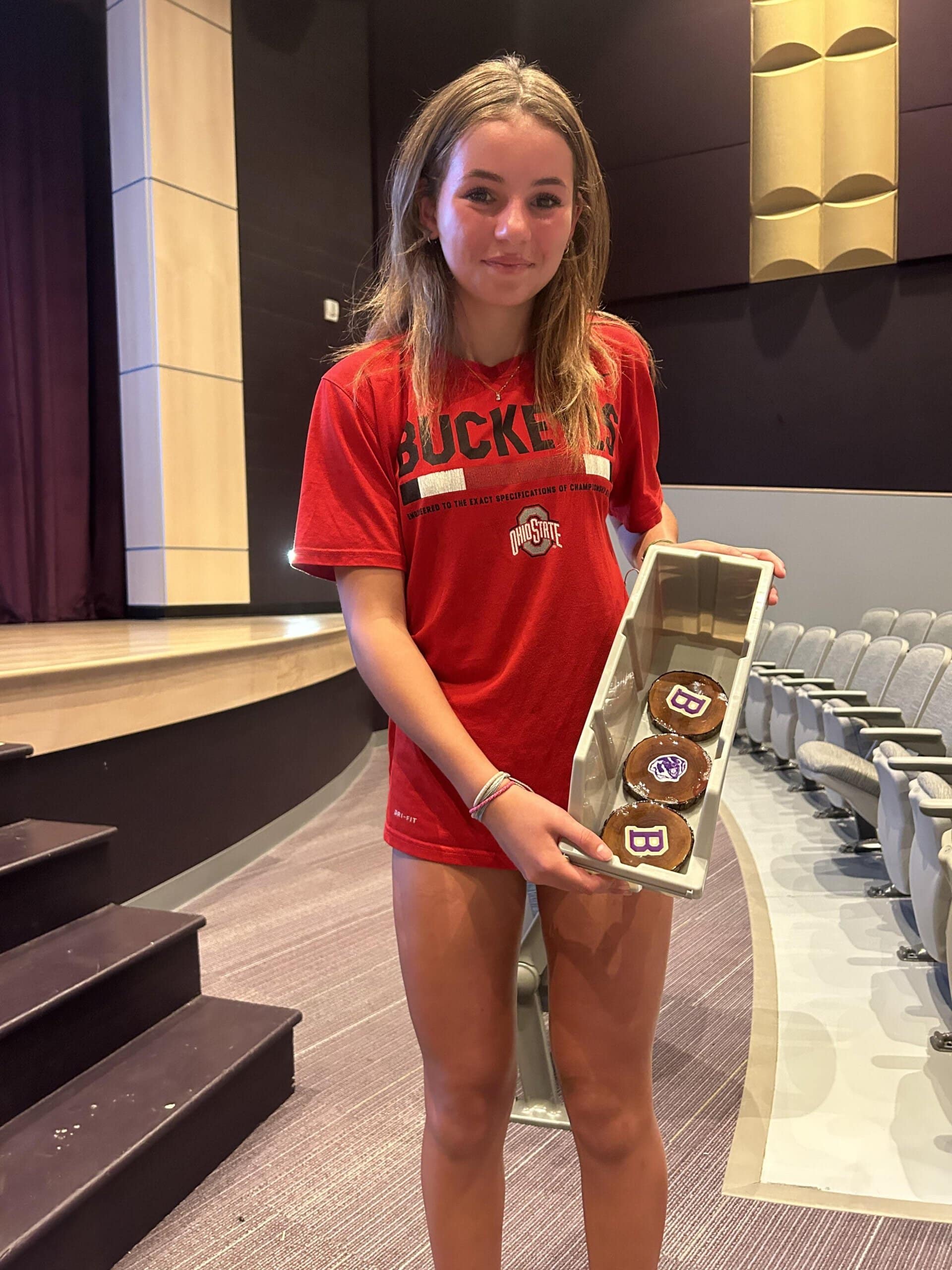
“We try to focus on things with a functional value,” Kostiha said, including items that can be sold at the Badger Spirit Shop.
Key chains, hall passes and colorful cornhole boards are some examples he showed the board. Molded plastic toy vehicles, a time capsule and a bubblegum dispenser were also pictured in a handout.
“Every item that comes out of the makerspace is stamped BMS,” he said.

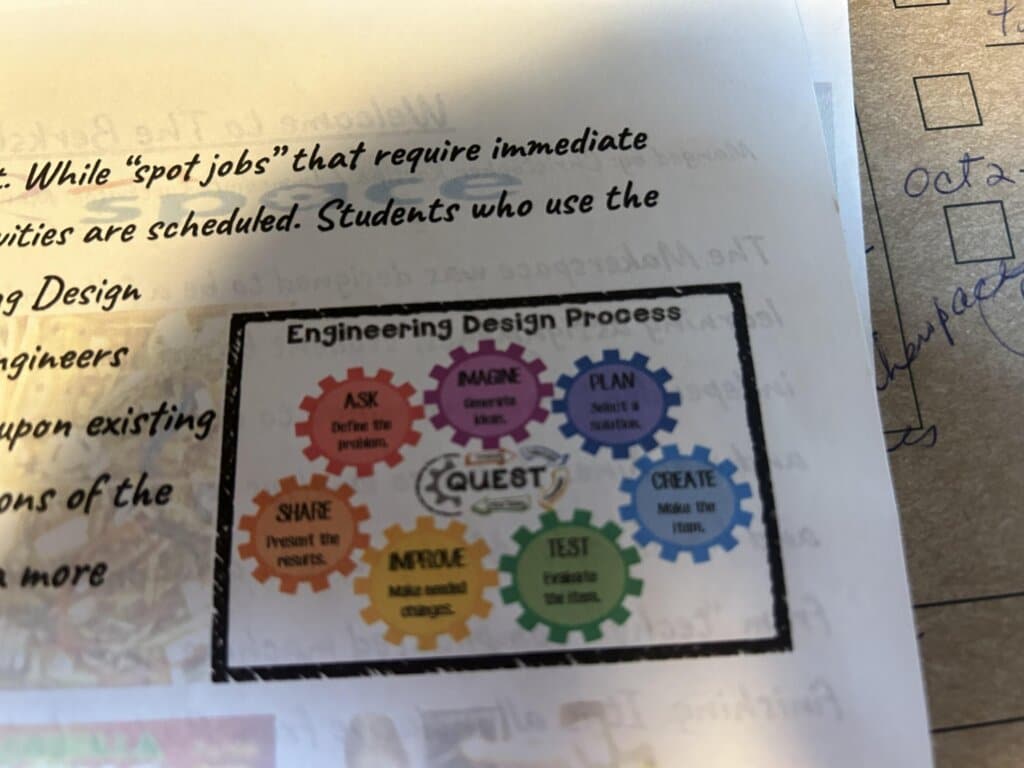
The classes for middle school students are organized and the students are grounded in the engineering design process early on.
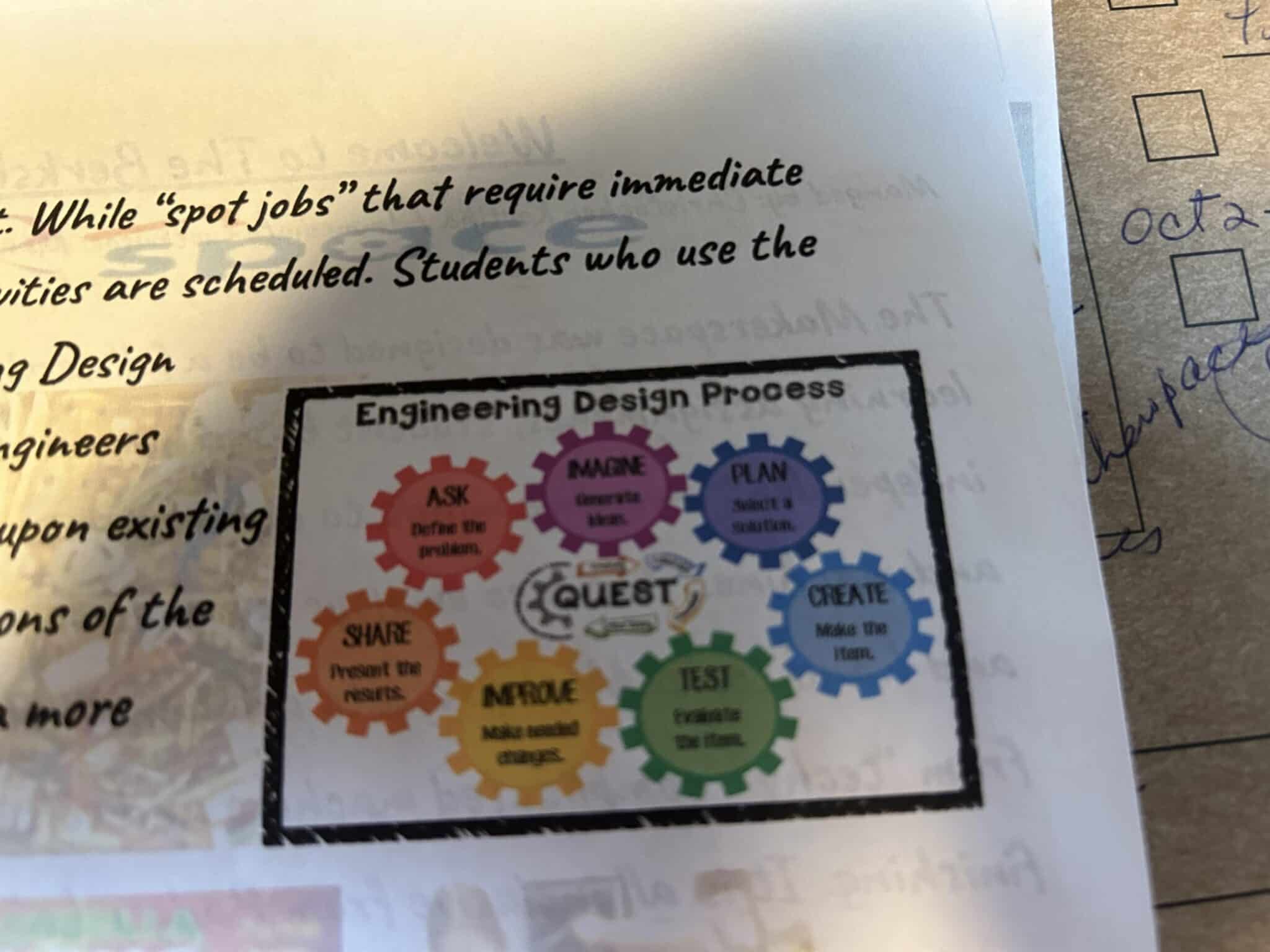
“Students who use the makerspace must adhere to the engineering design process. The EDP is a proven set of steps engineers follow to solve problems, invent and improve upon existing concepts,” he told the board, adding he customizes the EDP to different grade levels.
“Anything an engineer needs to attack a problem is in the EDP,” he said.
Although the many machines in the makerspace are fairly new, they are getting a workout. BMS Principal Mandy Randels said maintenance of the machines is important.
“We really appreciate the multiple things going on in there any given day,” she said, cuing Kostiha to explain how he handles maintenance.
“These machines break down on a regular basis,” he said. “I trained a few students on how to repair the more simple things that break.”
The list of groups who use the makerspace include students of all grades who need additional resources during their project-based learning activities, teachers and staff who need teaching graphics and manipulatives, school clubs and organizations, the athletic department and coaching staff, some community partners such as Kent State University – Geauga, the school board and the Berkshire custodial staff and technology department, Kostiha said.
Lessons learned exceed gaining skills with hand tools and paint brushes.
Kostiha recalled an incident where a student knocked a clock off the wall, valued at $450, and broke it.
Rather than send a bill home for the replacement, he turned it into a learning moment.
“We said, ‘Let’s have this kid take some responsibility.’ We brought him into the makerspace and had him repair that clock,” Kostiha said.