


With today’s distracted drivers, the more the buggy is visible, the better. – Scott Hildenbrand
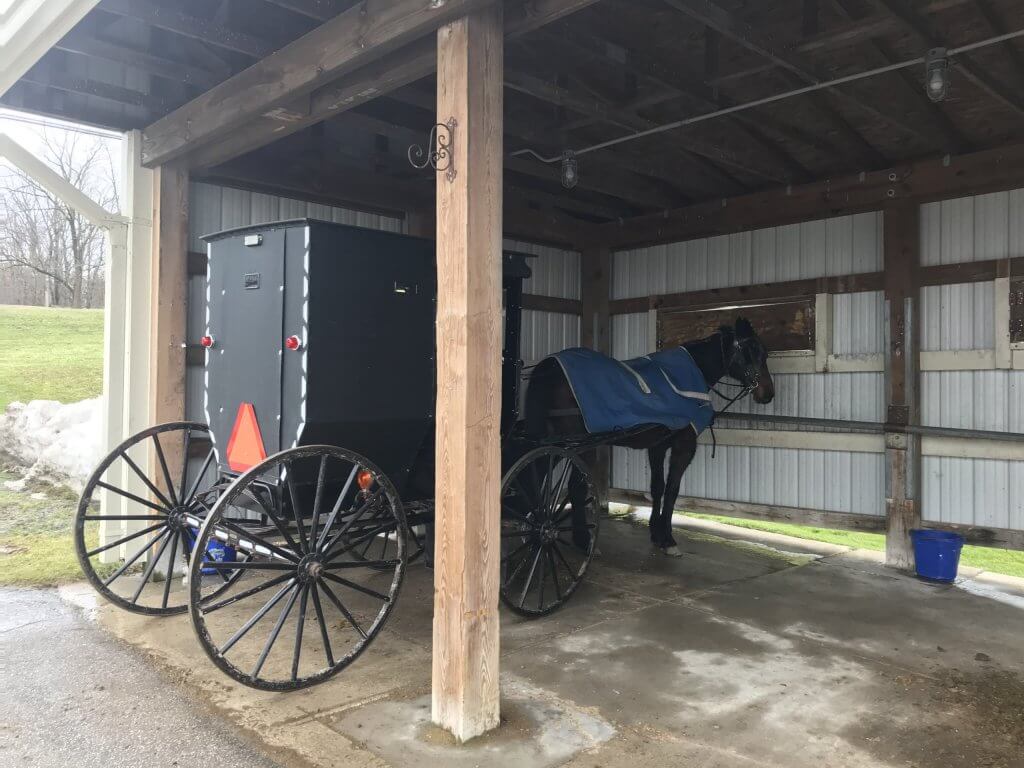

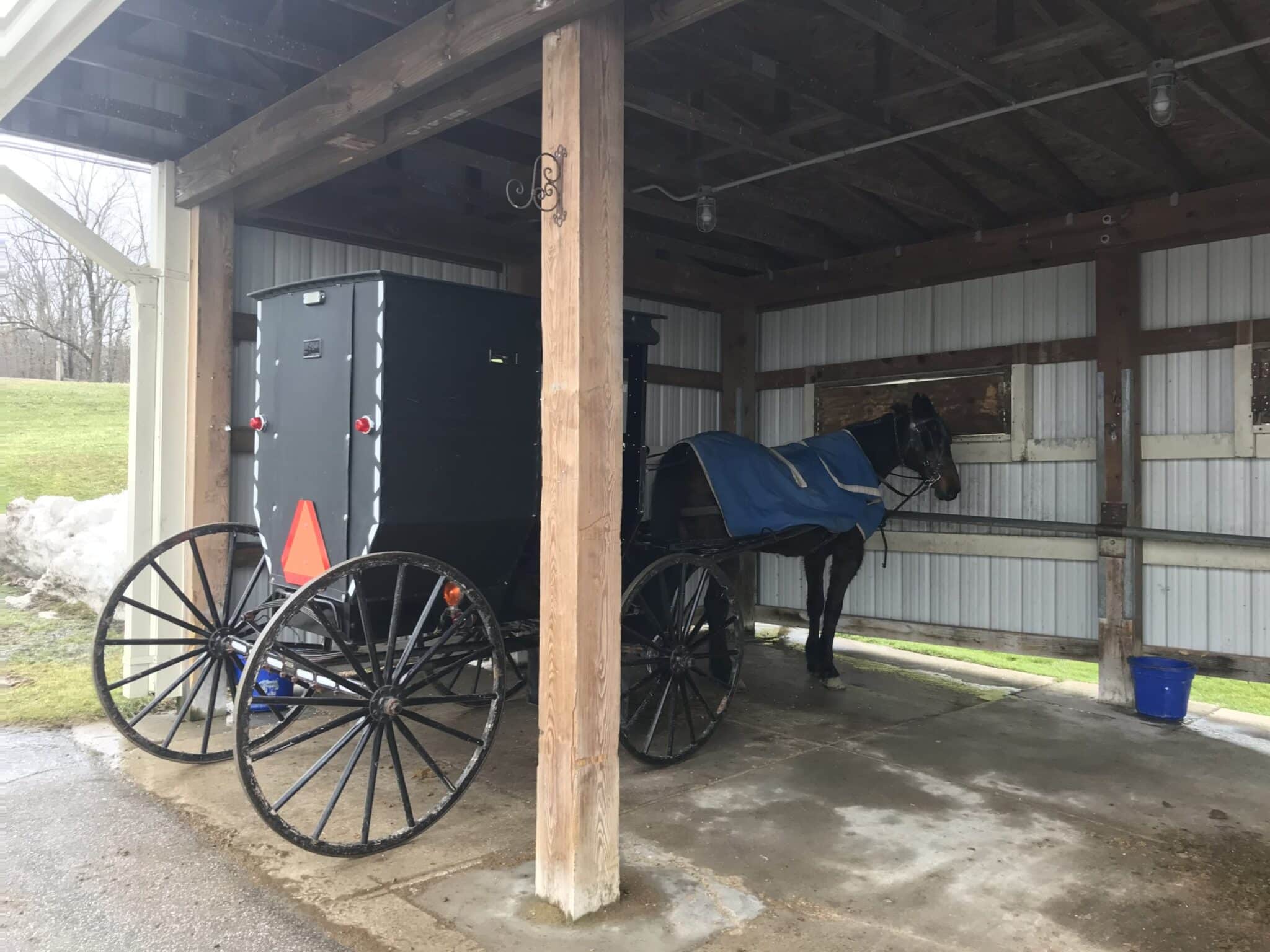

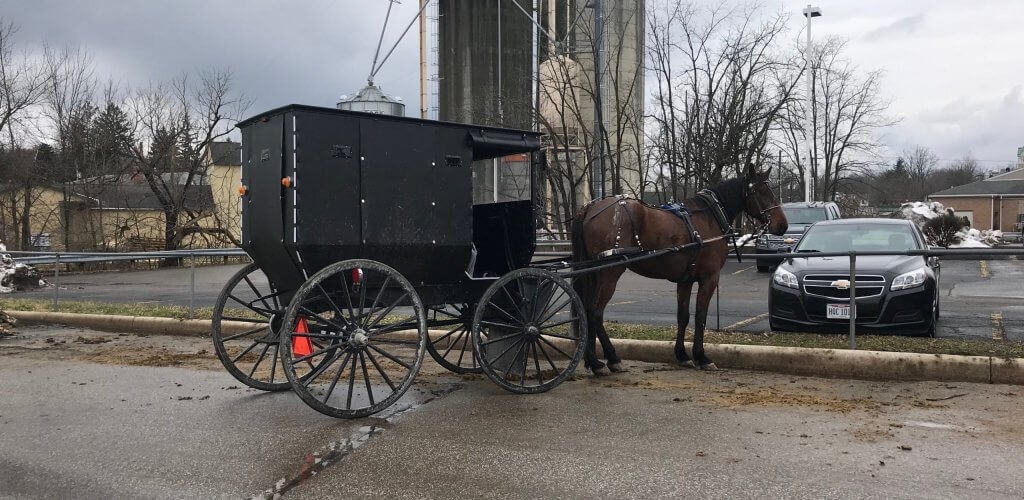
Sharing the road with Amish buggies, sulkies and farm equipment is accepted practice in Geauga County, the center of the second largest Amish settlement in the U.S.
Automobile drivers are generally cautious and courteous when they come upon a hoarse-drawn vehicle with children peeking out the back. No one wants to collide with the delicate buggy or the horse pulling it.
But every year, there are accidents in the county that cost human or equine lives. Usually the crashes are due to lack of buggy visibility or an unpredictable horse.
A new law proposed recently by Rep. Scott Wiggam (R-Wayne County) and Rep. Darrell Kick (R-Loudonville) would require horse-drawn vehicles to have a flashing yellow light on top of each buggy and to display reflective tape, according to a Feb. 11 article on ohiohouse.gov.
Amish buggies typically travel at 5 to 8 mph, according to the Ohio Department of Transportation, so car drivers can usually get around them safely, as long as they can see them.
However, some of Geauga’s back roads are narrow, have tight shoulders, deep ditches and undulate up and down through rural communities.
Those are the most likely scenarios in which motorized vehicles collide with buggies, especially after dark as Amish families are headed home after shopping or visiting.

The Ohio State Highway Patrol cites more than 120 accidents involving animal-drawn vehicles in 2019, mostly after dark, Wiggam said in the article.
“After consulting with the Amish, English and law enforcement communities, we have decided it is time to update our laws,” Kick said. “With new technology, we can implement changes that are less intrusive to religious freedoms, yet promote safety across the board for all Ohioans.”
According to local law enforcement, Amish in the Middlefield Settlement have been more willing to put lights and reflectors on their horse-drawn transportation. Occasionally, a flashing yellow light is seen and headlights on the front of the buggies are becoming more common.
“We are very lucky here, most of the buggies already comply with the measures specified,” said Middlefield Village Police Chief Joe Tucholski. “Our biggest issue is having them use their lights during inclement weather and the use of turn signals would help immensely.”
There are many paths and byways around Middlefield Village the Amish use to avoid the busy main roads full of cars and trucks. Most drivers are very aware of highway dangers and make way for the heavier vehicles, but Tucholski said the state rules of the road are not always followed.
“I feel there is a need for some type of drivers training so they are aware of roadway laws,” he said in an email.
Geauga County Sheriff Scott Hildenbrand supports the legislation, although he agreed the local Amish buggy owners already make the effort.
“They already have their buggies marked well,” he said in an email. “I have talked with other sheriffs in the state who don’t have the relationship we have with the Amish population. It is definitely a safety issue, especially with a black buggy at night.”
Not only are there more cars on the road than a decade ago, Hildenbrand noted the drivers of cars and trucks may not be paying attention as they should.
“With today’s distracted drivers, the more the buggy is visible, the better,” he said.

The ODOT offers the following advice for drivers in areas where Amish buggies are likely to be on the road:
- Blind corners created by wooded areas, cornfields or other tall crops are hazardous. For the driver of the buggy to see around the corner the horse may have to be closer to the intersection.
- Normal speeds for horse-drawn buggies range between five and eight miles per hour. Horse-drawn vehicles may be even slower when pulling large farm equipment or when crossing intersections because horses are not tractors or cars and will eventually become tired.
- Another hazard to consider is restricted vision from the driver of the horse-drawn vehicle. When pulling large loads of hay or other equipment, drivers may not be able to see cars behind them.
- Car drivers need to be extra cautious when passing horse-drawn farm equipment. Car drivers should anticipate left hand turns made by horse-drawn vehicles into fields and driveways.
Seeing a red and orange slow-moving vehicle triangle emblems on the back of farm vehicles should cause a driver to immediately slow and prepare to pass with caution, ODOT advises.
“When approaching and passing a horse-drawn vehicle, remember that horses are unpredictable and even the most road-safe horse can spook at a fast-moving motor vehicle. Be sure to slow down and give buggies and horse-drawn equipment plenty of room when passing. Only pass when legal and safe,” ODOT officials added.


