


"It's amazing to see the campers I had become counselors." Josh Wynn
“I hit you!”
“You did not!”
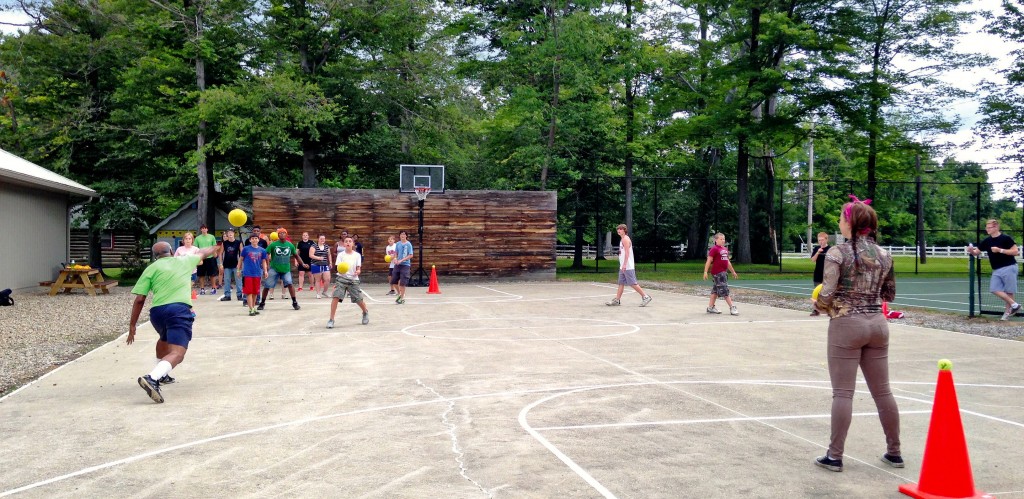
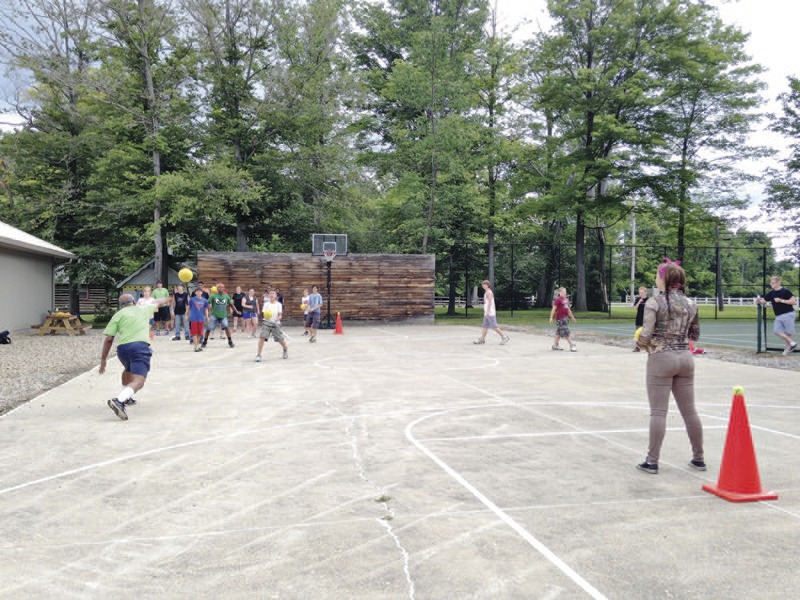
The screams of excited campers blend with the sound of rubber balls hitting their opponents during a Thursday morning pin dodgeball tournament.
Just another day of fun at Camp Ho Mita Koda, which celebrates its 85th anniversary this year, said Camp Director Kyle Chones.
The Newbury Township camp, a program of Diabetes Partnership of Cleveland, is the nation’s oldest continuing camp for children with diabetes.
Nestled on a 72-acre parcel adjacent to Auburn and Pekin roads, Camp Ho Mita Koda contains a man-made lake and activities such as swimming, archery, paintball, horseback riding, theater and a high- and low-ropes course.
“For many children with diabetes, this camp is a dream come true,” said Chones, the second-year director.
On average, about 200 students per summer — some hailing from as far west as Indiana — participate in the camp, aided by roughly 35 staff members.
The camp itself consists of two six-day sessions, one apiece for eight- to 12-year olds and another one for 12- to 15-year-olds, and a two-week session for 12- to 15-year-olds.
Additionally, a one-day minicamp for 4- to 10-year-olds and a free open house at the beginning of camp season takes place.
Campers not only partake in fun, but they also receive diabetes self-care skills that help them manage their disease.
“They become more independent and confident. In fact many campers return as counselors and staff,” Chones added.
@HeaderML:A Colorful History and a
Care-Focused Camp
In the late 1920s, a medical doctor named Henry John and his wife, Betty, wanted to help children affected by diabetes. So they brought the patients to their summer cottage and enjoyed two weeks of activities.
Over the years, the camp grew from 10 to 72 acres, expanded its programs and became what is known as Camp Ho Mita Koda, which means “Welcome, my friend,” in the Sioux language, according to the camp website.
Chones said about 98 percent of the campers present are Type I diabetics. Their condition entails 24-hour-a-day monitoring of diet and insulin.
If their blood sugar drops below a given blood glucose level, they must eat 15 carbohydrates, rest 15 minutes and be re-tested for higher levels, added Liz Reynolds, the camp’s nurse.
“They love peanut butter on graham crackers,” Reynolds said.
At each camp activity, medical staff are on hand. They arrive at the activity before the campers get there, Chones said.
In addition to normal activities, the participants also grow plants such as kale and various fruits and vegetables, he said.
They take tours of the camp’s original office, which is now a repository of artifacts and documents pertaining to the camp’s history, and also receive education on how to live with diabetes and make healthy choices, Chones said.
The Geauga County Master Gard-eners and a local 4-H club give presentations, he added.
Out on the ropes course, first-year instructor Sparkle Hill explained what she loved about her job.
“I love the adrenaline rush. Kids are conquering their fears and having fun,” Hill said.
Micah Momient, a 20-year counselor, started off as a camper and is now the ropes course supervisor. He oversees Hill and several other ropes instructors.
“I get a kick out of seeing the campers rise to the challenge,” Momient said.
Camp funding is made possible via donations from organizations, foundations and individuals. Chones said donors help out both with capital improvements and camperships, which are either full or partial scholarships.
Tradition dies hard at camp, as many participants eventually become counselors-in-training and counselors themselves, said Assistant Camp Director Josh Wynn, a 10-year veteran.
“It’s amazing to see the campers I had become counselors,” Wynn said. “It’s great to see my influence in how they lead their campers. And, maybe someday their campers will become counselors, too.”
Wynn and Chones then turned their attention to the ongoing pin dodgeball tournament, a variation of dodgeball that mandates a team must knock a tennis ball off the top of a traffic cone.
“Each session is memorable,” Chones said, his voice trailing off. “We just opened up a time capsule from 20 years ago at an open house earlier this year.”
The shouts and screams continued, the balls bouncing off the hard concrete.
“Why do I do this? When I see the kids’ faces light up after they arrive here for camp, I realize why I am doing this,”?Chones said. “It’s an amazing feeling.”
For more information about Camp Ho Mita Koda and Diabetes Partnership of Cleveland, visit www.diabetespartnership.org/ or www.diabetespartnership.org or call 216-591-0800.


