Warm, safe and dry are still the goals of Chardon Schools Board of Education when it comes to maintaining the current aging facilities.
Warm, safe and dry are still the goals of Chardon Schools Board of Education when it comes to maintaining the current aging facilities.
ThenDesign Architecture representatives Cheryl Fisher and Jeff Henderson discussed the district’s options to meet those goals during the board’s regular meeting July 21.
The district has been consulting with the Willoughby-based firm on the subject for months now, Superintendent Mike Hanlon said, adding the firm gave a presentation last September on immediate and long-term facility and infrastructure projects in the schools.
The school board would not be making any decisions right now, Hanlon said.
The content TDA is showing is conceptional and preliminary, Fisher added, calling it a “300,000-foot view.”
The options also don’t exist in separate bubbles. If the district wanted, TDA could combine certain aspects of each one into a new project, she said.
Renovations
“This is what we talked about mainly last September. These were assessments, what renovation work is needed, to all of your school buildings here in Chardon local schools,” Fisher said.
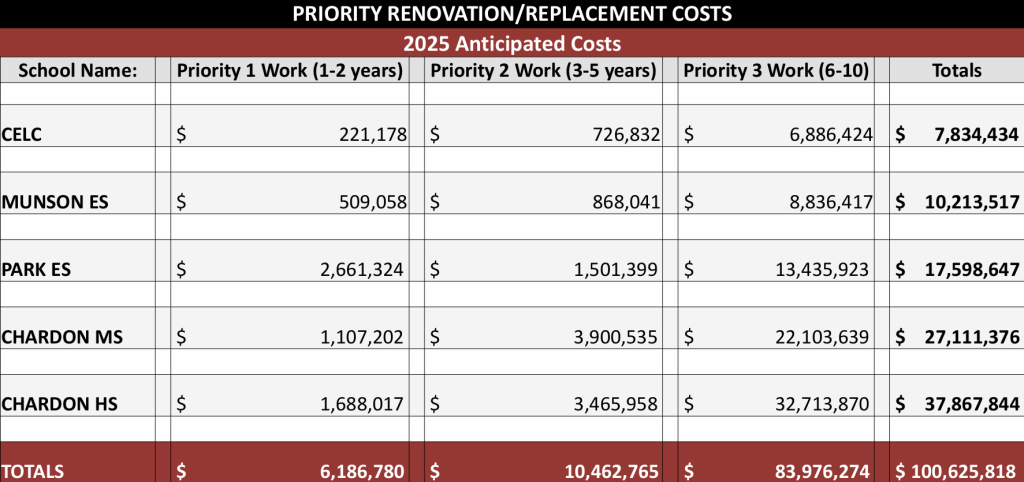
TDA divided a 23-point checklist for all the buildings and components into three tiers — priority one, which needs to be done in one to two years to uphold the warm, safe and dry standard; short-term needs, which should be done within five years; and long-term needs, which encompass major systems such as HVAC or plumbing.
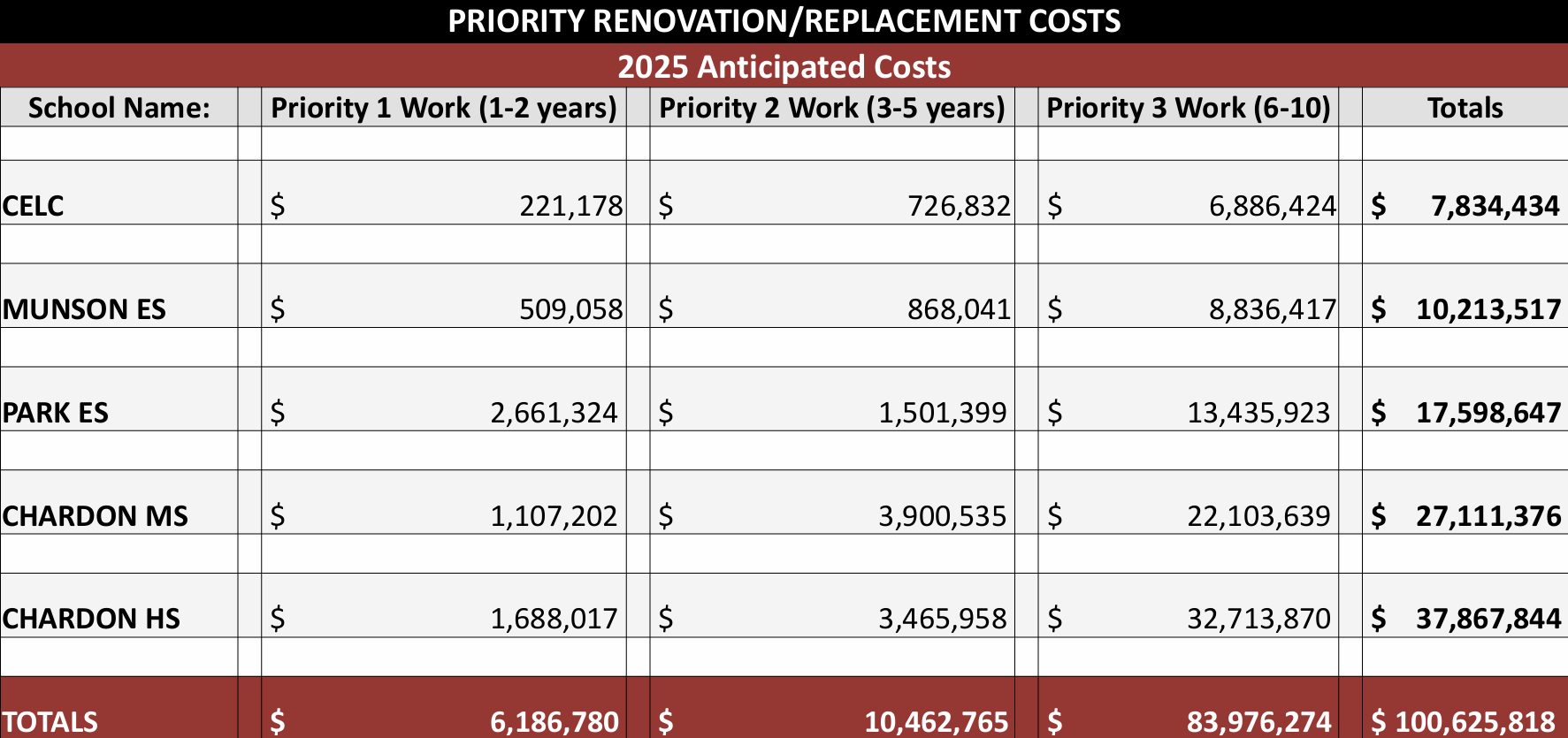
The combined renovation work is currently projected to cost about $100.6 million, Fisher said, adding TDA is assuming a 5% inflation rate when estimating costs over time.
That number is also strictly for building repairs and does not include reorganization or reprogramming, she said.
Priority renovations can be financed in a variety of ways, such as PI funds, community partnerships and grants, Fisher said.
“When you start to up the cost of the project, we start to look at different funding mechanisms,” she said, adding the primary mechanism used for projects of this size are bond issues.

New Building
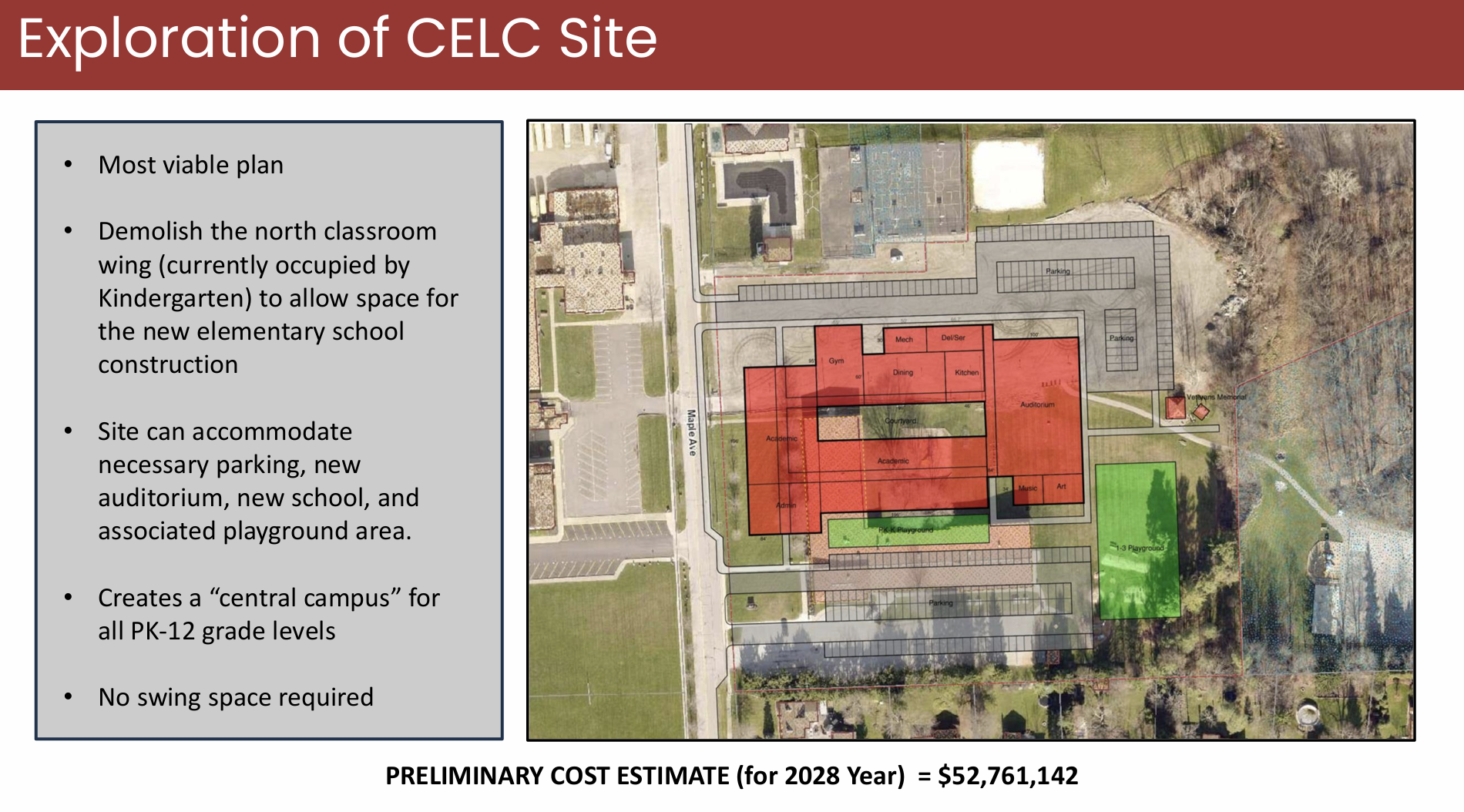
The district may consider building a new elementary school to house pre-kindergarten through grade three on either the current Chardon Middle School, Park Elementary School or Chardon Early Learning Center property, Henderson said.
Chardon’s enrollment is declining at a rate of around 1% per year and the district went through a reconfiguration in 2018, condensing the number of buildings, Hanlon said.
This would be the next opportunity in addressing the declining enrollment and ensuring the middle and high schools are still being used at capacity while consolidating into a central campus, he said.
A hypothetical school on the middle or elementary school properties would have a three-story academic wing, while the one on the CELC property would be two stories, Henderson said.
The middle school lot would require construction over part of the parking lot and board of education building, causing challenges in relocating both, he said, adding traffic circulation on the site could also pose a problem and there is no space for a new auditorium.
The elementary school site would require the district to purchase the current Chardon Public Library property, Henderson said.
While there would be a new auditorium, it would be bisected, similar to how Park is currently structured, however, Park would likely not be operational while construction was underway, so the district would need to provide a space for those students to go, he added.
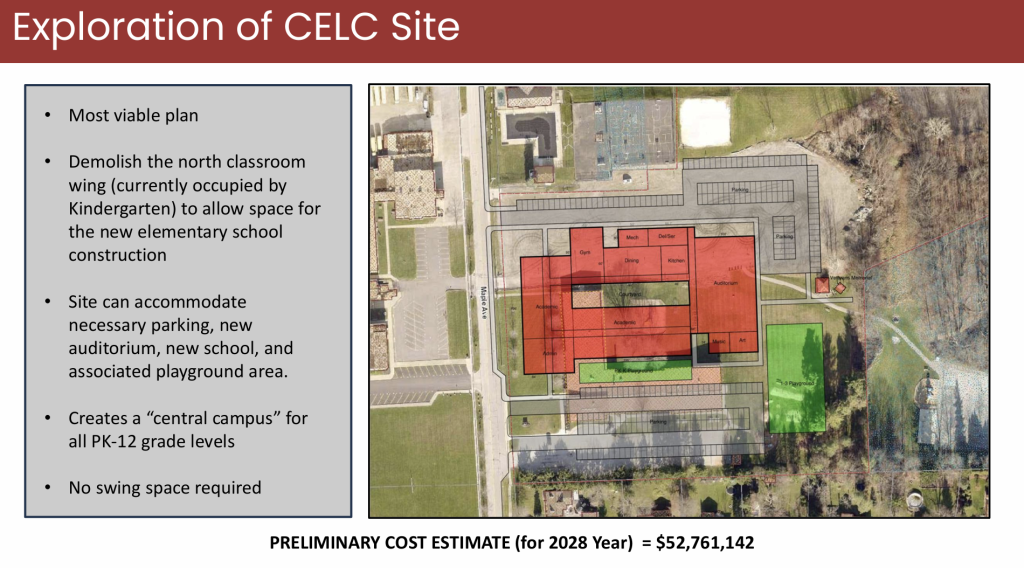
CELC provides the largest site and the south wing of the building could be maintained, Henderson said.
An auditorium could be attached to the building and the current high school student parking lot could be converted into parking for the building.
Having both the high school and new school traffic running along the same road might prove chaotic, board member Andrea Clark pointed out.
A traffic study would be done to check if turn lanes, lights or any other modifications would need to happen, Henderson added.

Reprogramming
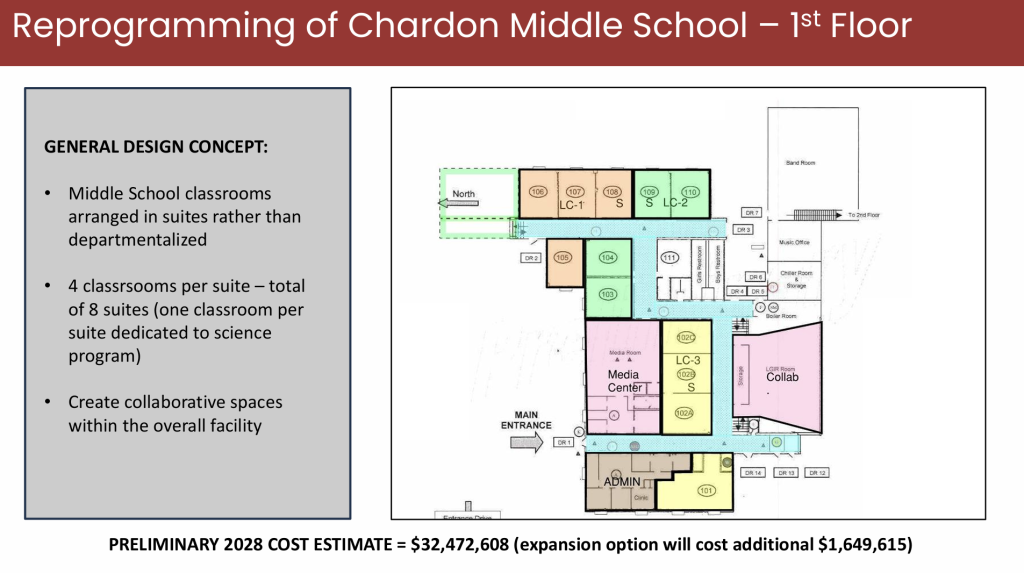
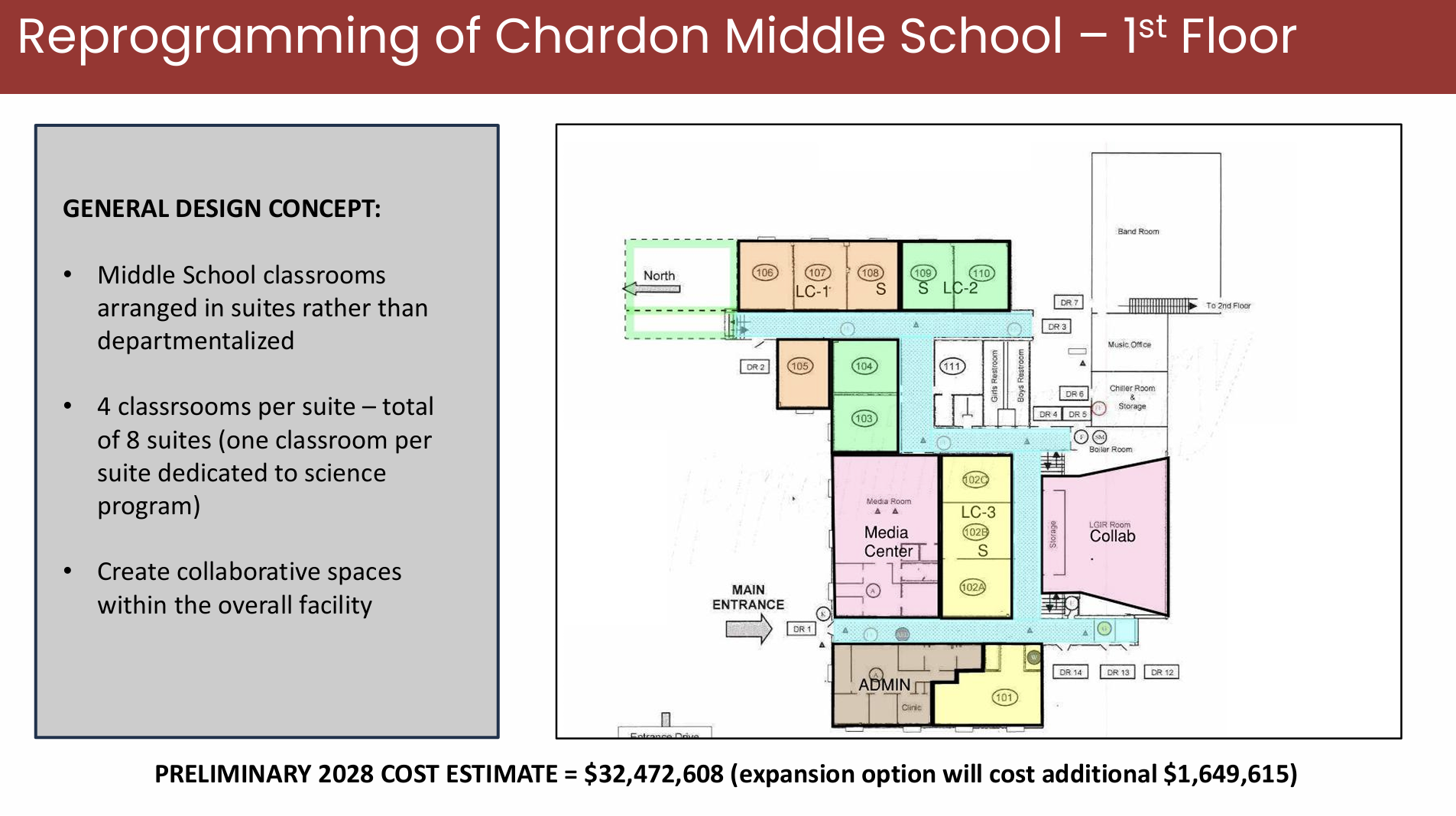
Reprogramming the middle and high school stands as a third option between the basic maintenance that must be done to uphold “warm, safe, dry” goals and a new building, Henderson said.
“The way I thought about it was, what do we normally do in a brand new school, what are the kinds of spaces we create? And what’s the possibility of getting them into a more extensive renovation project for each of the schools,” he said.
The schools would be redesigned around groupings of four classrooms shared by four teachers called suites, he said.
“The biggest thing here would be science rooms,” Henderson said. “Right now, the science rooms are kind of together. We would want one in each of the suites.”
Collaboration space, where students can work together, is also critical, Henderson said, adding the media centers can be repurposed for that and the cafeterias can be modified.
The project would also involve new finishes, such as flooring and paint, throughout the buildings, and with how extensive the reprogramming is, sprinkler systems would also need to be added, he said.
At the high school, the student parking lot could be relocated to the newly-open area behind the building and a security vestibule could be added to the north side of the school, Henderson said, adding parent drop-off could be done in that area, separate from the bus traffic.
Henderson also suggested relocating the weight room, currently across the school from the gym, over with the rest of the athletic rooms, which would open up possibilities to move band, choir and other arts classes into the freed up space.
Looking Forward
The school board would need community input and to look at the prospective timeline for the projects, board President Karen Blankenship said.
TDA projected some items for 2027 and 2028, which would mean having to be on the ballot in 2026, she noted.
The district’s current permanent improvement levy is not enough to cover the options TDA presented, Hanlon said, adding some form of new revenue would be required.
Board member Todd Albright expressed concern about the length of the projects, noting there could be potential leadership changes in the district while they were still underway.
Capacity restrictions could cause problems if the district builds too large a new building, he said.
Clark agreed, adding consolidating onto one campus would be a benefit, but could mean having to adjust the other schools.