


Proposed House Bill Would Also Impact LGBTQ+ Population
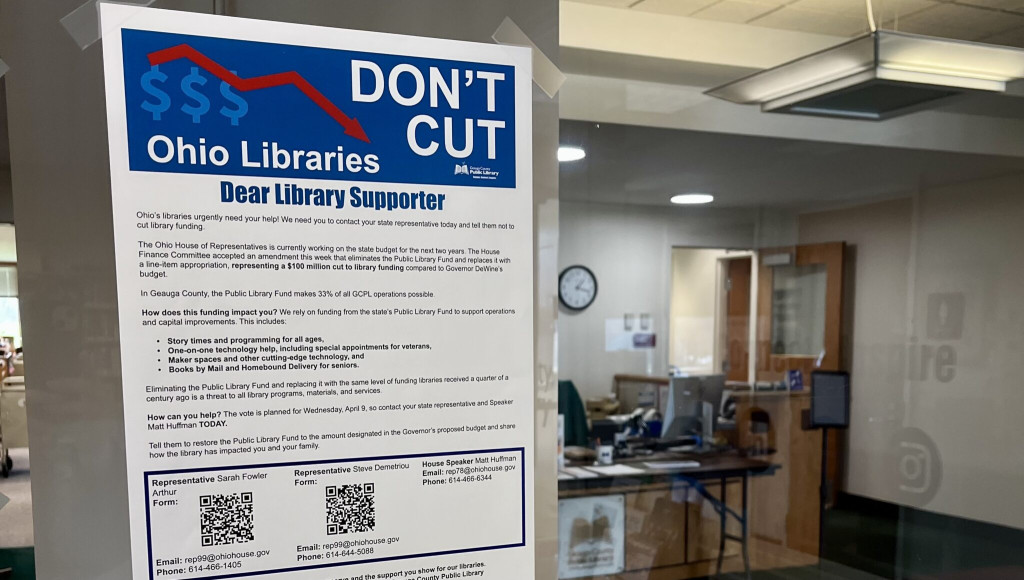
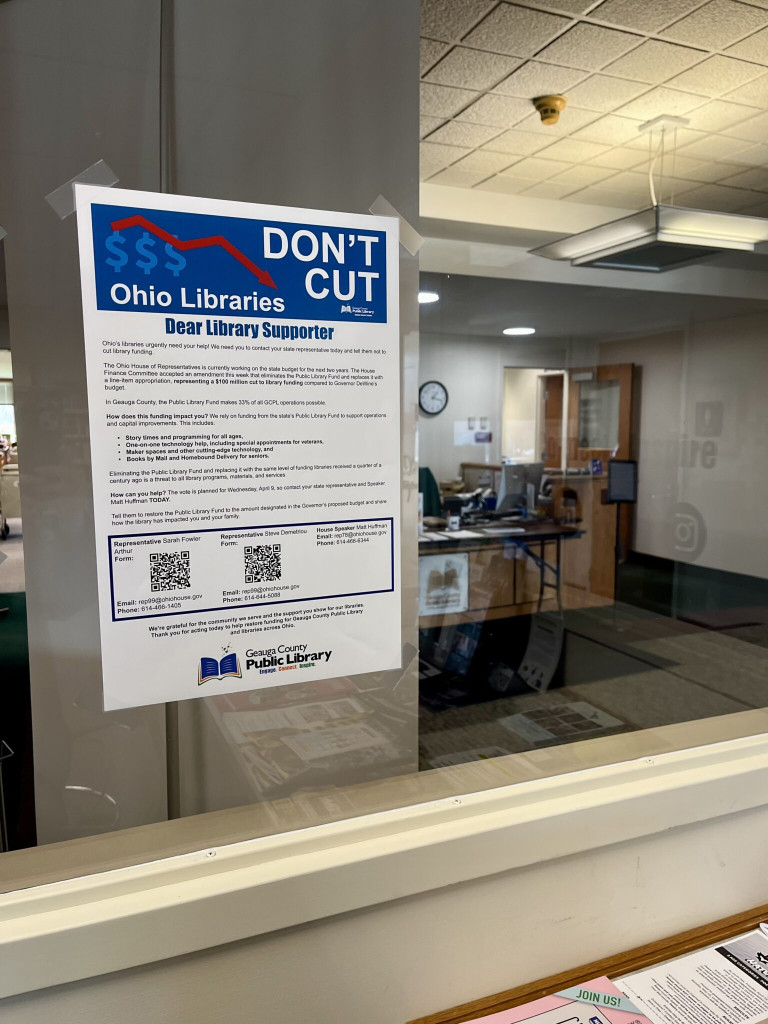
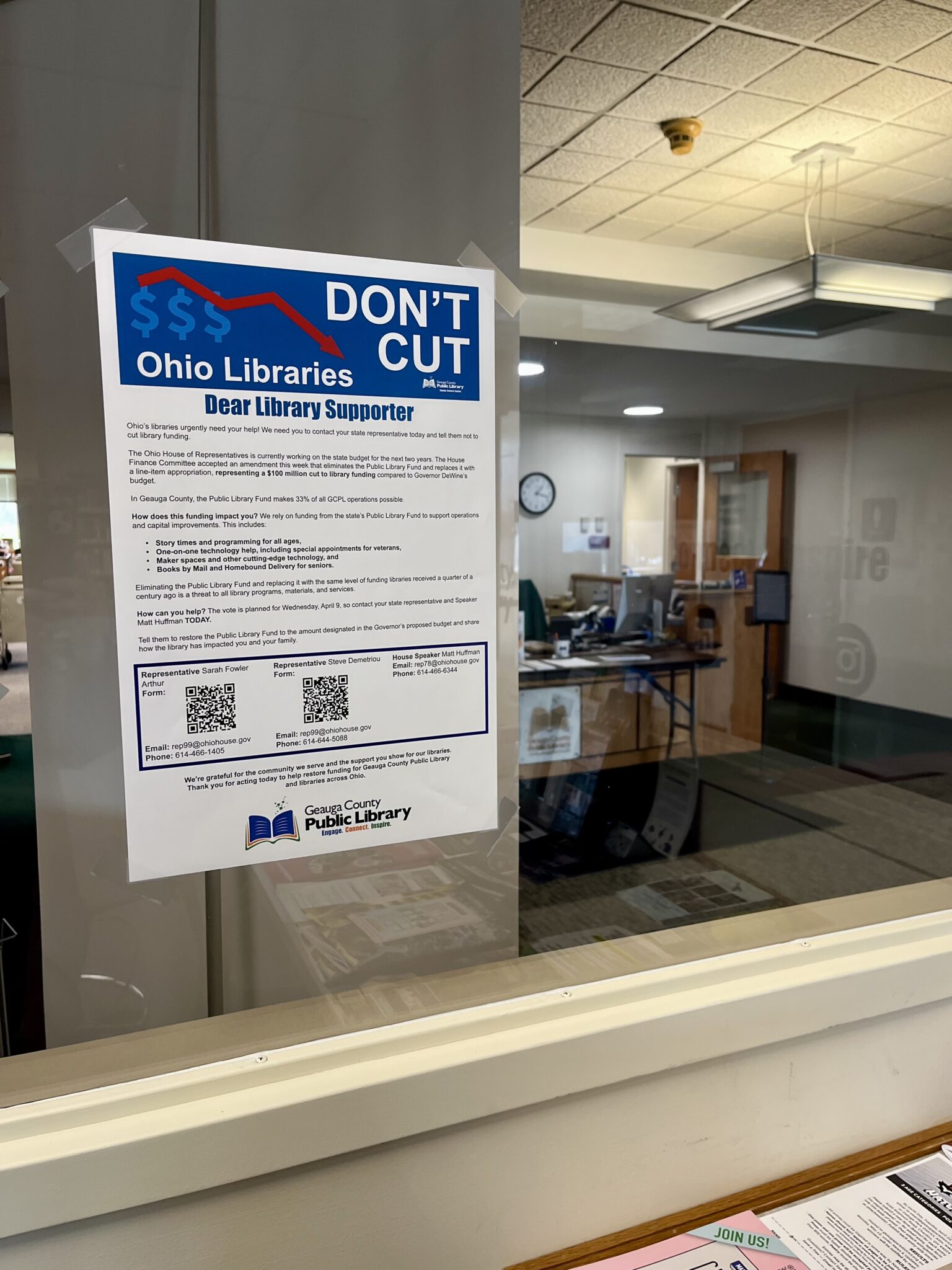
If passed, the recently-introduced Ohio House Bill 96 would reduce public library funding by $100 million — significantly impacting Geauga County Public Library programming.

*** Editor’s Note: This article has been updated with comments from Ohio Rep. Steve Demetriou. ***
If passed, the recently-introduced Ohio House Bill 96 would reduce public library funding by $100 million — significantly impacting Geauga County Public Library programming.
“Eliminating the public library fund and replacing it with the same level of funding libraries received a quarter of a century ago is a threat to all library programs, materials and services,” GCPL Executive Director Kris Carroll said in a letter. “We rely on funding from the state’s public library fund to support operations and capital improvements.”
H.B. 96, introduced April 1, would cut a hundred million dollars more from library funding than Gov. Mike DeWine’s proposed budget.
The Ohio House is proposing to allocate $485 million for fiscal year 2026 and $495 million for fiscal year 2027, whereas DeWine’s proposed budget would allocate $531.7 million for 2026 and $549.1 million for 2027.
“This fiscally conservative budget will deliver significant, swift property tax relief for all Ohioans,” Finance Chairman Brian Stewart (R-Ashville) said in a press release.
Rep. Steve Demetriou (R-Bainbridge Township), who is in support of H.B. 96, echoed Stewart.
“I’m going to be voting yes on it. It’s going to offer property taxpayers across the state the largest tax cut in Ohio History. There’s going to be a potential for $4.2 billion decrease of property taxes across the state,” he said April 9.
However, it will also greatly affect library programming, Carroll said in the letter.
“In Geauga County, the public library fund makes 33% of all Geauga County Public Library operations possible,” she added.
Some of the library programming that could see changes include one-on-one technology help, makerspaces, homebound delivery for seniors, storytimes for children, patron-led homeschool co-ops, book and movie streaming, AARP tax preparation and more.
“The services that we provide that are important to one patron might not be something that another patron uses … but we offer every group something that they may need,” she said in an April 7 phone interview. “Every age group, every demographic, every income bracket, every political or religious persuasion is served by our library.”
In 2024, there were 513,626 library visits to the county libraries. In 2025, there have been 115,199 visits so far, according to Denise Javins, marketing and communications manager for GCPL.
“The proposed funding levels take us back 25 years, threatening programs, materials and services that our community relies on,” Carroll said in the letter.
In other states, libraries are a part of the county or city government. However, in Ohio, libraries rely on state funding to pay for things like building maintenance, human resources, upkeep and others, she said.

“That’s why we have the public library fund to support us and make sure we provide consistent services across the state,” Carroll said April 7.
Michelle Francis, executive director of the Ohio Library Council, wrote a letter detailing the risks to Ohio without the funding.
“Ohio’s public libraries have had a partnership with the state to deliver services at the local level for almost 100 years and that funding is now at risk,” Francis said. “Public libraries serve all ages, and funding cuts of this magnitude could jeopardize the vital services that our communities rely on.”
Libraries were already on hard times, financially, she said.
“Now is not the time to make additional cuts to libraries when the demand for services at the local level is growing and expanding, usage is increasing and the rising cost of inflation can no longer be absorbed or ignored,” Francis said.
The proposed budget would not only impact library funding, it would also affect members of the LGBTQ+ community.
“It is the policy of the state of Ohio to recognize two sexes, male and female. These sexes are not changeable and are grounded in fundamental and incontrovertible reality,” a portion of the bill said.
This is the same text President Donald Trump used in an executive order in January.
“It conforms with federal law and it’s common sense we codify that into law and put this behind us,” Stewart said in the April 1 press release. “It’s like saying the world is round instead of flat and we think it was warranted to be in the code, so we can put that kind of discussion behind us.”
The bill would also require libraries to move any “material related to sexual orientation or gender identity or expression” to “a portion of the public library that is not primarily open to the view of persons under the age of 18.”
Demetriou said he wants to make sure adult material isn’t marketed to children.
“My kids go to the library every week and I want to make sure that when they’re in the kids section, they’re reading about kids’ things and not (some) sort of controversial, sexually-charged material,” he said. “What we’re doing in the budget is to make sure that the kids section is for kids books and everything else is in its own section. So, when parents are in the library checking out books with their kids, there’s no confusion.”
This goes against what libraries stand for, Carroll said.
“It does go against what libraries do, which is, we allow the parents to direct what children take out and we are for intellectual freedom,” Carroll said. “We don’t — We don’t censor materials. That’s really for families and parents to discuss. However, we will always follow the law, and if this becomes law, we’ll figure out how to address it.”
She added it’s too soon to tell what specific changes would need to be made.
The House was slated to vote on H.B. 96 April 9.


