


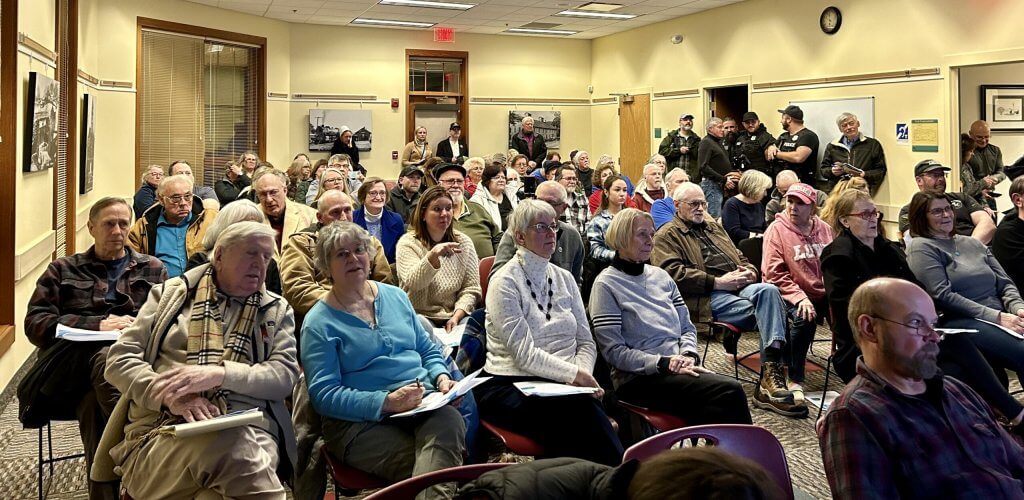
Although rumors that Northeast Ohio Areawide Coordinating Agency volunteers had to be escorted to their car after their Jan. 10 presentation were exaggerated, the scene at Middlefield Public Library was at times chaotic as audience members jeered, laughed and spoke over a virtual slideshow on climate change.
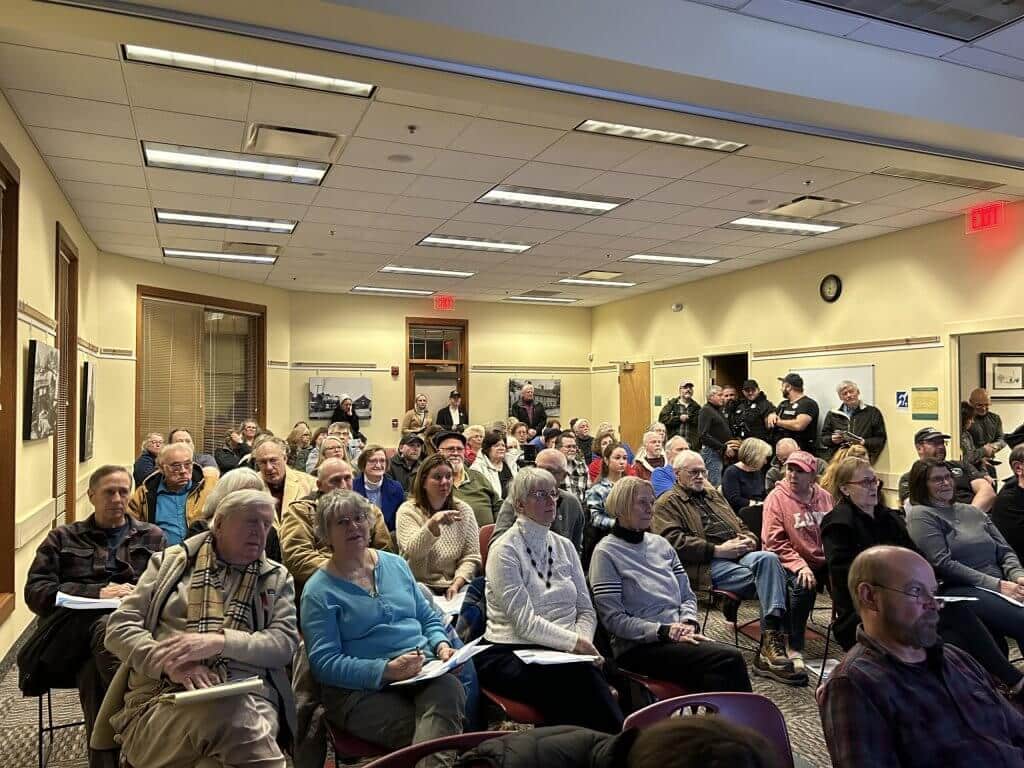
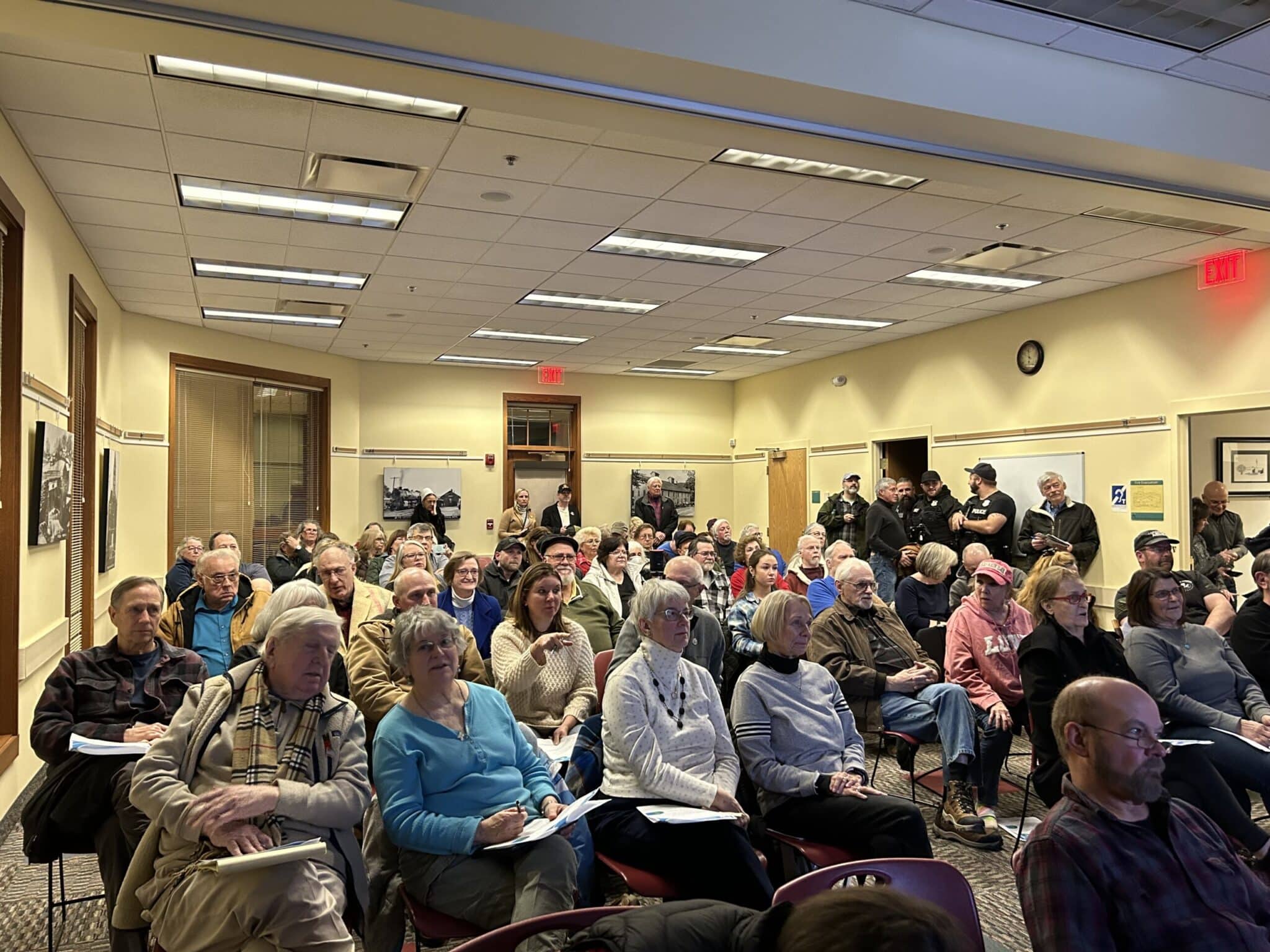
Although rumors that Northeast Ohio Areawide Coordinating Agency volunteers had to be escorted to their car after their Jan. 10 presentation were exaggerated, the scene at Middlefield Public Library was at times chaotic as audience members jeered, laughed and spoke over a virtual slideshow on climate change.
At least three village police officers were visible standing at the back of the room, but no serious security measures were needed, according to an officer on the scene.
“I walked out with them and stayed while they loaded their belongings,” said Middlefield Village Officer Matt Spitler the morning of Jan. 12. “There was no indication I was protecting them.”
It was standing room only for the one-hour virtual production. About 100 residents filled the room and some gathered in the hallway to listen and comment during the presentation and after.
Police Chief Joe Tucholsky said NOACA contacted him the week before the event requesting an officer be on hand. Spitler said he was the only officer hired for the evening and the others just stopped in to chat and see what was going on.
During the presentation, NOACA Director Grace Gallucci introduced the agency’s climate action plan and Joe McDonald, director of strategic planning for the agency.

He talked about the need for the CAP to protect infrastructure investments by improving the air quality of Northeast Ohio.
The region may suffer from climate change, such as increased precipitation, drought and unusual temperature fluctuations.
The water cycle balance could be disrupted because of climate change.
“We need to be prepared for disruptions and mitigate those disruptions,” McDonald said.
Speaking virtually, it was unclear whether he was aware of the catcalls, laughter and applause from the audience.
McDonald said the agency had sampled 2,500 adults across Cleveland and Cuyahoga, Geauga, Lake, Lorain and Medina counties to determine how they feel about climate change and if they felt their efforts could help.
“There is a sentiment in the region that we are not prepared for climate change,” he said, adding it is not known how specific weather patterns will develop.
“(The survey) lets NOACA know there is a need for a long-range planning effort,” McDonald said.
The distribution of the survey was based on population, he said. Geauga County is the least populated area in NOACA.
“I never got a survey,” shouted someone in the audience.
The virtual presentation provided a platform by which participants could text their responses to NOACA’s questions and those texts were shown up on the screen.
McDonald noted personal opinions would not be engaged and answers from all five counties were being presented simultaneously.
The first question asked how action to mitigate climate change could affect residents’ qualify of life. It resulted in about 150 responses that ranged from, “Still looking for the science” to possible improved water and air quality.
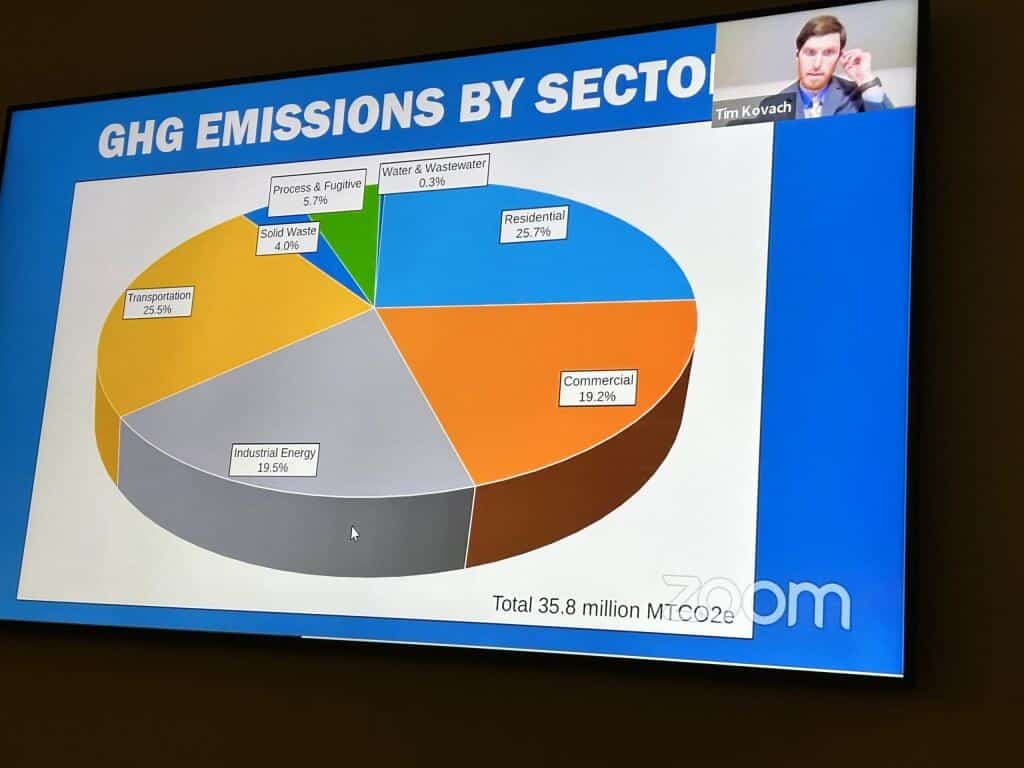
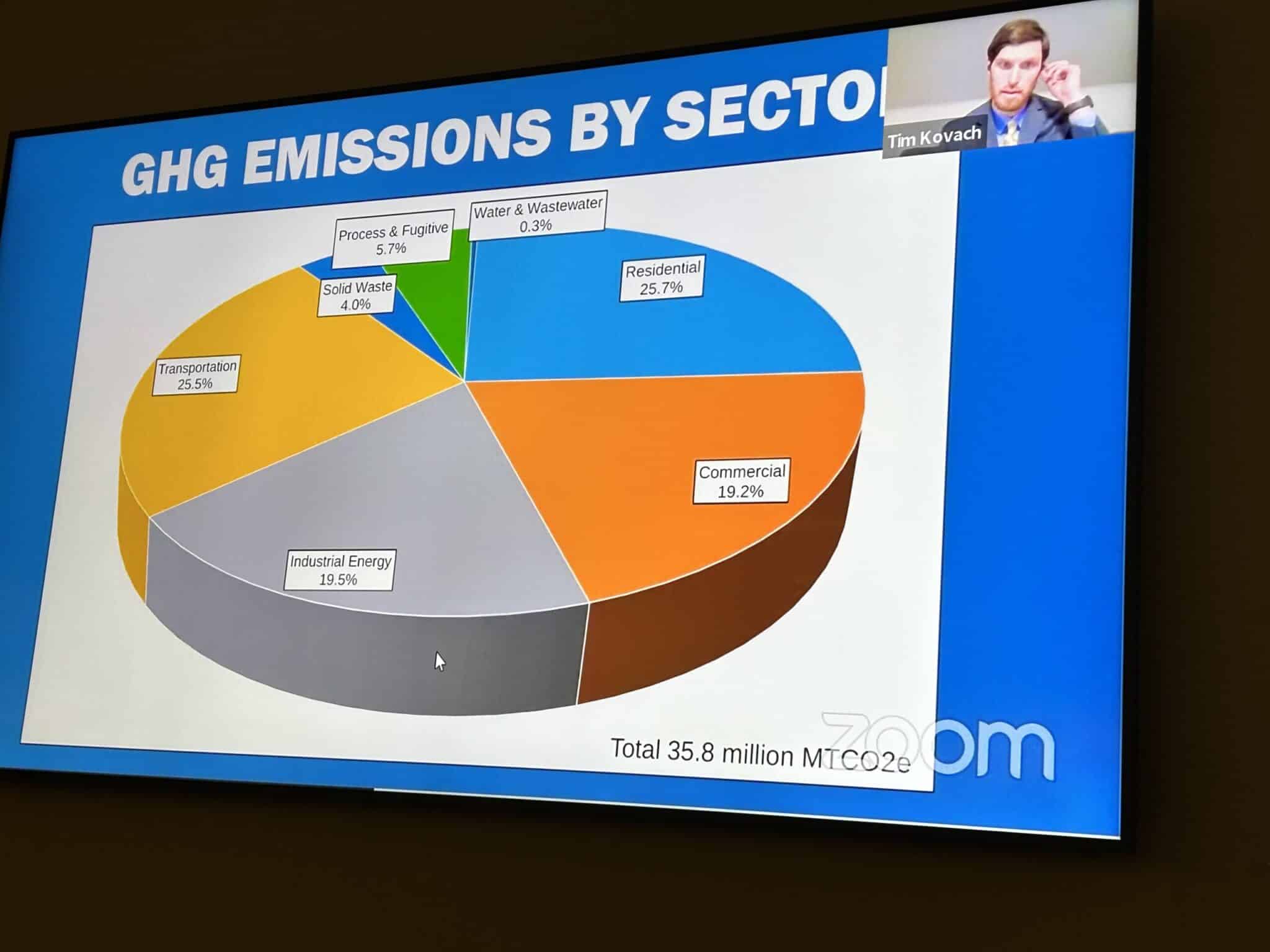
Tim Kovach, NOACA’s air quality planner, said an air quality inventory would be used to set a reduction target in the CAP.
Currently, it appears Cuyahoga County is responsible for about 64% of greenhouse gas emissions, with Geauga County contributing about 3.2%. The three other counties were at 10% or less, he said.
Reforestation, which aids in cleaning greenhouse gasses out of the atmosphere, is a partial solution and Geauga has the best record, Kovach said.
“How would you reduce your carbon footprint?” the audience was asked.
Responses included planting more trees, installing solar power and geothermal heating and cooling systems, traveling by train and working from home.
Other responses were to leave NOACA, buy a private jet and, “If I stopped breathing, that would reduce my carbon footprint.”
Gallucci broke in to say more train travel is a realistic option.
“Think about what we could do in the transportation realm to minimize greenhouse gas emissions,” she said, referring to the plan to increase regional rail transportation by 2050 and to support power availability for electric vehicles.
“NOACA is looking at ways to keep E-vehicles powered,” she said.
During the second segment of the program, Katie Moore, NOACA’s manager of environmental planning, provided steps to climate resiliency that would help the region reach its reduction targets.
Chief among the public’s concern for the environment were water and wastewater management systems, ecological systems and transportation systems, she said.
When the survey was collated, the questions most often asked were about Lake Erie.

“What does that mean to the lake? We saw that over and over again,” Moore said. “Lake Erie seems to continue to dominate this poll.”
She said that flooding and changing seasonal conditions were other concerns, with drought coming in last.
When the crowd was asked which segments of the population are most vulnerable to climate impacts, answers ranged from poorer communities to the elderly, children and wildlife.
Other responses included taxpayers who are forced to pay for NOACA, meteorologists and Chicken Little.
Gallucci closed the presentation by saying she was impressed with everyone’s enthusiasm.
“We had about 300 attendees from all locations. This is not just our plan, it is your plan,” she said. “There are folks on many sides of this debate. We will see where we will end up together on the CAP. Those of you who are still skeptical, that’s OK. We want to engage with you and develop a plan that works for everyone.”
More information about the CAP is available on the NOACA website, Gallucci said.
Resident Skip Claypool, a member of the Geauga County Planning Commission and the local tea party, attended the NOACA presentation and offered his take on the CAP and NOACA in general.
“Citizens in Geauga County do not like this urbanized organization pushing its ideas to our rural area,” he said in a phone call Jan. 12. “They want to change our lives.”
He maintained NOACA is supposed to help its member counties with roads and bridges, not climate change.


