


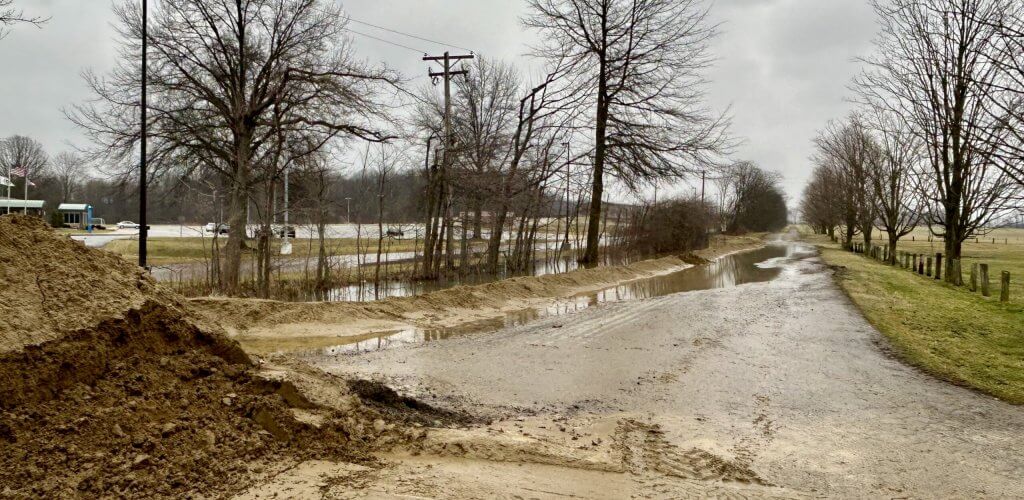
Controversy is boiling over flooding of the Geauga County Fairgrounds, which fair board and county officials contend didn’t exist before the construction of the new Berkshire Schools campus.
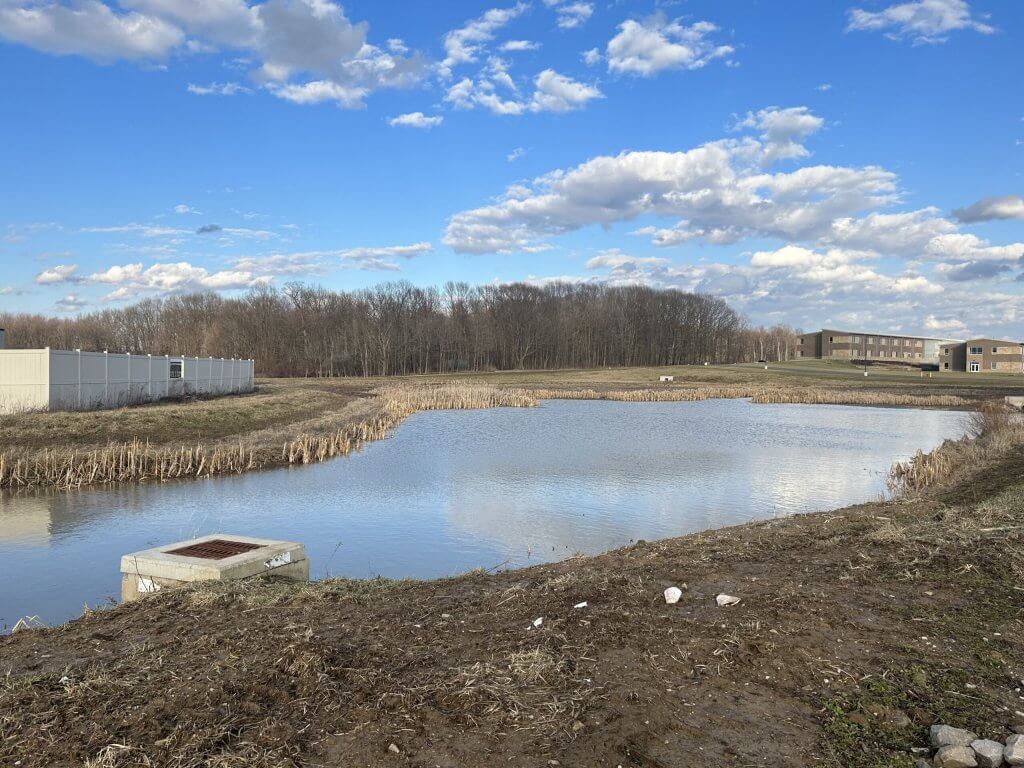
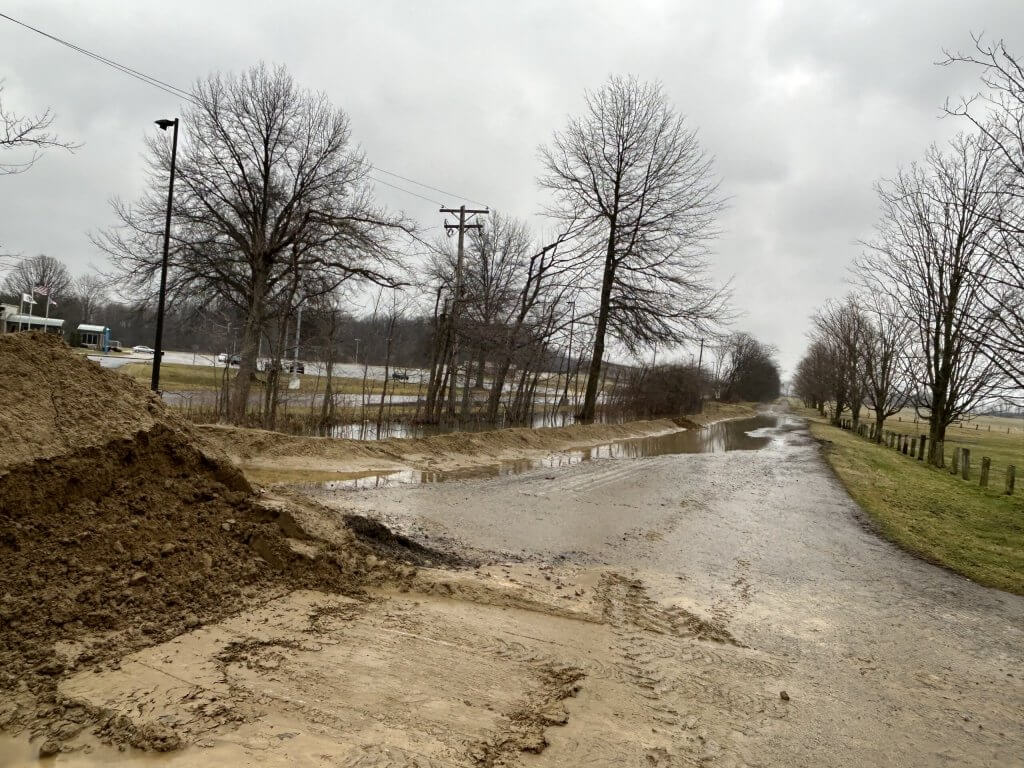
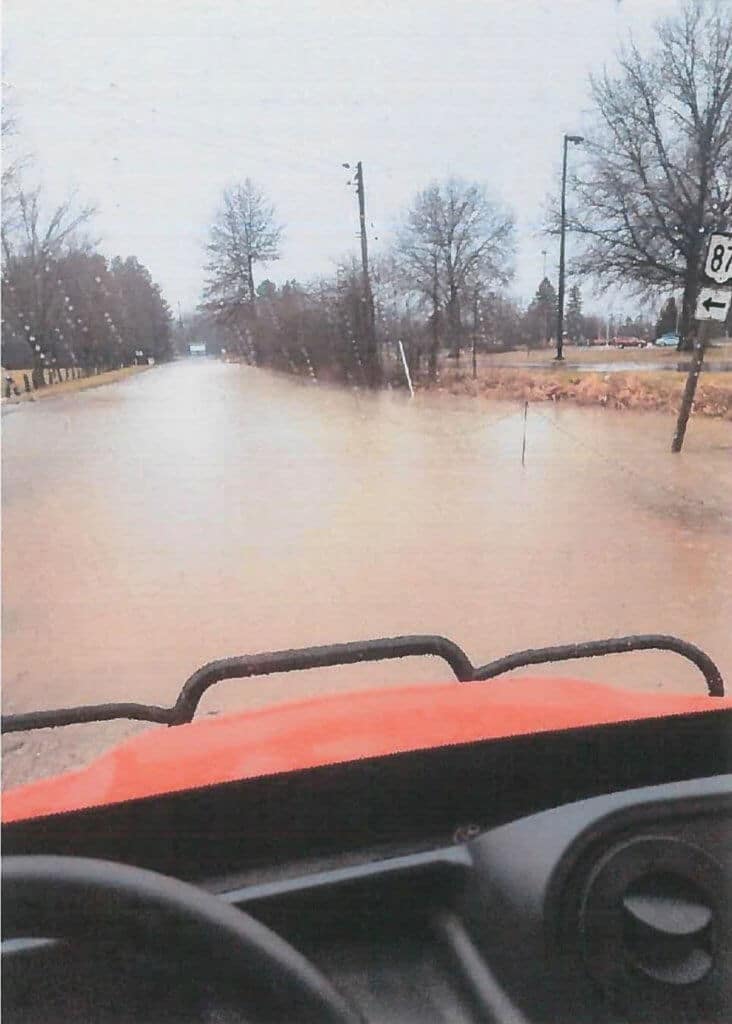
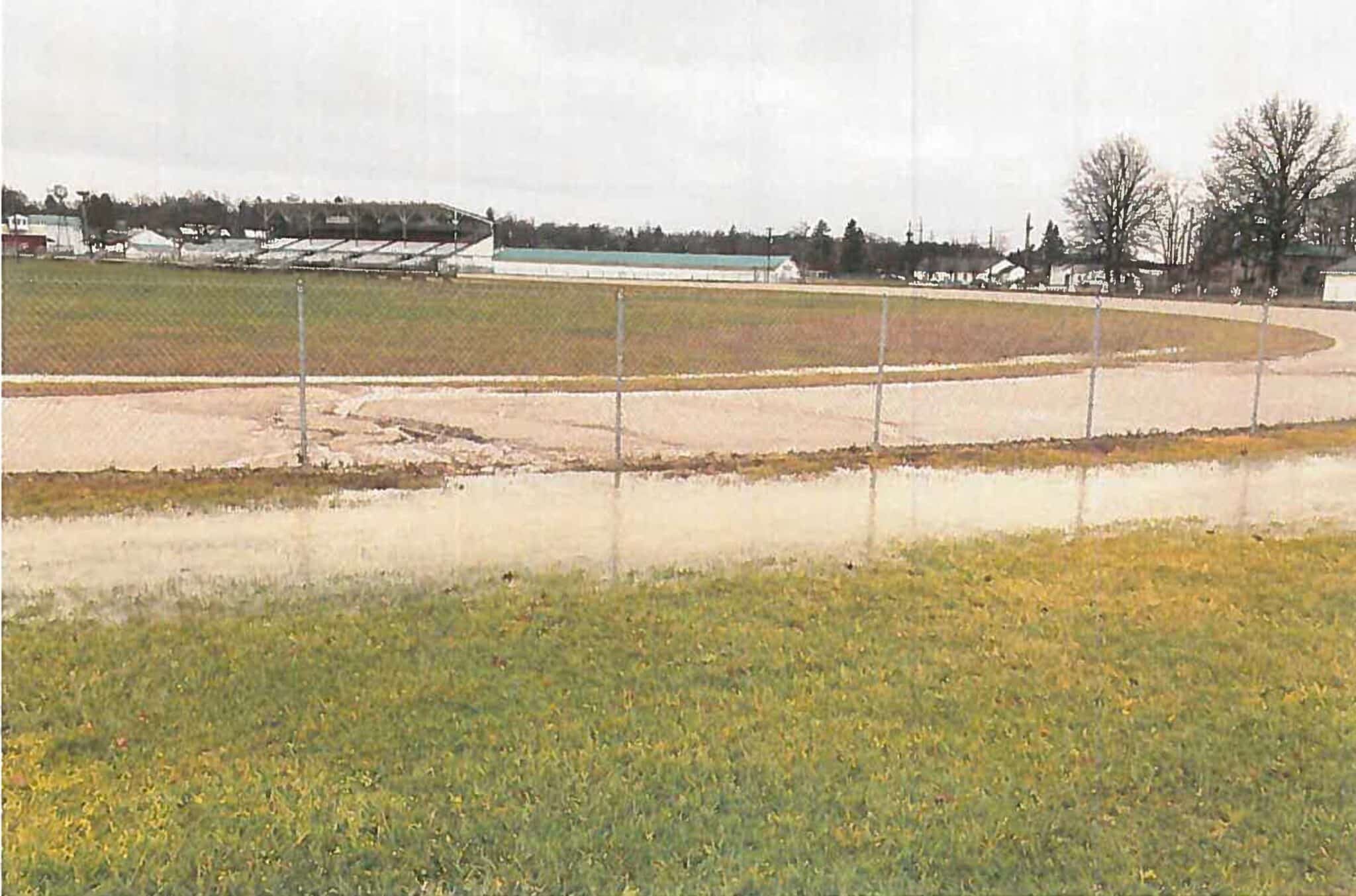
Controversy is boiling over flooding of the Geauga County Fairgrounds, which fair board and county officials contend didn’t exist before the construction of the new Berkshire Schools campus.
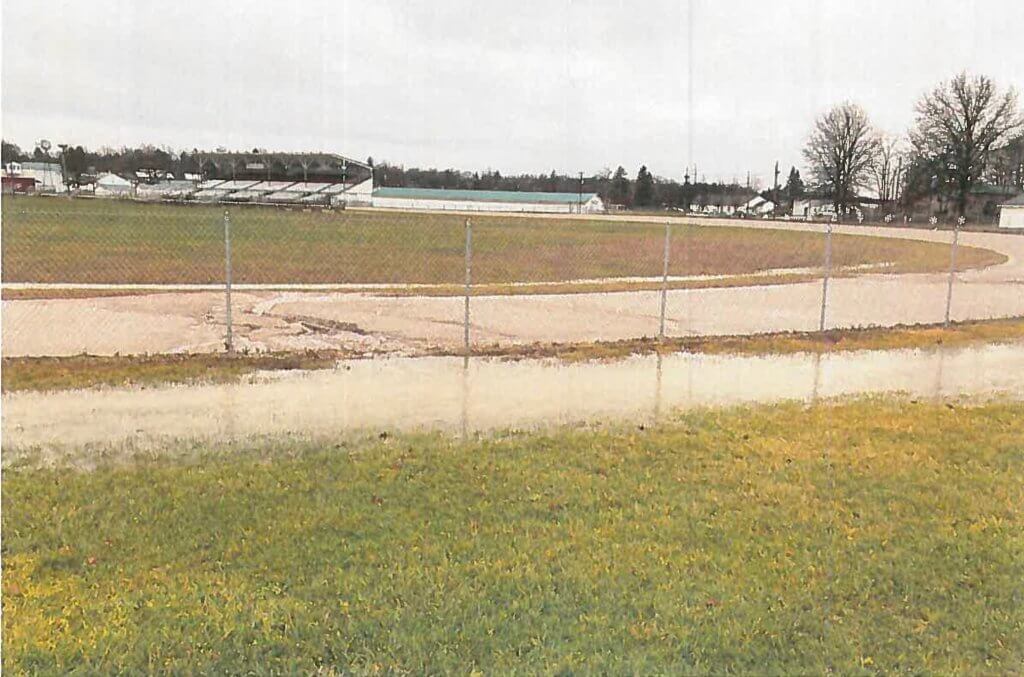
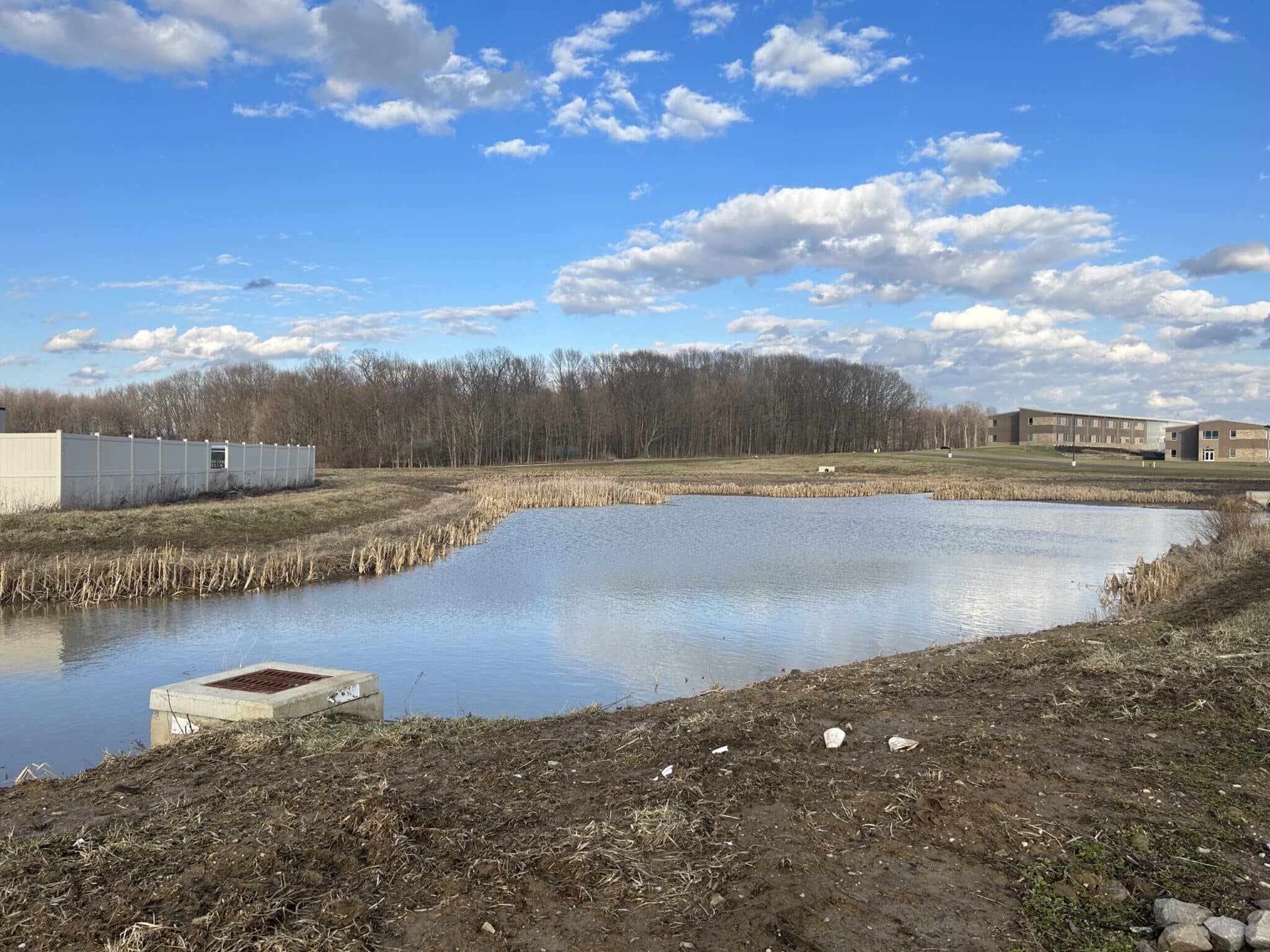
Runoff from the campus and football stadium directed toward a retention pond on the west side of the campus has been invading the north side of the fairgrounds, causing erosion to the race track, according to letters and emails obtained by the Geauga County Maple Leaf through a public records request.
The 13-grade school, built at a much higher elevation, replaced woods and fields several years ago. During construction, a drainage system was installed to remove the water from the 30-plus acres Berkshire Schools leases from Kent State University for the school and the stadium.
“Although the overall flows leaving the Berkshire site were designed to be lower than before, prior to the Berkshire site being developed, the stormwater discharge was never concentrated at this one location but rather overland flow over the entire property line as sheet flow,” said Carmella Shale, director of Geauga Soil and Water Conservation District, to Berkshire Schools Superintendent John Stoddard in a Dec. 1, 2022, email.
“Although the fairgrounds drainage system may be antiquated, it basically functioned without these flooding issues prior to Berkshire developing and discharging all the site stormwater at one point onto their property. That is the crux of the problem.”
Shale and SWCD district technician Mike Tadaj visited the fairgrounds Nov. 30 to verify a flooding complaint from the Geauga County Fair Board.
“Upon inspection, the stormwater discharging from the school property is too much for the fairground’s inlet pipe to handle. Water is pooling by the inlet pipe while further down toward the racetrack, the pipe clean-out has popped off and is causing damage to the racetrack,” Tadaj wrote in a Nov. 30 email to Stoddard.
While Tadaj acknowledged the school followed the construction stormwater pollution prevention plan and an engineer calculated less water is being discharged off the school property, the drainage issue did not occur before construction.
“The school is now focusing a lot of stormwater to a single discharge point, whereas before, most stormwater was spread out over the entire property line,” Tadaj said.
He recommended the installation of a catch basin at the fairground stormwater inlet and the installation of about 480 feet of new pipe that would take the water to an open ditch on the north side of the fairground fence.
Stoddard had proposed a solution of jetting out the receiving storm drainage system on the fairgrounds, past the area where the stormwater blew off the clean-out cap, according to Shale’s Dec. 1 email to Stoddard.
“I concur that this may provide an immediate bandage to the problem at low flow conditions,” Shale wrote Stoddard. “My only concern is that this will not be a long-term sustainable solution as the storm sewer system on the fairgrounds contains 6-inch pipes that clearly cannot handle the same discharge as the 15-inch discharge pipe from the school detention basin.”
She reaffirmed Tadaj’s recommendation and encouraged Stoddard “to work with all parties to alleviate this ongoing problem.”
On Jan. 3, 2023, Shale again emailed Stoddard to encourage the school and fair boards to work together to resolve the issue.
“This won’t be going away,” she said.

A rough sketch of the area showing a proposed solution was included with Tadaj’s letter. Shale emphasized the drawing is not the final plan.
“This is just a concept of a solution. This would have to be designed and upgrading the existing receiving pond accordingly. This was to get the conversation of solutions started,” she said over the phone last week.
In a Jan. 3 response to Shale’s email, the superintendent said the district’s architect developed a stormwater plan that complied with all regulations and was approved by authorities having jurisdiction over its project.
“(T)he district’s conduct related to the stormwater generated on its property cannot be considered anything but reasonable under the circumstances, which is the obligation in Ohio between adjacent upper and lower riparian landowners,” Stoddard wrote to Shale. “The reason water is pooling by the inlet pipe is because the fairgrounds is not taking the necessary steps to maintain the drainage system on its property. Specifically, the drain lines are clogged and the fairgrounds has made no effort to clear them.”
In addition, Stoddard said the fairgrounds were required to take reasonable steps to accommodate the reasonable amount of flow coming from the school district’s property.
“Moreover, the school district does not have the statutory authority to gratuitously use its funds to install drainage improvements on the property of an adjacent landowner for the benefit of the adjacent landowner,” he wrote. “The fairgrounds could certainly implement this proposed solution itself . . . to address the storm drainage issue on its property, but it is unreasonable to request that of, or impose that upon, the school district to implement.”
Stoddard also told Shale the school district was “troubled” by the manner in which the SWCD was inserting itself in the fray and advocating on behalf of the fairgrounds to pressure Berkshire “to fund an issue that the fairgrounds itself has never seen fit to address.”
Stoddard’s Jan. 3 letter was forwarded to Geauga County Administrator Gerry Morgan, as the county owns the underlying property of the fairgrounds.
“Understandably, the board of county commissioners is deeply concerned with the flooding that is occurring on the iconic fairgrounds property,” Morgan wrote Stoddard in a Jan. 27 letter.
Morgan, who worked as a civil engineer prior to becoming county administrator, challenged the design and construction of the school district’s system, claiming it brings more flow to the fairgrounds than existed prior to the construction.
First, pre-construction flows were determined utilizing the entire disturbed area of 30.6 acres, which is almost double the size of the pre-construction area that flowed to the new pond’s discharge point, Morgan said.
“At a minimum, you are doubling what should have been the allowable flow to be discharged at that point,” he wrote.
Second, the 30.6 acres included areas that not only did not flow to the discharge point, but were in separate sub-drainage areas that flowed off the site to other parcels away from the fairgrounds.
“Therefore, the design is improper even if you try to argue that no more flow is going onto the overall fairground property post-construction in comparison to pre-construction,” Morgan added. “The final construction takes stormwater from those original sub-drainage areas and directs it to the pond.”
Increasing the size of the storm sewer on the fairgrounds property would not solve the problem, given the amount of flow from the school property has increased, but would only “push the issue further down the line into the Village of Burton,” said Morgan.
Moreover, he asserted there were issues with the detention basin flooding during the construction of the school, but school officials and contractors expected those problems would abate when the work was complete.
“Given recent events, it is obvious these assurances have not been kept,” Morgan wrote, adding Berkshire must fix the stormwater problem.
“Failure of the school to do so will force the county to immediately pursue any and all means necessary to address and eliminate the problem,” he said.
Stoddard said last week the school district is in discussions with interested parties and was hopeful a resolution could be reached shortly.
On Feb. 13, Morgan responded to an inquiry about progress and said the county commissioners have not been discussing the matter with the school.
“I believe the fairboard/ag society attorney and the school’s attorney have had some discussions regarding the issue and that there may be further discussions between the parties involved to seek a resolution to the flooding issue,” he said.
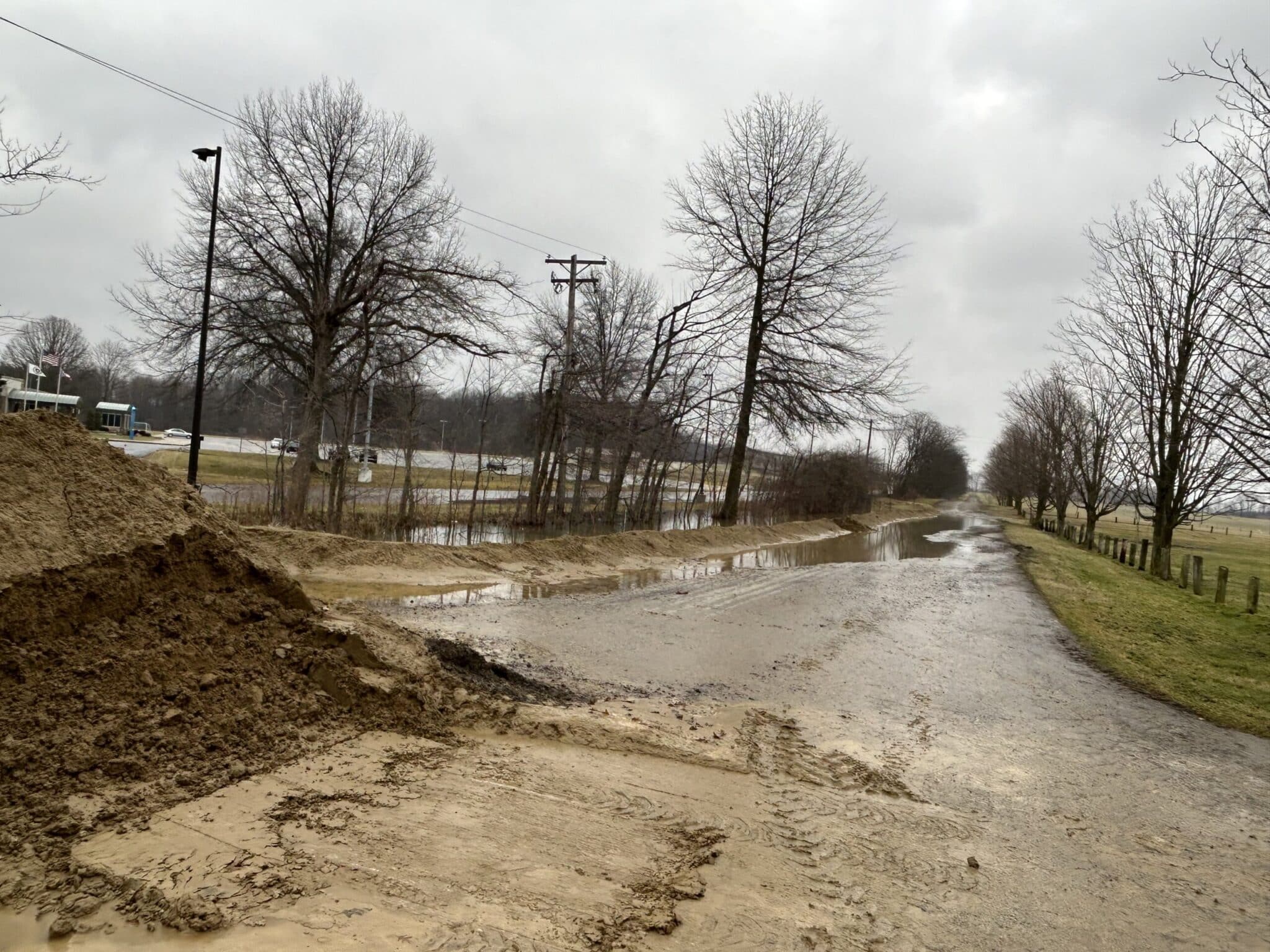
“In an effort to work with the school, the dirt mound on the fairgrounds property was breached to allow the water to continue to flow across the fairgrounds and eliminate the pooling of water on the school driveway, however, this has only further exacerbated the flooding issues on the fairgrounds,” Morgan added. “The commissioners are hopeful a solution can be determined to solve the flooding problem and an agreement reached to get the necessary adjustments made.”
Paul Harris — secretary of the board of directors of the Ohio Agricultural Society, the group responsible for running The Great Geauga County Fair — said Tuesday the fair board was hopeful a resolution could be reached.
“Our job is to put on a fair,” Harris said. “We’ve been dealing with a lot of runoff since 2019. We had several meetings and were assured once completed, the retention pond would work and we would have no issues, but since completion, the flooding is worse than ever before.”
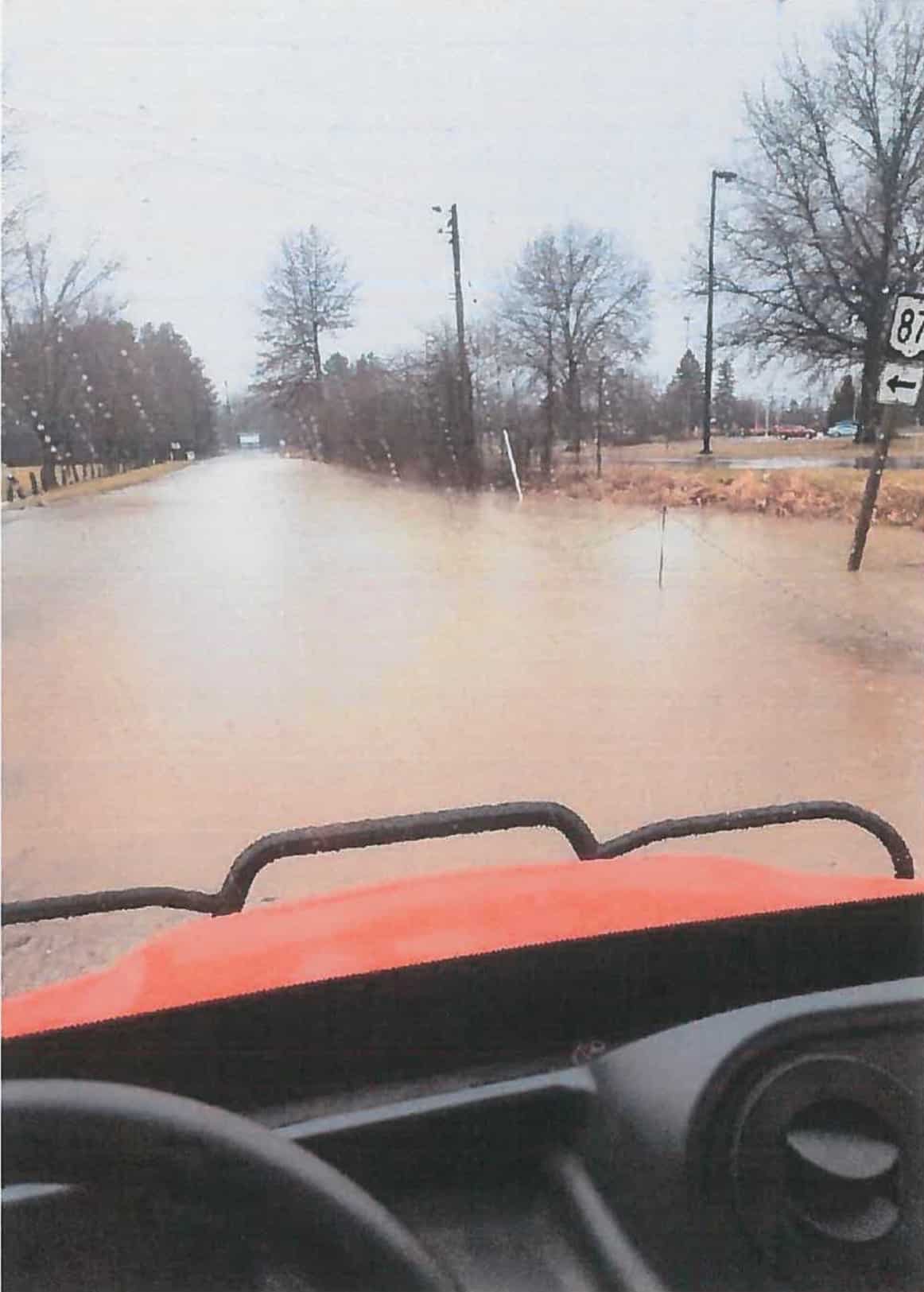
Any amount of rainfall now floods the fairgrounds and the entrance and parking lot become unusable — and the 71-year-old racetrack is washed out, Harris added.
“Unfortunately, a nasty letter from Stoddard’s attorney recently was sent to the fair board’s attorney, Casey O’Brien,” said Harris. “It’s unfortunate, but that’s where we’re at.”


